
The question of whether Houston is definitively “East Texas” is a complex one, often sparking friendly debate among Texans. Geographically, demographically, and culturally, Houston occupies a unique space, blurring the lines of traditional regional definitions. To understand its place, we must examine the characteristics that define East Texas and then assess how Houston aligns with or diverges from those traits.
Defining East Texas
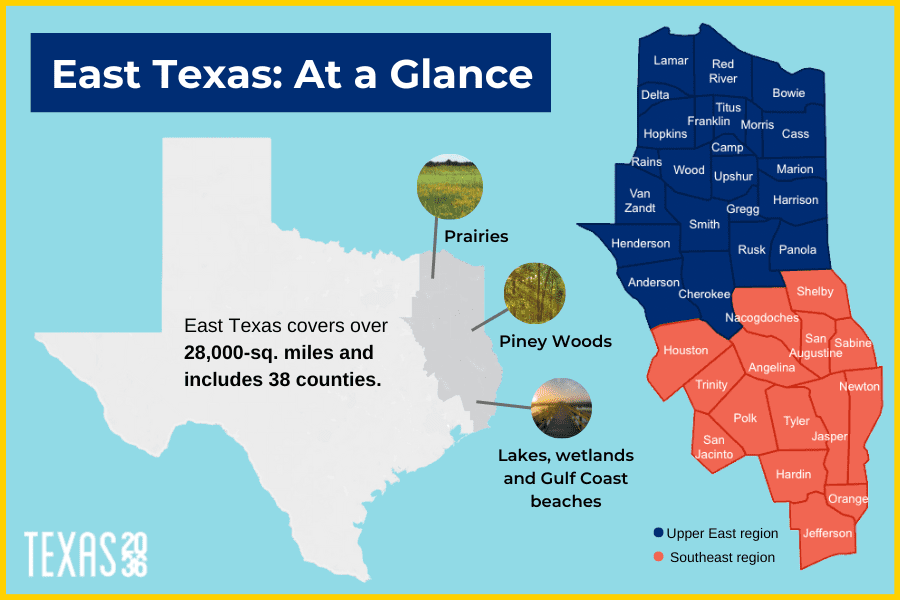
East Texas is not a formally designated political or administrative region, but rather a cultural and geographical shorthand for a specific area of the state. Historically, it conjures images of piney woods, rolling hills, a distinct Southern charm, and a strong connection to the Deep South’s cultural heritage.
Geographical Characteristics
The most defining geographical feature of East Texas is its dense forestation, particularly the vast expanse of the Piney Woods. This region is characterized by its fertile soil, abundant rainfall, and a landscape that sharply contrasts with the arid West or the flatter coastal plains further south. Rivers like the Sabine River and the Trinity River carve through the landscape, supporting lush vegetation and a rich biodiversity. Towns within this core East Texas area often have names evocative of nature and rural life.
Cultural and Historical Identity
Culturally, East Texas shares strong ties with the American South. Its history is deeply intertwined with cotton cultivation, oil booms, and a heritage that often reflects a more conservative, traditional ethos. The accent, the cuisine, and the social customs in many parts of East Texas are distinct from those found in other regions of the state. Think of the hospitality, the slower pace of life, and the importance of community that are often associated with Southern living.
Economic Landscape
Historically, the economy of East Texas was largely agrarian, centered around cotton and timber. The discovery of oil in the early 20th century, particularly the East Texas Oil Field, brought significant economic transformation, leading to boomtowns and a shift towards energy production. However, many communities retain a strong connection to their agricultural and natural resource roots.
Houston’s Unique Position
Houston, the fourth-largest city in the United States, is a metropolis of unparalleled diversity and dynamism. Its sheer size and its status as a global hub for energy, medicine, and aerospace set it apart from the more rural character often associated with East Texas.
Geographical Proximity vs. Regional Identity
Geographically, Houston is situated in Southeast Texas, approximately 50 miles from the Gulf of Mexico. While it is east of cities like San Antonio and Austin, and its metropolitan area does extend into what might be considered the fringe of the Piney Woods, its dominant landscape is not that of dense forests but rather coastal plains. The immediate surroundings of Houston are characterized by flat terrain, bayous, and marshlands, a stark contrast to the rolling hills and thick forests of classic East Texas.

The perceived eastern boundary of East Texas is often debated. Some geographers and locals might place it east of the Trinity River or even further east, while others might include the westernmost reaches of the Piney Woods that touch the Houston metropolitan area. However, the urban sprawl and the defining characteristics of Houston itself tend to overshadow any strict adherence to East Texas regional identity.
Cultural and Demographic Landscape
Houston is a melting pot of cultures, renowned for its incredible diversity. It is one of the most ethnically diverse cities in the United States, with significant populations from Latin America, Asia, Africa, and the Caribbean. This global demographic profoundly shapes its culinary scene, its festivals, and its overall cultural fabric, which is far more cosmopolitan than the more homogeneous cultural identity of much of East Texas.
While Houston does have a Southern influence, given its historical development and its proximity to the Deep South, it is not solely defined by it. The city’s rapid growth and its international influx have created a culture that is uniquely Houstonian, blending Southern hospitality with a modern, global outlook.
Economic Powerhouse
Economically, Houston is a titan. Its economy is driven by major industries like oil and gas, petrochemicals, healthcare (with the renowned Texas Medical Center), and aerospace (NASA’s Johnson Space Center). This industrial and corporate landscape is vastly different from the more resource-based economies of many East Texas towns. The sheer scale of Houston’s economy and its global reach place it in a category far beyond the regional economic models of East Texas.
Bridging the Gap: Southeastern Texas
Perhaps the most accurate descriptor for Houston is “Southeastern Texas.” This designation acknowledges its geographical position in the eastern part of the state while differentiating it from the more traditional cultural and geographical confines of East Texas.
Urban vs. Rural Divide
The fundamental difference lies in the urban-rural divide. East Texas is largely characterized by its smaller towns, rural communities, and natural landscapes. Houston, on the other hand, is a sprawling urban center with a massive population, extensive infrastructure, and a fast-paced, metropolitan lifestyle. While Houston may draw some of its historical roots and certain cultural elements from the broader Southern influence that extends into East Texas, its present-day identity is overwhelmingly that of a major global city.
Influence and Reach
Houston exerts a significant influence over a wide geographic area, including many communities that might otherwise identify with East Texas. People in these outlying areas often commute to Houston for work, shopping, and specialized services, creating a metropolitan sphere of influence. This economic and cultural pull means that while Houston is geographically east, its identity and operational sphere extend beyond the traditional boundaries of East Texas.

Conclusion: A Matter of Perspective
Ultimately, whether Houston is considered “East Texas” depends on the criteria one prioritizes. If one focuses purely on geographical location and the westernmost edges of the Piney Woods touching its periphery, a case could be made for a loose association. However, when considering the defining cultural, demographic, and economic characteristics that typify East Texas – its rural charm, its specific Southern heritage, and its distinct economic drivers – Houston stands apart.
It is more accurately described as a major hub within Southeastern Texas, a unique entity that bridges different regional influences but has forged its own distinct, cosmopolitan identity. The spirit of East Texas might be found in the nearby towns of Conroe or Beaumont, but in Houston, one finds a world unto itself, a testament to Texas‘s immense diversity and its capacity to be many things at once.
LifeOutOfTheBox is a participant in the Amazon Services LLC Associates Program, an affiliate advertising program designed to provide a means for sites to earn advertising fees by advertising and linking to Amazon.com. Amazon, the Amazon logo, AmazonSupply, and the AmazonSupply logo are trademarks of Amazon.com, Inc. or its affiliates. As an Amazon Associate we earn affiliate commissions from qualifying purchases.