
Navigating the landscape of concealed carry permits can be a complex undertaking, especially for permit holders venturing beyond their home state. For those residing in California and possessing a California Concealed Carry Weapon (CCW) permit, understanding which other states recognize this privilege is paramount for safe and legal firearm transport. This guide delves into the intricacies of reciprocity agreements and the states that acknowledge a California CCW, offering clarity for responsible gun owners planning their travel.
Understanding Concealed Carry Reciprocity
Concealed carry reciprocity refers to the legal recognition of a concealed carry permit issued by one state in another state. When states have reciprocity agreements, a valid permit from one state is honored in the other, allowing the permit holder to carry a concealed firearm legally. The absence of reciprocity means that a permit from one state is not recognized in another, and carrying a concealed firearm without a valid permit in that state would be a violation of its laws.
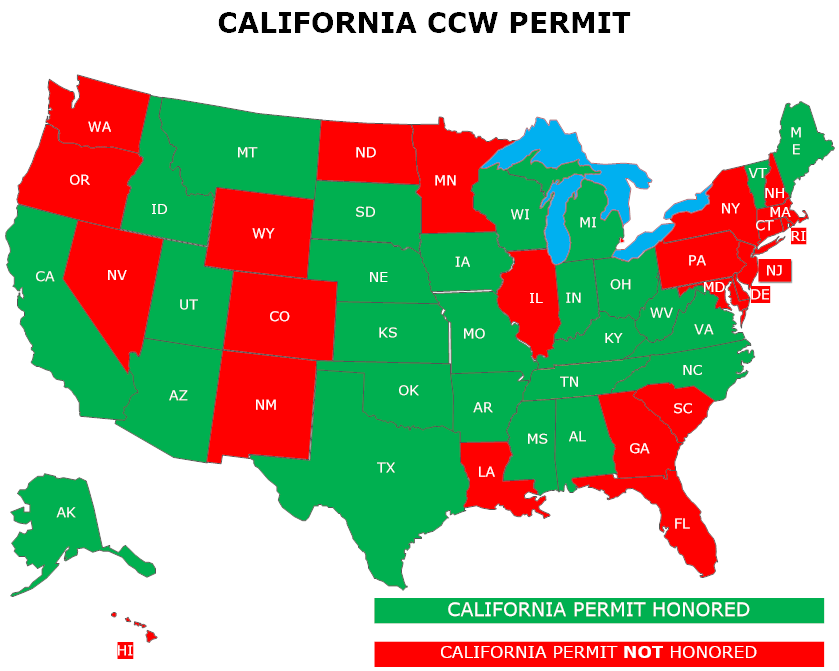
The landscape of reciprocity is dynamic and can change due to legislative actions at both the state and federal levels. Some states have universal reciprocity, meaning they honor permits from all other states that issue them. Others have specific, bilateral agreements with particular states, while a growing number are adopting permitless carry, where residents and often non-residents can carry concealed firearms without a permit.
Key Concepts in Reciprocity
- Mutual Recognition: This is the most common form of reciprocity, where State A honors permits from State B, and State B honors permits from State A.
- Unilateral Recognition: In some instances, one state might honor permits from another state, but the reverse is not true.
- Castle Doctrine/Stand Your Ground Laws: While not directly about reciprocity, these laws can impact the legal justifications for using a firearm in self-defense. Understanding these laws in any state you visit is crucial.
- Federal Law and Interstate Travel: Federal law does not mandate reciprocity for concealed carry permits. While there have been discussions and proposed legislation at the federal level, the current framework relies on individual state agreements or lack thereof.
The Challenge of California CCW Recognition
California has historically had a more restrictive approach to concealed carry permits, with a “may-issue” system that has been transitioning towards a “shall-issue” framework in recent years. This has historically led to fewer states recognizing California CCW permits compared to permits from “shall-issue” states. Furthermore, many states that have permitless carry for their own residents do not automatically extend that privilege to out-of-state permit holders.
States with Reciprocity for California CCW
The recognition of a California CCW permit is subject to the specific laws and agreements of each state. As of recent updates, the number of states that explicitly honor a California CCW permit is limited. It is critical to note that laws can change, and always verify the current status with the issuing authority of the state you plan to visit.
States with Explicit Reciprocity
While the list is not extensive, some states have historically shown a willingness to honor a California CCW. These typically fall into categories where the recognizing state has a broad reciprocity policy or has entered into specific agreements.
- Arizona: Arizona generally honors permits from states that meet certain reciprocity criteria, and a California CCW often falls within this.
- Idaho: Idaho has a strong stance on gun rights and typically recognizes permits from other states.
- Montana: Similar to Idaho, Montana generally recognizes out-of-state permits.
- Nevada: Nevada has reciprocity agreements with several states, and California CCW holders have historically been able to carry in the state.
- Oklahoma: Oklahoma is known for its permissive gun laws and typically honors permits from other states.
- South Dakota: South Dakota has broad reciprocity policies for concealed carry permits.
- Utah: While Utah has its own permit system, it often recognizes permits from other states, including California, under specific conditions.
States with Permitless Carry and Potential for Recognition
A significant shift in concealed carry laws across the United States has been the adoption of permitless carry (also known as constitutional carry). In these states, eligible residents can carry a concealed firearm without a permit. The crucial distinction for out-of-state permit holders is whether these states extend this privilege to them if they possess a permit from another state.
- States where a California CCW might be recognized under permitless carry provisions: Many states that have moved to permitless carry still allow out-of-state permit holders to carry concealed. In these scenarios, a California CCW might serve as the legal basis for carrying concealed, even if the state itself doesn’t require a permit for its own residents. Examples could include states like:

It is imperative to understand that simply because a state allows permitless carry does not automatically mean a California CCW is recognized. You must verify if the state’s permitless carry law specifically addresses recognition of out-of-state permits.
States That Do NOT Honor California CCW
Conversely, a significant number of states do not honor a California CCW permit. This is often due to stricter gun laws in those states, a lack of reciprocity agreements, or a policy of only recognizing permits from states with similar permit requirements.
States with No Explicit Reciprocity
It is generally advisable to assume that if a state is not explicitly listed as honoring a California CCW, then it does not. Traveling to these states with a concealed firearm and a California CCW would be a violation of their laws. This list is extensive and includes, but is not limited to:
- New York
- Massachusetts
- New Jersey
- Illinois
- Maryland
- Connecticut
- Delaware
- Hawaii
- Rhode Island
- Washington D.C. (District of Columbia)
This list is not exhaustive, and the specific requirements for carrying firearms in each state can vary significantly. For example, some states might have provisions for open carry that differ from concealed carry.
Essential Steps for Travelers
Before embarking on any trip that involves crossing state lines, responsible firearm owners must conduct thorough research. Relying on outdated information or assumptions can lead to serious legal consequences.
Verifying Reciprocity Status
- State Attorney General Websites: The most reliable source of information is the official website of the Attorney General or the state police/department of public safety for the state you intend to visit. These sites will often have dedicated sections on firearm laws and reciprocity.
- U.S. Law Shield or NRA-ILA: Organizations like U.S. Law Shield and the NRA-ILA (Institute for Legal Action) provide resources and guides on state firearm laws and reciprocity. However, always cross-reference this information with official state sources.
- Contacting Law Enforcement: For last-minute verification or complex scenarios, consider contacting the relevant law enforcement agency in your destination state.
Understanding State-Specific Laws
Even in states that honor a California CCW, there are often additional regulations to be aware of:
- Firearm Restrictions: Certain types of firearms or magazines may be prohibited in some states, regardless of your permit status.
- Prohibited Places: All states have a list of places where firearms are prohibited, such as schools, federal buildings, polling places, and private property where the owner has posted “no guns” signs.
- Ammunition Laws: Some states have restrictions on certain types of ammunition.
- Duty to Inform: In some states, you are legally required to inform a law enforcement officer that you are carrying a concealed firearm if you are stopped.
- Open Carry: Understand the laws regarding open carry in the state you are visiting. Carrying openly may be legal in a state where concealed carry with a California CCW is not, or vice-versa.
Travel Considerations
- Transporting Firearms: Ensure your firearm is unloaded and stored in a locked container separate from ammunition when traveling through states that do not honor your permit, even if you are not planning to carry concealed within that state. This adheres to federal guidelines for transporting firearms in vehicles.
- Temporary Carry: If you are traveling through a state without reciprocity, you might be permitted to carry in your vehicle without a permit, but you must be aware of the specific state’s vehicle gun laws. Once you exit your vehicle, you may be in violation.
- Permitless Carry States: If you are traveling to a permitless carry state that also acknowledges out-of-state permits, you may be able to carry concealed. However, ensure you meet all the eligibility requirements for carrying in that state.

Conclusion: Prudence and Preparedness
For California CCW permit holders, travel requires diligent planning and a thorough understanding of reciprocity laws. While the number of states that explicitly honor a California CCW is limited, the evolving landscape of permitless carry in many states offers potential for broader recognition. Always prioritize verifying information with official state sources, understanding the nuances of each state’s firearm laws, and ensuring compliance to avoid legal entanglements. Responsible gun ownership extends beyond the borders of your home state, demanding continuous education and adherence to the laws of the places you visit.
LifeOutOfTheBox is a participant in the Amazon Services LLC Associates Program, an affiliate advertising program designed to provide a means for sites to earn advertising fees by advertising and linking to Amazon.com. Amazon, the Amazon logo, AmazonSupply, and the AmazonSupply logo are trademarks of Amazon.com, Inc. or its affiliates. As an Amazon Associate we earn affiliate commissions from qualifying purchases.