
For many visitors to the Golden State, the allure of sun-drenched beaches, iconic landmarks, and vibrant cityscapes makes walking an integral part of the travel experience. From strolling along the Embarcadero in San Francisco to exploring the bustling streets of Los Angeles, pedestrians are everywhere. However, a common question often arises, particularly for those unfamiliar with local regulations: “Is it illegal to jaywalk in California?” The answer, like many legal matters, is nuanced, having recently undergone significant changes that every tourist and resident alike should understand.
In essence, jaywalking, or crossing the street outside of a marked crosswalk or against a pedestrian signal, has historically been illegal in California, carrying potential fines. However, recent legislative amendments have introduced more flexibility, aiming to decriminalize certain forms of jaywalking under specific conditions. This guide delves into the specifics of California’s pedestrian laws, offering insights crucial for navigating its streets safely and legally, ensuring your visit remains enjoyable and penalty-free. Understanding these regulations is not just about avoiding a ticket; it’s fundamentally about pedestrian safety and fostering a harmonious environment for all road users.

Understanding California’s Pedestrian Laws
To grasp the intricacies of jaywalking in California, it’s essential to first understand the foundational laws governing pedestrian movement. These regulations are designed to minimize accidents, maintain traffic flow, and ensure the safety of both pedestrians and motorists. While the general principle is to use designated crossings, the specifics reveal a layered approach.
The Basic Rule: Crossing at Crosswalks
At its core, California law mandates pedestrians to use crosswalks whenever available. California Vehicle Code §21955 states, “Between adjacent intersections controlled by traffic control signal devices or by police officers, pedestrians shall not cross the roadway at any place except in a crosswalk.” This means that in areas with signalized intersections, you are expected to cross within the painted lines. Even at uncontrolled intersections, pedestrians have the right-of-way within unmarked crosswalks (which exist as an extension of sidewalks across intersections). The intent is clear: channel pedestrian traffic to predictable locations where drivers can anticipate and react. Ignoring this rule historically meant you were jaywalking, liable for a citation.
What Constitutes “Jaywalking”?
The term “jaywalking” itself isn’t a legal term but a widely understood colloquialism for pedestrian actions that violate traffic laws. Prior to recent changes, common scenarios that constituted illegal jaywalking included:
- Mid-block crossing: Crossing the street in the middle of a block, away from any marked or unmarked crosswalk.
- Crossing against a signal: Entering a crosswalk or street when the “Don’t Walk” signal is displayed, or when a traffic light is red for pedestrians.
- Leaving the curb unsafely: Stepping off the curb into the path of an approaching vehicle that is so close as to constitute an immediate hazard.
- Walking on the roadway where sidewalks are provided: This technically isn’t jaywalking but a related pedestrian infraction.
Essentially, any crossing not conducted at a designated crosswalk or in adherence to traffic signals was traditionally considered unlawful. The enforcement of these rules could vary by city and even by specific police officer, leading to inconsistent application and sometimes disproportionate impacts, particularly in certain communities.
Recent Changes: The Freedom to Walk Act (AB 2147)
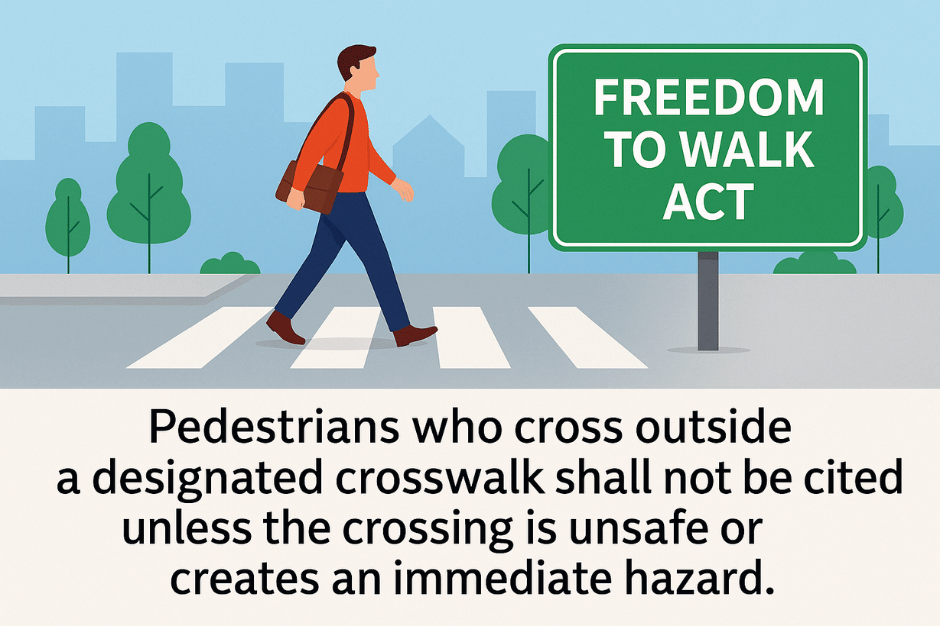
A significant shift occurred with the signing of Assembly Bill 2147, known as the “Freedom to Walk Act,” into law in September 2022. This legislation, which took effect on January 1, 2023, significantly alters the landscape of jaywalking enforcement in California. The core of AB 2147 is to decriminalize certain acts of jaywalking when a reasonably careful person would not have been in immediate danger.
Specifically, the law now states that a pedestrian can legally cross the street outside of a crosswalk or against a “Don’t Walk” signal if there is no immediate hazard from an approaching vehicle. This means that if a pedestrian can safely cross without impeding traffic or putting themselves in harm’s way, they cannot be cited solely for crossing outside of a marked crosswalk or against a signal. The burden is now on law enforcement to prove that an “immediate hazard” existed, making it more challenging to issue citations for minor infractions.
It is crucial to understand that this act does not give pedestrians free rein to cross anywhere, anytime. Crossing in front of moving traffic that is too close, or creating a dangerous situation, remains illegal and subject to fines. The law aims to reduce what many saw as discriminatory enforcement of jaywalking laws and allows for more flexibility for pedestrians when safety is not compromised. For tourists, this means a nuanced approach: while strict adherence to crosswalks is always safest, you won’t necessarily be ticketed for a safe, quick dash across a deserted street, provided no immediate danger is present.
Safety First: Why Pedestrian Laws Matter
While the Freedom to Walk Act introduces more leniency, the underlying reasons for pedestrian laws remain paramount: safety. Both pedestrians and drivers share the responsibility of preventing accidents, and understanding these responsibilities is key to a secure travel experience.
The Dangers of Unsafe Crossings
Despite the legal changes, the physical dangers of unsafe crossings have not diminished. Pedestrian fatalities and injuries remain a serious concern in California. According to the National Highway Traffic Safety Administration (NHTSA), pedestrian fatalities have been on the rise nationally, and California, with its dense urban areas like Los Angeles and San Diego, accounts for a significant portion. Factors contributing to these incidents include:
- Distracted driving and walking: Both drivers and pedestrians engrossed in phones or other devices are less aware of their surroundings.
- Speeding: Higher vehicle speeds dramatically increase the likelihood and severity of pedestrian injuries.
- Low visibility: Nighttime or adverse weather conditions reduce drivers’ ability to see pedestrians.
- Alcohol and drug impairment: For both drivers and pedestrians, impaired judgment can lead to tragic outcomes.
Crossing against a signal or mid-block, even if perceived as safe in the moment, inherently increases exposure to these risks. The new law’s “immediate hazard” clause requires subjective judgment, and what one pedestrian deems safe, a driver might not anticipate, leading to dangerous near-misses or actual collisions.
Drivers’ Responsibilities vs. Pedestrians’ Rights
California law places significant responsibility on drivers to yield to pedestrians. Drivers must yield the right-of-way to pedestrians in any marked crosswalk or in any unmarked crosswalk at an intersection. They must also exercise due care for the safety of any pedestrian upon a roadway. However, this right-of-way is not absolute. Pedestrians also have a responsibility to not suddenly leave a curb or other place of safety and walk or run into the path of a vehicle that is so close as to constitute an immediate hazard.
The new jaywalking law emphasizes this shared responsibility. While pedestrians now have more latitude, they are still obligated to exercise reasonable care for their own safety and the safety of others. The legal framework attempts to balance the need for pedestrian mobility with the imperative for road safety, requiring vigilance from everyone.
Special Considerations in Busy Tourist Areas
In popular tourist destinations such as Santa Monica‘s Third Street Promenade or near attractions like the Golden Gate Bridge in San Francisco, pedestrian traffic can be incredibly dense. Here, the risk of misjudgment, both by drivers and pedestrians, is higher. Even with the new law, local authorities may maintain a stricter stance on pedestrian compliance in these high-traffic zones due to the sheer volume of people and vehicles.
For instance, around a major amusement park like Disneyland in Anaheim, specific pedestrian flow systems are often in place, and deviations can quickly lead to congestion or dangerous situations. In such environments, it is always advisable to stick to marked crosswalks and obey all signals, regardless of the nuances of the Freedom to Walk Act. Prioritizing safety in these bustling areas will ensure a smooth and enjoyable experience for everyone.
Navigating California as a Pedestrian
With the nuanced understanding of California’s pedestrian laws, it’s practical to consider how to apply this knowledge effectively during your travels. Being an informed and cautious pedestrian is key to a hassle-free journey.
Tips for Safe Walking in Urban Environments
Even with the new law, adopting safe walking habits is crucial. Here are some indispensable tips:
- Always look both ways: This fundamental rule remains vital, even on one-way streets, as vehicles can come from unexpected directions.
- Make eye contact with drivers: Before stepping into a crosswalk, try to make eye contact with approaching drivers to confirm they see you.
- Avoid distractions: Put away your phone, remove headphones, and be fully present when crossing streets.
- Walk defensively: Assume drivers may not see you and be prepared to react.
- Be visible: Especially at dusk or night, wear bright clothing or use reflective materials. Carry a flashlight if walking in dimly lit areas.
- Understand right-of-way: While pedestrians generally have the right-of-way in crosswalks, never assume a vehicle will stop. Wait for them to stop completely before proceeding.
Understanding Pedestrian Signals
Pedestrian signals are your primary guide for crossing safely at intersections.
- “Walk” signal (or walking person icon): This indicates you may proceed to cross.
- “Don’t Walk” signal (or flashing hand icon): Do not enter the crosswalk. If you are already in the crosswalk when it begins flashing, proceed to complete your crossing.
- Countdown timers: Many signals include countdown timers, indicating how much time you have to cross. Use these wisely to assess if you can complete your crossing safely before the “Don’t Walk” appears.
Even with the Freedom to Walk Act, ignoring “Don’t Walk” signals when an immediate hazard exists is illegal and dangerous. Always prioritize the signal and your awareness of traffic.
Consequences of Violating Pedestrian Laws
While the Freedom to Walk Act has reduced citations for minor, safe jaywalking, violations that create an immediate hazard can still result in penalties.
- Fines: Jaywalking tickets typically incur a fine, which can vary by jurisdiction but often starts around $200. These fines can quickly add up with court fees and administrative costs.
- Increased Insurance Rates: While a single jaywalking ticket might not directly impact your car insurance, if you’re involved in an accident as a pedestrian and found to be partially at fault due to an illegal crossing, it could have implications for liability and future insurance claims.
- Personal Injury Liability: If you cause an accident or are injured while illegally crossing, your ability to claim damages (if you’re a pedestrian) or your liability (if you’re a driver) could be significantly impacted. Comparative negligence laws in California mean your compensation could be reduced or denied if you are found partly responsible for the incident.
- Serious Charges: In the most severe cases, if your illegal actions as a pedestrian lead to a significant traffic disruption or a serious accident, you could face more severe legal consequences, though this is rare for simple jaywalking.
Understanding these potential repercussions reinforces the importance of exercising caution and adhering to the spirit, if not always the letter, of the law.
Cultural Nuances and Practical Advice for Tourists
Beyond the legal framework, understanding the local pedestrian culture and adopting practical strategies can greatly enhance a tourist’s experience in California.
Observing Local Pedestrian Culture
While the law dictates certain behaviors, actual pedestrian practices can vary. In some bustling urban cores, you might observe locals making quick, seemingly “illegal” crossings when traffic is light. This might give the impression that jaywalking is widely tolerated. However, as a visitor, it’s generally best to err on the side of caution. Locals are often more attuned to specific traffic patterns, driver behaviors, and enforcement tendencies in their immediate areas. As a tourist, you lack this innate familiarity, making adherence to official guidelines a safer bet.
Remember, even if you see others jaywalking, that doesn’t make it legal or safe for you, especially if you’re not accustomed to the pace of traffic or the specific road layouts. Embrace the local culture by being observant but prioritize your safety and legal standing.
Planning Your Walks
To minimize the temptation or need to jaywalk, proactive planning can be highly beneficial:
- Use navigation apps: Apps like Google Maps or Apple Maps often provide pedestrian-specific directions that guide you to proper crossings.
- Familiarize yourself with public transport: In major cities like San Francisco or Sacramento, public transportation (buses, trams, metro) can bridge longer distances, reducing the need for extensive walking and risky crossings.
- Explore designated pedestrian zones: Many cities have areas explicitly designed for foot traffic, such as promenades, boardwalks, or shopping districts (e.g., Hollywood Walk of Fame). These areas inherently minimize pedestrian-vehicle conflicts.
- Allow extra time: Rushing often leads to risky decisions. Give yourself ample time to reach your destination, so you don’t feel pressured to make unsafe crossings to save a few minutes.

What to Do if You Get a Ticket
Despite your best efforts, unforeseen circumstances can arise. If you do receive a jaywalking ticket:
- Remain calm and cooperative: Do not argue with the issuing officer. Provide your identification as requested.
- Sign the citation: Signing the ticket is not an admission of guilt; it’s a promise to appear in court or resolve the ticket. Refusing to sign can lead to arrest.
- Understand your options: You will typically have the option to pay the fine, contest the ticket in court, or, in some cases, attend traffic school (though this is less common for pedestrian infractions).
- Seek advice if needed: If you believe the ticket was issued unfairly or if you’re unsure how to proceed, consider consulting local legal resources, especially if you are not a U.S. resident.
Navigating the legal system from afar can be complicated, so prevention is always better than cure.
In conclusion, the question of whether it’s illegal to jaywalk in California has a more nuanced answer today thanks to the Freedom to Walk Act. While strictly adhering to crosswalks and signals remains the safest and most recommended practice, the law now provides more flexibility for pedestrians to cross outside of designated areas when no immediate hazard exists. However, this flexibility does not negate the fundamental responsibility of pedestrians to exercise caution and prioritize safety. For tourists, understanding these rules and adopting safe walking habits will not only help avoid potential fines but, more importantly, ensure a secure and delightful exploration of all that California has to offer. Walk smart, stay safe, and enjoy your journey!
LifeOutOfTheBox is a participant in the Amazon Services LLC Associates Program, an affiliate advertising program designed to provide a means for sites to earn advertising fees by advertising and linking to Amazon.com. Amazon, the Amazon logo, AmazonSupply, and the AmazonSupply logo are trademarks of Amazon.com, Inc. or its affiliates. As an Amazon Associate we earn affiliate commissions from qualifying purchases.