
Navigating the legal landscape of recording conversations can be a complex endeavor, especially when planning a trip or a longer stay in a new locale. For travelers and those considering relocation, understanding the specific laws of a destination is paramount. Colorado, a state renowned for its stunning natural beauty and vibrant cities like Denver and Aspen, has a clear stance on this matter. This article delves into the legality of recording conversations in Colorado, offering insights for tourists, business travelers, and anyone interacting with others within the Centennial State.
Understanding Colorado’s Recording Laws: A Two-Party Consent State
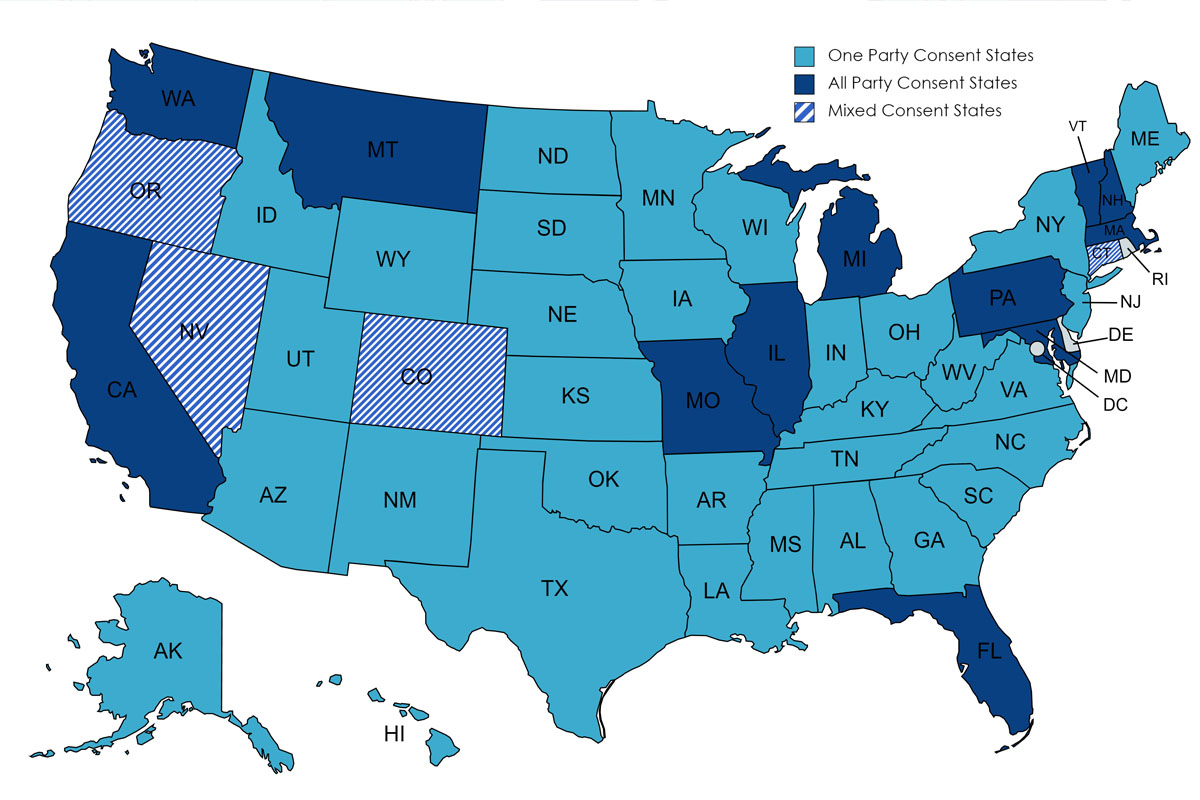
At the heart of Colorado’s privacy laws concerning audio recording lies the concept of “two-party consent.” This means that for a conversation to be legally recorded in Colorado, all parties involved in that conversation must consent to the recording. This principle is enshrined in Colorado Revised Statutes § 18-9-101 et seq.

The “One-Party Consent” vs. “Two-Party Consent” Distinction
It is crucial to differentiate between one-party and two-party consent states. In one-party consent states, only one individual participating in the conversation needs to be aware of and consent to the recording. This can include the person doing the recording themselves. However, Colorado is not a one-party consent state.
In Colorado, if you are recording a private conversation without the knowledge and consent of all parties involved, you may be committing a criminal offense. This applies whether you are a resident or a visitor to the state. The intent behind the recording does not necessarily negate the illegality if consent is absent.
What Constitutes a “Private” Conversation?
The “private” nature of a conversation is a key element in determining whether recording is permissible. Generally, a conversation is considered private if the participants have a reasonable expectation that it will not be overheard or recorded by others. This typically excludes conversations held in public spaces where there is no expectation of privacy, such as a busy street corner or a crowded public park in Rocky Mountain National Park.
However, even in seemingly public places, if the conversation is intended to be confidential between participants, recording it without consent can still be problematic. For instance, a discussion between friends at an outdoor cafe table might still be considered private if they are speaking in hushed tones and do not expect to be overheard or recorded by nearby patrons.
Exceptions to the Two-Party Consent Rule
While the two-party consent rule is the general standard, there are limited exceptions. These are often narrowly defined and relate to situations where the expectation of privacy is significantly diminished or where law enforcement is involved under specific legal circumstances.
- Public Proceedings: Generally, recordings of public meetings or proceedings where there is no reasonable expectation of privacy are permissible. This could include city council meetings open to the public or court hearings.
- Information Readily Available to the Public: If information is already publicly accessible, such as announcements or statements made in a public forum, recording them might not fall under the purview of privacy laws.
- Criminal Investigations: Law enforcement agencies, with appropriate legal authorization (such as a warrant), can record conversations. This exception does not extend to private citizens.
For the average traveler or visitor, relying on these exceptions is generally not advisable. The safest approach is to always seek consent.
Practical Implications for Travelers and Visitors in Colorado
Understanding Colorado’s recording laws has direct implications for anyone visiting or staying in the state, whether for leisure or business.
When You Might Encounter Situations Requiring Consent
Imagine you’re enjoying a stay at a charming bed and breakfast near Boulder, or perhaps attending a conference at a hotel in Colorado Springs. You might be tempted to record:
- Business Meetings: If you’re in Denver for business, you might wish to record a meeting to ensure accuracy or for later reference. It is imperative to inform all attendees and obtain their explicit consent before pressing record.
- Informal Conversations with New Acquaintances: While exploring attractions like the Garden of the Gods or a local brewery, you might strike up an interesting conversation. Recording this without the other person’s knowledge could lead to legal trouble.
- Interactions with Service Providers: Whether it’s a guide on a Colorado River rafting trip or a hotel concierge at the Broadmoor, any conversation you wish to record requires their consent.
- Discussions in Hotel Rooms or Rental Properties: While you might assume a hotel room or a vacation rental is your private space, the expectation of privacy can extend to conversations held within. If another party is present, their consent is still needed if you intend to record.
How to Obtain Consent
Obtaining consent in Colorado is straightforward but essential.
- Verbal Consent: The simplest method is to ask directly, “Are you okay with me recording this conversation?” If the other party agrees verbally, that can suffice. However, for added protection, especially in business contexts, a written record is always preferable.
- Written Consent: A written agreement, even an email or text message confirming consent, can serve as proof. This is particularly useful for important discussions or business negotiations.
- Implied Consent (Use with Caution): In some limited scenarios, consent might be implied by the circumstances, such as when a speaker is making a public address or clearly indicating they expect to be recorded. However, relying on implied consent in private conversations is risky and not recommended in Colorado.

The Role of Technology: Smartphones and Hidden Recorders
With the ubiquity of smartphones, many people have recording capabilities readily available. While convenient, this accessibility does not override legal requirements. Using a smartphone app or a dedicated audio recording device to secretly record a conversation in Colorado is a violation of the law. This includes:
- Smartphone Apps: Many applications on smartphones offer sophisticated recording features. Using these without consent is illegal.
- Wearable Devices: Devices like smartwatches or even hidden cameras with audio capabilities fall under the same legal scrutiny.
- Dash Cams and Other Devices: If your vehicle’s dash cam also records audio inside the cabin, be mindful of who is present. If you are transporting passengers, their consent may be required depending on the nature of the conversation and their expectation of privacy.
Recording in Specific Contexts
The application of Colorado’s two-party consent law can vary slightly depending on the context of the interaction.
Business and Professional Interactions
In the professional realm, maintaining ethical standards and adhering to legal requirements is crucial. When conducting business in Colorado, whether in a corporate office in Denver or during a site visit to a manufacturing plant, always obtain consent before recording any meetings, interviews, or discussions. This applies to both internal company meetings and interactions with clients, vendors, or partners. Failure to do so could not only lead to legal repercussions but also damage professional relationships and your organization’s reputation.
Personal and Social Gatherings
Even in casual social settings, the principle of two-party consent holds. While it might seem less formal, recording personal conversations without everyone’s agreement can still infringe on their privacy rights. This is particularly relevant if you’re attending a wedding in the mountains or a family reunion at a resort. If you wish to capture audio from such events, clearly communicate your intentions to those you’ll be recording and obtain their permission.
Customer Service and Tourism Encounters
Tourists often engage in numerous interactions with service providers. If you’re interacting with hotel staff at a luxury resort, a tour guide leading an excursion to the Mesa Verde National Park, or a restaurant server in Aspen, and you wish to record your conversation, you must ask for their consent. While many service providers might be accustomed to such requests, always err on the side of caution and ask. Conversely, if a service provider is recording you, they must also obtain your consent.
Legal Ramifications of Non-Compliance
Violating Colorado’s two-party consent law can have serious consequences, ranging from civil penalties to criminal charges.
Civil Liability
An individual whose privacy has been violated by an unlawful recording may pursue civil action. This could involve seeking damages for emotional distress, invasion of privacy, and other related harms. The amount of damages awarded would depend on the specifics of the case and the impact of the violation.
Criminal Penalties
Under Colorado Revised Statutes, unauthorized recording of a private conversation can be classified as a misdemeanor or, in more severe cases, a felony. Penalties can include fines and imprisonment. These criminal charges underscore the seriousness with which the state views violations of privacy.
Impact on Evidence
If a recording is made in violation of Colorado law, it may be inadmissible as evidence in court. This means that even if the recording contains crucial information, it cannot be used to support a legal case if it was obtained illegally. This is a significant deterrent for those who might consider surreptitious recording for evidentiary purposes.
Best Practices for Responsible Recording
To ensure you remain compliant with Colorado law and uphold ethical standards, consider these best practices.
- Always Assume Two-Party Consent is Required: When in doubt, always ask for permission. It is better to be safe than to face legal consequences.
- Be Transparent: Clearly state your intention to record before doing so.
- Obtain Explicit Consent: Verbal or written consent is ideal. Make sure the other party understands what is being recorded and agrees to it.
- Know Your Surroundings: Be mindful of whether a conversation is truly private or occurs in a public setting. However, even in public, a reasonable expectation of privacy can exist.
- Educate Yourself: If you are traveling to Colorado for extended business or personal reasons, it is wise to familiarize yourself with the state’s laws regarding privacy.
- Consult Legal Counsel: For significant business transactions or any situation where the stakes are high, consulting with a legal professional in Colorado is recommended to ensure full compliance.
By understanding and respecting Colorado’s two-party consent law, you can ensure your interactions in the state are both legal and ethical, allowing you to fully enjoy all that Colorado has to offer, from its breathtaking landscapes to its welcoming communities.
LifeOutOfTheBox is a participant in the Amazon Services LLC Associates Program, an affiliate advertising program designed to provide a means for sites to earn advertising fees by advertising and linking to Amazon.com. Amazon, the Amazon logo, AmazonSupply, and the AmazonSupply logo are trademarks of Amazon.com, Inc. or its affiliates. As an Amazon Associate we earn affiliate commissions from qualifying purchases.