
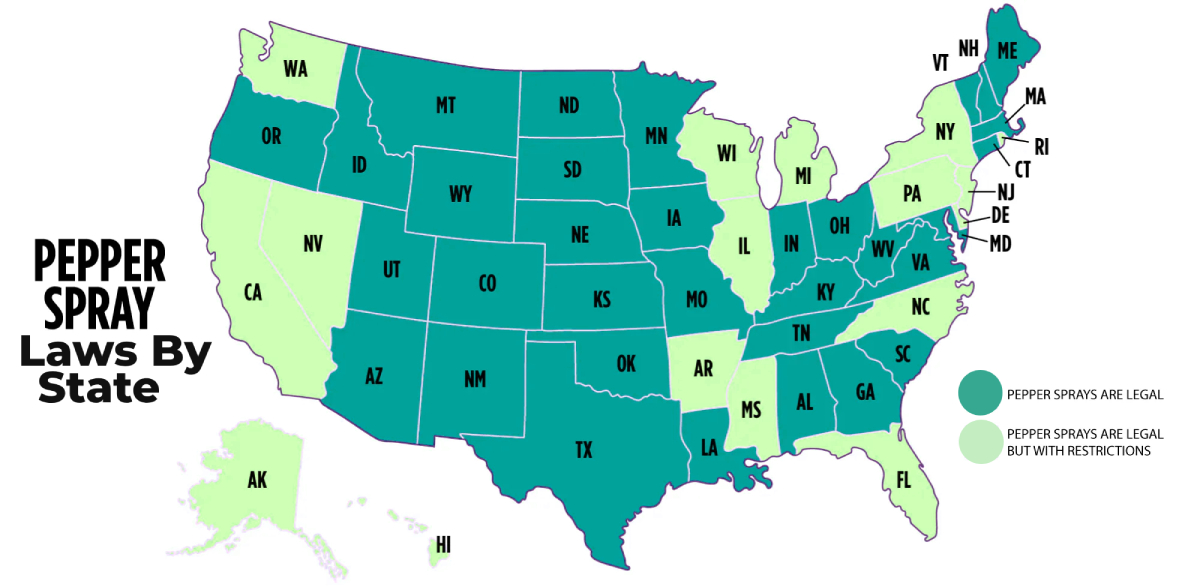
The question of whether Mace, a common brand of pepper spray, is legal to possess and carry in California is a frequent one, particularly for residents and visitors concerned about personal safety. Understanding the specific regulations surrounding self-defense tools is crucial for ensuring compliance with the law and for making informed decisions about personal security. California, like many states, has specific statutes governing the use and possession of chemical sprays, and while Mace is generally permitted, there are important nuances and limitations to be aware of.
The legality of Mace in California is primarily determined by California Penal Code Section 12403.8. This section explicitly permits individuals to possess and carry self-defense sprays, including those containing oleoresin capsicum (OC), the active ingredient in most pepper sprays. However, this permission comes with certain restrictions designed to prevent misuse and ensure that these devices are used solely for self-defense purposes.

Understanding the Legal Framework for Self-Defense Sprays in California
In California, the law distinguishes between various types of self-defense sprays. While “Mace” is a well-known brand, it’s important to understand that the law refers to “self-defense spray” or “chemical spray” more broadly. The key characteristic is that these devices are designed to temporarily incapacitate a person through the use of inflammatory agents.
Permitted Uses and Restrictions
California Penal Code Section 12403.8 allows individuals to possess and carry self-defense sprays that meet specific criteria. These criteria generally include:
- Content: The spray must contain oleoresin capsicum (OC), a natural inflammatory agent derived from chili peppers. Some sprays may also contain other chemical irritants.
- Strength and Concentration: While there aren’t strict percentage limits on the OC concentration for personal possession, the effectiveness and labeling of such products are generally regulated to ensure they are not excessively potent or harmful when used appropriately for self-defense.
- Container Size: The container size is a crucial factor. California law limits the amount of self-defense spray that can be possessed. Generally, the maximum capacity allowed for an individual is two fluid ounces (approximately 59 milliliters) of a chemical substance that causes temporary incapacitation. This limitation is in place to prevent the use of excessively large or industrial-strength canisters that could cause undue harm.
- Purpose: The fundamental principle is that these sprays are intended for self-defense against an aggressor. Their use is legally justified when there is a reasonable belief of imminent danger of bodily harm. Using a self-defense spray for any other purpose, such as intimidation, assault, or vandalism, is illegal and can result in criminal charges.
- Age Restrictions: While California Penal Code Section 12403.8 does not explicitly state an age restriction for possession, it is generally understood that minors (individuals under 18 years of age) may not legally purchase or possess such items. This is consistent with broader laws regarding the sale of potentially harmful items to minors.
It is important to note that while Mace is a brand that often comes to mind, the legality pertains to the type of product rather than solely the brand name. Therefore, other brands of pepper spray that meet the California legal requirements are also permissible.
What is Not Permitted
While personal possession of compliant self-defense sprays is allowed, certain types of chemical incapacitants are prohibited in California. These typically include:
- “Mace” in its original formulation: It’s worth noting that the original formulation of Mace, which contained chloroacetophenone (CN), is now largely obsolete and was more akin to tear gas. While legal in some contexts historically, modern self-defense sprays primarily use OC. If one were to encounter an old CN-based spray, its legality would be questionable and it would likely not be covered under the current self-defense spray statutes.
- Tear Gas Devices (other than OC-based self-defense sprays): California Penal Code Section 12403 generally prohibits the possession of tear gas weapons, except for those specifically permitted for self-defense. This distinction is important. While OC spray falls under the permissible category, other forms of tear gas, like those used by law enforcement for crowd control, are not intended for civilian personal possession.
- Excessively Large Canisters: Possession of self-defense sprays exceeding the two-fluid-ounce limit is illegal.
- Use for Non-Defensive Purposes: As mentioned, any use outside of justifiable self-defense is a violation of the law.
Carrying Self-Defense Sprays in California
The legality of possessing Mace or similar self-defense sprays extends to carrying them. However, responsible carrying practices are essential.
Where You Can Carry
Generally, you can carry a legal self-defense spray in most public places within California. This includes:
- On your person: Carrying it in a purse, pocket, or on a keychain is common.
- In your vehicle: It can be kept in a glove compartment or other accessible location.
- In public spaces: Parks, streets, and most commercial establishments.
Where You Cannot Carry
There are specific locations where carrying self-defense sprays is prohibited, even if they are otherwise legal to possess:
- Courthouses: As per California Penal Code Section 171b, weapons are prohibited in courthouses.
- Federal Buildings: Similar restrictions apply to federal buildings and property.
- Airports: Especially in secure areas beyond security checkpoints, weapons are prohibited.
- Schools and Universities: California law generally prohibits the possession of weapons on school grounds, which often extends to self-defense sprays. California Education Code Section 626.10 is relevant here, outlining prohibitions on weapons on school property.
- Correctional Facilities: Possession is, of course, prohibited in prisons and jails.
- Private Property with Restrictions: Some private establishments may have their own policies prohibiting weapons, including self-defense sprays.
It is always advisable to be aware of signage or specific rules posted at various locations. When in doubt, it is best to err on the side of caution and leave the self-defense spray behind.
Training and Responsible Use
Possessing a self-defense tool like Mace or pepper spray comes with a responsibility to understand its use.
Understanding How to Use It
- Familiarization: Before carrying, it is highly recommended to familiarize yourself with the device. Understand how to remove the safety mechanism, aim, and deploy the spray.
- Distance: Pepper spray is most effective at a specific range, typically between 3 to 15 feet, depending on the product. Being aware of this range is crucial for effective use and to avoid self-exposure.
- Aiming: Aim for the attacker’s face, specifically the eyes, nose, and mouth, as these areas are most sensitive to the irritant.
- Effect: Understand that the effects are temporary and designed to provide an opportunity to escape. It is not intended to be a permanent incapacitant.
- Decontamination: In the event of accidental self-exposure, fresh air and flushing the affected areas with cool water are generally recommended.
Legal Justification for Use
The use of Mace or pepper spray is legally justifiable only when there is an immediate threat of harm.
- Reasonable Fear: You must have a reasonable belief that you are in danger of physical harm. This is an objective standard, meaning a reasonable person in the same situation would also believe they are in danger.
- Imminent Threat: The threat must be imminent, meaning it is happening now or is about to happen.
- Proportionality: The use of force, including self-defense spray, should be proportional to the threat.
- Escape: The primary goal of using a self-defense spray is to create an opportunity to escape the situation safely. Once you have created distance and are no longer in immediate danger, continuing to use the spray would be considered excessive force and potentially illegal.
- Reporting: It is often advisable to report the incident to law enforcement after a use of force, even in self-defense, to document the event and establish the legal justification.
Purchasing Self-Defense Sprays in California
When purchasing Mace or other self-defense sprays in California, consumers should ensure they are buying from reputable sources and that the products meet the state’s legal requirements.
Where to Buy
- Sporting Goods Stores: Many sporting goods retailers carry a selection of self-defense sprays.
- Online Retailers: Numerous online stores specialize in safety equipment, including pepper spray. When purchasing online, ensure the seller ships to California and that the products comply with California law.
- Specialty Safety Stores: Stores dedicated to personal safety and security often offer a wider range of options and knowledgeable staff.
What to Look For
- Labeling: Check the product label to ensure it specifies oleoresin capsicum (OC) as the active ingredient and adheres to California regulations regarding container size (typically no more than 2 fluid ounces).
- Reputable Brands: While brand names are not the sole determinant of legality, sticking to well-known and reputable brands like Mace (and other established manufacturers of OC sprays) generally ensures product quality and compliance.
- Product Specifications: Be aware of the spray pattern (stream, cone, fog) and the effective range.
Frequently Asked Questions About Mace in California
Q: Can I carry Mace in my purse in California?
A: Yes, provided the Mace is a legal self-defense spray (typically OC-based) and the container size does not exceed two fluid ounces, you can carry it in your purse in most public places.
Q: Is it legal to carry Mace at Disneyland or other theme parks in California?
A: Most theme parks, including Disneyland and Universal Studios Hollywood, have policies that prohibit weapons, which often includes self-defense sprays. It is best to check the specific park’s rules and regulations or leave the item at your hotel or in your vehicle.
Q: Can I take Mace on a plane in California?
A: No, self-defense sprays like Mace are generally prohibited in both carry-on and checked baggage on commercial flights. Transportation Security Administration (TSA) regulations are strict regarding such items.
Q: What is the difference between Mace and pepper spray?
A: “Mace” is a brand name that has become almost synonymous with pepper spray. However, historically, the original Mace formulation used CN gas. Modern self-defense sprays widely available are typically pepper sprays containing oleoresin capsicum (OC). The legality in California pertains to the type of chemical irritant (OC) and container size, not just the brand name.

Q: What happens if I am caught with illegal self-defense spray in California?
A: Possession of prohibited self-defense sprays or exceeding the legal limits for permissible sprays can result in arrest and criminal charges, potentially leading to fines and even jail time, depending on the severity and circumstances.
In conclusion, Mace, as a type of self-defense spray, is generally legal in California for personal possession and carry, provided it meets specific criteria, most notably being OC-based and not exceeding a two-fluid-ounce capacity. Understanding these regulations is key to ensuring safe and lawful use of personal defense tools within the Golden State.
LifeOutOfTheBox is a participant in the Amazon Services LLC Associates Program, an affiliate advertising program designed to provide a means for sites to earn advertising fees by advertising and linking to Amazon.com. Amazon, the Amazon logo, AmazonSupply, and the AmazonSupply logo are trademarks of Amazon.com, Inc. or its affiliates. As an Amazon Associate we earn affiliate commissions from qualifying purchases.