
When travelers descend upon New Orleans, they are often searching for the vibrant soul of the United States. From the rhythmic pulse of Frenchmen Street to the historic charm of the French Quarter, the city defies simple color-coded labels. While political maps of Louisiana often paint a picture of ideological divides, the reality of life in the “Crescent City” is far more nuanced, blending a kaleidoscope of local culture, heritage, and unique social dynamics that transcend the binary of red and blue.
The Cultural Tapestry of the Crescent City
To understand New Orleans, one must first peel back the layers of its history. This is a city built on the intersection of French, Spanish, and African influences, creating a social fabric that values tradition and community over partisan aesthetics.
A Legacy of Resilience
The identity of the city is rooted in its resilience. Whether it is the reconstruction efforts following Hurricane Katrina or the preservation of the Garden District, the focus here remains on the protection of local heritage. Locals take immense pride in their architecture, such as the iconic St. Louis Cathedral, and their unique approach to community governance. This is a place where neighborhoods like Tremé maintain their own distinct rhythm, regardless of which way the national political winds are blowing.
Culinary Diplomacy
If one were to classify the city by its palate, it would neither be red nor blue, but a deep, rich gumbo brown. The culinary scene in New Orleans acts as a neutral ground where history and hospitality converge. Establishments like Commander’s Palace or the bustling stalls of the French Market serve as microcosms of the city. Here, the conversation is rarely about partisan lines; it is about the perfect roux, the quality of a po’boy, or the history of a jazz standard.
Political Reality Versus Local Identity
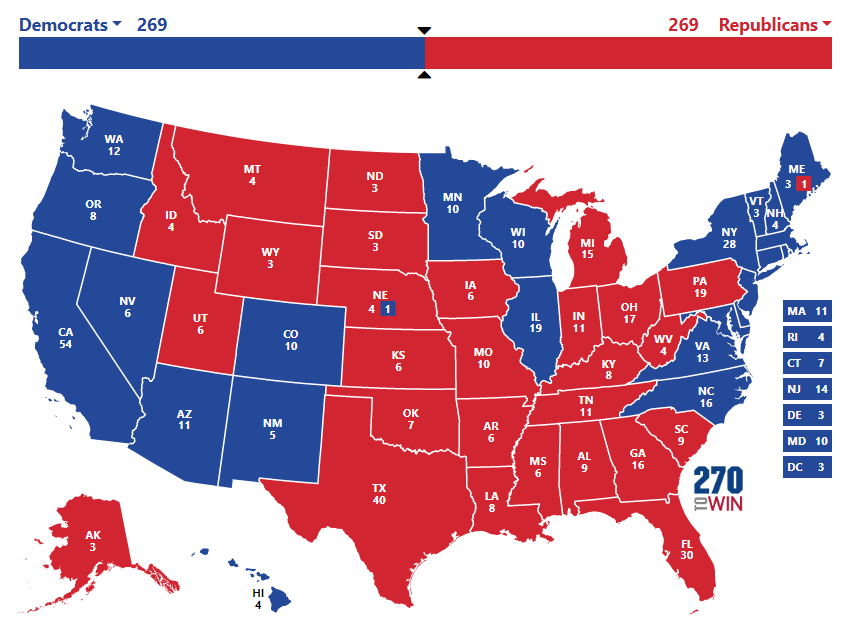
While New Orleans is frequently characterized as a Democratic stronghold within a predominantly Republican state, the day-to-day experience of a resident or a visitor is defined by “localism.”
The Municipal Lens
The city operates under a set of priorities that are uniquely its own. Issues such as the maintenance of the Mississippi River levees, the preservation of historic sites like Jackson Square, and the ongoing management of tourism infrastructure are the true drivers of local policy. Visitors often find that the political climate is far less visible than the spirit of Mardi Gras, where the costumes and the parades—rather than slogans—take center stage.

Beyond the Binary
The tendency to categorize a city like New Orleans as either “red” or “blue” overlooks the independent streak that runs through the population. The local culture is deeply suspicious of external labels. Whether one is wandering through City Park or exploring the National World War II Museum, one notices that the city’s heart is tied to its local institutions and its distinct, slow-moving pace of life, which often operates independently of national political trends.
The Visitor’s Perspective: What Actually Matters?
For those traveling to New Orleans, the color of the ballot box is arguably irrelevant. What truly matters is the immersion into a city that refuses to be constrained by modern political definitions.
Finding Harmony in Diversity
The beauty of the city lies in its diversity of expression. From the brass bands that play in Armstrong Park to the solemn beauty of St. Louis Cemetery No. 1, the city welcomes all who come to appreciate its history. The “red” and “blue” labels are often imported from outsiders who seek to simplify a complex, beautiful, and often contradictory place. When you are sitting in a balcony bar overlooking Bourbon Street, the only colors that matter are the neon lights of the jazz clubs and the vibrant masks worn during the festive season.
Tips for Engaging with Local Culture
- Respect the Traditions: Whether visiting the Audubon Aquarium of the Americas or dining in a small cafe in Bywater, always take the time to learn the local customs.
- Support Local Artisans: Instead of focusing on national chains, explore the small boutiques and galleries that make Royal Street famous.
- Engage with History: Take a tour of the New Orleans Museum of Art to understand how the city’s identity has been shaped by global influences rather than just domestic politics.

The Soul of the Crescent City
Ultimately, New Orleans remains a city of profound complexity. It is not defined by the political spectrum of its region, but by its own unwavering devotion to its heritage. The music that spills out of Preservation Hall, the scents of spices drifting from kitchens, and the laughter echoing through the Marigny neighborhood create a sanctuary of culture that renders partisan labels obsolete.
When you walk down the historic streets, you aren’t walking through a red or blue landscape; you are walking through a living, breathing monument to human expression. The city’s colors are the bright, chaotic, and beautiful hues of a stained-glass window, each piece holding its own significance, yet all contributing to the singular light of Louisiana.
In the final analysis, New Orleans is neither red nor blue. It is purple, green, and gold—the colors of Mardi Gras—representing justice, faith, and power. It is a city that chooses its own identity, one tradition at a time, inviting every visitor to set aside their preconceptions and simply listen to the music. As the trumpets sound at Louis Armstrong Park, the binary questions of national politics fade into the background, leaving behind only the vibrant, indomitable spirit of one of the most culturally significant cities in the United States.
LifeOutOfTheBox is a participant in the Amazon Services LLC Associates Program, an affiliate advertising program designed to provide a means for sites to earn advertising fees by advertising and linking to Amazon.com. Amazon, the Amazon logo, AmazonSupply, and the AmazonSupply logo are trademarks of Amazon.com, Inc. or its affiliates. As an Amazon Associate we earn affiliate commissions from qualifying purchases.