
Navigating the legal landscape of marital property can be a complex undertaking, particularly for couples considering relocation or establishing residency in a new state. Understanding how assets and debts are classified and divided in the event of divorce, death, or separation is crucial. This article delves into the specific property laws of Oregon, addressing the common question: Is Oregon a community property state?
Understanding Community Property and Common Law Property States
Before examining Oregon‘s specific laws, it’s essential to grasp the fundamental differences between community property and common law property systems. These distinctions have significant implications for how assets acquired during a marriage are treated.

Community Property System
In community property states, most property acquired by either spouse during the marriage is considered jointly owned by both spouses. This jointly owned property is called “community property.” The rationale behind this system is that both spouses contribute to the marital estate, even if one spouse earns a higher income or does not have a paid job outside the home. Generally, separate property (assets owned before marriage or received as a gift or inheritance during marriage) remains the separate property of the individual spouse. However, the commingling of separate and community property can complicate these classifications.
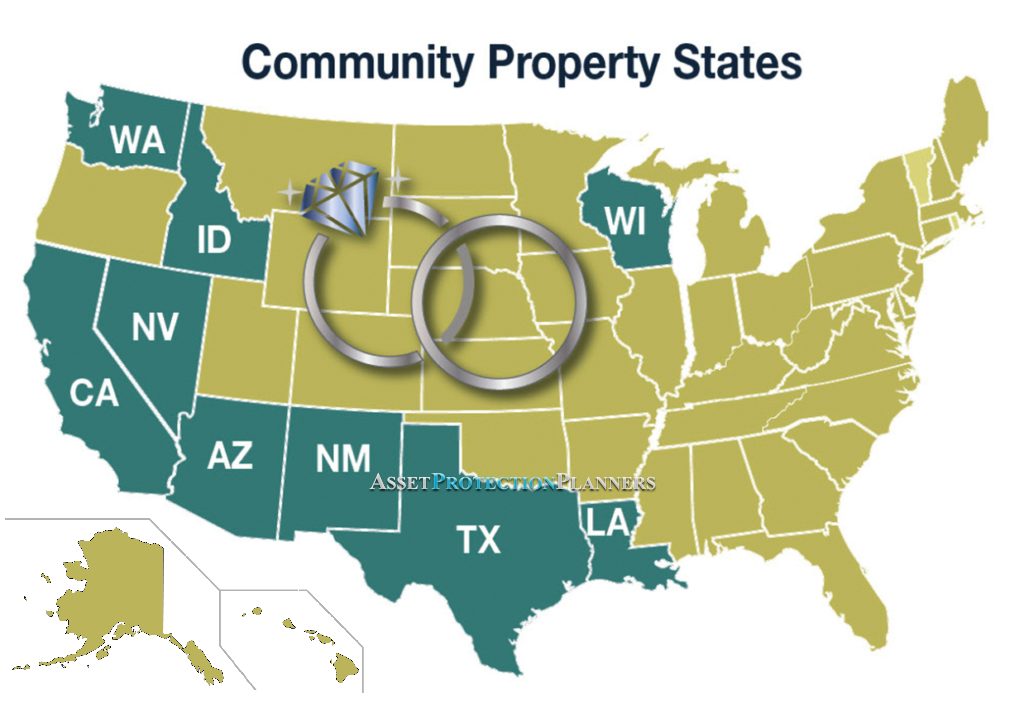
The nine community property states in the United States are:
In these states, community property is typically divided equally between spouses in the event of divorce.
Common Law Property System
In contrast, common law property states (also known as equitable distribution states) operate under the principle that property acquired during the marriage belongs to the spouse who earned or acquired it. Upon divorce, courts divide marital property in a manner that is deemed “equitable,” or fair, which does not necessarily mean a 50/50 split. Factors such as the length of the marriage, the contributions of each spouse (both financial and non-financial), and the economic circumstances of each party are considered.
Oregon’s Property Laws: An Equitable Distribution State
The answer to whether Oregon is a community property state is definitively no. Oregon follows the common law property system, classifying itself as an equitable distribution state. This means that assets acquired during the marriage are not automatically considered jointly owned. Instead, the law presumes that property acquired by a spouse during the marriage is that spouse’s separate property, unless evidence suggests otherwise.
Marital Property in Oregon
While Oregon is not a community property state, it does recognize the concept of marital property. When a marriage ends in divorce, the court will divide the marital property equitably. Marital property, in the context of Oregon law, generally refers to assets and debts that were acquired by either spouse during the marriage, regardless of whose name is on the title. This includes:
- Income and Wages: Earnings from employment or self-employment during the marriage.
- Real Estate: Homes, land, or other properties purchased during the marriage.
- Personal Property: Vehicles, furniture, electronics, and other tangible items acquired during the marriage.
- Retirement Accounts: Contributions made to pensions, 401(k)s, IRAs, or other retirement plans during the marriage.
- Investments: Stocks, bonds, mutual funds, and other investment accounts accumulated during the marriage.
- Business Interests: Any businesses started or significantly grown during the marriage.
Separate Property in Oregon
Separate property, on the other hand, is not subject to division in a divorce. This includes:
- Property owned before the marriage: Any assets owned by a spouse prior to the wedding date.
- Gifts received during the marriage: Property given to one spouse as a gift.
- Inheritances received during the marriage: Assets inherited by one spouse.
It is crucial to maintain clear records and avoid commingling separate property with marital property, as this can lead to separate property being reclassified as marital property by the court.
Divorce and Property Division in Oregon
When a couple divorces in Oregon, the court endeavors to divide the marital property and debts in an equitable manner. The guiding principle is fairness, considering various factors to arrive at a just distribution.
Factors Considered by Oregon Courts in Property Division
Oregon Revised Statutes (ORS) Chapter 107 outlines the factors that courts may consider when dividing marital property. While there is no definitive formula, judges will examine all relevant circumstances to ensure an equitable outcome. These factors commonly include:
- The length of the marriage: Longer marriages often result in a more equal division of marital assets.
- The contribution of each spouse to the marriage: This includes financial contributions, as well as contributions as a homemaker, parent, or caregiver.
- The economic circumstances of each spouse: The court will consider the current and future earning capacity of each party, their age, health, and any other factors affecting their financial well-being.
- The desirability of awarding the family home to one spouse: If there are minor children, the court may favor awarding the family home to the custodial parent to maintain stability.
- The extent to which property was acquired by one spouse through gift or inheritance: While typically considered separate, if such property has been significantly improved or commingled with marital assets, it might be considered.
- The tax consequences to each party: The court will consider how the division of property will affect the tax liabilities of each spouse.
- The dissipation of marital assets by one spouse: If one spouse has wasted or spent marital assets irresponsibly, this can be taken into account.
The Role of Separate Property in Divorce
While separate property is generally not subject to division, its existence and how it was managed during the marriage can influence the court’s decision regarding the division of marital property. For instance, if a spouse used significant separate property funds to pay off marital debts or improve marital property, the court might consider this in the equitable distribution of other marital assets.
Considerations for Couples and Estate Planning
Understanding Oregon‘s property laws extends beyond divorce to encompass estate planning and the rights of surviving spouses.
Spousal Rights and Inheritance
In the event of a spouse’s death, the surviving spouse in Oregon has certain rights, regardless of whether a will exists. Oregon law provides for spousal elective shares, which allow a surviving spouse to claim a portion of the deceased spouse’s estate, even if the will attempts to disinherit them. This ensures a basic level of financial security for the surviving spouse.
Estate Planning in Oregon
For couples residing in Oregon, estate planning should be undertaken with an understanding of Oregon‘s equitable distribution principles. This includes:
- Wills: Clearly outlining how separate and marital property should be distributed.
- Trusts: Establishing trusts can provide more control over asset distribution and potentially offer tax advantages.
- Powers of Attorney: Designating individuals to manage financial and healthcare decisions if one spouse becomes incapacitated.
- Prenuptial and Postnuptial Agreements: These agreements can define how assets will be treated in the event of divorce or death, offering clarity and predictability. However, these agreements must be fair, voluntary, and fully disclosed to be enforceable.
Relocation and Property Laws
For couples planning to move to Oregon from a community property state, it is crucial to understand that their marital property status will change. Assets acquired after establishing residency in Oregon will be subject to Oregon‘s equitable distribution laws. Similarly, couples moving from Oregon to a community property state will find their marital assets subject to that new state’s community property laws. Seeking legal counsel in both the departing and arriving states is highly recommended to ensure a smooth transition and understanding of how property will be classified and managed.

Conclusion: Oregon’s Equitable Approach to Marital Property
In summary, Oregon is not a community property state. It operates under an equitable distribution system, where marital property acquired during the marriage is divided fairly, though not necessarily equally, upon divorce. Separate property remains the property of the individual spouse. This distinction is vital for Oregon residents to understand for divorce proceedings, estate planning, and when considering relocation. By grasping these legal principles, couples can better protect their assets and plan for their financial future within the framework of Oregon law. Consulting with a qualified legal professional in Oregon is always advisable for personalized advice regarding marital property rights and obligations.
LifeOutOfTheBox is a participant in the Amazon Services LLC Associates Program, an affiliate advertising program designed to provide a means for sites to earn advertising fees by advertising and linking to Amazon.com. Amazon, the Amazon logo, AmazonSupply, and the AmazonSupply logo are trademarks of Amazon.com, Inc. or its affiliates. As an Amazon Associate we earn affiliate commissions from qualifying purchases.