
Navigating the highways of the Lone Star State can be a unique experience, and one question that often arises for drivers, particularly those familiar with other states or even other countries, is the legality of “splitting lanes.” This maneuver, commonly referred to as lane splitting, involves a motorcyclist filtering between two lanes of traffic that are moving in the same direction. While it’s a practice seen in various parts of the world, its status in Texas is not as straightforward as a simple yes or no.
The term “splitting lanes” itself can sometimes lead to confusion. In essence, it’s about riding between stationary or slow-moving vehicles. The key distinction lies in whether this action is explicitly permitted, prohibited, or falls into a grey area governed by broader traffic laws. For anyone planning a trip to Texas, whether for a leisurely road trip exploring its vast landscapes, a business stay in a bustling city like Dallas or Houston, or a family vacation to visit iconic landmarks such as the Alamo or the Space Center Houston, understanding this aspect of motorcycle riding is crucial for safety and avoiding potential legal entanglements.
Understanding Lane Splitting and Motorcycle Rider Safety
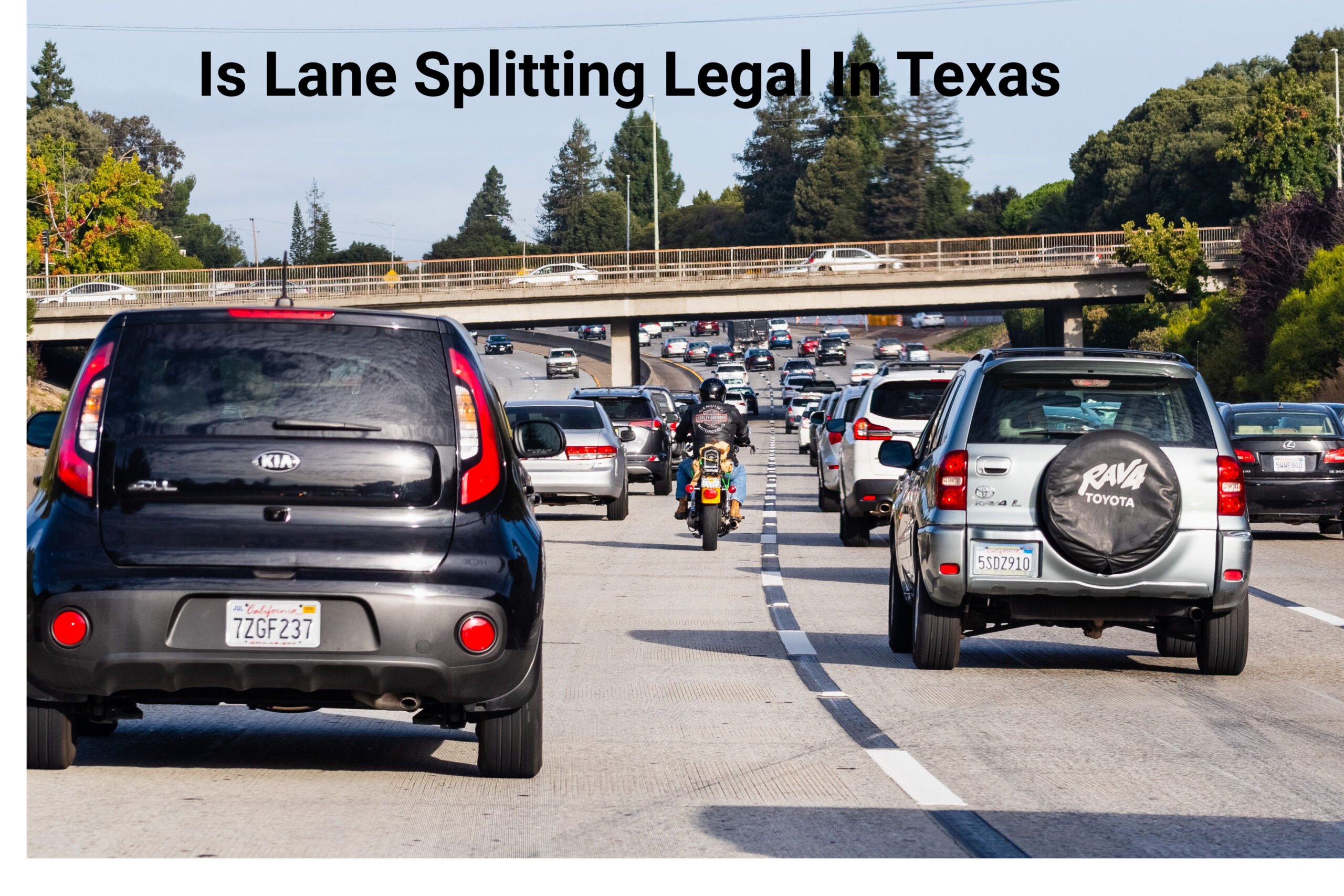
Before delving into the specifics of Texas law, it’s important to clarify what “lane splitting” entails and why it’s a topic of discussion. Motorcyclists often engage in lane splitting for various reasons, primarily to improve their efficiency and safety. In congested traffic, filtering between lanes can allow them to avoid being stuck in traffic jams, potentially reducing exposure to prolonged idling in extreme weather conditions and mitigating the risk of being rear-ended by inattentive drivers.
However, the practice is not without its risks. It requires a high degree of skill, constant vigilance, and the cooperation of other drivers. When undertaken in areas where it’s not explicitly permitted or understood, it can lead to dangerous situations. Drivers may not expect a motorcycle to be present between lanes, leading to sudden swerving or braking. Furthermore, road conditions, such as potholes or debris, can pose a significant hazard to a motorcyclist navigating tight spaces.
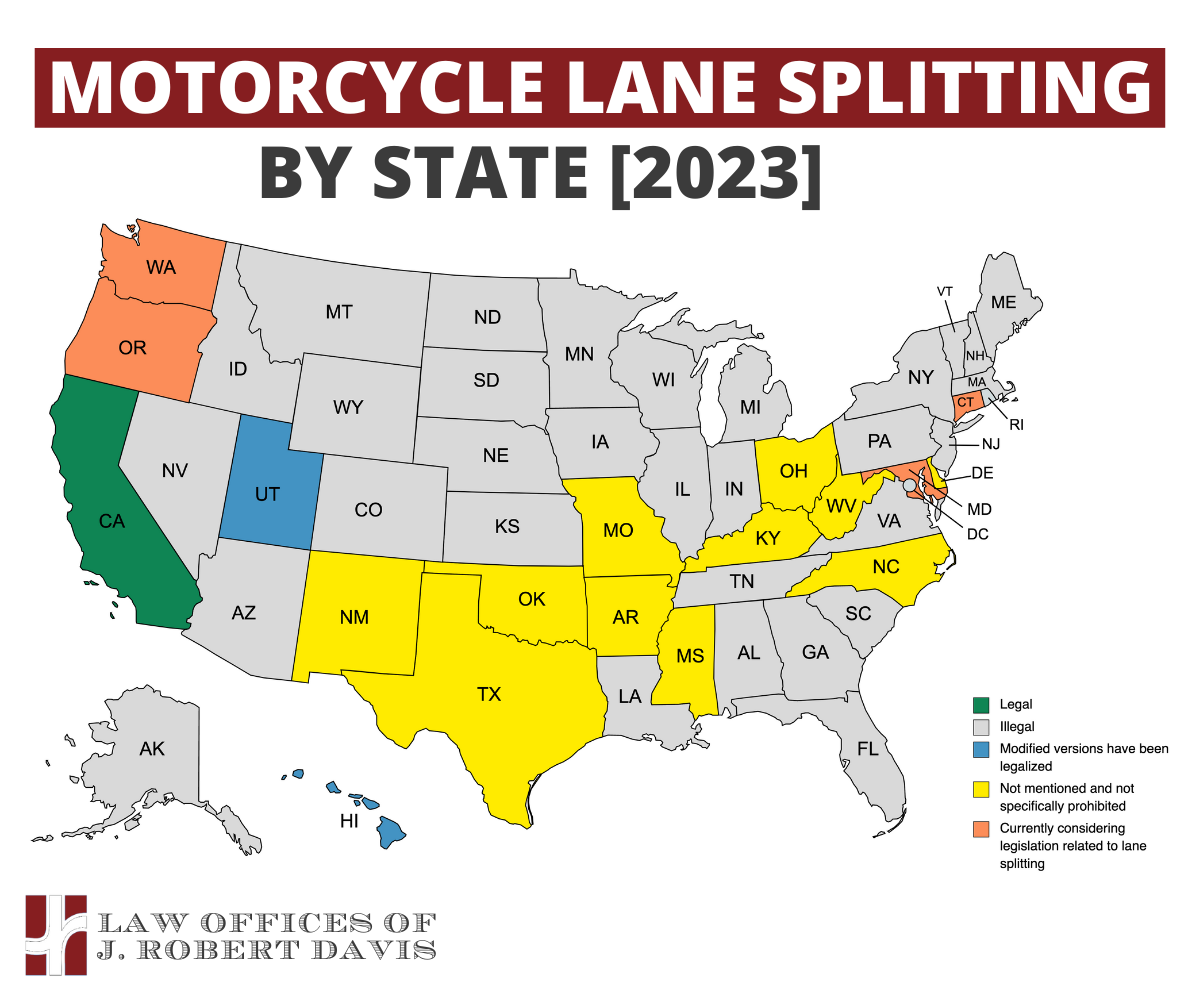
The legality of lane splitting varies dramatically from state to state in the United States. Some states, like California, have legalized lane splitting under specific conditions. Others have outright bans. Texas, however, has historically occupied a more ambiguous position, often leaving riders and law enforcement to interpret existing statutes. This ambiguity can be a source of concern for both riders and those who share the road with them.
Texas Transportation Code and Motorcycle Operations
To ascertain the legality of lane splitting in Texas, we must turn to the Texas Transportation Code. The code provides the framework for all traffic laws within the state, defining what is permissible and what constitutes an infraction. When it comes to motorcycles, the code outlines specific regulations concerning their operation, including rules about lane usage.
The critical section often discussed in relation to lane splitting is the rule regarding how vehicles should travel on roadways divided into two or more clearly marked lanes for travel in the same direction. Generally, vehicles are required to be driven as nearly as practicable entirely within a single lane and shall not be moved from such lane until the driver has first ascertained that such movement can be made with safety.
For motorcycles, this fundamental rule raises questions. Does “entirely within a single lane” strictly mean occupying only one marked lane, or does it allow for maneuvering between lanes? The interpretation of this language is where the nuance lies. Law enforcement and courts have historically interpreted these statutes, and without explicit prohibition or permission, the default stance can be that any action not expressly allowed is therefore not permitted.
However, the Texas Legislature has, on occasion, considered and debated measures to clarify or explicitly permit lane splitting under certain conditions. These discussions reflect a growing awareness of motorcycle rider safety concerns and the potential benefits of lane splitting in alleviating traffic congestion. While proposed legislation has not always succeeded, these debates signal an ongoing evolution in how the state views this particular riding technique.
When is Lane Splitting Generally Considered Illegal in Texas?
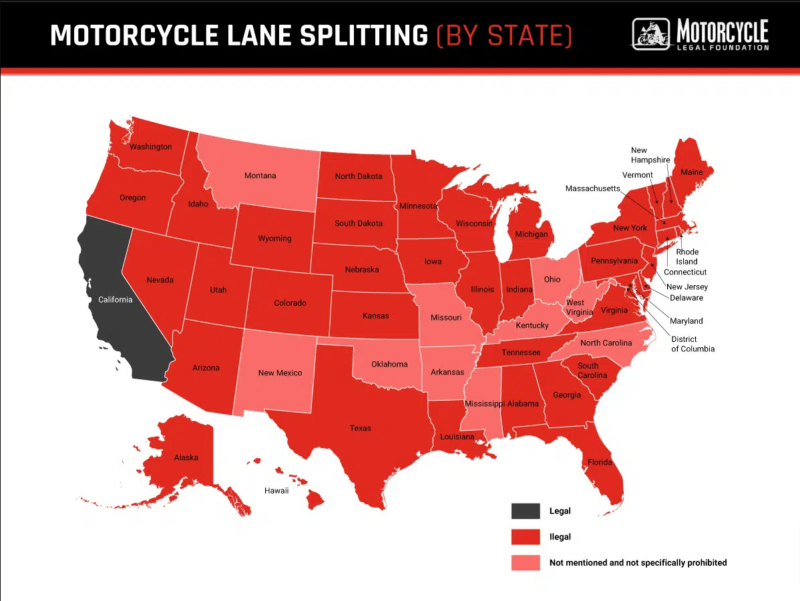
While there isn’t a single statute that explicitly states “lane splitting is illegal in Texas,” the absence of explicit permission, coupled with general traffic laws, often leads to the conclusion that it is not legally permissible for motorcycles to split lanes in the state.
The core of the legal interpretation often hinges on the requirement for vehicles to remain “entirely within a single lane.” For motorcyclists, operating between two lanes of traffic is inherently a maneuver that involves crossing lane lines and positioning the motorcycle in an area not designated as a full lane of travel. This can be construed as a violation of the principle of staying within a single lane.
Furthermore, Texas law, like most traffic laws, emphasizes safety. If lane splitting is deemed to create an unsafe condition – which it often can in the absence of clear understanding and mutual respect between riders and other motorists – it can be cited under broader reckless driving or unsafe operation statutes. This means that even if the act of passing between lanes isn’t specifically outlawed, the resulting unsafe behavior could lead to legal penalties.
Consider the context of a traffic stop. A law enforcement officer observing a motorcycle weaving between lanes of slow-moving or stopped traffic could issue a citation for various offenses, including failure to maintain a single lane, unsafe lane change, or even reckless driving, depending on the specific circumstances and the officer’s judgment.
The lack of explicit legalization also means that motorcyclists cannot assume it is safe or legal to split lanes in Texas. Unlike in states where it is permitted, drivers in Texas are generally not expecting motorcycles to maneuver between them. This lack of expectation can heighten the risk of accidents. A driver making a sudden lane change, opening a car door, or simply not seeing the motorcycle can have severe consequences.
Therefore, for riders visiting or residing in Texas, the safest and most legally prudent approach is to assume that lane splitting is not permitted. This conservative approach ensures adherence to the letter and spirit of the law, prioritizing safety for all road users and avoiding potential fines or legal issues.
Exploring Motorcycle Rider Safety and Traffic Laws in Texas
The broader topic of motorcycle rider safety in Texas is multifaceted, encompassing not only the legality of specific maneuvers like lane splitting but also a range of practices and considerations aimed at minimizing risks. Understanding these aspects is crucial for anyone who rides a motorcycle in the state, whether for leisure, commuting, or participating in organized events such as rallies in cities like Fort Worth.
Motorcycle safety is a shared responsibility. While riders are expected to operate their vehicles with skill and adhere to traffic laws, other drivers also play a vital role in ensuring a safe environment. This includes being extra vigilant for motorcycles, using turn signals, and maintaining a safe following distance. Awareness campaigns and educational initiatives are ongoing efforts in Texas to promote this understanding.
For those who are passionate about exploring the diverse attractions Texas has to offer, from the natural beauty of Big Bend National Park to the historic streets of San Antonio, safe motorcycle travel is paramount. This involves not only understanding traffic laws but also proper gear usage, rider training, and vehicle maintenance.
Beyond the question of lane splitting, Texas law addresses several other aspects relevant to motorcycle riders:
- Helmet Laws: Texas has a helmet law, but it allows for exemptions. Riders who are 21 years or older, have completed a motorcycle safety course, or are covered by a minimum of $10,000 in medical insurance can legally ride without a helmet. However, wearing a helmet is widely recognized as a critical safety measure, significantly reducing the risk of head injury in the event of a crash.
- Lane Usage: As mentioned, the general rule is to operate within a single lane. This applies to all vehicles, including motorcycles. This principle aims to prevent erratic maneuvers and maintain predictable traffic flow.
- Following Distance: Motorcyclists, like all drivers, are expected to maintain a safe following distance. However, due to a motorcycle’s smaller profile and potentially quicker stopping ability, this can sometimes be a point of emphasis.
- Visibility: Motorcyclists are encouraged to take steps to increase their visibility to other drivers, such as wearing brightly colored clothing and using headlights.
The tourism and lifestyle aspects of Texas also intersect with motorcycle riding. Many travelers choose Texas for its extensive road networks, offering opportunities for scenic drives through regions like the Texas Hill Country or along the Gulf Coast. For those seeking luxury travel experiences, discovering unique accommodations like boutique hotels in Austin or sprawling resorts near Galveston, a safe and legal approach to transportation is part of the overall journey. Similarly, budget travelers can enjoy the vastness of Texas by planning their routes and ensuring they are compliant with all traffic regulations.
Ultimately, the question of “Is Splitting Lanes Legal In Texas?” leans towards a “no” in practical terms, due to the lack of explicit authorization and the potential for it to be interpreted as a violation of existing traffic statutes. For both residents and visitors, prioritizing safety and adhering to established traffic laws is the most advisable course of action, ensuring a smooth and enjoyable experience navigating the diverse landscapes and vibrant cities of Texas.
LifeOutOfTheBox is a participant in the Amazon Services LLC Associates Program, an affiliate advertising program designed to provide a means for sites to earn advertising fees by advertising and linking to Amazon.com. Amazon, the Amazon logo, AmazonSupply, and the AmazonSupply logo are trademarks of Amazon.com, Inc. or its affiliates. As an Amazon Associate we earn affiliate commissions from qualifying purchases.