
For anyone dreaming of life in the Lone Star State, contemplating a move, or perhaps already enjoying the vibrant culture of cities like Austin, Dallas, Houston, or San Antonio, understanding local laws is as crucial as knowing the best barbecue joints or scenic routes for a Texas Hill Country road trip. One of the most significant legal frameworks, especially for couples, concerns marital property. When planning significant life events—be it purchasing a new home, investing in a vacation rental, or even embarking on a new business venture that demands extensive business stays—the question of how assets are owned and divided becomes paramount. So, let’s unpack a fundamental legal query that impacts countless Texans and those considering making Texas their home: is Texas a community property state? The short answer is unequivocally yes. But the implications of this status extend far beyond simple legal definitions, weaving into the very fabric of lifestyle choices, financial planning, and even how couples envision their shared future, especially when that future involves travel, investment in accommodation, and exploring new destinations.
Understanding Community Property in the Lone Star State
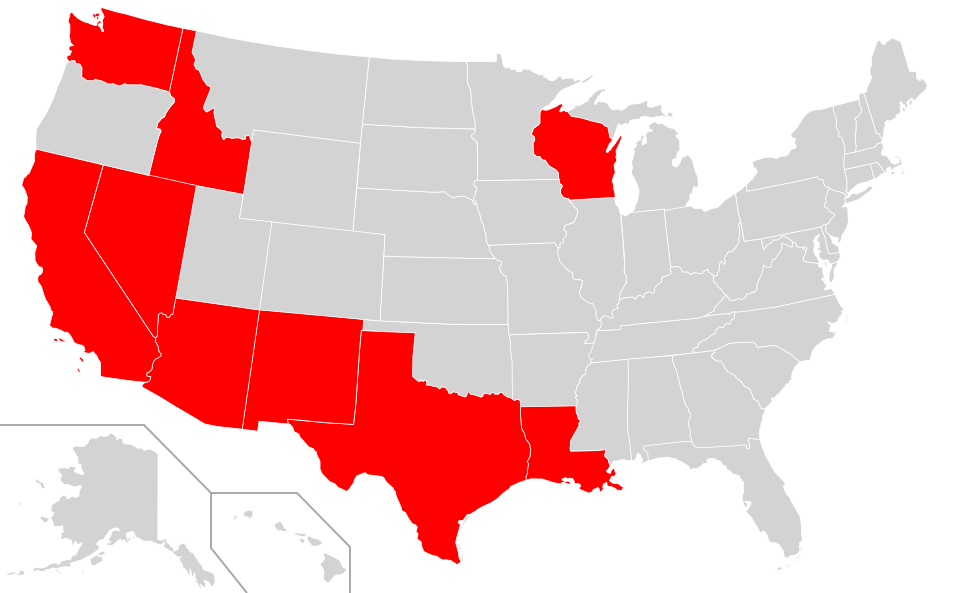
Texas stands as one of only nine states in the United States that adheres to community property laws, a system derived from Spanish civil law, distinguishing it significantly from the common law property systems prevalent in most other states like Florida or California (though California is also a community property state). This legal framework dictates how marital assets are owned and, crucially, how they are divided in the event of a divorce or the death of a spouse. For many, especially those who travel frequently or hold assets in various locations, understanding these nuances is essential for peace of mind and secure financial planning. It’s not just about splitting assets during separation; it influences everything from securing a mortgage for a dream home near a beloved landmark to establishing a legacy that includes shared travel experiences and properties.

What Exactly is Community Property?
At its core, community property refers to assets acquired by either spouse during their marriage. This includes, but is not limited to, income earned from employment, real estate purchased during the marriage (such as a primary residence or a beachfront villa for holidays), personal property like vehicles, furniture, and art, as well as retirement accounts and investment portfolios built up over the years. The foundational principle is that both spouses contribute equally to the marriage, whether financially or through other means, and therefore, all property acquired during that union is considered to be owned equally by both, regardless of whose name is on the title or who earned the income.
For a couple planning a future filled with luxury travel or investing in a boutique hotel in Marfa, understanding that this property is jointly owned from the moment of acquisition is critical. It means that decisions regarding these assets often require mutual consent, and in the absence of a prenuptial or postnuptial agreement, these assets would be subject to a 50/50 division in a divorce. This is a stark contrast to common law states, where property is typically owned by the spouse who purchased it or whose name is on the title.

Separate Property: What Stays Yours?
While the concept of community property covers a vast array of assets, Texas law also distinctly defines “separate property.” This category includes assets owned by a spouse before the marriage, as well as property acquired during the marriage by gift or inheritance. For instance, if one spouse inherits a family cabin in the Rocky Mountains or receives a generous monetary gift from a relative, that asset typically remains their separate property, even during the marriage. Additionally, any recovery for personal injuries (excluding loss of earning capacity) also falls under separate property.
Maintaining the distinction between separate and community property can be vital, especially for individuals with significant pre-marital assets or those who anticipate future inheritances. It becomes particularly important for travelers who might own property overseas or have investments that predated their marriage. Documenting the separate nature of these assets through meticulous record-keeping and potentially through legal agreements is a strategic move to protect individual interests, ensuring that a beloved family heirloom or a solo adventure travel fund remains independent of the marital estate.
Navigating Marital Assets and Lifestyle Choices
The community property framework in Texas profoundly influences the financial and lifestyle decisions of married couples. From determining how to finance a dream honeymoon at a five-star resort to planning for long-term investments in real estate or travel-related businesses, understanding this legal structure is paramount. It encourages a collaborative approach to financial management, as most significant acquisitions and debts undertaken during the marriage are considered joint.
Impact on Travel Planning and Vacation Homes
For couples who cherish travel, the implications of community property extend to every aspect of their adventurous life. When you book that luxurious hotel suite for an anniversary getaway or invest in a timeshare in a popular tourist destination, the funds used and the asset acquired are generally part of the community estate. This shared ownership fosters a sense of joint investment in experiences and assets.
Consider the increasing trend of couples purchasing vacation homes, whether a cozy apartment in South Padre Island, a mountain cabin for family trips, or even a charming villa in Europe. In a community property state like Texas, such properties, if acquired during the marriage, are automatically classified as community property, regardless of which spouse’s name appears on the deed. This has significant ramifications for financing, maintenance, and future decisions regarding the property, including its potential sale or inheritance. Couples need to approach these investments with a clear understanding that they are shared assets, requiring mutual agreement on management and disposition. This often involves joint accounts for mortgage payments and upkeep, further solidifying the shared financial journey inherent in community property.
Investing in Hospitality and Accommodation
Beyond personal vacation properties, community property laws also influence entrepreneurial ventures within the hospitality sector. Imagine a married couple in Texas deciding to invest in a small bed and breakfast or a fleet of rental properties designed for long-term stays near a growing Texas attraction. The capital invested, the income generated, and the property itself would largely be considered community property. This means that both spouses have an ownership interest and a say in the business’s operations and future.
For couples engaging in such ventures, clear communication and a shared vision are essential. While community property implies equal ownership, practical business operations might benefit from specific agreements about management roles, profit distribution, and decision-making authority. This legal framework, while promoting equality, also underscores the importance of strong partnership—both marital and business—when pursuing shared financial goals in fields like hotel ownership, tourism development, or accommodation management. Whether it’s a boutique hotel in Fredericksburg or a series of glamping sites near Big Bend National Park, the legal foundation of community property will dictate its ultimate ownership structure within the marriage.
Estate Planning and the Future of Your Legacy
The implications of Texas’ community property laws extend significantly into estate planning, a critical aspect of securing one’s legacy and ensuring that assets are distributed according to one’s wishes. For couples who have built a life together, filled with shared travels and joint investments, understanding how these laws affect their estate is vital for protecting their loved ones and their hard-earned assets.
Protecting Your Travel Investments and Shared Dreams
When it comes to estate planning in a community property state, careful consideration must be given to wills, trusts, and other legal instruments. Unlike separate property, which a spouse can generally bequeath entirely as they wish, community property presents a different scenario. Upon the death of a spouse, the deceased’s share of the community property passes according to their will. If there is no will, Texas intestacy laws will dictate how the property is distributed, often leading to a portion of the community property passing to the surviving spouse and other portions potentially to children or other heirs, depending on the specifics. This means that if a couple owns a beloved vacation retreat or shares a portfolio of luxury travel assets, careful planning is required to ensure these cherished possessions are handled in a way that respects both spouses’ intentions.
Many couples find prenuptial agreements or postnuptial agreements to be valuable tools in this regard. These legal documents can specify how assets, particularly those acquired before marriage or expected inheritances, should be treated, potentially converting community property into separate property or vice versa. For instance, a couple could agree that a condo purchased during the marriage with community funds, but intended solely as a retirement haven for one spouse, should be treated as separate property upon divorce or death. Such agreements can provide clarity and peace of mind, allowing couples to tailor their financial arrangements to their unique lifestyle and travel goals, whether it’s planning for a global retirement or ensuring specific assets are preserved for future generations to enjoy through family trips.
Relocation and the Global Traveler: A Community Property Perspective
For globetrotters, expatriates, and individuals contemplating a move to or from Texas, the state’s community property laws introduce an additional layer of complexity, particularly concerning assets acquired in different jurisdictions. The mobile lifestyle often entails acquiring property, making investments, and accumulating wealth across various states or even countries, each with its own set of marital property laws.
Consider a couple who spent years living in a common law state like New York where they purchased investment properties and built significant savings. If they then relocate to Texas, their marital assets, though acquired in a common law state, do not automatically become community property. Texas law recognizes what is known as “quasi-community property,” which are assets acquired by either spouse in another state that would have been community property if acquired in Texas. While this distinction primarily applies in the context of divorce or death within Texas, it highlights the complexities involved for those with a transient lifestyle.
Conversely, a couple moving from Texas to a common law state will find that their Texas community property generally retains its character as jointly owned, even after the move. However, the new state’s laws might govern how such property is managed, transferred, or divided within that new jurisdiction. This cross-jurisdictional aspect makes legal consultation essential for anyone undergoing significant relocation, particularly those with substantial assets or complex financial portfolios that include international properties, diverse investments, or ownership stakes in global hospitality ventures. Understanding how the legal landscape shifts with geographical changes is crucial for maintaining financial stability and realizing long-term lifestyle aspirations, whether those aspirations involve settling down in a historic home in Europe or continuing a life of budget travel with shared assets.
In conclusion, Texas is indeed a community property state, a fact that permeates various aspects of married life, from daily financial decisions to long-term estate planning. For residents and prospective residents, especially those with an active travel and lifestyle outlook, grasping these laws is not merely a legal formality but a fundamental component of well-being and planning. It encourages transparency, cooperation, and strategic foresight in managing shared assets, ultimately allowing couples to confidently pursue their dreams, whether they involve investing in a charming bed and breakfast in the Texas Hill Country or embarking on a lifetime of shared global adventures.
LifeOutOfTheBox is a participant in the Amazon Services LLC Associates Program, an affiliate advertising program designed to provide a means for sites to earn advertising fees by advertising and linking to Amazon.com. Amazon, the Amazon logo, AmazonSupply, and the AmazonSupply logo are trademarks of Amazon.com, Inc. or its affiliates. As an Amazon Associate we earn affiliate commissions from qualifying purchases.