
Travelers contemplating a summer escape to the American Southwest often find themselves wrestling with a seemingly simple question that belies a complex climatic reality: Is Texas hotter than Arizona? While both states are synonymous with scorching temperatures, especially during the peak summer months, the answer is far from a straightforward “yes” or “no.” The perception of heat, influenced by factors like humidity, elevation, and geographic diversity, plays a crucial role in how intensely one experiences the summer sun in these vast and varied landscapes. Understanding these nuances is key to planning an enjoyable and safe trip, whether you’re seeking vibrant city life, serene desert vistas, or a taste of authentic Southern culture.

Understanding the Climates: A Tale of Two Deserts (and More)
To truly gauge the “hotness” of Texas versus Arizona, one must first appreciate the distinct meteorological characteristics of each state. Both are expansive, but their dominant climate drivers create vastly different thermal experiences.
Texas’ Diverse Geography and Climate Zones
Texas is a behemoth, encompassing over 268,000 square miles, which contributes to its remarkably diverse climate zones. From its humid subtropical eastern reaches to its arid western deserts, the state offers a mosaic of weather patterns.
- East and Southeast Texas, home to cities like Houston and parts of Dallas, experiences hot, extremely humid summers. The Gulf of Mexico heavily influences this region, bringing abundant moisture that makes even moderate temperatures feel stifling. The heat index, which combines air temperature and relative humidity, often pushes perceived temperatures well into the triple digits, making outdoor activities challenging.
- Central Texas, including the capital Austin and San Antonio, shares this humid-subtropical characteristic, though slightly less intensely than coastal areas. Summers here are long, with average highs frequently exceeding 95°F (35°C), accompanied by significant humidity.
- South Texas, particularly the Rio Grande Valley, enjoys a near-tropical climate, boasting some of the warmest average winter temperatures in the continental U.S. However, its summers are relentlessly hot and humid, enduring for many months.
- West Texas, stretching into the Chihuahuan Desert, contrasts sharply with the humid east. Cities like El Paso experience an arid to semi-arid climate, characterized by higher daytime temperatures but lower humidity. This dry heat means larger diurnal temperature swings, with often significantly cooler nights, a welcome respite missing in much of the rest of Texas.
Arizona’s Arid Dominance and Elevation Play
Arizona, while also diverse, is predominantly defined by its desert landscapes, primarily the Sonoran Desert and, in its northwest corner, the Mojave Desert. This prevalence of arid land leads to a distinctly different type of heat experience.
- Low Desert Regions: The major metropolitan areas of Phoenix and Tucson lie in the low Sonoran Desert. Here, summer temperatures routinely soar above 100°F (38°C), often reaching 110°F (43°C) or higher. Yuma, near the California border, is consistently one of the hottest cities in the world. The defining characteristic is the dry heat. While the absolute temperatures are often higher than in Texas, the low humidity allows sweat to evaporate more efficiently, making the heat feel less oppressive to some individuals.
- High Elevation Areas: Arizona’s mountainous regions offer a stark climatic contrast. Flagstaff, for example, sits at an elevation of nearly 7,000 feet (2,100 meters) and experiences four distinct seasons, with mild summers and significant snowfall in winter. Even the Grand Canyon sees much cooler temperatures at its rim than in the valley floor. This elevation gradient provides critical relief from the desert heat, allowing for year-round outdoor recreation at various altitudes.
- Monsoon Season: From July to September, Arizona experiences its monsoon season. While not as humid as the Gulf Coast, this period brings increased moisture, dramatic thunderstorms, and flash flooding, briefly altering the typical dry heat experience.
Peak Summer Temperatures: A Direct Comparison for Travelers
When comparing peak summer heat, the distinction between absolute temperature and perceived heat becomes paramount for travelers.
Record Highs and Averages: Where the Thermometer Soars
In terms of pure numerical readings, Arizona’s low desert cities tend to record higher average daily maximums and more extreme record highs during summer. Phoenix frequently sees extended streaks of days above 110°F (43°C). Texas cities like Dallas and Houston will often reach 100°F (38°C), but rarely sustain the extreme 115°F+ (46°C+) temperatures that are not uncommon in parts of Arizona. El Paso in West Texas provides a closer comparison to Arizona’s dry heat, with high temperatures but lower humidity than its eastern counterparts.
The Humidity Factor: How “Hot” Feels Different
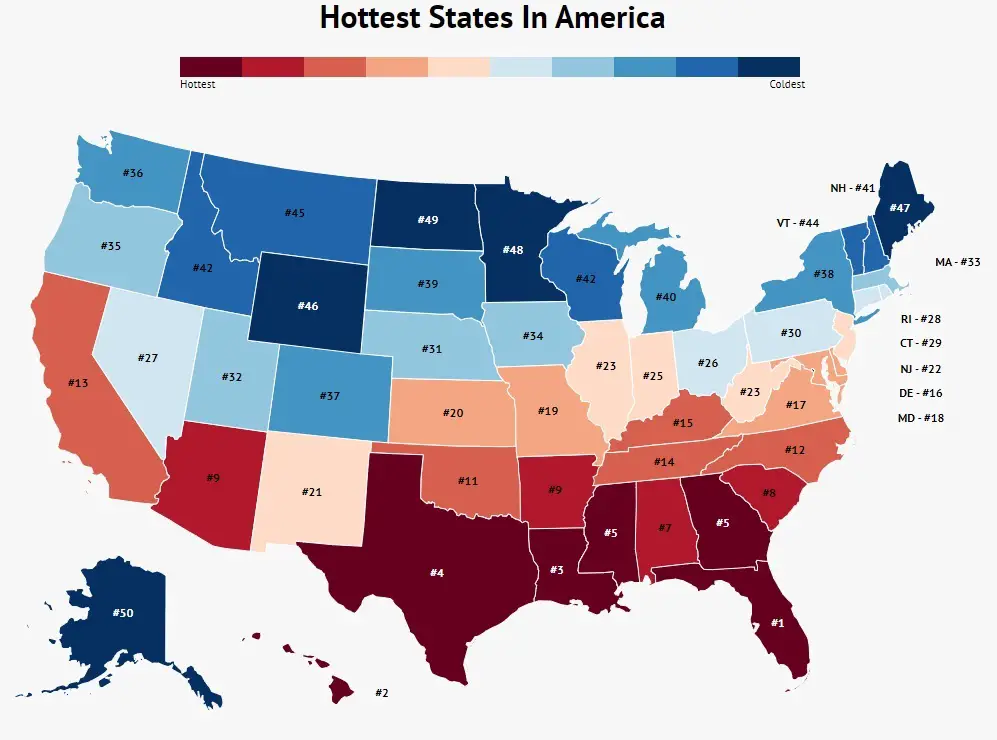
This is where the debate truly gets interesting. While Arizona often boasts higher actual temperatures, many argue that Texas’s heat feels more oppressive and dangerous due to humidity. The human body cools itself primarily through the evaporation of sweat. In Arizona’s dry heat, sweat evaporates quickly, providing an efficient cooling mechanism. In Texas, the high humidity already saturates the air with moisture, severely inhibiting sweat evaporation. This makes 95°F (35°C) in Houston feel far more suffocating than 105°F (41°C) in Phoenix, especially for those unaccustomed to such conditions. The heat index in Texas often adds 10-20 degrees to the actual air temperature, creating a dangerous combination that can quickly lead to heat exhaustion or stroke.
Travel Considerations: Navigating the Heat in Each State
For travelers, understanding these climatic differences is crucial for planning activities, packing appropriately, and ensuring comfort and safety.
Adapting to Arizona’s Intense Dry Heat
Traveling to Arizona during summer requires strategic planning, but it’s far from impossible.
- Best Times to Visit: Spring (March-May) and Fall (September-November) offer the most pleasant temperatures, ideal for hiking, exploring national parks like the Grand Canyon, and enjoying outdoor patios.
- Summer Activities: If you must visit in summer, plan outdoor activities for very early mornings (sunrise hikes) or evenings. Midday is best spent indoors in air-conditioned museums, shopping centers, or by a pool. Many resorts in Scottsdale and Phoenix cater specifically to summer guests with elaborate pool areas and cooling misters. Water-based recreation on lakes and rivers is also popular.
- Health and Safety: Hydration is paramount. Drink more water than you think you need, even if you don’t feel thirsty. Wear wide-brimmed hats, sunglasses, and light-colored, loose-fitting clothing. Sunscreen is non-negotiable. Always be aware of signs of heat exhaustion.
Conquering the Texas Humidity
Navigating Texas’s humid summer requires a different approach, focusing more on staying cool and dry.
- Best Times to Visit: Similar to Arizona, Spring (March-May) and Fall (September-November) are ideal. Winters are generally mild and pleasant, especially in South Texas.
- Summer Activities: Outdoor activities during the peak afternoon in eastern Texas are generally not recommended for extended periods. Focus on indoor attractions such as museums, aquariums, art galleries, and restaurants. The San Antonio River Walk offers a slightly cooler, shaded environment. Coastal cities like Galveston provide beach access, but the water temperatures are warm, and the humidity persists. Water parks and public pools are popular havens.
- Health and Safety: Due to the high humidity, your body’s natural cooling system is less effective. Take frequent breaks in air conditioning, stay hydrated, and wear moisture-wicking fabrics. Be mindful of heat advisories and warnings.
Beyond Summer: Year-Round Climates and Travel Opportunities
While the summer months present distinct challenges in both states, their shoulder seasons and winters offer fantastic opportunities for travelers.
Winter Warmth: Escaping the Cold
Both Texas and Arizona serve as popular destinations for “snowbirds” fleeing colder northern climates.
- Arizona’s Deserts: The low desert regions of Arizona (Phoenix, Tucson) experience wonderfully mild, sunny, and dry winters, with average daytime temperatures in the 60s and 70s°F (15-25°C). This is prime time for golf, hiking, and enjoying outdoor festivals.
- Texas’s Mild Side: Much of Texas also enjoys mild winters, particularly South Texas and the Gulf Coast, where temperatures rarely dip below freezing. While not as consistently sunny as Arizona’s deserts, it’s a pleasant escape from snow and ice, offering comfortable conditions for exploring cities and natural areas.

Spring and Fall: The Sweet Spots for Exploration
These transitional seasons are arguably the best times to visit either state, offering a balance of comfortable temperatures and fewer crowds.
- Texas: Spring brings breathtaking wildflowers, especially in the Texas Hill Country, and comfortable weather for exploring cities and historical sites before the intense summer humidity sets in. Fall offers crisp air, football season, and pleasant conditions for outdoor recreation.
- Arizona: Spring and Fall in Arizona are perfect for hiking and exploring the state’s iconic landscapes, from the red rocks of Sedona to the majesty of the Grand Canyon. The temperatures are warm but tolerable, making it ideal for adventure travel.
In conclusion, while Arizona often registers higher absolute temperatures in its desert expanses during summer, Texas’s pervasive humidity makes its heat feel more oppressive and physically taxing for many. The “hotter” state ultimately depends on whether you’re measuring by the thermometer’s mercury or your body’s perceived discomfort. Both states are undeniably hot in summer, but they offer distinct climatic experiences that savvy travelers can navigate successfully by choosing the right season and planning activities thoughtfully.
LifeOutOfTheBox is a participant in the Amazon Services LLC Associates Program, an affiliate advertising program designed to provide a means for sites to earn advertising fees by advertising and linking to Amazon.com. Amazon, the Amazon logo, AmazonSupply, and the AmazonSupply logo are trademarks of Amazon.com, Inc. or its affiliates. As an Amazon Associate we earn affiliate commissions from qualifying purchases.