
Navigating the intricate dance of global finance often hinges on understanding the operational rhythms of its most prominent exchanges. For many, the New York Stock Market is the undisputed epicenter of this activity, a barometer of economic health and a vibrant hub for investors worldwide. However, like any major institution, its doors are not perpetually open. For those planning to engage with the market, be it for investment, analysis, or simply to witness its bustling energy, knowing its operating schedule is paramount. This guide delves into the opening hours of the New York Stock Market and the factors that determine its accessibility, ensuring your financial endeavors align seamlessly with market operations.

Understanding the NYSE and Nasdaq Schedules
The New York Stock Market, more formally known as the New York Stock Exchange (NYSE), and its equally significant counterpart, the Nasdaq, operate on standardized schedules, but with specific nuances that can affect trading days. Understanding these core schedules is the first step in determining when the market will be open for business.
Standard Trading Hours
Both the New York Stock Exchange and the Nasdaq observe the same standard trading hours. These hours are designed to maximize participation from both domestic and international investors, striking a balance that accommodates various time zones.
- Opening Bell: The trading day officially commences at 9:30 AM Eastern Time (ET). This is when the first trades are executed, and the market’s direction for the day often begins to take shape. The iconic opening bell ceremony, though often televised, signifies the start of active trading.
- Closing Bell: The trading session concludes at 4:00 PM Eastern Time (ET). This closing time is crucial for end-of-day portfolio adjustments and for investors looking to place orders before the market pauses. The closing bell marks the end of the continuous trading period.
These hours are consistent throughout the standard trading week, from Monday to Friday. However, the question of whether the market is open “tomorrow” inherently brings into consideration weekends and holidays, which are the primary determinants of non-operational days.
Pre-Market and After-Hours Trading
It’s important to note that while the primary continuous trading session ends at 4:00 PM ET, trading activity doesn’t entirely cease. Both the NYSE and Nasdaq offer pre-market and after-hours trading sessions.
- Pre-Market Trading: This typically begins as early as 4:00 AM ET and extends until the market opens at 9:30 AM ET. It allows for trading based on overnight news, corporate announcements, and global market movements.
- After-Hours Trading: This session usually runs from 4:00 PM ET to 8:00 PM ET. It provides an opportunity for investors to react to news that emerges after the main session has closed.
While these extended sessions offer flexibility, they are not the primary focus for most retail investors and often experience lower liquidity and wider price swings compared to regular trading hours. When discussing whether the market is “open,” it generally refers to the standard 9:30 AM to 4:00 PM ET session.
Weekends and Holidays: When the Market Takes a Break
The most common reasons for the New York Stock Market to be closed are weekends and official holidays. Understanding these closures is fundamental to planning your trading activities.
Weekend Closures
The New York Stock Exchange and the Nasdaq are closed on Saturdays and Sundays. This is a universal practice across major global stock exchanges, providing a necessary period of rest and allowing for the processing of trades executed during the week.
Official Stock Market Holidays
In addition to weekends, both exchanges observe a set of official holidays. These holidays are generally aligned with federal holidays in the United States. The most common holidays that result in market closures include:
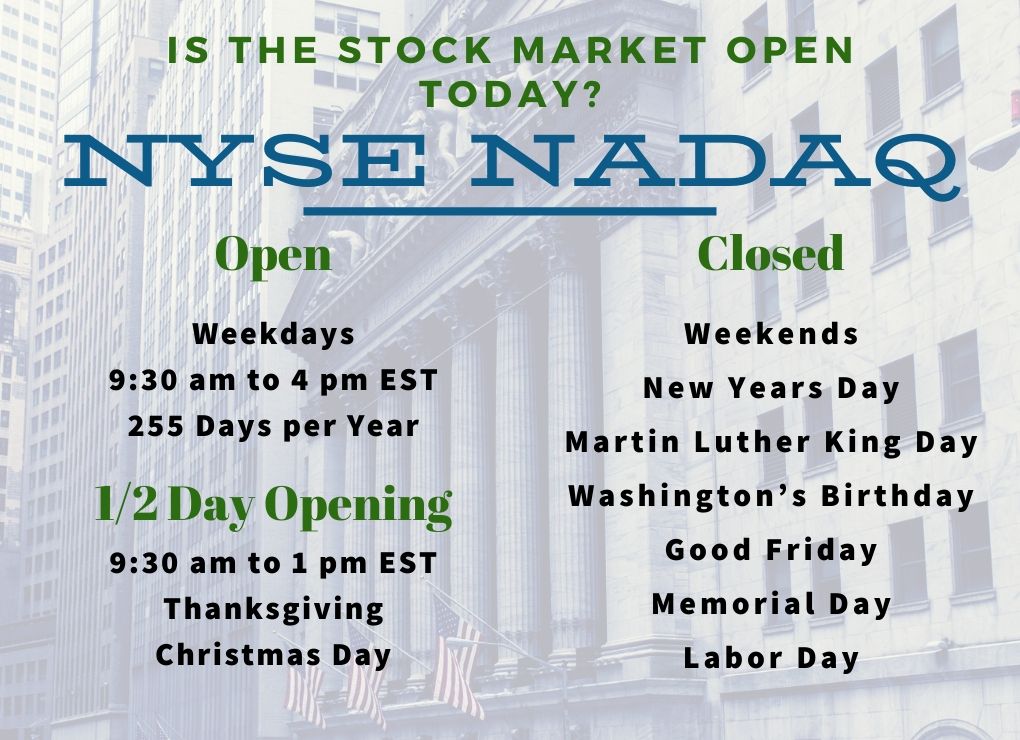
- New Year’s Day: January 1st. If January 1st falls on a Saturday, the preceding Friday (December 31st) will be observed as the holiday. If it falls on a Sunday, the following Monday (January 2nd) will be observed.
- Martin Luther King, Jr. Day: The third Monday in January.
- Presidents’ Day: The third Monday in February.
- Good Friday: The Friday preceding Easter Sunday. This date varies each year.
- Memorial Day: The last Monday in May.
- Juneteenth National Independence Day: June 19th. If June 19th falls on a Saturday, the preceding Friday will be observed. If it falls on a Sunday, the following Monday will be observed.
- Independence Day: July 4th. Similar to New Year’s Day, the observance is shifted if July 4th falls on a weekend.
- Labor Day: The first Monday in September.
- Thanksgiving Day: The fourth Thursday in November.
- Christmas Day: December 25th. Observance rules similar to New Year’s Day apply if December 25th falls on a weekend.
It is crucial to check a reliable financial calendar or the official websites of the New York Stock Exchange or Nasdaq for the most up-to-date information on holiday schedules, as there can occasionally be special circumstances or early closings announced.
Early Closings
On occasion, the market may close early. These are typically scheduled events, often occurring on the day after Thanksgiving Day (sometimes referred to as “Black Friday”). This early closing, usually at 1:00 PM ET, is a long-standing tradition and allows for a prolonged holiday weekend for market participants. It is important to be aware of these specific dates as they can catch the unprepared investor off guard.
Navigating Unusual Market Closures
While standard weekends and holidays are predictable, there are rarer instances where the market might close due to unforeseen circumstances. These events, though infrequent, underscore the importance of staying informed.
Unexpected Disruptions
Major events such as severe weather, natural disasters, or significant national emergencies could potentially lead to the closure of the stock markets. These decisions are made to ensure the safety of market personnel and to prevent trading disruptions during times of widespread crisis. In such scenarios, official announcements are made by the exchanges and widely disseminated through financial news outlets.
Other Potential Closures
In addition to the aforementioned, there might be other less common reasons for closure. For example, the NYSE and Nasdaq have, in the past, closed in observance of days of national mourning or remembrance. These are typically announced well in advance, allowing ample time for market participants to adjust.
Planning Your Trading Strategy Around Market Hours
Understanding the operational schedule of the New York Stock Market is not merely an academic exercise; it directly impacts trading strategies and investment decisions. Proactive planning ensures that you can capitalize on opportunities and avoid potential pitfalls.
Strategic Timing of Trades
For active traders, the opening and closing hours are often the most volatile periods. The opening can reflect overnight sentiment, while the closing can be influenced by portfolio rebalancing and the rush to lock in profits or cut losses. Knowing when these periods occur allows traders to position themselves accordingly, whether to enter or exit positions or to simply observe the market’s initial and final movements.
Impact on Investment Decisions
For long-term investors, the daily schedule might seem less critical. However, understanding market holidays is still important, especially when it comes to managing expectations around earnings reports or economic data releases. If a significant economic indicator is released on a market holiday, its impact might be delayed until the market reopens, potentially leading to a gap in opening prices.

Accessing Real-Time Information
In an increasingly interconnected financial world, staying informed is key. Many financial news websites and brokerage platforms provide real-time updates on market status, including upcoming closures and holiday schedules. It is advisable to bookmark these resources or set up alerts to receive timely notifications, especially when crucial trading days are approaching. The official websites of the New York Stock Exchange and the Nasdaq remain the definitive source for the most accurate and up-to-date information regarding their operating hours and holiday schedules.
In conclusion, whether the New York Stock Market is open tomorrow is a question that requires a comprehensive understanding of its standard trading hours, weekend closures, and official holidays. By staying informed and planning accordingly, investors can navigate the financial landscape with greater confidence and efficiency.
LifeOutOfTheBox is a participant in the Amazon Services LLC Associates Program, an affiliate advertising program designed to provide a means for sites to earn advertising fees by advertising and linking to Amazon.com. Amazon, the Amazon logo, AmazonSupply, and the AmazonSupply logo are trademarks of Amazon.com, Inc. or its affiliates. As an Amazon Associate we earn affiliate commissions from qualifying purchases.