
Understanding the Political Status of Puerto Rico
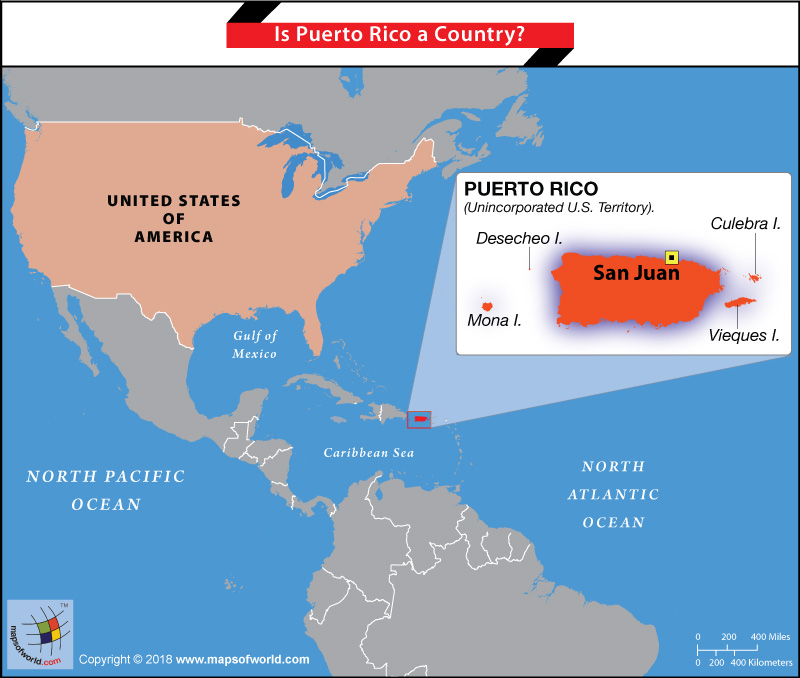
The question of whether Puerto Rico is a part of the United States is more nuanced than a simple yes or no. While it is an unincorporated territory of the U.S., its relationship with the mainland is unique and has been a subject of debate and political discussion for decades. Understanding this status is crucial for travelers, potential residents, and anyone interested in the geography and political landscape of the Caribbean.
Historical Context and the Insular Cases
The current political status of Puerto Rico can be traced back to the Spanish-American War of 1898, which resulted in Spain ceding Puerto Rico, along with Cuba and Guam, to the United States. Following this, the U.S. Congress enacted legislation to govern the newly acquired territories. The key legal framework defining the relationship between the United States and its territories, including Puerto Rico, emerged from a series of Supreme Court decisions in the early 20th century known as the “Insular Cases.”

These cases established the doctrine of “unincorporated territories.” This means that Puerto Rico, like Guam, the U.S. Virgin Islands, and the Northern Mariana Islands, belongs to the United States but is not considered an integral part of it. Consequently, the U.S. Constitution does not automatically apply in its entirety to these territories; rather, Congress has the power to decide which parts of the Constitution do apply.
Rights and Responsibilities of Puerto Rican Residents
Residents of Puerto Rico are U.S. citizens by birth since the passage of the Jones-Shafroth Act in 1917. This grants them the right to live, work, and travel freely within the United States without needing passports or visas. They can also serve in the U.S. military.
However, there are significant differences in rights and representation compared to citizens residing in U.S. states. Puerto Rican residents do not have voting representation in the U.S. Congress; they elect a single Resident Commissioner who can speak and vote in committees but not on the House floor. Furthermore, while they pay federal taxes like Medicare and Social Security, they generally do not pay federal income tax on income earned within Puerto Rico. This is a complex area, as certain federal taxes do apply, and the tax structure has been a point of contention.
Governance and Self-Determination
Puerto Rico has its own constitution and government, with a governor, a legislature, and a judicial system that are separate from the U.S. federal government, though ultimately subordinate to it. The island’s political status has been a recurring issue, with various plebiscites and debates over potential statehood, independence, or maintaining the current territorial status.
The dominant political parties in Puerto Rico represent different viewpoints on this issue. The Popular Democratic Party (PPD) historically favored enhancing the island’s autonomy within the territorial framework or pursuing a “free associated state” status, while the New Progressive Party (NPP) advocates for statehood, aiming to achieve full equality of rights and representation as the 51st state. A smaller movement supports full independence.
The U.S. Congress holds the ultimate authority to grant statehood or approve any changes to Puerto Rico’s political status. Without Congressional action, the island remains an unincorporated territory. This ongoing political uncertainty impacts economic development, federal funding, and the aspirations of its citizens.
Navigating Puerto Rico as a Traveler
For travelers, understanding Puerto Rico’s political status simplifies many practical aspects of a visit. As a U.S. territory, it operates largely within U.S. legal and economic frameworks.
Entry Requirements and Currency
Because Puerto Rico is a U.S. territory, U.S. citizens do not need a passport to travel to the island from the mainland United States. Standard forms of identification, such as a driver’s license, are sufficient. This makes spontaneous trips and last-minute bookings considerably easier. International travelers arriving directly from foreign countries into Puerto Rico would still need to adhere to U.S. immigration and customs regulations.
The currency used in Puerto Rico is the U.S. dollar, the same as in the mainland United States. This eliminates the need for currency exchange, simplifying financial transactions for visitors. Credit cards and ATMs are widely accepted, particularly in tourist areas and major cities like San Juan.
Communication and Connectivity
Cell phone service and internet connectivity in Puerto Rico generally work seamlessly for those traveling from the mainland United States. Most U.S. mobile carriers offer service on the island with no additional roaming charges, as it is considered domestic territory. Wi-Fi is readily available in hotels, restaurants, and public spaces, particularly in urban centers.
Legal Framework and Safety
The legal system in Accommodations and Transportation
A wide array of accommodations is available, ranging from luxury resorts and boutique hotels in cities like San Juan and Ponce to charming guesthouses and vacation rentals in more remote areas. Renowned establishments such as the Condado Vanderbilt Hotel and the >>-rico/vieques”>Vieques and Fajardo. Ferry services also connect the main island to the smaller islands of Vieques and Cultural and Economic Implications of its Status
The unincorporated territory status of Puerto Rico profoundly impacts its economy and culture, creating both unique opportunities and significant challenges. Puerto Rico’s economy is deeply intertwined with that of the United States. While it benefits from access to the U.S. market and federal programs, it also faces limitations. The island’s economy has historically relied on manufacturing, pharmaceuticals, and tourism. However, it has also experienced economic downturns, including a significant debt crisis, which led to the establishment of an oversight board by the U.S. Congress, the Puerto Rico Oversight, Management, and Economic Stability Act (PROMESA). Federal policies and funding play a crucial role in Puerto Rico’s development. However, the island often receives less federal funding per capita than U.S. states for programs like Medicaid and infrastructure projects. This disparity is a direct consequence of its territorial status and a frequent point of contention in debates about equality and fairness. Despite its political ties to the United States, Puerto Rico maintains a rich and distinct cultural identity. Spanish is the primary language, though English is widely spoken, especially in tourist areas and among those who have lived or worked in the mainland United States. This bilingualism reflects the island’s historical evolution and its current geopolitical position. The vibrant culture is evident in its music, dance, cuisine, and art. From the infectious rhythms of The question of Puerto Rico’s political status remains unresolved and continues to shape the island’s future. Plebiscites have been held, with varying levels of participation and outcomes, but none have resulted in a definitive change mandated by the U.S. Congress. The aspirations of the Puerto Rican people for greater self-determination or full integration as a state are a constant undercurrent in the island’s political discourse. For travelers, this ongoing debate does not typically impact the experience of visiting. However, understanding the complexities of Puerto Rico’s relationship with the United States provides a deeper appreciation for the island’s history, culture, and the aspirations of its people. It allows for a more informed and empathetic engagement with this fascinating Caribbean destination. The island is a U.S. territory, intricately linked to the mainland, yet fiercely proud of its distinct identity and heritage.Economic Landscape and U.S. Federal Influence
Cultural Identity and Bilingualism
The Ongoing Debate on Status