
The question of whether the Texas State Guard is a “joke” is a provocative one, often stemming from a misunderstanding of its unique mission and operational scope. Unlike the federalized National Guard, which serves as a reserve component of the U.S. Army and U.S. Air Force, the Texas State Guard operates solely under the authority of the Governor of Texas. This fundamental distinction shapes its capabilities, responsibilities, and public perception. To truly assess its role, we must delve into its history, its present-day functions, and the value it brings to the Lone Star State, rather than dismissing it through a superficial lens.

A Legacy of Service: The Historical Context
The genesis of the Texas State Guard can be traced back to periods of national emergency and a need for localized defense. Its predecessors, such as the Texas Rangers and various state militias, have a long and storied history, dating back to the Republic of Texas. These formations were crucial for maintaining order, defending frontiers, and supporting Texan independence.
Evolution of State-Level Defense
Over time, as the federal military structure evolved, the need for a dedicated state defense force remained. The modern iteration of the Texas State Guard was formally established in the 20th century, designed to provide a uniformed military force that could respond to state-specific emergencies without being drawn into federal service. This provided Texas with a degree of self-reliance in matters of security and disaster response, ensuring that state needs were always prioritized. Its development has been a continuous process, adapting to changing threats and governmental structures.
The Role of the Texas State Guard in State Emergencies
Throughout its history, the Texas State Guard has been called upon to assist in numerous situations. This has included natural disasters such as hurricanes along the Texas coast and severe weather events across the state. During these crises, State Guard personnel have provided essential support, from logistical assistance and communications to search and rescue operations and the establishment of temporary shelters. Their presence can often fill critical gaps when federal resources are stretched thin or when immediate, localized response is paramount.
Mission and Operational Scope: Beyond the Battlefield
The core of the perceived “joke” often lies in the assumption that the Texas State Guard is meant to replicate federal military roles. However, its mission is deliberately different, focusing on state-level support and preparedness. It is not designed for overseas deployments or frontline combat operations in the same way as the U.S. Army or U.S. Air Force. Instead, its strength lies in its adaptability and its commitment to serving the citizens of Texas.
State Defense and Homeland Security
The primary mission of the Texas State Guard is to provide a military force that is readily available to the Governor of Texas for state defense and homeland security missions. This can encompass a range of activities, from supporting law enforcement agencies during large-scale events and emergencies to providing security for critical infrastructure. Their role is to augment existing state and local resources, offering a uniformed, disciplined, and trained force when needed.
Disaster Relief and Emergency Response
One of the most visible and vital functions of the Texas State Guard is its role in disaster relief. When Texas faces floods, wildfires, hurricanes, or other catastrophic events, the State Guard can be mobilized to assist in a multitude of ways. This includes:
- Logistical Support: Managing the distribution of essential supplies, operating transportation assets, and setting up temporary facilities.
- Communications: Establishing and maintaining communication networks when civilian infrastructure is compromised.
- Search and Rescue: Assisting in locating and rescuing individuals in disaster-stricken areas.
- Medical Support: Providing basic medical aid and supporting medical facilities.
- Security: Securing disaster zones to prevent looting and ensure the safety of displaced populations.

Their availability on a state level means they can be deployed rapidly within Texas without the complexities of federal activation.
Specialized Units and Capabilities
The Texas State Guard comprises various specialized units designed to address specific needs. These can include:
- Military Police: Providing law enforcement and security functions.
- Engineering Units: Assisting with infrastructure repair and construction.
- Medical Units: Offering healthcare services and support.
- Communications Units: Managing and maintaining vital communication systems.
- Intelligence and Reconnaissance: Gathering information to support state operations.
These specialized capabilities allow the State Guard to be a versatile asset, capable of tackling a wide array of challenges that fall within its state-focused mandate.
The “Joke” Perception: Misunderstandings and Realities
The perception of the Texas State Guard as a “joke” often stems from a few key areas: a lack of understanding of its distinct mission, comparisons to federal military forces, and the nature of its personnel. It is crucial to differentiate its role from that of the National Guard and to appreciate the voluntary nature of its service.
Differentiating from the National Guard
The most significant point of confusion arises when comparing the Texas State Guard to the Texas National Guard. The National Guard is a dual-state and federal entity. Its soldiers and airmen can be called up for federal duty by the President of the United States, serving in national conflicts or global operations. The Texas State Guard, conversely, is exclusively a state-level force, answering only to the Governor of Texas. This fundamental difference in command and control means their operational tempo, training focus, and ultimate purpose are distinct. To expect the Texas State Guard to perform missions identical to the federal National Guard is to fundamentally misunderstand its design.
The Nature of State Guard Personnel
Many members of the Texas State Guard are citizen-soldiers who serve on a voluntary basis, often balancing their service with civilian careers and family life. They are not typically full-time military personnel. This dedication to serving their state in their free time is a testament to their commitment. While their training may not always mirror the intensity or specialization of active-duty federal forces, it is geared towards their specific state missions. Their contributions are often highly valuable, particularly in filling manpower gaps during state emergencies.
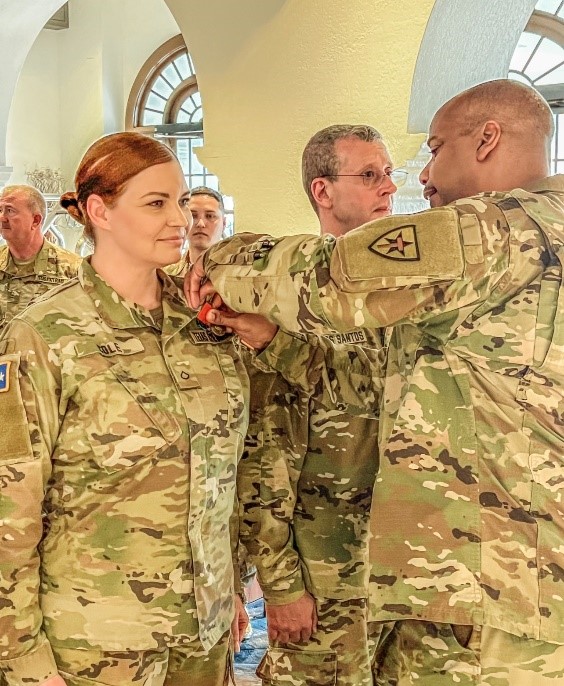
Value Proposition: What the State Guard Contributes
Dismissing the Texas State Guard as a “joke” overlooks the tangible value it provides to the state of Texas.
- Cost-Effectiveness: As a largely voluntary force, the State Guard offers a cost-effective solution for augmenting state emergency response capabilities.
- State-Specific Expertise: Its members often possess civilian skills and local knowledge that are invaluable during state operations.
- Rapid Deployment: Being under state command, it can be mobilized quickly within Texas without federal bureaucratic hurdles.
- Flexibility: It can be tasked with a wide variety of missions that might not fall under the purview of federal agencies or the National Guard.
When the Texas State Guard is called to support during a crisis, such as providing aid after a devastating tornado in Central Texas or assisting with flood relief in East Texas, their efforts are far from a joke. They are the boots on the ground, providing essential services and demonstrating a profound commitment to their fellow Texans. Their role is not to be a lesser version of the federal military, but a vital component of the state’s overall emergency preparedness and response infrastructure. The question should not be whether they are a joke, but rather how effectively they are utilized and supported to fulfill their critical state-level mission.
LifeOutOfTheBox is a participant in the Amazon Services LLC Associates Program, an affiliate advertising program designed to provide a means for sites to earn advertising fees by advertising and linking to Amazon.com. Amazon, the Amazon logo, AmazonSupply, and the AmazonSupply logo are trademarks of Amazon.com, Inc. or its affiliates. As an Amazon Associate we earn affiliate commissions from qualifying purchases.