
Navigating the legal landscape of relationships can be complex, especially when it comes to the recognition of informal unions. For many, the concept of a “common law marriage” conjures images of couples living together for years, perhaps raising a family, without ever having a formal wedding ceremony. The question often arises: does such a legal status exist, and if so, what are the requirements to establish it? In the state of Texas, the answer is a resounding yes, but with specific criteria that must be met. Understanding these requirements is crucial, not just for couples in Texas, but also for those who might be planning a move or a significant life event within the Lone Star State. This guide aims to demystify common law marriage in Texas, covering its definition, the essential elements needed to prove its existence, and what happens when such a union is dissolved.

Understanding Common Law Marriage in Texas
Common law marriage, also known by the less formal term “informal marriage,” is a legal framework that allows couples to be recognized as married without undergoing a formal wedding ceremony or obtaining a marriage license. This form of marriage has roots in historical legal traditions where societal norms often dictated marital status based on cohabitation and public acknowledgment rather than a state-sanctioned ritual. In Texas, the legislative framework for common law marriage is codified in the Texas Family Code. It’s important to note that Texas is one of a minority of states that still recognizes this type of union. Other states have abolished common law marriage entirely, meaning that if a couple entered into what they believed was a common law marriage in a state that doesn’t recognize it, it would likely not be valid in that originating state. However, if a couple meets the criteria for a common law marriage in Texas, that marriage is generally recognized throughout the United States.
The recognition of common law marriage in Texas is not a casual affair. It requires clear and convincing evidence that all statutory requirements have been met. This means that simply living together, even for an extended period, is not enough to establish a common law marriage. The state has specific legal hurdles that must be cleared. The primary purpose of these stringent requirements is to prevent fraudulent claims and to ensure that individuals who enter into such unions do so with a clear intent to be married. This intent is paramount and forms the bedrock of any common law marriage claim.
When considering common law marriage in Texas, it’s also important to understand its implications. Once established, a common law marriage is as legally binding as a ceremonial marriage. This means that couples are subject to the same rights and responsibilities, including those related to property division, inheritance, spousal support, and benefits. Therefore, proving the existence of a common law marriage often arises in situations where a couple is separating and needs to divide assets, or in cases where one party has passed away and the surviving partner seeks to claim inheritance rights. The legal ramifications are significant, making it essential for individuals to understand the precise legal standing of their relationship in Texas.
The Three Essential Elements of Common Law Marriage
To establish a common law marriage in Texas, three specific elements must be proven to exist simultaneously. The absence of even one of these elements will render the informal marriage invalid. These elements are designed to ensure that the couple’s intent to be married is clear, unambiguous, and publicly acknowledged.
Agreement to be Married
The first and arguably most critical element is that the couple must have an agreement to be married. This agreement is not necessarily a written contract, but rather a mutual understanding and present intent between both parties to consider themselves married at that moment. It’s about a commitment to being husband and wife, not a promise to marry in the future. This can be demonstrated through various forms of evidence, such as:
- Verbal Declarations: Both individuals stating to each other, “We are married” or “I am your husband/wife.” These declarations must be made with the intent to be married presently, not in the future.
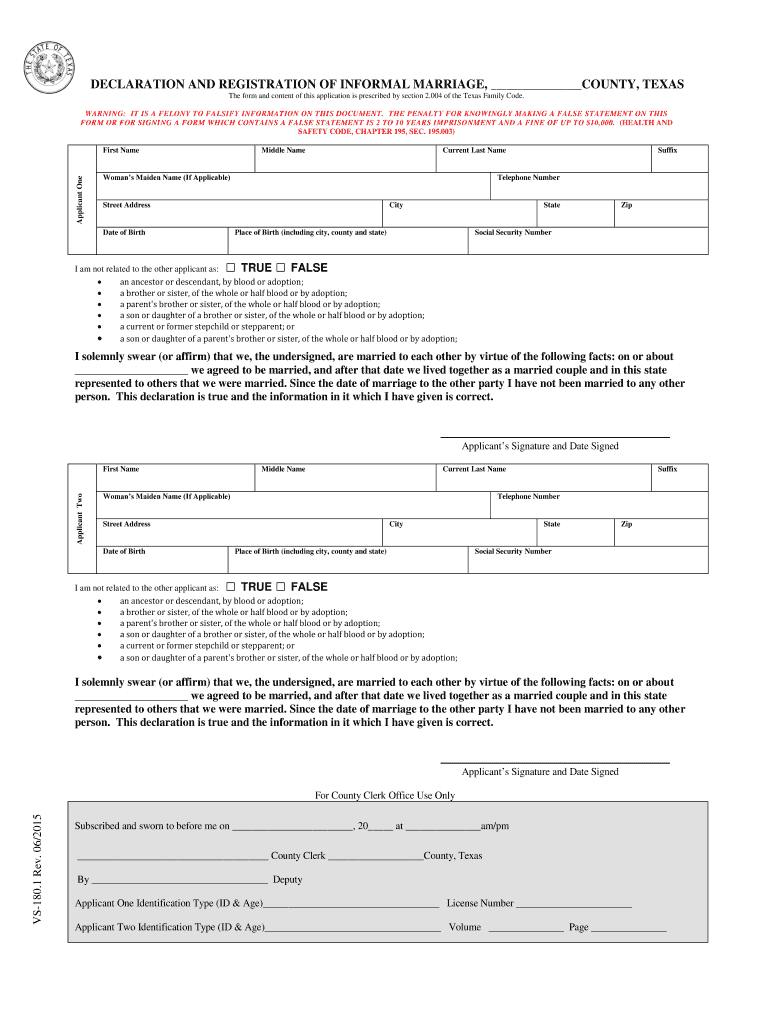
- Written Declarations: While less common, a written document signed by both parties stating their intent to be married can serve as strong evidence. This is not the same as a marriage certificate, which is issued after a ceremonial marriage.
- Circumstantial Evidence: Actions and statements that clearly indicate a mutual understanding of being married. This could include discussions about joint finances, future plans as a married couple, or even referring to each other as “husband” or “wife” in intimate settings.
It is crucial that this agreement is a present intent. For example, if a couple says, “We will get married next year,” that is an agreement to future marriage, not a present agreement to be married now. The intent must be to establish the marital status immediately. This element is often the most challenging to prove, as it relies heavily on the testimony of the parties involved and any witnesses who may have overheard such declarations.
Cohabitation in Texas
The second essential element is that the couple must have lived together in Texas after agreeing to be married. This means that the couple must have cohabited within the geographical boundaries of the state of Texas. Cohabitation implies sharing a residence and living together as a couple. The duration of cohabitation is not as important as the fact that it occurred after the agreement to be married. It signifies that the couple has acted upon their agreement to be married by sharing a life together.
The “living together” aspect signifies a shared home and a domestic partnership. This can be evidenced by:
- Joint Residence: Having the same address on official documents, mail, or utility bills.
- Shared Household: Participating in the daily life of a shared home, such as sharing chores, expenses, and responsibilities.
- Publicly Presenting a United Front: While the next element focuses on public acknowledgment, the act of cohabiting itself is a significant indicator of a shared life that aligns with marital status.
It’s important to understand that the cohabitation must be in Texas. If a couple lives together in another state that does not recognize common law marriage, and then moves to Texas, they would need to establish the agreement to be married while they are in Texas and then cohabit there. The agreement and cohabitation must occur within the state.
Holding Out to the Public as Married
The third and final essential element is that the couple must have represented themselves to others as being married. This is often referred to as “holding out” to the public. It means that the couple has presented themselves as a married couple to their friends, family, community, or any other third parties. This public representation is a crucial indicator that the couple themselves considered their union to be a marriage.
Evidence of “holding out” can include:
- Using the Same Last Name: If one party adopts the other’s last name, or if they use a hyphenated last name.
- Introducing Each Other as Husband/Wife: When introducing one another to others, using terms like “my husband” or “my wife.”
- Filing Joint Tax Returns: While not always definitive, filing joint tax returns can be strong evidence of holding out as married.
- Referring to Each Other as Spouse: In conversations with others, using the term “spouse” or “partner” in a marital context.
- Joint Bank Accounts or Credit Cards: While not exclusive to married couples, using joint financial accounts can contribute to the evidence.
- Wearing Wedding Rings: While not a requirement, wearing wedding rings can be an outward symbol of marital status.
The “holding out” element must be consistent and not merely sporadic. It should be a pattern of behavior that clearly communicates to the public that the couple considers themselves married. For example, consistently introducing each other as husband and wife at social gatherings, or signing documents as a married couple, would satisfy this requirement. Conversely, if a couple only uses marital terms in private, or only when it is convenient, it may not be sufficient to prove this element.
Proving a Common Law Marriage
Proving a common law marriage in Texas typically involves presenting evidence to a court, especially if the marriage is being disputed during a divorce or probate proceeding. Since there isn’t a marriage license or certificate for informal marriages, the burden of proof falls on the party claiming that a common law marriage exists. This often requires a significant amount of documentation and testimony.
Gathering Evidence
The first step in proving a common law marriage is to meticulously gather any evidence that supports the three essential elements: agreement to be married, cohabitation in Texas, and holding out to the public as married. This evidence can be diverse and may include:
- Witness Testimony: Friends, family members, neighbors, or colleagues who can testify to the couple’s agreement to be married or their public representation as a married couple. These witnesses can be crucial in corroborating verbal declarations or instances of “holding out.”
- Documents: This can encompass a wide range of materials. Examples include:
- Affidavits: Sworn statements from individuals who have direct knowledge of the couple’s relationship and their intent to be married.
- Joint Leases or Property Deeds: If the couple jointly owned or leased property.
- Insurance Policies: Listing each other as a spouse or beneficiary.
- Bank Statements and Financial Records: Showing joint accounts or shared financial responsibility.
- Tax Returns: Filed jointly.
- Correspondence: Letters, emails, or social media posts where the couple refers to each other as husband or wife.
- Photographs: Depicting the couple together at significant events, or wearing wedding rings.
- The Testimony of the Parties: If both parties agree that a common law marriage exists, their joint testimony can be very powerful. However, if one party denies the existence of the marriage, the other party will need to rely more heavily on external evidence and witnesses.
The standard of proof in Texas for establishing a common law marriage is “clear and convincing evidence.” This is a higher standard than the “preponderance of the evidence” typically used in civil cases. It means that the evidence must produce a firm belief or conviction in the mind of the fact-finder that the common law marriage exists.
Legal Proceedings and Divorce
If a couple has established a common law marriage in Texas and wishes to divorce, they must go through a formal divorce proceeding. This is because Texas law requires a judicial dissolution of all marriages, including informal ones. The process will involve:
- Filing for Divorce: A petition for divorce must be filed with the court, and the petition will likely include a statement that the parties are married under common law.
- Proof of Marriage: The party claiming the common law marriage will need to present their evidence to the court to prove its existence. If the court finds that a valid common law marriage was established, it will proceed with the divorce. If the court finds that the elements were not met, the divorce action may be dismissed.
- Division of Property and Other Matters: Once the existence of the marriage is confirmed, the court will address issues such as the division of marital property, child custody and support (if applicable), and potential spousal support, just as it would in a ceremonial divorce.
Similarly, if one partner in a common law marriage dies, the surviving partner may need to petition the court to establish the marriage for purposes of inheritance or other survivor benefits. This can be particularly important if the deceased partner did not leave a will, or if the will does not adequately provide for the surviving partner. The court will then review the evidence to determine if a common law marriage existed at the time of death.
It is highly recommended that individuals facing these situations seek legal counsel from an experienced family law attorney in Texas. An attorney can help assess the strength of the evidence, guide the client through the legal process, and ensure that their rights are protected, whether they are trying to prove or disprove the existence of a common law marriage. The nuances of proving “clear and convincing evidence” require specialized knowledge and a strategic approach to evidence presentation.
Navigating Relationship Milestones in Texas
The concept of common law marriage in Texas adds a unique layer to relationship milestones, particularly for those who might not opt for a traditional wedding. While the allure of a spontaneous union can be appealing, it’s crucial for couples to understand the legal weight of their decisions. For travelers and those contemplating a long-term stay or lifestyle in Texas, awareness of this legal avenue is paramount.
For couples who have lived together in Texas and believe they have met the criteria for common law marriage, and are now planning future endeavors, such as a move to another state or a formal recognition of their union, it is often advisable to formalize their marriage. This can be done by obtaining a marriage license and having a ceremonial wedding. This step provides a clear, irrefutable legal record of their marital status, which can simplify future legal and financial matters, especially when dealing with jurisdictions that do not recognize common law marriage.
For those seeking a unique travel experience or considering Texas as a destination for a significant life event, understanding common law marriage is essential. While Texas offers a rich tapestry of attractions, from the vibrant energy of Austin‘s music scene to the historical charm of San Antonio‘s Alamo, and the vast landscapes of Big Bend National Park, it also carries specific legal considerations for couples. Whether one is booking a luxurious suite at the Hotel San Antonio or planning an extended stay in a villa in the Texas Hill Country, the legal status of a relationship in Texas can have implications.
Ultimately, while Texas offers a path to legal recognition of marriage without a formal ceremony, it is a path paved with strict legal requirements. The intention to be married, cohabitation within the state, and a clear public representation as a married couple are the cornerstones of this legal framework. Understanding these elements is key to navigating relationships and legalities in the Lone Star State, ensuring that personal commitments are recognized and respected under the law.
LifeOutOfTheBox is a participant in the Amazon Services LLC Associates Program, an affiliate advertising program designed to provide a means for sites to earn advertising fees by advertising and linking to Amazon.com. Amazon, the Amazon logo, AmazonSupply, and the AmazonSupply logo are trademarks of Amazon.com, Inc. or its affiliates. As an Amazon Associate we earn affiliate commissions from qualifying purchases.