
The question of whether Tokyo is “bigger” than New York is a fascinating one, prompting a deep dive into urban metrics, population densities, and the very definition of a city. While the immediate, instinctive answer might lean towards one or the other based on anecdotal experience or popular perception, a closer examination reveals a more nuanced reality. Both metropolises are titans of global influence, economic powerhouses, and cultural epicenters, each with distinct characteristics that shape their perceived scale. To truly compare them, we must move beyond simple geographical area and delve into population, metropolitan sprawl, and economic footprint.

Defining “Bigger”: Population and Metropolitan Area
When discussing the “bigness” of a city, population is often the primary metric. In this regard, Tokyo consistently ranks as the most populous metropolitan area in the world. The Greater Tokyo Area, also known as the Tokyo-Yokohama metropolitan area, encompasses a vast expanse that includes Tokyo prefecture and extends into surrounding prefectures such as Kanagawa, Saitama, and Chiba. This interconnected urban and suburban region is home to an estimated population exceeding 37 million people. This colossal figure dwarfs many nations, let alone other cities.
New York City, on the other hand, while incredibly populous, operates on a different scale. The five boroughs of New York City themselves house approximately 8.4 million residents. However, the New York metropolitan area, which includes parts of New Jersey, Connecticut, and Pennsylvania, brings the total population to around 20 million. While this is an enormous figure and represents one of the largest metropolitan areas globally, it still falls significantly short of Tokyo’s demographic dominance.
The Nuance of Metropolitan Boundaries
The challenge in direct comparison lies in the definition of “metropolitan area.” These boundaries are not always static and can be defined differently by various statistical agencies. Tokyo’s administrative structure, with its extensive prefectural system and highly integrated commuter networks, naturally leads to a broader definition of its urbanized zone. The sheer density of development and the seamless transition from urban core to suburban sprawl in Tokyo is a testament to its unparalleled scale in terms of human habitation.
New York, with its iconic skyline and concentrated urban core, might feel larger to a visitor due to its verticality and the sheer density of its famous landmarks. However, when looking at the raw numbers of people living and working within its extended economic sphere, Tokyo commands the lead.
Land Area: A Different Perspective
When we shift the focus to geographical area, the picture becomes more complex and less definitively in Tokyo’s favor. Tokyo Prefecture itself covers an area of approximately 2,194 square kilometers. This includes not only the densely populated wards but also the Tama area and the Izu and Ogasawara Islands. The core urbanized area, however, is significantly smaller.
New York City, comprising its five boroughs—Manhattan, Brooklyn, Queens, the Bronx, and Staten Island—covers a total land area of about 783.8 square kilometers. However, this figure often excludes water area. If we consider the total area including water, it expands slightly.
The New York metropolitan area, as defined by the U.S. Census Bureau, covers a much larger geographical expanse, often encompassing over 34,000 square kilometers. This makes the extended New York region, in terms of geographical spread, significantly larger than Tokyo Prefecture.
Urban Sprawl vs. Density
This difference highlights a key distinction in urban development. Tokyo is characterized by extreme density within its core and a highly efficient, interconnected public transportation system that facilitates this. While the metropolitan area is vast in population, the feeling of urban sprawl might be less pronounced than in New York’s broader definition. Conversely, the New York metropolitan area, while containing a massive urban core, extends further geographically, encompassing more land that is less intensely developed but still economically tied to the city.

So, if “bigger” means sheer land area covered by its official metropolitan statistical area, New York might edge out Tokyo. However, if “bigger” refers to the population concentrated within an intensely urbanized and interconnected zone, Tokyo is undeniably larger.
Economic and Cultural Footprint
Beyond quantifiable metrics, the “bigness” of a city can also be measured by its economic influence and cultural reach. Both Tokyo and New York are global financial centers, innovation hubs, and cultural powerhouses.
Financial Centers
Tokyo is home to the Tokyo Stock Exchange, one of the world’s largest. It is a primary hub for finance, technology, and business in Asia. The sheer volume of economic activity within the Greater Tokyo Area is immense, supporting a vast array of industries and driving innovation.
New York City, with Wall Street as its iconic symbol, is a preeminent global financial capital. The New York Stock Exchange and NASDAQ are the world’s largest stock exchanges by market capitalization. Its influence on global finance, media, fashion, and the arts is unparalleled, making it a critical node in the global network.
Cultural Impact
Culturally, both cities have a profound global impact. Tokyo is the birthplace of numerous trends in anime, manga, fashion, and cuisine that have captivated the world. Its unique blend of ancient traditions and hyper-modernity creates a captivating cultural landscape, from the historic temples of Asakusa to the neon-lit streets of Shibuya.
New York, often called the “city that never sleeps,” is a melting pot of cultures. It is a global epicenter for theater (Broadway), music, art, and cuisine. Iconic landmarks like the Statue of Liberty, Times Square, and Central Park are recognized worldwide, symbolizing its cultural significance and drawing millions of visitors annually.
In terms of economic and cultural “bigness,” it is perhaps more accurate to say they are different types of big, each with its unique strengths and global reach.
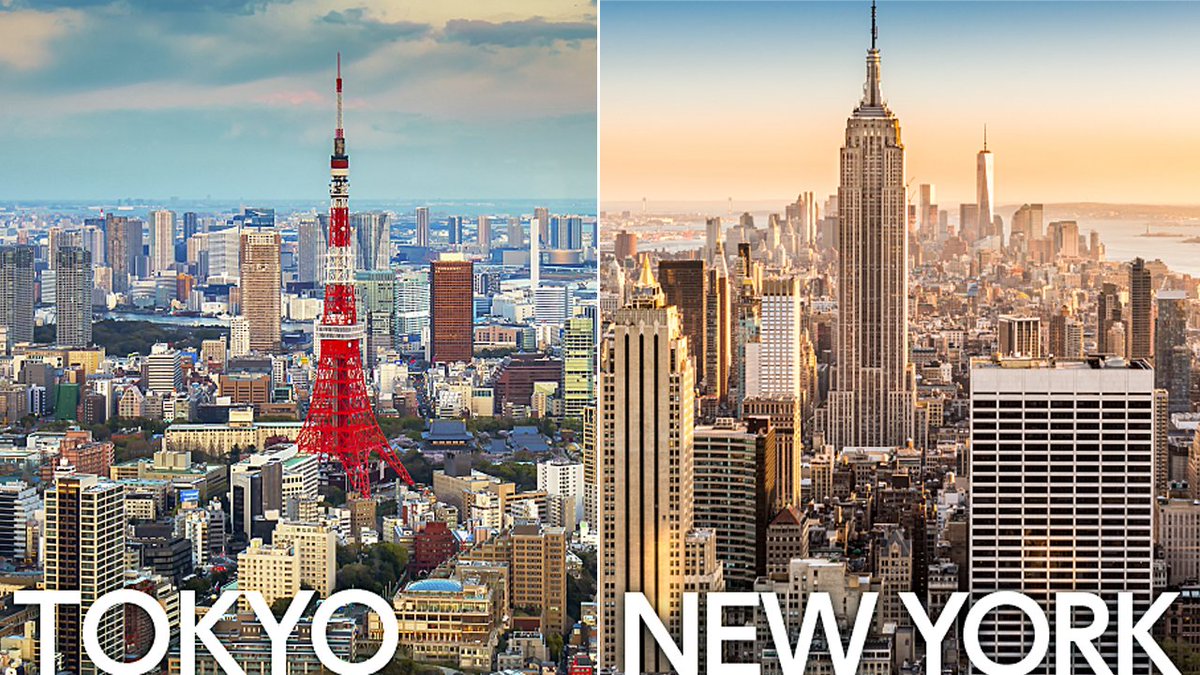
Conclusion: A Tale of Two Giants
So, is Tokyo bigger than New York? The answer, as is often the case with complex urban systems, depends on the yardstick you use.
If “bigger” refers to the sheer number of people living within its integrated metropolitan sphere, then Tokyo is undeniably larger, boasting the world’s most populous metropolitan area. Its population density and efficient infrastructure allow for an immense number of people to coexist within a highly developed urban environment.
If “bigger” is interpreted as geographical land area, particularly when considering the broader, more sprawling definition of a metropolitan region, then the New York metropolitan area might be considered larger, encompassing a more expansive territory.
However, beyond these quantitative measures, both cities are colossal in their own right. They are titans of commerce, culture, and innovation, each shaping global trends and attracting people from all corners of the globe. Their impact extends far beyond their physical boundaries, making them not just cities, but entire worlds unto themselves. Whether one is “bigger” than the other is less important than appreciating the unique grandeur and immense influence that both Tokyo and New York bring to the global stage. They represent different models of urban development and societal organization, each a testament to human ambition and ingenuity.
LifeOutOfTheBox is a participant in the Amazon Services LLC Associates Program, an affiliate advertising program designed to provide a means for sites to earn advertising fees by advertising and linking to Amazon.com. Amazon, the Amazon logo, AmazonSupply, and the AmazonSupply logo are trademarks of Amazon.com, Inc. or its affiliates. As an Amazon Associate we earn affiliate commissions from qualifying purchases.