
Investing in real estate, whether for personal accommodation or as a revenue-generating asset, often represents one of the most significant financial decisions an individual or entity makes. In California, a state renowned for its dynamic property market and diverse accommodation options, understanding the nuances of capital gains taxes is paramount. These taxes can substantially impact the net proceeds from the sale of a home, a rental property, or a vacation residence, making informed planning an indispensable part of property ownership and divestiture within the Golden State.
Capital gains taxes are levied on the profit realized from the sale of an asset held for investment, or in many cases, personal use. For property owners in California, this typically refers to the difference between the property’s sale price and its adjusted basis (original cost plus improvements, minus depreciation). The specifics of these taxes, including rates and exemptions, vary significantly based on the holding period of the asset, the seller’s income level, and the nature of the property itself. Navigating this intricate landscape requires a clear understanding of both federal and state tax laws, especially for those who view their property as not just a place to live but also a significant financial asset within the vibrant California accommodation market.
The Foundation of Capital Gains: Federal and State Perspectives
To fully grasp capital gains taxes in California as they relate to accommodation, it’s essential to first differentiate between federal and state tax structures. While both impose taxes on capital gains, their rates, rules, and exemptions can differ, creating a complex framework for property sellers.
Federal Capital Gains Tax Rates
At the federal level, capital gains are categorized into short-term and long-term. Short-term capital gains arise from the sale of an asset held for one year or less and are taxed at ordinary income tax rates, which can range significantly depending on the taxpayer’s overall income. For long-term capital gains, derived from assets held for more than one year, the tax rates are generally more favorable, offering a significant incentive for longer-term property ownership. These rates are typically 0%, 15%, or 20% for most taxpayers, again depending on their taxable income. For a couple selling their primary residence in San Francisco after five years, any taxable gain beyond specific exclusions would fall under these long-term federal rates. Additionally, higher-income taxpayers may also be subject to a 3.8% Net Investment Income Tax (NIIT) on capital gains and other investment income, further increasing their federal tax liability. This federal layer forms the base upon which California’s state taxes are built.
California’s Unique Approach to Capital Gains
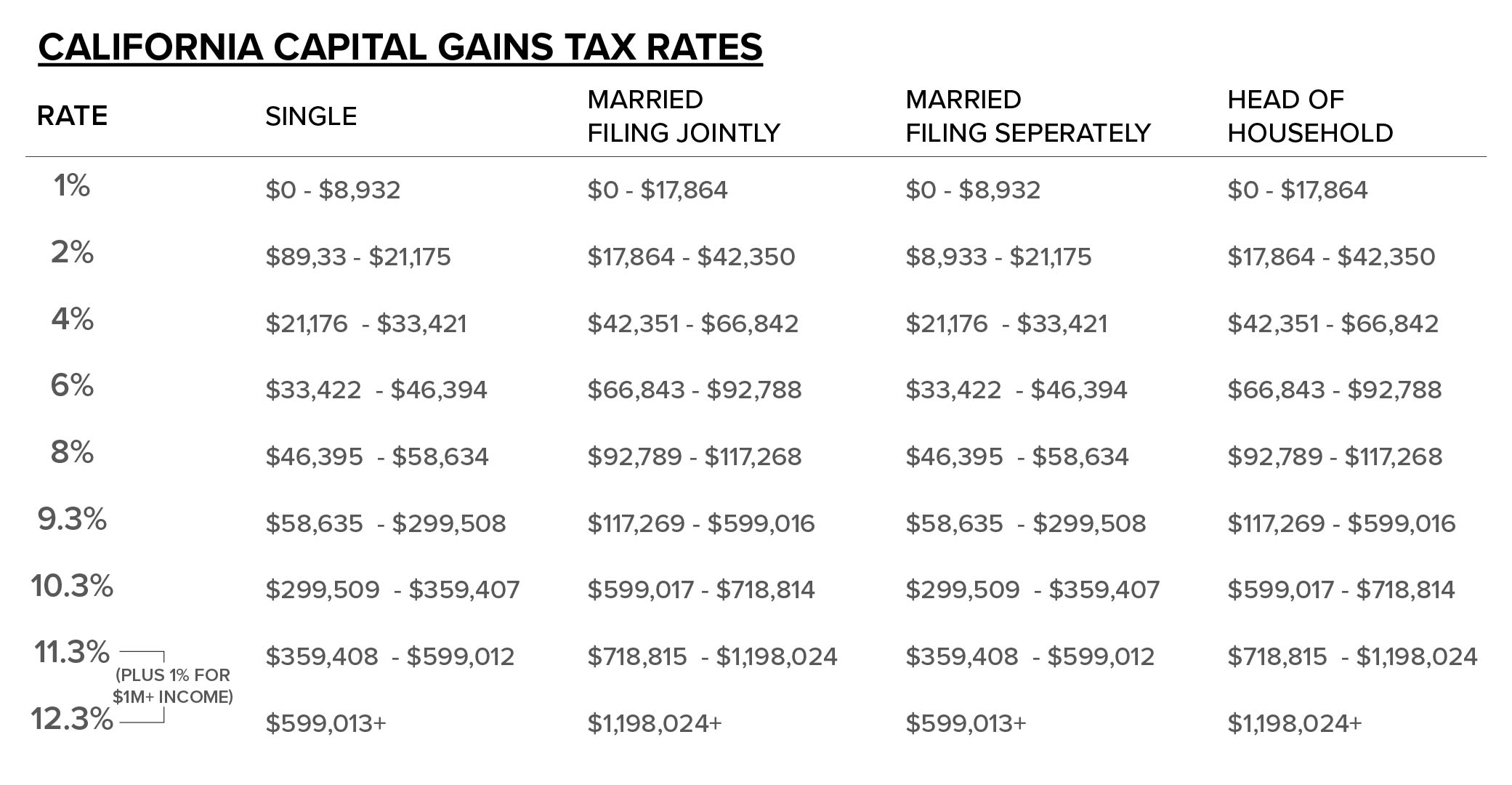
California stands out among states for its approach to capital gains. Unlike some states that have a separate, lower tax rate for capital gains, California treats capital gains as ordinary income. This means that profits from the sale of property, whether held for a short or long period, are added to a taxpayer’s other income and taxed at California’s progressive state income tax rates. These rates can be as high as 13.3% for the highest earners, making California one of the states with the highest combined federal and state capital gains tax rates in the nation. This unique structure underscores the importance of careful planning for any property transaction, from a family home in Los Angeles to an investment duplex in San Diego.
Capital Gains on Various Accommodation Types in California
The application of capital gains taxes in California is not uniform across all types of accommodation. The distinction between a primary residence, a rental property, and a vacation home profoundly impacts the tax treatment, offering different opportunities for exclusions, deductions, and tax deferral.
Primary Residence Exclusion: A Key Benefit for Homeowners
For homeowners selling their primary residence in California, one of the most significant tax benefits is the Section 121 exclusion. This federal provision allows single filers to exclude up to $250,000 of capital gains and married couples filing jointly to exclude up to $500,000 from their taxable income, provided certain conditions are met. To qualify, the homeowner must have owned the home and used it as their primary residence for at least two out of the five years preceding the sale. This exclusion can significantly reduce or even eliminate federal and state capital gains tax liability for many homeowners, making property ownership a more financially attractive prospect in cities like Sacramento or Fresno. However, it’s crucial to note that this exclusion applies only to the primary residence and not to investment properties or vacation homes.
Rental Properties and Investment Accommodation
When it comes to selling rental properties or other forms of investment accommodation in California, the tax landscape becomes more complex. The primary residence exclusion does not apply, meaning all capital gains are generally taxable. Furthermore, if the property was depreciated during its ownership, a portion of the gain equivalent to the depreciation taken will be subject to a recapture tax, typically at a rate of 25% at the federal level, before long-term capital gains rates are applied to the remaining profit.
- Depreciation Recapture: This refers to the process where the IRS recovers the tax benefits previously granted through depreciation deductions when an asset is sold. For a rental property in Oakland that has been depreciated over several years, this can add a significant layer to the tax calculation.
- Ordinary Income Treatment by California: As noted, California taxes these gains as ordinary income, making the combined federal and state tax burden on successful rental property sales potentially very high. Investors in California’s thriving short-term rental market, for example, must factor these taxes into their long-term financial planning.
Vacation Homes and Second Residences
Vacation homes and second residences generally receive the same tax treatment as other investment properties in California. The capital gains derived from their sale are fully taxable at both federal long-term capital gains rates (if held for over a year) and California’s ordinary income tax rates. There is no specific exclusion similar to the primary residence exclusion. However, if a vacation home is rented out for a portion of the year, it may be possible to deduct certain expenses associated with the rental activity, but this also introduces complexities regarding personal use vs. rental use days, affecting the calculation of taxable gains and deductible losses. Property owners in popular California vacation spots like Lake Tahoe or Palm Springs need to be acutely aware of these distinctions.

Strategies for Minimizing Capital Gains Tax on Accommodation
Given California’s high tax rates, effective tax planning is crucial for property owners looking to mitigate their capital gains tax liability. Several strategies can be employed, though their suitability depends on individual circumstances and property type.
1031 Exchange for Investment Properties
For owners of investment accommodation (like rental properties or commercial spaces), a 1031 Exchange (also known as a like-kind exchange) is a powerful tool to defer capital gains taxes. This strategy allows an investor to sell a property and reinvest the proceeds into a “like-kind” property, deferring the capital gains tax until the replacement property is eventually sold. The rules surrounding 1031 exchanges are strict, with specific timelines for identifying and closing on a replacement property. A successful 1031 exchange can be particularly beneficial for seasoned real estate investors in California, enabling them to grow their portfolio without immediate tax burdens. It’s a key strategy for those managing multiple rental units in cities like Long Beach or Anaheim.
Leveraging Capital Losses
Capital losses from other investments can be used to offset capital gains. If an individual has sold other assets at a loss, these losses can first offset capital gains dollar-for-dollar. If capital losses exceed capital gains, up to $3,000 of the remaining loss can be deducted against ordinary income each year, with any unused loss carried forward to future tax years. This strategy is less about reducing gains directly from property sales and more about overall portfolio management to minimize the total tax burden.
Tax-Loss Harvesting
A proactive approach to leveraging capital losses is tax-loss harvesting. This involves intentionally selling underperforming assets at a loss to generate a capital loss that can then be used to offset capital gains from profitable property sales. This strategy requires careful timing and understanding of market conditions, but it can be an effective way to manage a diversified investment portfolio, including real estate holdings in California.
Long-Term Holding Periods
While California does not offer preferential rates for long-term capital gains, holding an asset for more than one year still qualifies it for federal long-term capital gains rates, which are significantly lower than short-term rates. This alone can represent substantial tax savings compared to selling an investment property within the first year of ownership, particularly for high-income earners. Patient investors in the San Jose housing market, for example, may benefit from this strategy.
Reporting and Compliance: Navigating the Tax Season
Accurate reporting of capital gains is critical to avoid penalties from both the Internal Revenue Service (IRS) and the California Franchise Tax Board (FTB). Property sales are often reported to the IRS on Form 1099-S by the closing agent, ensuring that the transaction is on record.
Required Forms and Documentation
When filing taxes, homeowners and investors will typically use:
- Federal Form 8949 (Sales and Other Dispositions of Capital Assets): Used to list the details of each property sale.
- Federal Schedule D (Capital Gains and Losses): Used to summarize capital gains and losses from Form 8949 and calculate the net gain or loss.
- California Schedule D (Capital Gains or Losses): California has its own Schedule D, which largely mirrors the federal form but applies California’s specific tax rules.
Maintaining thorough records of the property’s purchase price, closing costs, improvements made, and any depreciation taken is essential for accurately calculating the adjusted basis and, subsequently, the capital gain. Without proper documentation, taxpayers may face challenges in proving their basis, potentially leading to a higher taxable gain.

Estimated Taxes and Withholding
For individuals who realize a significant capital gain from the sale of an accommodation property, particularly investment properties, it’s often necessary to pay estimated taxes throughout the year. Both the IRS and the California FTB require taxpayers to pay income tax as it is earned or received. Failure to pay estimated taxes can result in penalties. In some cases, a portion of the sale proceeds from California real estate transactions may be withheld for state tax purposes, especially for non-residents or transactions exceeding certain thresholds.
Understanding capital gains taxes in California is a critical component of property ownership and investment within the accommodation sector. From the primary residence homeowner benefiting from significant exclusions to the seasoned real estate investor navigating complex 1031 exchanges, the financial implications are substantial. By grasping the interplay between federal and state tax laws, leveraging available exclusions and strategies, and ensuring diligent compliance, property owners can optimize their financial outcomes and make informed decisions in California’s dynamic real estate market. Consulting with a qualified tax professional is always recommended to tailor these strategies to individual circumstances and ensure adherence to the latest tax regulations.
LifeOutOfTheBox is a participant in the Amazon Services LLC Associates Program, an affiliate advertising program designed to provide a means for sites to earn advertising fees by advertising and linking to Amazon.com. Amazon, the Amazon logo, AmazonSupply, and the AmazonSupply logo are trademarks of Amazon.com, Inc. or its affiliates. As an Amazon Associate we earn affiliate commissions from qualifying purchases.