
The Fundamental Orders of Connecticut stand as a foundational document in the narrative of American democracy, predating even the Declaration of Independence and the U.S. Constitution. While often discussed in the context of history and civics, understanding this seminal text can also enrich our appreciation of historical landmarks and the cultural tapestry of the United States. For travelers and enthusiasts of local culture, delving into the origins of self-governance offers a unique perspective on the places where these ideas took root, from the charming towns of Connecticut to the broader landscape of early American settlements. This exploration, much like discovering hidden gems on a travel itinerary or uncovering the history behind a magnificent piece of architecture, reveals the enduring legacy of democratic principles.
The Genesis of Self-Governance in Early Connecticut
The story of the Fundamental Orders is inextricably linked to the early colonial experience in New England. Established in 1639 by settlers of the then-thriving Connecticut Colony, these orders were a groundbreaking attempt to create a structured, yet remarkably liberal, form of government. Unlike other colonies that were directly governed by the Crown or proprietary charters, the inhabitants of Connecticut sought to define their own governance, based on principles of representative rule and the consent of the governed.
The Need for Order: Settling the Connecticut River Valley
The mid-17th century saw a significant influx of settlers into the Connecticut River Valley. Drawn by fertile lands and the promise of a new life, individuals and groups from the more established, but often theocratically rigid, Massachusetts Bay Colony sought to establish their own communities. Among the most prominent of these were the congregations led by Reverend Thomas Hooker, Reverend Samuel Stone, and Reverend John Davenport.
Reverend Hooker, in particular, is often credited as the spiritual and intellectual father of the Fundamental Orders. His sermons, notably one delivered in 1638 at the site that would become Hartford, articulated a vision of government rooted in popular sovereignty. He famously argued that “the privilege of election by all persons assembled is… the very foundation of all free government.” This was a radical idea in an era where governance was largely hierarchical and divinely ordained.
The settlers in Hartford, Wethersfield, and Windsor found themselves in a unique position. While they were subjects of the English Crown, they were also operating in a territory whose precise jurisdictional claims were somewhat ambiguous. This created a practical necessity for self-organization. Without a clear governing charter from England at that time, they had to devise their own framework for lawmaking, dispute resolution, and the administration of justice. This pressing need for internal order, coupled with the philosophical underpinnings provided by leaders like Hooker, paved the way for the creation of the Fundamental Orders.
A Departure from Other Colonies
To fully appreciate the significance of the Fundamental Orders, it’s crucial to contrast them with the governance structures of other contemporary colonies. For instance, the Massachusetts Bay Colony operated under a charter that granted considerable autonomy, but its governance was heavily influenced by religious qualifications for suffrage. The Plymouth Colony had its Mayflower Compact, a declaration of self-governance, but it was more of a social contract than a detailed governmental framework. The Fundamental Orders, however, went further by establishing a comprehensive system of elected officials, representative assemblies, and a clear process for legislative action.
The Fundamental Orders established a framework for a government that was:
- Representative: Power was vested in elected officials who represented the people.
- Limited: The powers of government were defined and, to some extent, limited by the document itself.
- Popularly Based: The emphasis was on the consent of the governed, a precursor to the democratic ideals that would later define the United States.
This forward-thinking approach laid the groundwork for a society that valued participation and the rule of law, principles that continue to resonate today in the civic life of Connecticut and beyond. Exploring the historical sites associated with these early settlements, such as the Old State House in Hartford, can offer a tangible connection to this pivotal moment in American history.
The Core Principles Embedded in the Fundamental Orders
The Fundamental Orders of Connecticut are a testament to the Enlightenment ideals that were beginning to percolate through European and American thought. They laid out a system of governance that was remarkably advanced for its time, focusing on the rights and responsibilities of citizens and establishing checks and balances within the governmental structure.
Laying the Groundwork for a Republic
At its heart, the Fundamental Orders were designed to create a stable and just society. They did not grant universal suffrage as we understand it today; eligibility to vote was typically tied to property ownership and church membership. However, compared to the prevailing systems, they represented a significant step towards a more inclusive political landscape.
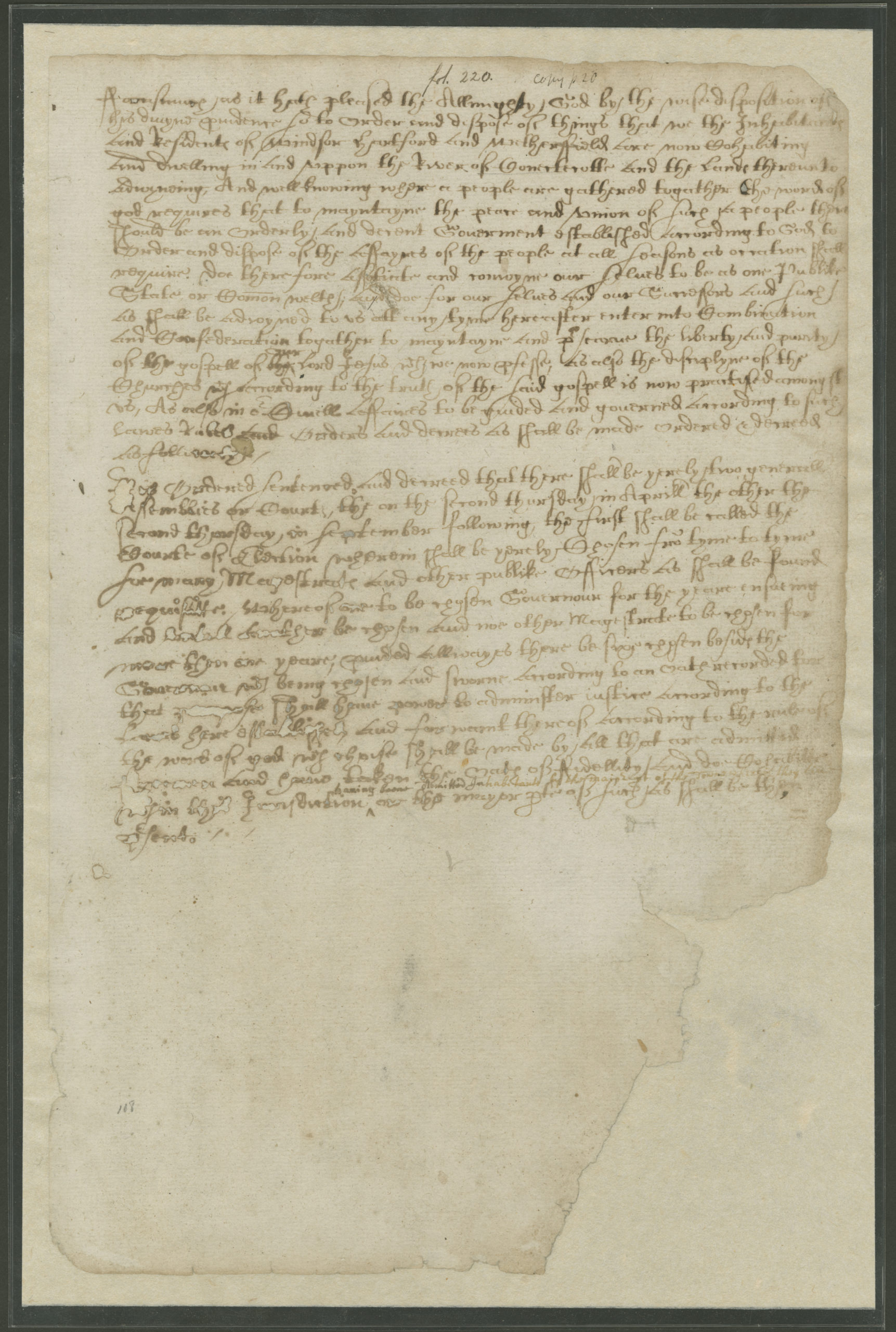
Key provisions within the Fundamental Orders included:
- The General Assembly: This body was established as the primary legislative authority. It was composed of elected representatives from each town, along with the governor and magistrates. This bicameral structure, in essence, foreshadowed the legislative systems seen in many modern governments.
- Election of Officials: The governor and magistrates were to be elected annually by the freemen of the colony. This ensured accountability to the populace and prevented the entrenchment of power. The process involved nomination by the magistrates and subsequent election by the General Assembly.
- Judicial System: The Orders provided for a judicial system, with magistrates empowered to hear cases and administer justice according to the laws of the colony. This was crucial for maintaining order and resolving disputes peacefully.
- Town Governance: The Orders recognized the importance of local autonomy, granting towns the power to manage their own affairs and elect their own local officials.
The Concept of a Written Constitution
Perhaps the most enduring legacy of the Fundamental Orders is their nature as a written constitution. Unlike governments that relied on unwritten customs or royal decrees, Connecticut established a clear, codified document that defined the powers and limitations of its government. This set a precedent for the development of written constitutions, including the U.S. Constitution itself, which would later be drafted to govern the newly formed nation.
The emphasis on a written document provided a clear framework for citizens and officials alike, establishing a shared understanding of the rules of the game. This contributed to the stability and legitimacy of the government, fostering an environment where civil liberties could gradually develop. For travelers interested in the historical development of law and governance, visiting places like the Connecticut State Library or historical societies can provide deeper insights into the artifacts and records related to this period.
A Precursor to American Democracy
The principles embedded in the Fundamental Orders—popular sovereignty, representative government, and the rule of law—became cornerstones of American democracy. Historians often point to the Fundamental Orders as a crucial step in the evolution of self-governance in the colonies, demonstrating that the colonists were capable of and eager for the responsibility of governing themselves. This early experience with self-rule was instrumental in shaping the ideals that would fuel the American Revolution a century and a half later.
The very act of drafting and implementing such a document was a bold statement of independence and capability. It showed that a community could establish a functioning government based on reasoned principles, without direct oversight from afar. This spirit of innovation and self-determination is a vital part of the American narrative, and the Fundamental Orders are a powerful early chapter in that story.
The Lasting Impact and Modern Relevance
The Fundamental Orders of Connecticut may be centuries old, but their impact continues to resonate in the structures of modern governance and the enduring ideals of democracy. While the document itself has long been superseded by later constitutions, the principles it championed remain central to the American political ethos. Understanding these orders provides a unique lens through which to view historical landmarks, appreciate local culture, and even inform our approach to travel and exploration.
A Blueprint for Future Governance
The Fundamental Orders served as a crucial precedent for the development of other colonial governments and, ultimately, for the United States Constitution. The idea of a written document that outlines the powers and responsibilities of government, establishes a system of elected representation, and emphasizes the consent of the governed were all revolutionary concepts that found fertile ground in Connecticut.
When the delegates convened to draft the U.S. Constitution in 1787, they drew upon a rich history of self-governance, and the Fundamental Orders were undoubtedly part of that intellectual inheritance. The principles of popular sovereignty and representative democracy, so clearly articulated by Reverend Thomas Hooker and his contemporaries, became the bedrock upon which the new nation was built.
For anyone visiting Connecticut, exploring the historical sites associated with this era is a journey into the very origins of American governance. The Old State House in Hartford, for instance, stands as a tangible monument to the traditions of self-rule that began with the Fundamental Orders. Such sites are not just historical curiosities; they are living testaments to the enduring power of ideas that shaped a nation.

The Fundamental Orders in Tourism and Lifestyle
The appreciation for the Fundamental Orders of Connecticut can deeply enrich the travel experience, especially for those interested in history, culture, and the foundations of American society. Visiting Connecticut offers an opportunity to connect with this pivotal past in a meaningful way.
- Landmarks and History: Beyond the Old State House, numerous historical markers and sites across Connecticut tell the story of the early settlements and the development of governance. Traveling to towns like Hartford, Wethersfield, and Windsor allows for a direct engagement with the landscape where these foundational events unfolded. Understanding the Fundamental Orders adds a layer of historical depth to any exploration of American architecture and historic sites.
- Local Culture and Tourism: The legacy of the Fundamental Orders is woven into the fabric of Connecticut‘s local culture. It informs a sense of civic pride and a deep respect for the principles of democracy. Engaging with local historical societies, museums, and guided tours can provide personalized insights into this history, transforming a simple visit into an educational and enriching experience.
- Lifestyle and Education: For those who appreciate luxury travel or budget-friendly explorations, understanding the historical context can elevate any trip. A stay in a historic inn or a visit to a renowned resort in Connecticut can be enhanced by knowing the deep roots of self-governance that characterize the region. It fosters a connection to the place that goes beyond superficial attractions, touching on the very ideas that underpin the American way of life.
In essence, the Fundamental Orders of Connecticut are more than just an ancient document; they are a testament to the enduring human quest for self-determination and just governance. They serve as a reminder that the freedoms and democratic structures we often take for granted have a long and complex history, rooted in the courageous vision of early settlers who dared to imagine a new way of living together. For the curious traveler, the history buff, or the student of democracy, exploring the legacy of the Fundamental Orders offers a profound connection to the past and a renewed appreciation for the principles that continue to shape our present.
LifeOutOfTheBox is a participant in the Amazon Services LLC Associates Program, an affiliate advertising program designed to provide a means for sites to earn advertising fees by advertising and linking to Amazon.com. Amazon, the Amazon logo, AmazonSupply, and the AmazonSupply logo are trademarks of Amazon.com, Inc. or its affiliates. As an Amazon Associate we earn affiliate commissions from qualifying purchases.