
Florida, the Sunshine State, beckons with its vibrant beaches, world-class theme parks, and diverse landscapes, drawing millions of visitors and new residents each year. For many, establishing residency or embarking on an extended stay in Florida is intertwined with the desire to obtain a driver’s license, a crucial document for navigating the state’s extensive road networks and enjoying its many attractions. This comprehensive guide delves into the specific requirements and timelines for obtaining a driver’s license in Florida, offering clarity for those planning their transition to this popular destination. Whether you’re a young driver eager for newfound independence, a seasoned traveler seeking to explore the state at your own pace, or a new resident settling into life in cities like Miami or Orlando, understanding the licensing process is paramount.
The Foundation: Understanding Florida’s Driver’s License Tiers
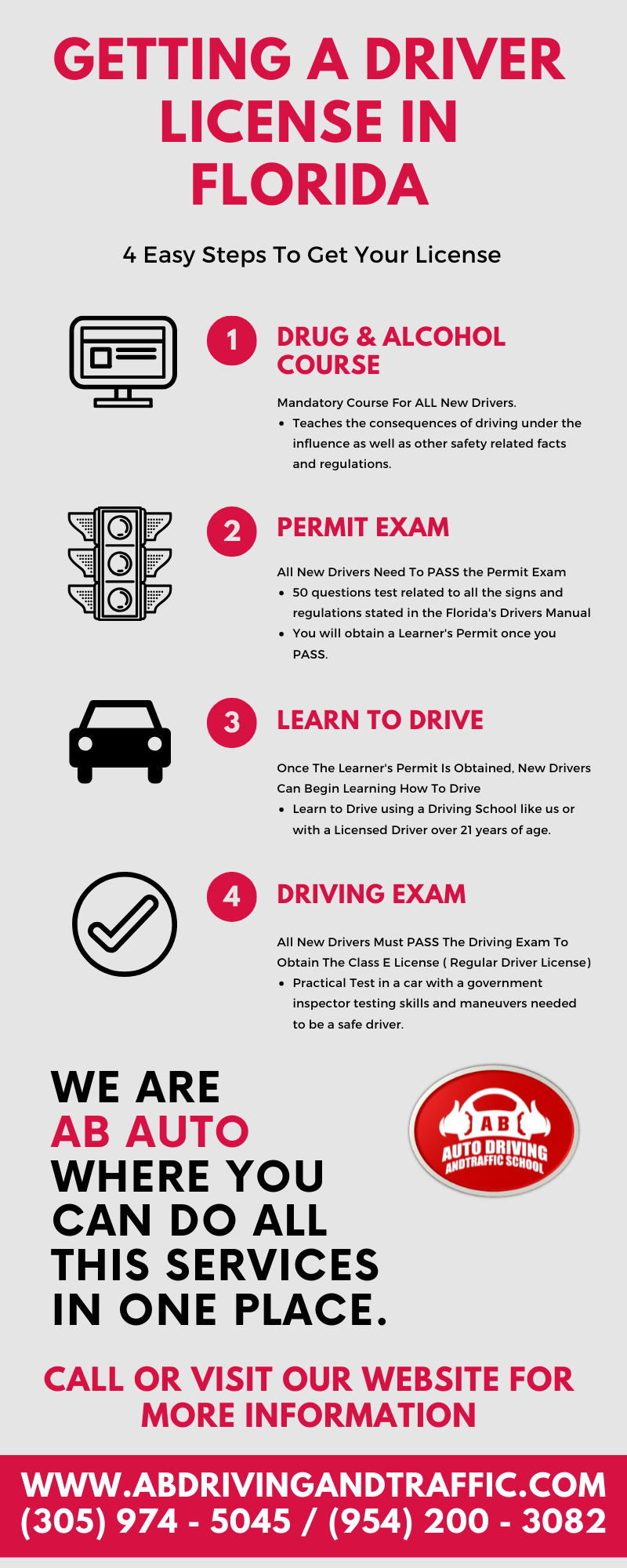
Florida’s driver’s licensing system is structured to accommodate individuals at different stages of their driving journey and residency status. The primary focus for most newcomers and younger drivers revolves around obtaining a Learner’s Permit and then progressing to a Driver’s License. The eligibility for each stage is contingent on age, completion of required courses, and passing necessary tests.
The Learner’s Permit: The First Step to Driving Freedom
For aspiring drivers under the age of 18, the journey begins with obtaining a Learner’s Permit, also known as a Class E Learner’s License. This permit signifies that the individual has met the initial requirements for learning to drive under supervision.
Age and Educational Prerequisites
To be eligible for a Learner’s Permit in Florida, an applicant must be at least 15 years old. Crucially, they must also have completed a state-approved Traffic Law and Substance Abuse Education (TLSAE) course. This course is designed to educate young drivers on the responsibilities and dangers associated with driving, including the impact of alcohol and drug use. In addition to the TLSAE course, individuals under 18 must also hold their Learner’s Permit for a minimum of 12 months, or until they turn 18, whichever comes first. During this permit holding period, they must complete at least 40 hours of supervised driving practice, with at least 10 of those hours occurring at night. This structured approach ensures a foundational level of experience before a driver is granted more autonomy.
Required Documentation for a Learner’s Permit
The application process for a Learner’s Permit requires meticulous preparation of documentation. Applicants must provide proof of identity, date of birth, and Social Security number. This typically includes original or certified copies of documents such as a U.S. birth certificate, U.S. passport, or permanent resident alien card. Additionally, proof of residential address in Florida is mandatory, which can be demonstrated through utility bills, bank statements, or lease agreements. For minors, a parent or legal guardian must be present to sign the application, granting consent for the minor to obtain a license.
The Written Knowledge Test
Once the applicant has fulfilled the age and educational requirements and gathered the necessary documents, the next step is to pass the written knowledge test administered by the Florida Department of Highway Safety and Motor Vehicles (FLHSMV). This test assesses the applicant’s understanding of Florida traffic laws, road signs, and safe driving practices. Familiarity with the Florida Driver’s Handbook is essential for success. Upon passing this test, the applicant is issued their Learner’s Permit.
The Driver’s License: Achieving Independent Driving
With a Learner’s Permit in hand and the required supervised driving experience logged, individuals aged 16 or 17 can then apply for a full Driver’s License. This marks a significant milestone, granting them the privilege of driving independently.
Eligibility and Supervised Driving
As mentioned, holding a Learner’s Permit for at least 12 months and completing 40 hours of supervised driving (including 10 at night) are prerequisites for a 16 or 17-year-old to apply for a Driver’s License. This period is crucial for developing safe driving habits and gaining practical experience in various driving conditions.
The Driving Skills Test
The final hurdle for young drivers is the driving skills test, often referred to as the “road test.” This practical examination evaluates the applicant’s ability to safely operate a vehicle, demonstrating proficiency in skills such as maneuvering, obeying traffic signals, parking, and general road awareness. The test is conducted by a certified examiner who assesses the applicant’s adherence to traffic laws and safe driving techniques. Passing this test, along with the previously completed written test and educational requirements, leads to the issuance of a Florida Driver’s License.
Beyond Youth: Licensing for Adults and New Residents
The licensing process in Florida extends beyond young drivers. Adults who are new to the state or those who have never held a license before also have a clear path to obtaining their driving privileges. The requirements for adults differ in terms of age-specific restrictions but share common threads of knowledge and skills assessment.
For New Residents: Transferring Your Driving Privileges
For individuals moving to Florida from another state or country, the process of obtaining a Florida driver’s license is generally straightforward, provided they already hold a valid license from their previous location.
Requirements for Transferring a License
New residents must obtain a Florida driver’s license within 30 days of establishing residency. The process involves surrendering their out-of-state license and presenting proof of identity, Social Security number, and Florida residential address. Unlike young drivers, adults who hold a valid license from another U.S. state are typically exempt from taking the written knowledge test and the driving skills test, assuming their out-of-state license is current. However, they will still need to pass a vision test. If transferring a license from a country other than Canada or the United States, applicants may need to complete both the written knowledge test and the driving skills test.
Establishing Residency
Proof of Florida residency is a critical component for new residents. Acceptable documents include a lease agreement, mortgage statement, utility bill, or bank statement showing your Florida address. For those who have recently moved, having these documents readily available will expedite the application process at a Florida Department of Highway Safety and Motor Vehicles (FLHSMV) office.
For Adults Applying for Their First License
Adults in Florida who are seeking a driver’s license for the first time, regardless of their age (18 and over), must also complete a series of steps.
The TLSAE Course for Adults
While the strict 12-month holding period of a Learner’s Permit is specific to minors, adults seeking their first driver’s license in Florida are still required to complete the Traffic Law and Substance Abuse Education (TLSAE) course. This course provides essential information on traffic laws, safe driving, and the dangers of impaired driving, ensuring all drivers have a foundational understanding of these critical aspects.
The Vision and Written Knowledge Tests
Adult applicants must pass a vision test to ensure they can see adequately to operate a vehicle safely. Following this, they will need to pass the written knowledge test, which covers Florida traffic laws, road signs, and safe driving practices. The Florida Driver’s Handbook is the definitive resource for preparing for this test.
The Driving Skills Test for Adults
Unlike new residents with existing licenses, adults applying for their first Florida license will need to demonstrate their driving proficiency by passing the driving skills test. This test assesses their ability to safely operate a vehicle in various traffic situations, mirroring the requirements for younger drivers.
Navigating the Application Process: Tips for a Smooth Experience
Obtaining a driver’s license, whether it’s a Learner’s Permit or a full license, involves a structured application process. Being prepared and understanding the steps can make this experience much smoother.
Preparing Your Documents
Thorough preparation of all required documents is the most critical step in ensuring a streamlined application process. Missing or incorrect documentation is a common reason for delays or needing to reschedule appointments.
Key Documents to Gather:
- Proof of Identity: Such as a U.S. birth certificate, U.S. passport, or Certificate of Citizenship.
- Proof of Social Security Number: Your Social Security card or an official document listing your SSN.
- Proof of Florida Residential Address: Utility bills, bank statements, or lease agreements.
- Proof of Date of Birth: This is usually covered by your identity document.
- Parental Consent Form: For applicants under 18.
- TLSAE Course Completion Certificate: Proof of completing the required traffic law and substance abuse education.
It is always advisable to check the official FLHSMV website for the most up-to-date list of acceptable documents, as requirements can occasionally be updated.
Scheduling Your Visit and Taking the Tests
The FLHSMV operates numerous service centers across Florida. It is highly recommended to schedule an appointment online before visiting a service center, especially for more complex services like initial license applications. This will significantly reduce your waiting time.
At the Service Center:
Upon arrival at the service center, you will submit your documents for verification. You will then undergo the vision test. If applying for a Learner’s Permit or your first Driver’s License as an adult, you will take the written knowledge test. Once you pass the written test and have met all other prerequisites (like supervised driving hours for minors), you can schedule your driving skills test. Successful completion of all these steps will result in the issuance of your Florida Driver’s License.
The process of obtaining a driver’s license in Florida is designed to ensure that all drivers possess the necessary knowledge, skills, and understanding to operate a vehicle safely on the state’s roads. Whether you are a local teenager eager to explore the attractions of Orlando or a new resident looking forward to driving along the scenic routes of the Florida Keys, understanding these requirements is your first step towards independent travel and enjoying all that Florida has to offer. From the theme parks of Orlando to the beaches of Clearwater and the vibrant culture of Tampa, your Florida adventure awaits, and a driver’s license is your key to unlocking it all. Remember to consult the official FLHSMV website for the most accurate and current information.
LifeOutOfTheBox is a participant in the Amazon Services LLC Associates Program, an affiliate advertising program designed to provide a means for sites to earn advertising fees by advertising and linking to Amazon.com. Amazon, the Amazon logo, AmazonSupply, and the AmazonSupply logo are trademarks of Amazon.com, Inc. or its affiliates. As an Amazon Associate we earn affiliate commissions from qualifying purchases.