
Red tide events, a natural phenomenon that can significantly impact Florida’s coastline, are a complex ecological occurrence driven by a confluence of environmental factors. While often perceived as a singular event, these blooms are the result of intricate interactions within the marine environment, primarily involving microscopic organisms and the conditions that allow them to flourish. Understanding the causes of red tide is crucial for residents, visitors, and policymakers alike, as it directly influences the health of marine ecosystems, local economies, and public well-being.
The Culprit: Karenia brevis
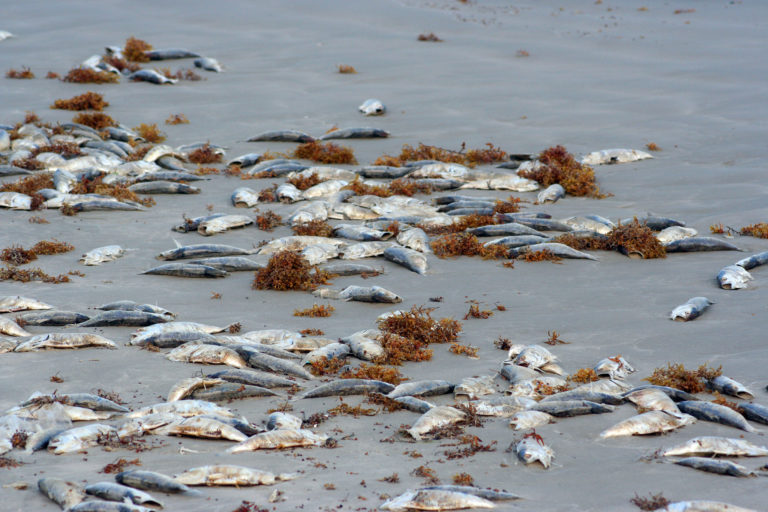
The primary organism responsible for Florida’s infamous red tides is a single-celled, microscopic alga known as Karenia brevis. This dinoflagellate, indigenous to the Gulf of Mexico, possesses unique characteristics that enable it to bloom under specific circumstances. Unlike many other phytoplankton, Karenia brevis has the ability to produce potent neurotoxins, commonly referred to as brevetoxins. These toxins are the direct cause of the harmful effects associated with red tide events, including the respiratory irritation experienced by humans and animals, and the massive fish kills that often accompany severe blooms.

Life Cycle and Toxin Production
The life cycle of Karenia brevis is multifaceted and not fully understood, but research indicates it involves both a planktonic (free-swimming) and a benthic (bottom-dwelling) stage. During its planktonic phase, the organism floats in the water column, photosynthesizing and reproducing. When conditions are favorable, typically in nutrient-rich waters, these populations can grow exponentially, forming what is known as a bloom.
The production of brevetoxins is a critical aspect of Karenia brevis‘s biology. While the exact ecological function of these toxins is still debated, theories suggest they may help the organism compete with other phytoplankton, deter grazers, or even facilitate nutrient acquisition. Regardless of the evolutionary advantage, the release of these toxins into the water is what defines a harmful algal bloom (HAB) and leads to the widespread ecological and economic consequences observed.
Environmental Triggers and Conditions
The initiation and intensification of Karenia brevis blooms are not solely dependent on the presence of the organism itself. A variety of environmental factors act as catalysts, creating conditions conducive to its proliferation. These triggers are often interconnected, making it challenging to pinpoint a single cause.
Nutrient Availability
One of the most significant factors influencing algal blooms, including red tide, is nutrient availability. While Karenia brevis is naturally present in the Gulf of Mexico, increased levels of nutrients, particularly nitrogen and phosphorus, can fuel rapid growth. These nutrients can originate from various sources:
- Upwelling: Natural oceanic processes can bring nutrient-rich deep waters to the surface. In the Gulf of Mexico, upwelling events can be particularly important for initiating blooms, especially offshore.
- Riverine Input: Runoff from agricultural lands, urban areas, and wastewater treatment facilities carries fertilizers and other nutrient-rich materials into coastal waters. While Karenia brevis is a marine organism, significant freshwater influxes can also introduce nutrients that support its growth, especially in estuarine areas that connect to the open Gulf.
- Atmospheric Deposition: Nutrients can also be transported through the atmosphere and deposited onto the ocean surface.
The debate over the specific role of human-introduced nutrients in exacerbating Karenia brevis blooms is ongoing. While the organism is indigenous, studies suggest that increased nutrient loading from anthropogenic sources can potentially enhance bloom intensity and duration, especially in coastal areas.
Water Temperature and Salinity
Optimal water temperatures and salinity levels play a crucial role in the growth and survival of Karenia brevis. The organism generally thrives in warm, subtropical waters. While precise temperature ranges can vary, blooms are often observed during the warmer months. Similarly, salinity plays a role; Karenia brevis is adapted to the saline environment of the Gulf of Mexico but can tolerate a range of salinities. Fluctuations, particularly those associated with heavy rainfall or drought, can influence bloom dynamics.
Ocean Currents and Wind Patterns
Ocean currents and wind patterns are instrumental in the transport and distribution of Karenia brevis populations. Prevailing winds and currents can move blooms from offshore bloom initiation zones closer to the coast, impacting different regions of the Florida Panhandle and Southwest Florida with varying intensity. For example, southeasterly winds can push offshore blooms towards the Florida coastlines of Sarasota, Lee, and Collier counties. Conversely, onshore winds can help concentrate the algae along the beaches.
Seasonal and Long-Term Cycles
Red tide events in Florida are often characterized by seasonal patterns, with certain times of the year being more prone to blooms. However, the timing and severity can also be influenced by broader climatic patterns and long-term oceanographic cycles. Factors such as El Niño or La Niña events, and changes in oceanic circulation, can indirectly affect the conditions that favor Karenia brevis growth.
Factors Influencing Bloom Severity and Duration
Beyond the initial triggers, several factors determine how severe a red tide bloom becomes and how long it persists. These include the organism’s growth rate, grazing pressure from other marine life, nutrient replenishment, and the physical environment.
Grazing Pressure
The population dynamics of Karenia brevis are also influenced by organisms that feed on phytoplankton. While brevetoxins can deter many grazers, some organisms may tolerate or even consume the algae, thereby controlling bloom growth. The abundance and diversity of these natural predators can therefore impact the overall size and duration of a red tide event.
Light Availability
As a photosynthetic organism, Karenia brevis requires sunlight. The depth of the water column, water clarity, and the presence of other plankton can affect the amount of light reaching the algae. While blooms can occur in a range of conditions, sufficient light penetration is essential for sustained growth.
Dissolved Oxygen Levels
During the decay of a large algal bloom, particularly after it has subsided, the decomposition process by bacteria consumes large amounts of dissolved oxygen in the water. This can lead to hypoxic (low oxygen) or anoxic (no oxygen) conditions, which are detrimental to most marine life, contributing to fish kills and impacting the broader marine ecosystem. This is a consequence of the bloom, rather than a direct cause of its initiation, but it is a critical aspect of the overall red tide phenomenon.

Monitoring and Prediction Efforts
Given the significant impact of red tides on Florida’s coastal communities, extensive monitoring and prediction efforts are underway. Organizations like the Florida Fish and Wildlife Conservation Commission (FWC) continuously sample water bodies to detect the presence of Karenia brevis and measure toxin levels. These efforts involve:
- Water Sampling: Regular collection of water samples from various coastal locations to analyze phytoplankton concentrations and identify the presence of Karenia brevis.
- Satellite Imagery: Using remote sensing technology to detect large-scale bloom patterns and monitor their movement.
- Model Development: Employing sophisticated oceanographic and atmospheric models to predict bloom trajectory and potential landfall.
These monitoring programs provide crucial information for public health advisories, beach closures, and the management of affected industries, such as fishing and tourism. Understanding the causes and triggers of red tide is fundamental to improving these prediction capabilities and developing effective mitigation strategies, thereby safeguarding the natural beauty and economic vitality of Florida’s vibrant coastline.
LifeOutOfTheBox is a participant in the Amazon Services LLC Associates Program, an affiliate advertising program designed to provide a means for sites to earn advertising fees by advertising and linking to Amazon.com. Amazon, the Amazon logo, AmazonSupply, and the AmazonSupply logo are trademarks of Amazon.com, Inc. or its affiliates. As an Amazon Associate we earn affiliate commissions from qualifying purchases.