
The history of Los Angeles is, in many ways, a history written in flame. As a sprawling metropolis nestled between the dry, mountainous terrain of the Santa Monica Mountains and the vast expanse of the Pacific Ocean, the city exists in one of the most fire-prone ecosystems on the planet. Understanding what causes fires in this region requires a deep dive into the intersection of geography, climate, and human development.
The Meteorological Engine: Santa Ana Winds
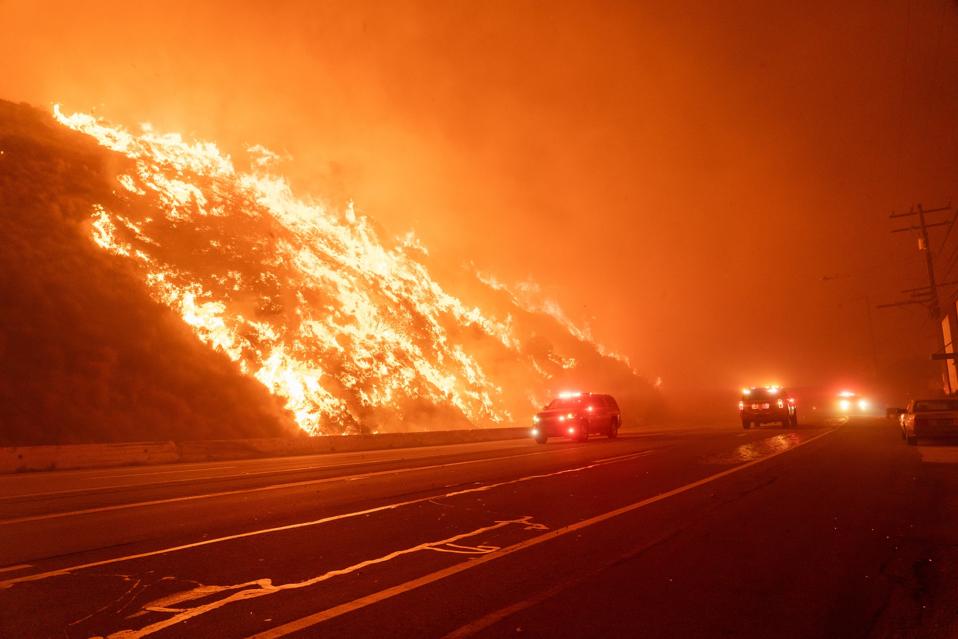
The primary driver of catastrophic fire events in Southern California is the phenomenon known as the Santa Ana Winds. These are strong, extremely dry, down-slope winds that originate inland in the Great Basin and the high deserts of Nevada.
The Mechanics of Heat
As these air masses move westward, they compress and heat up, rapidly dropping in humidity as they descend the steep slopes of the Transverse Ranges. By the time these gusts reach the Los Angeles Basin, they act like a hair dryer directed at parched vegetation. This creates a “perfect storm” scenario where even a single spark can lead to an uncontrollable conflagration within minutes.
Seasonal Vulnerability
The fire season in California traditionally peaks in the autumn months. During this time, the landscape is at its driest following a long, rainless summer. The arrival of the winds often catches residents and authorities in a state of high alert, as the fuel beds—composed of dry chaparral and scrub oak—are primed for ignition.
Human Impact and Infrastructure Vulnerabilities
While natural climate patterns set the stage, human activity remains the most frequent trigger for ignitions. Statistical data consistently shows that the overwhelming majority of wildfires in the urban-wildland interface are human-caused.
Electrical Grid Failures
One of the most significant sources of ignition in recent decades has been the aging electrical infrastructure managed by companies like Southern California Edison. In high-wind events, power lines can be downed by falling tree branches or may spark when high-voltage equipment fails. When these sparks land in dry brush, they can ignite fires that quickly overwhelm initial suppression efforts.
The Urban-Wildland Interface
Los Angeles is defined by its unique expansion into hilly, rugged terrain. Neighborhoods like Hollywood Hills and Bel Air are built directly into fire-adapted ecosystems. This proximity means that human infrastructure—ranging from discarded cigarettes to malfunctioning landscaping equipment—is constantly adjacent to highly combustible fuels. When a fire breaks out in these areas, it transitions from a wildland fire to an urban disaster, threatening iconic landmarks such as the Griffith Observatory and the sprawling residential complexes that define the city’s unique geography.

Vegetation and Ecology: The Role of Chaparral
To understand the frequency of fires, one must understand the biology of the landscape itself. The hills surrounding Los Angeles are primarily covered in chaparral, a shrubland plant community that has evolved with fire over millions of years.
Fire-Adapted Ecosystems
Chaparral species are remarkably resilient; many possess dormant seeds that germinate only when triggered by the intense heat of a fire. However, the modern frequency of fires in California is far higher than the natural historical cycle. When fires occur too frequently, the native shrubs cannot recover, and they are often replaced by invasive, non-native grasses.
The Grass-Fire Cycle
These invasive grasses are far more flammable than native shrubs and dry out much earlier in the season. This creates a feedback loop: the invasive grasses burn easily, leading to more frequent fires, which in turn kill off the native vegetation and provide more space for the invasive grasses to proliferate. This ecological shift has fundamentally altered the fire risk profile for areas surrounding the Santa Susana Mountains and beyond.
Management and Mitigation Strategies
The ongoing challenge for local government and fire departments, such as the Los Angeles Fire Department, is balancing development with rigorous safety standards. As climate change continues to increase the average temperature and decrease the moisture content of the soil, mitigation has become a top priority.
Defensible Space
Homeowners in high-risk zones are now required to maintain “defensible space”—a buffer zone where vegetation is thinned or removed to slow the advance of fire. Local ordinances enforce strict clearing requirements around structures, ensuring that fire crews have a fighting chance to protect property during active incidents.
Advanced Warning Systems
Technology has also become a cornerstone of prevention. Satellite monitoring, remote cameras placed throughout the San Gabriel Mountains, and sophisticated atmospheric modeling allow for rapid deployment of resources. By identifying the exact location of a “smoke report” in its infancy, responders can contain fires before they are whipped into infernos by the prevailing winds.

Resilience and Future Outlook
Despite these efforts, the reality of living in Southern California remains tied to the presence of fire. As the city evolves, the focus has shifted toward building “hardened” structures—homes made of fire-resistant materials, with dual-pane windows and enclosed eaves—that are capable of surviving the ember storms that often precede the main fire front.
The question of what causes fire in Los Angeles is not answered by a single event or action, but by a complex interplay of environmental factors and the undeniable reality of human presence in a wild landscape. By respecting the volatile nature of the Pacific coastal climate and adhering to strict mitigation protocols, the region continues to adapt to the persistent threat of wildfire, ensuring that the vibrancy of the city remains intact despite the challenges posed by its natural environment.
LifeOutOfTheBox is a participant in the Amazon Services LLC Associates Program, an affiliate advertising program designed to provide a means for sites to earn advertising fees by advertising and linking to Amazon.com. Amazon, the Amazon logo, AmazonSupply, and the AmazonSupply logo are trademarks of Amazon.com, Inc. or its affiliates. As an Amazon Associate we earn affiliate commissions from qualifying purchases.