
Florida, a state synonymous with sunshine, sandy beaches, and a vibrant tourism industry, also grapples with a unique geological phenomenon: sinkholes. These often sudden and dramatic depressions in the earth’s surface can disrupt landscapes, impact infrastructure, and even pose risks to residents and visitors alike. Understanding the underlying causes of sinkholes in the Sunshine State is crucial for appreciating the natural forces at play and for developing strategies to mitigate their effects, thereby safeguarding the very landmarks and destinations that draw millions to its shores each year.
The Limestone Foundation: Florida’s Karst Landscape
The primary driver behind Florida’s susceptibility to sinkholes lies in its geology. The state is predominantly composed of porous limestone and other soluble bedrock formations. This type of terrain is known as karst, a landscape characterized by features formed by the dissolution of soluble rocks.
Dissolution by Water: The Chemical Reaction
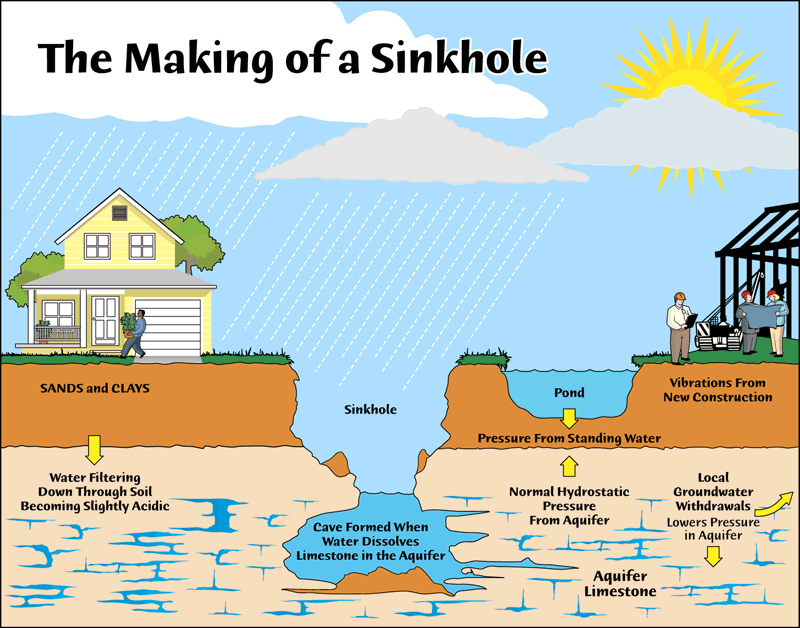
Underlying much of Florida is a thick layer of Cenozoic carbonate rocks, primarily the Ocala Limestone and the Tampa Limestone. These rocks are rich in calcium carbonate, a mineral that readily dissolves when exposed to acidic water. Rainwater, as it percolates through the atmosphere and soil, picks up carbon dioxide, forming weak carbonic acid. When this slightly acidic water encounters the limestone, a slow but persistent chemical reaction occurs, gradually widening existing cracks and creating underground voids.
Subsurface Cavities and Conduits
Over geological timescales, this dissolution process can create extensive networks of underground cavities, tunnels, and conduits within the limestone bedrock. These subterranean spaces can vary significantly in size, from small, unnoticeable pockets to massive caverns. The formation of these voids is a silent, unseen process that lays the groundwork for potential sinkhole development. The constant movement of groundwater through these passages also plays a critical role in shaping the subsurface topography.
Types of Sinkholes and Their Formation Mechanisms
While the underlying cause is consistent – dissolution of bedrock – sinkholes in Florida manifest through several distinct formation mechanisms, each with its own characteristics and triggers.
Dissolution Sinkholes
These are the most gradual type of sinkhole and are most common in areas where the soluble bedrock is exposed or lies very close to the surface. As mentioned, rainwater continuously dissolves the limestone, slowly widening existing fissures and creating shallow depressions. These sinkholes often go unnoticed for extended periods, appearing as subtle dips in the ground that can enlarge over time. They are less likely to cause sudden, catastrophic collapses.
Cover-Subsidence Sinkholes
This type of sinkhole occurs when the land surface is covered by a layer of sand or other unconsolidated material that lies above the soluble bedrock. As the bedrock below dissolves and forms cavities, the overlying sand begins to sag or “subside” downwards into the developing void. This process is also gradual, leading to a slow sinking of the ground. These can eventually lead to a more abrupt collapse if the overlying material can no longer support its own weight.
Cover-Collapse Sinkholes
These are the most dramatic and potentially dangerous type of sinkhole in Florida. They occur when a thick layer of unconsolidated material (sand, clay, etc.) overlies the soluble bedrock. In this scenario, the dissolving bedrock creates an underground void. Initially, the weight of the overlying soil and any structures on it are supported by the strength of the soil itself or by arching. However, as the void grows, the overburden can no longer support its own weight or the weight of anything on top of it. Eventually, the overburden collapses abruptly into the void, creating a sudden and often deep sinkhole. This is the type of sinkhole most frequently depicted in media and causes the most concern for residents and businesses, particularly in areas like Tampa Bay and Central Florida.
Contributing Factors to Sinkhole Activity
While the karst geology of Florida is the foundational reason for sinkhole occurrence, several external factors can accelerate or trigger their formation.
Groundwater Fluctuations

Changes in groundwater levels are a significant trigger for sinkhole activity. When groundwater levels drop, for instance, during prolonged dry periods or due to excessive groundwater pumping, the water that was previously supporting the roof of an underground cavity is removed. This loss of hydrostatic support can cause the roof to weaken and eventually collapse. Conversely, rapid increases in groundwater levels, such as after heavy rainfall or hurricanes, can also contribute by increasing pore water pressure within the soil, potentially destabilizing the overburden. The extensive groundwater withdrawal for agriculture and urban development in Florida can exacerbate these fluctuations.
Heavy Rainfall and Storm Events
Florida experiences frequent and sometimes intense rainfall, particularly during the wet season and hurricane season. Heavy downpours can saturate the ground, increasing the load on the subsurface and potentially washing away supporting soil into underground voids. The rapid infiltration of water can also accelerate the dissolution process in limestone. Events like Hurricane Ian, while primarily known for wind and storm surge, also bring significant rainfall that can contribute to geological instability over time.
Human Activities
Beyond groundwater pumping, other human activities can influence sinkhole formation:
- Construction and Heavy Loads: The weight of buildings, roads, and other infrastructure can stress the subsurface. Construction activities, such as dewatering for foundations, can also alter groundwater levels.
- Plumbing Leaks: Leaking water or sewer pipes can create localized areas of saturated soil or wash away subsurface materials, creating small voids that can enlarge and potentially lead to sinkhole formation.
- Explosives and Vibrations: While less common, the use of explosives for mining or construction, or even intense vibrations from heavy machinery or earthquakes (though rare in Florida), can trigger the collapse of already weakened subsurface structures.
Identifying and Mitigating Sinkhole Risks in Florida
Recognizing the prevalence of sinkholes, Florida has developed strategies for identification and mitigation to protect its valuable tourism assets and residential areas.
Geological Surveys and Mapping
The Florida Geological Survey plays a vital role in studying and mapping areas prone to sinkhole activity. By understanding the underlying geology and historical sinkhole occurrences, they can help identify regions with a higher risk profile. This information is crucial for urban planning, development decisions, and public awareness campaigns, especially in popular tourist hubs like Orlando and Miami.
Monitoring and Early Detection
While predicting sinkholes with certainty remains challenging, certain indicators can suggest potential instability. These can include:
- Sudden appearance of small depressions or cracks in the ground.
- Unexplained sagging or tilting of fences, trees, or utility poles.
- Unusual wilting of vegetation in specific areas, possibly due to water loss to subsurface cavities.
- Cloudy well water, which can indicate groundwater disturbance.
Homeowners and property managers are encouraged to be vigilant for these signs, especially in historically susceptible areas.
Sinkhole Remediation and Insurance
When a sinkhole occurs, professional remediation is essential. Common methods include:
- Grouting: Injecting a cement-like mixture into the void to stabilize the ground.
- Compaction Grouting: Pumping a grout mixture to densify and compact the soil.
- Backfilling: Excavating the sinkhole and filling it with stable material.
Florida also has specific insurance policies for sinkhole coverage, which homeowners can obtain to protect themselves against the significant costs associated with sinkhole damage. Understanding these policies is a key aspect of property ownership in the state.

Preserving Florida’s Natural Wonders and Attractions
The presence of sinkholes is an intrinsic part of Florida’s unique natural character, contributing to the formation of stunning natural features like the Devil’s Den Spring and numerous other springs that are vital to the state’s ecosystem and tourism. These geological processes, while posing challenges, are also responsible for some of Florida’s most captivating natural landmarks. By understanding and respecting these forces, Florida can continue to attract visitors to its diverse attractions, from the theme parks of Orlando to the pristine beaches of the Florida Keys, while managing the inherent geological risks. The ongoing study and awareness of sinkhole causes are integral to ensuring the continued safety and allure of the Sunshine State for generations to come.
LifeOutOfTheBox is a participant in the Amazon Services LLC Associates Program, an affiliate advertising program designed to provide a means for sites to earn advertising fees by advertising and linking to Amazon.com. Amazon, the Amazon logo, AmazonSupply, and the AmazonSupply logo are trademarks of Amazon.com, Inc. or its affiliates. As an Amazon Associate we earn affiliate commissions from qualifying purchases.