
The iconic island of Manhattan, a global epicenter of finance, culture, and fashion, holds a unique place within the administrative structure of New York State. For many visitors and even some residents, the question of which county Manhattan belongs to might seem straightforward, yet understanding its specific designation offers valuable insight into the region’s historical development and its governmental organization. Delving into this administrative detail not only clarifies geographical boundaries but also provides a foundational understanding for navigating the complexities of New York City‘s governance and its intricate relationship with the surrounding areas.

The Borough and the County: A Unified Identity
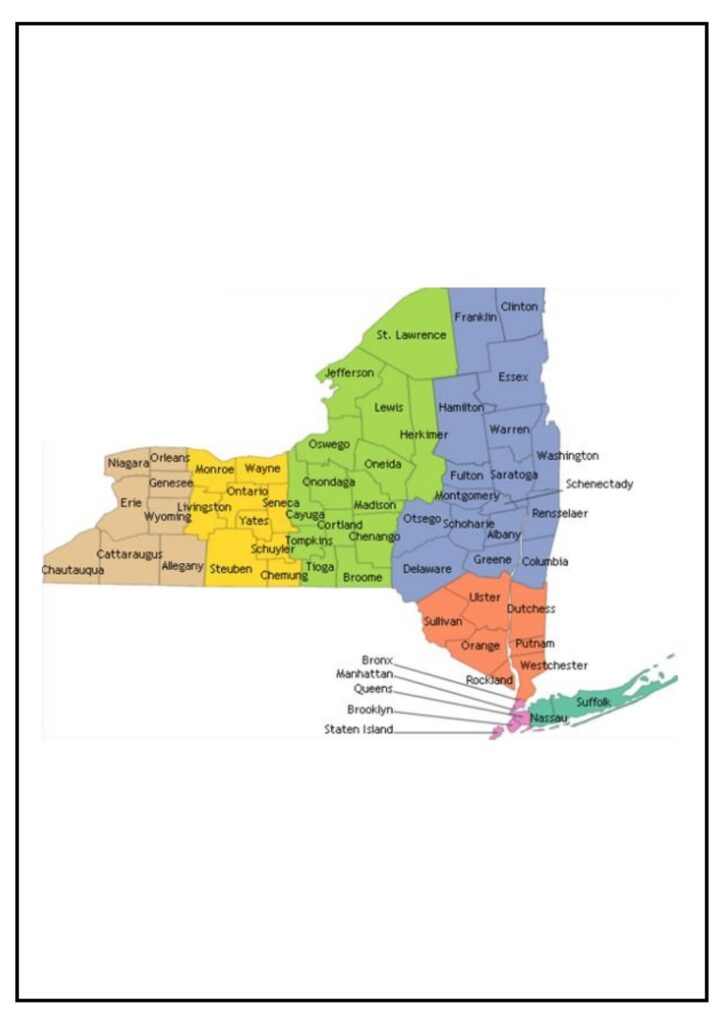
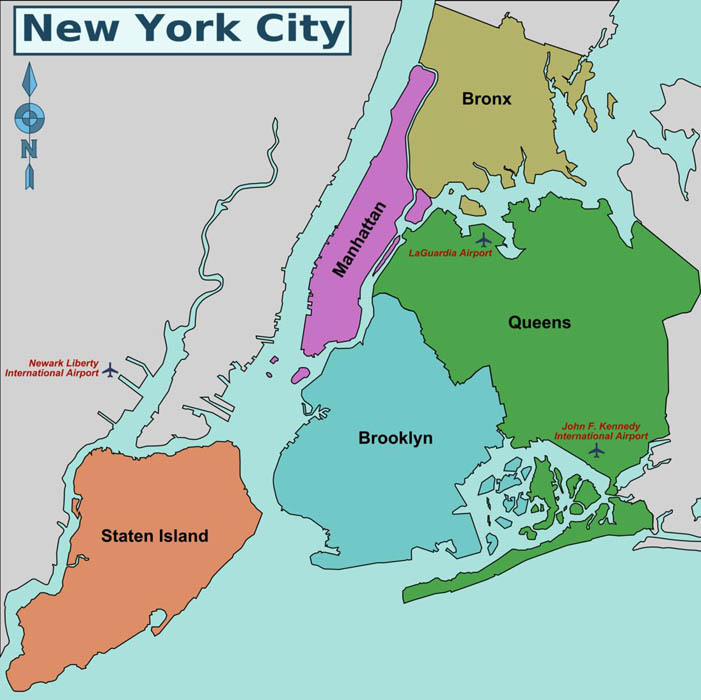
Manhattan is not merely an island; it is also one of the five boroughs that constitute New York City. These boroughs – Manhattan, Brooklyn, Queens, the Bronx, and Staten Island – are themselves counties or combinations of counties. This unique structure often leads to confusion, as the term “Manhattan” refers to both the geographical landmass and the administrative county.
Manhattan as New York County
The answer to “What county is Manhattan New York in?” is that Manhattan is New York County. This is a fundamental aspect of its identity. When discussing the administrative divisions of New York State, New York County is synonymous with the borough of Manhattan. This consolidation means that the governmental functions typically handled by a county executive or board of supervisors are largely managed by the city government in New York City, with the Manhattan Borough President serving in an advisory and advocacy role.
The historical roots of this fusion are deep. The current structure of New York City was established in 1898 with the consolidation of the existing City of New York (which was then largely coterminous with New York County) with the surrounding counties of Kings, Queens, and Richmond (now Staten Island), and parts of Westchester County. This monumental event created the modern New York City and inherently merged the functions of county government with city government for the constituent boroughs. Therefore, Manhattan as a borough directly encompasses and is identical to New York County.
Understanding the Five Boroughs as Counties
To further contextualize Manhattan’s place, it’s beneficial to understand how the other boroughs relate to counties:
- The Bronx: This borough is coterminous with Bronx County. When you are in the Bronx, you are in both the borough and the county.
- Brooklyn: This borough is coterminous with Kings County. Brooklyn was historically an independent city and then consolidated as Kings County before becoming part of the greater New York City.
- Queens: This borough is coterminous with Queens County. Similar to Brooklyn, Queens was comprised of several towns and villages that united to form Queens County before consolidation.
- Staten Island: This borough is coterminous with Richmond County. The name was officially changed to Richmond County in 1975, although it remains Staten Island as the borough.
This unique arrangement of the five boroughs, each corresponding to a county (or in the case of Manhattan and the Bronx, being coterminous with their respective counties), simplifies some aspects of governance while maintaining a distinct identity for each geographical and administrative area. For travelers, this means that when they are navigating Manhattan, they are, in essence, navigating New York County.
Navigating Manhattan: A County-Level Perspective
Understanding that Manhattan is New York County is more than just a geographical trivia point; it influences how one might perceive the area, particularly in relation to its history, legal framework, and logistical considerations. While the city government handles many of the day-to-day operations, the county designation is still relevant for various administrative and legal purposes.
Historical Context and Administrative Evolution
The establishment of counties in New York dates back to the colonial era. Originally, the area that is now Manhattan was part of a larger administrative region. Over time, as settlements grew and governance structures evolved, New York County was formally established. Its identity as the core of the burgeoning city that would eventually become the metropolis we know today was cemented early on.
The 1898 consolidation was a pivotal moment, significantly altering the administrative landscape. Prior to this, each borough might have had its own distinct county-level administration. The consolidation aimed to streamline services, create economies of scale, and unify the growing metropolitan area under a single municipal government. This effectively absorbed the county governments into the city government for the consolidated counties. Therefore, while New York County legally exists, its administrative functions are largely performed by the City of New York. This means that official documents, legal proceedings, and administrative processes often refer to New York County when dealing with matters pertaining to Manhattan.
Practical Implications for Visitors and Residents
For tourists planning a trip to Manhattan, the county designation might not directly impact their itinerary for visiting iconic landmarks like the Empire State Building or exploring neighborhoods like Greenwich Village. However, understanding the administrative structure can be useful for a deeper appreciation of the city’s organization. For instance, when looking up official records, zoning information, or understanding certain legal frameworks that still operate on a county basis, knowing that Manhattan is New York County is essential.
For residents, the county designation plays a more direct role in matters such as jury duty, property records, and local elections. While many services are delivered at the borough or city level, the underlying county structure is still the foundation for certain governmental operations. This can sometimes lead to dual designations appearing on official forms or in legal contexts. The Manhattan Borough President’s office, for example, acts as a representative for New York County within the broader New York City framework, advocating for the interests of its residents and businesses.
The Significance of County Boundaries in a Metropolitan Context
The concept of counties traditionally served as fundamental administrative divisions for organizing services, collecting taxes, and administering justice across a region. In a highly urbanized and consolidated environment like New York City, the role of counties has evolved, but their historical significance and residual administrative relevance remain.
Administrative Consolidation: A New York Model
The consolidation of the five boroughs into New York City in 1898 is a prime example of administrative consolidation. This process aimed to create a more unified and efficient governmental structure for a rapidly growing metropolitan area. By merging independent cities, towns, and villages, the city government could provide services more uniformly and manage development more comprehensively.
In the case of Manhattan, its existence as New York County and as a borough created a situation where the county government was inherently subsumed by the city government. This model is distinct from many other parts of the United States, where counties often operate with a greater degree of autonomy and a wider range of direct service provision, independent of a large consolidated city. The New York approach highlights a focus on city-wide governance, with county-level designations serving more as historical markers and frameworks for specific legal and administrative purposes.
Legal and Governmental Frameworks
The persistence of county designations, even within a consolidated city, is crucial for understanding the legal and governmental frameworks in place. For example, the court system in New York City is organized partly along county lines. The New York County Supreme Court, for instance, serves Manhattan and handles a wide array of civil and criminal matters. Similarly, district attorneys are elected on a county basis, with the District Attorney of New York County responsible for prosecuting crimes in Manhattan.
This dual structure can sometimes be confusing, but it reflects the historical development of governance and the enduring relevance of county-based legal traditions. For anyone engaging with the legal system in Manhattan, understanding its identity as New York County is fundamental. It provides clarity on which courts have jurisdiction, which prosecutor’s office is involved, and how legal processes are initiated and managed within that specific administrative boundary. This organizational clarity ensures that the legal machinery of justice functions effectively across the diverse landscape of New York City.
LifeOutOfTheBox is a participant in the Amazon Services LLC Associates Program, an affiliate advertising program designed to provide a means for sites to earn advertising fees by advertising and linking to Amazon.com. Amazon, the Amazon logo, AmazonSupply, and the AmazonSupply logo are trademarks of Amazon.com, Inc. or its affiliates. As an Amazon Associate we earn affiliate commissions from qualifying purchases.