
Delving into the administrative landscape of California, many travelers and curious minds often ponder: “What county is San Francisco?” The answer is as unique and captivating as the city itself. Unlike most major cities in the United States that reside within a larger county, San Francisco holds the distinctive status of being both a city and a county, simultaneously. This consolidated city-county structure is a fascinating anomaly that profoundly influences its governance, geography, and ultimately, its identity as a premier global destination for travel and tourism. This article will unravel the intricacies of San Francisco’s unique administrative status, exploring its historical roots, geographical implications, and how this singularity shapes the unparalleled experiences awaiting visitors, from its iconic landmarks to its diverse accommodation options and vibrant lifestyle.
The Unique Status: A City and a County
The concept of a consolidated city-county is not entirely unique in the United States, but San Francisco’s embodiment of this structure is particularly noteworthy given its prominence and historical significance. When you refer to the City and County of San Francisco, you are speaking of the exact same geographical and political entity. This means that San Francisco manages its municipal affairs (like fire departments, public works, and parks) and its county affairs (such as courts, public health, and voter registration) through a single unified government. This streamlined governance is a direct result of its historical development and geographical constraints, contributing to a distinctive urban fabric that is both efficient and charmingly compact.
A Brief History of Consolidation
The story of San Francisco’s consolidation dates back to the mid-19th century, a period of explosive growth and dramatic change in California. Following the California Gold Rush of 1849, San Francisco transformed almost overnight from a small settlement into a bustling port city, drawing a massive influx of prospectors, entrepreneurs, and adventurers from around the globe. This rapid expansion, however, brought with it significant challenges related to governance, public order, and infrastructure.
In 1850, when California officially became a state, San Francisco was initially part of a much larger county. However, the burgeoning city soon found its needs diverging from those of the more rural areas of the county. The administrative complexities of managing a rapidly urbanizing population within a traditional county structure became increasingly apparent. To address these issues, the California State Legislature passed the Consolidation Act of 1856. This landmark legislation formally merged the municipal government of the City of San Francisco with the county government of San Francisco County. The act created a unified government responsible for all public services within its boundaries, a system that has largely endured to this day. This consolidation was a pragmatic response to the unique demands of a booming urban center, establishing a model that allowed for more centralized planning and administration, paving the way for the development of the metropolitan icon we know today.
Geographical Footprint and Urban Density
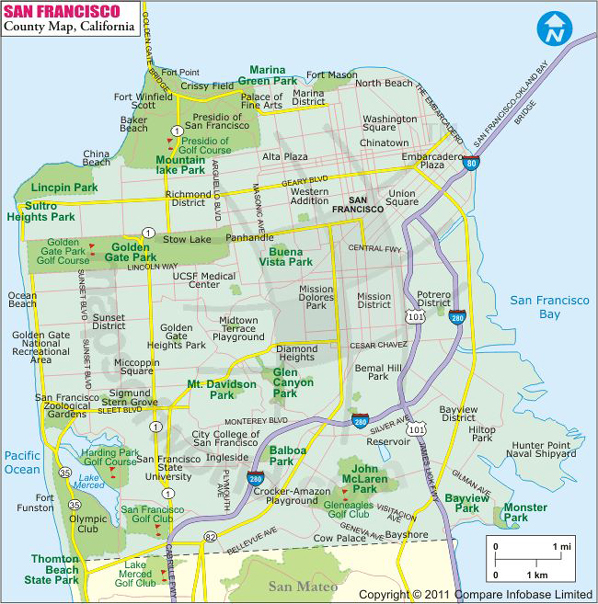
The geographical extent of the City and County of San Francisco is remarkably small compared to many other major cities. Encompassing a land area of just under 47 square miles (approximately 121 square kilometers), it is situated on the northern tip of the San Francisco Peninsula. This compact size, combined with a dense population, creates a distinctive urban environment. The peninsula location, bordered by the Pacific Ocean to the west and San Francisco Bay to the north and east, defines its natural boundaries and has profoundly influenced its development.
The limited land available has led to a vertical urban landscape in many areas, characterized by towering skyscrapers alongside historic Victorian houses. It has also necessitated innovative solutions for public transportation, green spaces, and community planning. The city’s geography is famously hilly, with iconic steep streets offering breathtaking vistas at every turn. This unique topographical character not only adds to the city’s charm but also dictates its infrastructure, encouraging a vibrant walking culture and a robust public transit system, including its world-famous Cable Cars. The contained nature of the city-county means that virtually all of San Francisco’s celebrated attractions, diverse neighborhoods, and economic hubs are within relatively easy reach, making it an incredibly accessible destination for travelers eager to explore its depths. This dense, vibrant environment ensures that visitors are always close to their next adventure, whether it’s a stroll through a historic district or a visit to a world-class museum.

San Francisco’s Allure: A Hub of Travel and Tourism
The consolidated city-county status has, in many ways, amplified San Francisco’s appeal as a travel destination. The unified administration can focus resources efficiently within its distinct boundaries, contributing to well-maintained public spaces, a strong civic identity, and a coherent tourism strategy. This concentrated effort allows the city to excel in offering a rich tapestry of experiences that draw millions of visitors annually, cementing its reputation as a global icon. Its compact nature means that a diverse range of attractions, from natural wonders to cultural treasures, are packed into a relatively small area, maximizing the visitor experience.
Iconic Landmarks and Must-See Attractions
San Francisco is synonymous with a collection of landmarks that are instantly recognizable worldwide, each offering a unique glimpse into the city’s history, culture, and natural beauty. The most prominent of these is undoubtedly the Golden Gate Bridge. This engineering marvel, a majestic Art Deco suspension bridge, spans the entrance to San Francisco Bay, connecting the city to Marin County. Walking or biking across its span provides unparalleled views of the city skyline, the bay, and the Pacific Ocean, a truly unforgettable experience that tops many travel itineraries.
Another compelling attraction is Alcatraz Island, often referred to as “The Rock.” This infamous former federal prison, located just a short ferry ride from Fisherman’s Wharf, offers a chilling yet fascinating look into its past as home to some of America’s most notorious criminals. The island also provides stunning panoramic views of the city and the Golden Gate Bridge, making it a must-visit for history buffs and sightseers alike.

Fisherman’s Wharf itself is a vibrant hub of activity, famous for its fresh seafood, bustling Pier 39 with its barking sea lions, and charming street performers. From here, visitors can embark on bay cruises, visit the Aquarium of the Bay, or simply soak in the lively atmosphere. The historic Cable Cars, a National Historic Landmark, offer not just a mode of transport but an experience in themselves, clattering up and down the city’s steep hills and providing spectacular views, particularly along the Hyde Street route.
Other notable landmarks include the crookedest street in the world, Lombard Street, a winding one-block section with eight hairpin turns; the expansive urban oasis of Golden Gate Park, which houses the California Academy of Sciences and the de Young Museum; and the Ferry Building Marketplace, a foodie paradise located on the Embarcadero. Each of these attractions is easily accessible within the compact city-county, allowing visitors to maximize their exploration of San Francisco’s diverse offerings.
Diverse Neighborhoods and Cultural Experiences
Beyond its famous landmarks, San Francisco’s true magic lies in its distinct neighborhoods, each possessing a unique character, history, and cultural identity. The city-county’s compact size and historical development have fostered a remarkable mosaic of communities, making exploration a continuous journey of discovery.
Chinatown, one of the oldest and most established Chinatowns in North America, is a sensory delight. Its vibrant streets are adorned with ornate archways, traditional markets, authentic restaurants, and hidden temples, offering a deep dive into Chinese heritage and cuisine. Not far, the Mission District pulses with a rich Latin American cultural vibrancy, evident in its colorful murals, delicious taquerias, and lively streets. It’s a hub for art, food, and a bohemian spirit.
Haight-Ashbury, the birthplace of the 1960s counterculture movement, still retains much of its psychedelic charm with Victorian homes, vintage shops, and a free-spirited vibe. Nearby, the Castro District stands as a beacon of LGBTQ+ rights and culture, known for its vibrant nightlife, historic Castro Theatre, and inclusive community.
North Beach, historically the Italian quarter and the heart of the Beat Generation, offers a blend of European charm, literary history, and bustling cafes. It’s an ideal spot for enjoying espresso, fresh pasta, and live music. Meanwhile, the upscale Pacific Heights neighborhood boasts grand Victorian and Edwardian mansions and provides breathtaking views of the bay, showcasing the city’s luxurious side.
Each neighborhood offers a distinct flavor of local culture, food, and activities, inviting travelers to explore beyond the typical tourist routes and immerse themselves in the authentic lifestyle of San Francisco. From budget-friendly eats to luxury boutiques, the diversity within the city-county ensures an experience tailored to every taste and interest.
Navigating Accommodation and Lifestyle in the City-County
The unique city-county structure of San Francisco also has a significant impact on its accommodation landscape and the lifestyle it offers. The density and relatively small area mean that while options are plentiful, visitors can experience everything from opulent luxury to charming boutique stays, often within close proximity to major attractions and transportation hubs. This concentrated environment fosters a dynamic lifestyle that is both fast-paced and deeply connected to local culture and the surrounding natural beauty.
From Luxury Stays to Budget-Friendly Options
As a world-class travel destination, San Francisco offers an extensive range of accommodation options to suit every preference and budget. For those seeking opulence and top-tier amenities, the city boasts numerous luxury hotels, particularly clustered around Union Square and along the waterfront. Iconic establishments like the St. Regis San Francisco, the Ritz-Carlton San Francisco, and the Palace Hotel offer exquisite suites, world-class dining, and impeccable service, perfect for a high-end travel experience. These hotels often provide comprehensive services for business travelers and those seeking a pampered retreat.
Mid-range hotels are plentiful across various districts, offering comfortable stays with modern amenities. Areas like SoMa (South of Market) are popular for their contemporary hotels catering to both business and leisure travelers, often close to convention centers and tech companies. For a more boutique experience, numerous charming hotels can be found in neighborhoods like Nob Hill and North Beach, each with its unique character and often housed in beautifully preserved historic buildings.
Budget-conscious travelers also have a wide array of choices, from hostels and guesthouses in vibrant areas like the Tenderloin or near Civic Center, to more affordable chain hotels scattered throughout the city-county. Beyond traditional hotels, San Francisco also offers a burgeoning market for short-term apartment rentals and villas, providing a more local and often more spacious accommodation experience, ideal for families or longer stays. When considering accommodation, it’s always advisable to use booking platforms that allow for comparison and to read reviews, ensuring the best fit for individual travel needs. Given the city’s compact nature, many hotels, regardless of price point, offer excellent access to public transportation, making exploration convenient.
Culinary Delights and Unique Local Lifestyles
San Francisco’s culinary scene is as diverse and dynamic as its population, a testament to its status as a global city-county. The food culture here is deeply rooted in innovation, sustainability, and a reverence for fresh, local ingredients, largely thanks to its proximity to California’s rich agricultural regions and the abundant seafood from the Pacific. From Michelin-starred restaurants pushing the boundaries of gastronomy to casual eateries serving up delectable street food, the city offers an unparalleled culinary journey.
Food tourism is a major draw, with visitors eager to experience everything from the legendary sourdough bread and Dungeness crab at Fisherman’s Wharf, to the authentic dim sum in Chinatown, and the vibrant Mission-style burritos. The city is also a pioneer in the farm-to-table movement, with numerous restaurants sourcing ingredients directly from local farms. The Ferry Building Marketplace is a perfect example of this ethos, housing an array of artisanal food vendors, gourmet shops, and renowned restaurants, making it a must-visit for any foodie.
The lifestyle in San Francisco is characterized by a blend of progressive thinking, outdoor activity, and a strong sense of community. Despite its urban density, residents and visitors alike enjoy easy access to natural beauty, from the expansive Golden Gate Park to scenic coastal trails. The city embraces a culture of walking and cycling, fostered by its pleasant climate and pedestrian-friendly infrastructure. It is also a hub of arts and culture, with world-class museums, theaters, and a vibrant live music scene.
Furthermore, San Francisco’s proximity to Silicon Valley imbues it with an innovative, tech-savvy energy that permeates various aspects of daily life and entrepreneurship. This unique blend of history, culture, innovation, and natural beauty creates a distinctive lifestyle that is both sophisticated and laid-back, offering an enriching experience for anyone who chooses to explore its dynamic streets. Whether seeking luxury travel, a budget-friendly adventure, a family trip, or a business stay, San Francisco provides a backdrop of unparalleled experiences, all within the bounds of its self-contained city-county.
In conclusion, the answer to “What county is San Francisco?” is that it is its own county. This singular status as a consolidated city-county is more than just an administrative detail; it is a foundational element that has shaped its history, defined its compact yet diverse geography, and contributed significantly to its enduring appeal as a vibrant hub of travel, tourism, and innovation. From its iconic landmarks to its rich cultural tapestry, and from its diverse accommodation options to its unique lifestyle, San Francisco offers an experience that is truly one-of-a-kind, inviting visitors to discover the magic encapsulated within its distinctive boundaries.
LifeOutOfTheBox is a participant in the Amazon Services LLC Associates Program, an affiliate advertising program designed to provide a means for sites to earn advertising fees by advertising and linking to Amazon.com. Amazon, the Amazon logo, AmazonSupply, and the AmazonSupply logo are trademarks of Amazon.com, Inc. or its affiliates. As an Amazon Associate we earn affiliate commissions from qualifying purchases.