
For individuals who choose to incorporate firearms into their personal security, sport, or collection, understanding the specific legal framework governing gun ownership in California is paramount. California stands out among U.S. states for its comprehensive and often intricate firearm regulations, creating a distinct “lifestyle” landscape for gun owners. Navigating these requirements demands diligence and a commitment to responsible conduct. This guide provides an insightful overview of the essential steps and considerations for purchasing a firearm in the Golden State, emphasizing the unique aspects that shape the experience for its residents.
Understanding California’s Unique Firearm Landscape
California’s approach to firearm regulation is among the strictest in the nation, reflecting a legislative philosophy centered on public safety. This rigorous environment means that the process of acquiring a firearm here differs significantly from many other states. For those considering gun ownership as part of their California lifestyle, it’s crucial to acknowledge this distinct legal terrain from the outset. The state continuously updates its laws, adding layers of complexity that necessitate ongoing awareness and compliance. From background checks and waiting periods to specific firearm features and storage mandates, every step is carefully delineated, requiring prospective owners to be thoroughly informed.
This landscape isn’t merely about restrictions; it’s about a highly structured process designed to ensure that firearm ownership is undertaken responsibly. Unlike some areas where gun purchases might be relatively straightforward, in California, it’s a multi-stage journey that prioritizes education, verification, and safety. Embracing this reality is the first step toward successful and legal firearm acquisition within the state.
The Foundational Requirements for Gun Ownership
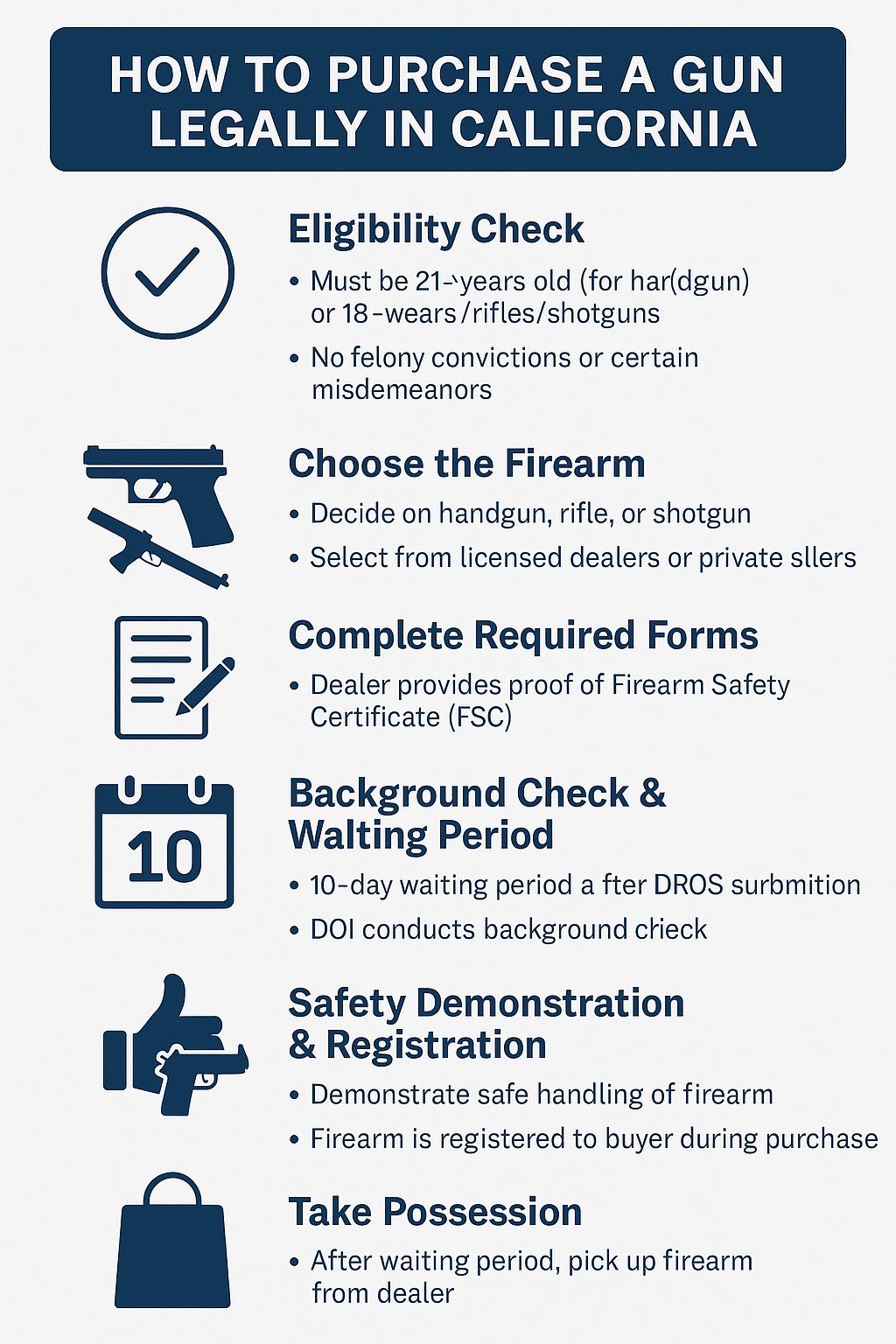
Before even considering a specific firearm, prospective buyers in California must meet several fundamental eligibility criteria and complete mandatory preliminary steps. These requirements are the bedrock of responsible firearm ownership in the state, shaping the lifestyle of any gun owner.
Eligibility and Residency
The first hurdle is determining eligibility. To purchase a handgun in California, an individual must generally be 21 years of age or older. For long guns (rifles and shotguns), the minimum age is also typically 21, with some narrow exceptions for those aged 18-20, such as active-duty military personnel. Beyond age, several factors can disqualify an individual, including felony convictions, certain misdemeanor convictions (especially those involving domestic violence), current restraining orders, and specific mental health adjudications.
Crucially, prospective buyers must prove California residency. This usually requires a valid California Driver’s License or ID card, along with secondary proof of residency such as a utility bill, vehicle registration, or a residential lease. For handguns, an additional, distinct proof of residency beyond the ID may be required, emphasizing the state’s stringent verification process. This focus on verifiable residency ensures that firearms are acquired by legitimate California residents, adding a layer of control to the overall lifestyle of gun ownership.
The Firearm Safety Certificate (FSC)
A cornerstone of California’s gun laws is the mandatory Firearm Safety Certificate (FSC). This certificate demonstrates that the individual has passed a written test covering basic firearm safety rules, laws, and responsibilities. The test consists of 30 multiple-choice questions, requiring a score of at least 75% to pass.
The FSC is typically obtained at gun stores or other certified locations by Department of Justice-approved instructors. It’s valid for five years and is a prerequisite for purchasing any firearm in California, whether from a licensed dealer or through a private party transfer. This emphasis on safety education underscores California’s commitment to fostering a responsible gun-owning lifestyle, ensuring that every new owner possesses fundamental knowledge before acquiring a weapon.
Approved Firearms and the Roster
California maintains a “Handgun Roster” of firearms certified by the Department of Justice (DOJ) as meeting specific safety and technological standards. Only handguns listed on this roster can be sold, offered for sale, or manufactured in California. The roster includes requirements for features like a loaded chamber indicator, a magazine disconnect mechanism, and, for newer additions, microstamping technology, though the latter has severely limited new models from being added.
For rifles and shotguns, while there isn’t a direct “roster” in the same vein, the state has a strict “assault weapon” ban. This ban defines certain semi-automatic firearms with specific cosmetic or functional features (like pistol grips, telescoping stocks, or flash suppressors) as illegal “assault weapons,” making them unlawful to purchase or possess unless they were legally owned prior to the ban and registered. Understanding these specific firearm definitions and the roster system is a critical part of the California gun-owning lifestyle, as it dictates what types of firearms are legally accessible.
The Purchase Process: From Selection to Pickup
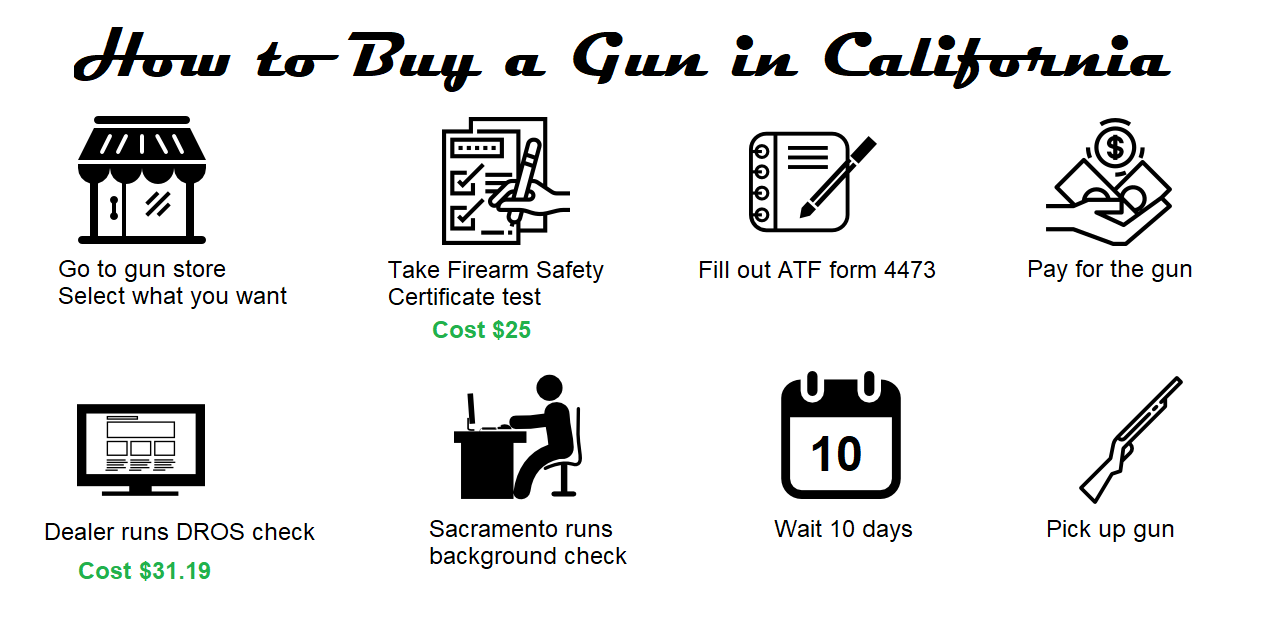
Once the foundational requirements are met, the actual purchase process in California follows a structured legal pathway, involving licensed dealers and mandatory background checks. This detailed process is an integral part of the responsible gun owner’s lifestyle.
Licensed Dealers (FFLs)
All firearm purchases and transfers in California must go through a federally licensed firearm dealer (FFL). This includes both new purchases from a retailer and private party transfers between individuals. The FFL acts as an intermediary, ensuring all state and federal laws are followed. They are responsible for conducting the background check, processing the necessary paperwork, and holding the firearm until the mandatory waiting period has expired. Engaging with a reputable FFL is a key part of navigating the gun ownership lifestyle in California.
The DROS (Dealer Record of Sale) Process
The core of the purchase process is the Dealer Record of Sale (DROS) system. When a buyer selects a firearm, the FFL initiates the DROS, which includes submitting the buyer’s personal information to the California Department of Justice (DOJ) for a comprehensive background check. This check verifies eligibility based on state and federal prohibitions.
Crucially, California mandates a non-waivable 10-day waiting period from the date of DROS submission before the firearm can be picked up. During this period, the DOJ completes its background investigation. This waiting period applies to all firearm purchases and is a defining characteristic of the California gun purchase lifestyle, designed to provide a “cooling-off” period. Buyers are also generally limited to purchasing one handgun or semi-automatic centerfire rifle within any 30-day period.
Proof of Residency and Storage
As mentioned earlier, proof of California residency is critical. For handgun purchases, a secondary form of residency proof (beyond a California ID) is usually required, such as a recent utility bill, car registration, or a valid concealed carry permit. This stringent verification ensures compliance.
Furthermore, California law requires that all firearms be sold with an approved safety device (e.g., a lockbox or cable lock) or that the purchaser present proof of owning an approved safe. This is part of the state’s safe storage mandate, which is a significant component of the responsible firearm ownership lifestyle, even before the firearm leaves the store.
Ammunition Purchases
In addition to firearm purchases, California also regulates ammunition sales. As of July 1, 2019, all ammunition purchases must go through a licensed ammunition vendor, who conducts a background check on the buyer. This check verifies that the purchaser is not prohibited from owning firearms. This additional step in acquiring ammunition is yet another unique aspect of the gun ownership lifestyle in California.
Beyond the Purchase: Ongoing Responsibilities and California Lifestyle
Acquiring a firearm in California is merely the beginning of the journey. The state imposes ongoing responsibilities that define the lifestyle of a conscientious gun owner, extending beyond the initial transaction to everyday storage, transport, and continuous legal awareness.
Safe Storage and Transport
California has comprehensive safe storage laws designed to prevent unauthorized access to firearms, especially by minors. These laws require firearms to be stored in a locked container or disabled with a locking device when not in use. Failure to comply can result in severe penalties. This commitment to secure storage is not just a legal mandate but a core ethical component of responsible firearm ownership.
When transporting firearms, they must be unloaded and stored in a locked container. Handguns must be transported in a locked container in the trunk or a locked container other than the glove compartment or console. Long guns must also be unloaded and in a locked container, though the location within the vehicle is less strictly specified. Understanding and adhering to these transport rules is essential for maintaining a lawful and safe firearm lifestyle in California.
Understanding Local Ordinances
While state law provides a broad framework, individual cities and counties in California can enact their own, often stricter, firearm ordinances. For example, cities like Los Angeles and San Francisco have implemented additional rules regarding magazine capacity, safe storage requirements, or even bans on certain types of firearms or ammunition.
It is incumbent upon the firearm owner to research and understand both state laws and any local regulations that apply to their specific residence or areas they frequent. This layered legal landscape means that the “gun owner lifestyle” in California requires a higher degree of vigilance and continuous research to remain fully compliant.
Continuous Education
The firearm laws in California are not static. The legislative environment is dynamic, with new laws and amendments frequently being proposed and enacted. A responsible gun owner in California makes continuous education about these evolving laws a part of their lifestyle. Staying informed through reputable sources, joining local firearm owner associations, and consulting with FFLs are all crucial steps to ensure ongoing compliance and to adapt to any changes in the legal landscape. This proactive approach underscores the seriousness of firearm ownership in the state and helps foster a community of responsible and law-abiding individuals.
LifeOutOfTheBox is a participant in the Amazon Services LLC Associates Program, an affiliate advertising program designed to provide a means for sites to earn advertising fees by advertising and linking to Amazon.com. Amazon, the Amazon logo, AmazonSupply, and the AmazonSupply logo are trademarks of Amazon.com, Inc. or its affiliates. As an Amazon Associate we earn affiliate commissions from qualifying purchases.