
Embarking on a new chapter in the Sunshine State, whether for a sun-drenched vacation, a long-term residency, or even a business venture, often involves navigating the practicalities of vehicle ownership. For many, this means understanding the requirements for registering a vehicle in Florida. This process, while straightforward, requires specific documentation and adherence to certain procedures. This guide aims to demystify the steps involved in getting your vehicle legally registered in Florida, ensuring you can hit the open roads of the Sunshine State without a hitch.
Understanding the Florida Vehicle Registration Process
Registering a vehicle in Florida is a mandatory step for all residents and those who will be keeping a vehicle in the state for an extended period. The primary goal of registration is to ensure vehicles are properly identified, insured, and have paid the necessary fees and taxes. The Florida Department of Highway Safety and Motor Vehicles (FLHSMV) oversees this process, and while their online resources are extensive, understanding the core requirements beforehand can save you time and potential frustration. The process typically involves proving ownership, confirming insurance, and paying applicable fees.
Key Requirements for Vehicle Registration
To successfully register your vehicle in Florida, you’ll need to gather several essential documents and information. These requirements are designed to verify your identity, establish legal ownership of the vehicle, and confirm that the vehicle meets safety and environmental standards where applicable.
Proof of Ownership
The most crucial element in registering any vehicle is demonstrating that you are its rightful owner. For a new vehicle purchased from a dealership, the dealership will usually handle much of the initial paperwork. However, if you are purchasing a used vehicle, especially from a private seller, or if you are bringing a vehicle from another state, you will need to provide specific documentation.
- For New Vehicles: If you buy a new car, truck, or motorcycle from a Florida dealership, they will typically issue you a temporary tag and submit the necessary paperwork to the FLHSMV on your behalf. You will then receive your permanent registration and title by mail. This simplifies the process considerably for new vehicle purchases within the state.
- For Used Vehicles Purchased in Florida: When buying a used vehicle from a private seller within Florida, you will need the vehicle’s title, properly signed over to you by the previous owner. You will also need a completed title application form. If there is a lien on the title, you will need a lien satisfaction letter from the lienholder.
- For Used Vehicles Purchased Out of State: Bringing a vehicle from another state to Florida requires a bit more attention. You will need the out-of-state title, properly assigned to you. Additionally, you will likely need a VIN (Vehicle Identification Number) inspection. This inspection verifies that the vehicle’s VIN matches the documentation and that the vehicle has not been reported stolen. For vehicles from certain states or those that haven’t been titled previously, a bill of sale may also be required.
- Leased Vehicles: If your vehicle is leased, the leasing company typically handles the initial registration process. You will usually receive temporary registration and then your permanent registration from them.
Proof of Florida Insurance
Florida law mandates that all registered vehicles must have continuous Florida insurance coverage. This means you cannot have a gap in your insurance from the moment you register your vehicle. The minimum required coverage includes:
- Property Damage Liability (PDL): At least $10,000 for damage to another person’s property.
- Personal Injury Protection (PIP): At least $10,000 in PIP benefits. PIP covers medical expenses and lost wages for you and your passengers, regardless of who is at fault in an accident.
You will need to present proof of this insurance when you go to register your vehicle. This proof typically comes in the form of an insurance policy binder or an insurance card issued by your Florida-licensed insurance provider. It’s crucial to obtain this coverage before you attempt to register your vehicle, as the registration process will not be completed without it. Many insurance companies offer online portals or direct communication with Florida vehicle registration offices to facilitate this verification.
Identification and Residency Verification
To register a vehicle in Florida, you will need to prove your identity and, in most cases, your Florida residency. Acceptable forms of identification typically include:
- Valid Driver’s License: A Florida driver’s license is the most common and preferred form of identification. If you are new to the state, you will need to obtain a Florida driver’s license within 30 days of establishing residency.
- Out-of-State Driver’s License: If you have an out-of-state driver’s license, you will still need to provide proof of Florida residency.
- Other Valid Government-Issued Identification: In some cases, other forms of government-issued photo identification may be accepted, but a Florida driver’s license is highly recommended.
Proof of Florida residency can be established with documents such as:
- Utility bills (electricity, water, gas) in your name at your Florida address.
- A lease agreement or mortgage statement for your Florida property.
- Bank statements showing your Florida address.
- A voter registration card.
It’s advisable to check the FLHSMV website for the most current and comprehensive list of acceptable identification and residency documents, as requirements can be updated.
Vehicle Identification Number (VIN) Inspection
For vehicles being registered in Florida for the first time, particularly those coming from out of state or from countries other than the United States, a VIN inspection is often required. This is a safety measure to ensure the vehicle is not stolen and that the VIN on the vehicle matches the documentation presented.
- Where to get a VIN Inspection: VIN inspections can typically be performed by:
- Law enforcement officers (sheriff’s office or police department).
- Licensed dealerships.
- County tax collector offices that offer registration services.
The inspector will examine the VIN plates on your vehicle and record the number on a state-provided form. This completed form is then submitted as part of your registration application. Some exceptions may apply, such as for new vehicles purchased from a Florida dealership.
Fees and Taxes
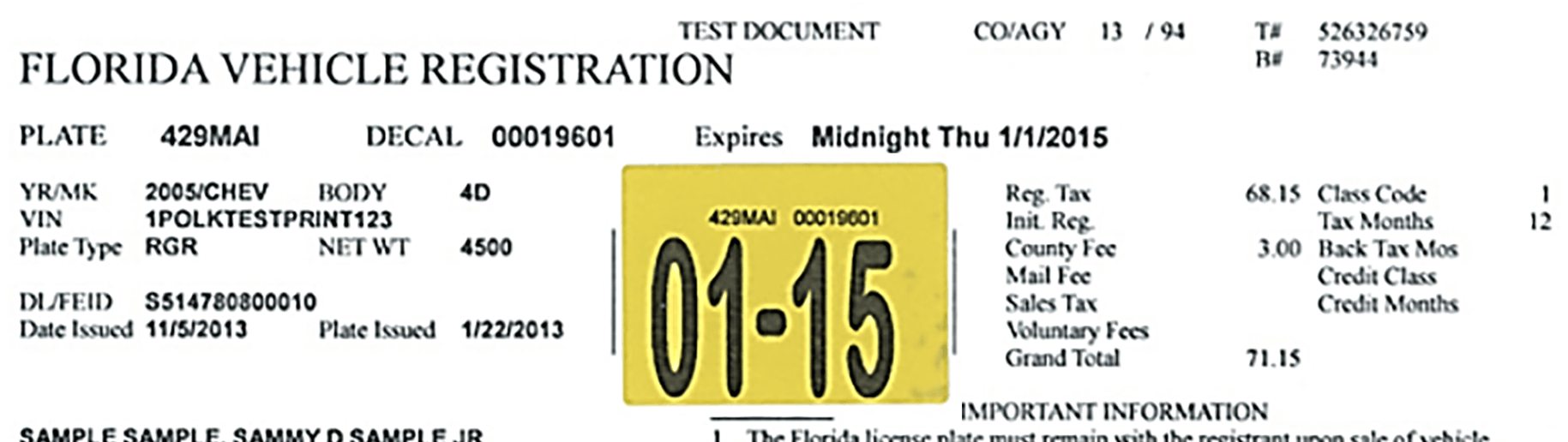
Registering a vehicle in Florida involves several fees and taxes. These vary depending on the type of vehicle, its weight, its age, and whether you are titling it for the first time in Florida.
- Title Fee: A fee is charged for issuing a new Florida title.
- Registration Fee: This fee is based on the type and weight of the vehicle. For example, passenger cars, SUVs, and light trucks have different fee structures. Motorcycle registration fees are generally lower.
- Sales Tax (if applicable): If you purchased the vehicle recently and have not paid sales tax in another state, you will likely owe Florida sales tax on the purchase price of the vehicle. The rate varies by county. If you purchased the vehicle out of state, you may receive credit for sales tax paid in that state.
- Plate Fee: There is a fee for the license plate itself.
- Other Fees: Additional fees may apply for specialty plates, expedited services, or other specific circumstances.
It’s essential to have a good estimate of these costs before you visit the registration office. The FLHSMV website provides fee calculators and schedules to help you determine the approximate amount you will need to pay.
Navigating the Registration Process: Where to Go
Once you have gathered all the necessary documentation, the next step is to submit your application and complete the registration process. In Florida, this is typically done through your local county tax collector’s office or, in some cases, through private tag and title agencies.
The Role of the County Tax Collector’s Office
County tax collector offices are the primary point of contact for most vehicle registration and titling services in Florida. These offices act as agents for the FLHSMV and are equipped to handle:
- Title applications
- Vehicle registration renewals and new registrations
- Issuing license plates
- Collecting applicable fees and taxes
- Issuing driver licenses and ID cards
You can visit any county tax collector’s office in Florida, regardless of where you reside within the state. It’s often a good idea to check the specific hours of operation and whether appointments are required for the office you plan to visit, as wait times can vary. Many offices offer online services for renewals, but initial registrations and title transfers typically require an in-person visit.
Private Tag and Title Agencies
For added convenience, especially if you are on a tight schedule or prefer a more personalized service, private tag and title agencies offer similar services to the county tax collector offices. These privately owned businesses are licensed by the state to process vehicle registrations and titles. While they may charge a small additional service fee, they can often expedite the process and provide a more streamlined experience. This can be particularly helpful for those who are new to Florida and unfamiliar with the local government offices.
Special Circumstances and Considerations
While the general requirements for vehicle registration in Florida are consistent, there are specific situations that may involve additional steps or unique considerations. Understanding these can prevent delays and ensure a smoother process.
Registering a Vehicle from Out of State
As mentioned earlier, bringing a vehicle from another state to Florida requires careful attention to detail. Beyond the title and proof of insurance, the VIN inspection is a key component. If your vehicle has a VIN that differs from what is standard for United States vehicles (e.g., a vehicle imported from another country), you may need additional documentation and inspections. It is advisable to contact the FLHSMV or your local county tax collector’s office in advance to clarify any specific requirements for non-standard VINs or imported vehicles.
Specialty Plates and Customization
Florida offers a wide array of specialty license plates, ranging from plates supporting environmental causes like sea turtles to those honoring universities and military branches. If you are interested in a specialty plate, you will need to select your desired plate design when you register your vehicle. There is typically an additional annual fee associated with specialty plates. You can browse the available specialty plate options on the FLHSMV website.
Transferring a Title and Registration
If you are purchasing a vehicle from a friend or family member within Florida, or if you are selling your vehicle to someone in the state, the title and registration need to be properly transferred. The seller must sign over the title to the buyer, and the buyer is responsible for transferring the title and registering the vehicle in their name within 30 days of purchase. Failure to do so can result in penalties.
Motorcycles, RVs, and Commercial Vehicles
While the core requirements remain similar, there can be specific nuances for registering different types of vehicles. Motorcycles require proof of insurance and a valid title. RVs may have different weight-based registration fees. Commercial vehicles, such as trucks used for business purposes, often have additional registration requirements, including weight certifications and potential commercial driver’s license (CDL) considerations. Always consult the FLHSMV for the most accurate and up-to-date information regarding specific vehicle types.
In conclusion, registering your vehicle in Florida is a process that, while requiring diligence, is designed to be manageable. By understanding the essential documents needed—proof of ownership, insurance, identification, and the completion of any required inspections—and by knowing where to go, you can ensure a smooth transition into operating your vehicle legally within the Sunshine State. Whether you’re a new resident exploring the vibrant cities like Miami or Orlando, or a visitor enjoying the beaches of the Florida Keys, being properly registered will allow you to fully experience all that Florida has to offer.
LifeOutOfTheBox is a participant in the Amazon Services LLC Associates Program, an affiliate advertising program designed to provide a means for sites to earn advertising fees by advertising and linking to Amazon.com. Amazon, the Amazon logo, AmazonSupply, and the AmazonSupply logo are trademarks of Amazon.com, Inc. or its affiliates. As an Amazon Associate we earn affiliate commissions from qualifying purchases.