
The Eagles’ “Hotel California” is not just a song; it’s a cultural phenomenon, a lyrical labyrinth that has captivated listeners for decades. Released in 1976 as the title track of their eponymous album, it quickly ascended to iconic status, winning a Grammy Award for Record of the Year in 1978. Yet, despite its omnipresence on airwaves and its legendary guitar solos, the precise meaning of “Hotel California” remains shrouded in mystery, fueling endless speculation and debate among fans, critics, and even the band members themselves. Is it a literal tale of a strange hotel encounter, a metaphor for the dark side of the American Dream, a commentary on the music industry, or perhaps an allegory for addiction and excess?

This article delves into the enigmatic lyrics of “Hotel California,” exploring its multifaceted interpretations and the cultural context that gave birth to one of rock history’s most compelling narratives. For those who appreciate the allure of travel, the mystique of destinations, and the deep cultural experiences that places can offer, understanding “Hotel California” offers a unique lens through which to view the promises and perils of seeking paradise, especially in a place as iconic as California.
The Enigma of the Hotel California
From the moment the acoustic guitar intro drifts in, followed by the haunting vocal line, “On a dark desert highway, cool wind in my hair,” “Hotel California” establishes an immediate atmosphere of journey and impending revelation. The song masterfully paints a vivid, dreamlike scenario that feels both inviting and unsettling, drawing listeners into a narrative that seems to promise a haven but delivers something far more complex. The “hotel” itself, central to the story, is more than just a place to stay; it’s a symbol that evolves throughout the song, becoming a focal point for various allegorical interpretations.
A Lyrical Deep Dive: Unpacking the Verses
The narrative of “Hotel California” unfolds like a surreal travelogue. A weary traveler, driving through the desert at night, spots a welcoming light in the distance – the eponymous Hotel California. The initial description evokes a sense of luxurious escape, a kind of opulent oasis after a long journey: “Such a lovely place (Such a lovely place), Such a lovely face.” This imagery immediately resonates with themes common to travel and accommodation – the desire for comfort, beauty, and reprieve from the road. The “warm smell of colitas, rising up through the air” adds to the exotic, perhaps intoxicating, ambiance. It’s the quintessential image of an indulgent resort promising an unforgettable experience.
However, beneath this veneer of hospitality, a subtle unease begins to creep in. The “mirrors on the ceiling, the pink champagne on ice” initially suggest decadence, a lavish lifestyle typical of luxury travel. Yet, the hotel bellman’s chilling greeting, “We are all just prisoners here, of our own device,” instantly shatters the illusion of freedom and peace. This line is crucial, transforming the hotel from a simple accommodation into a more profound, perhaps inescapable, state of being. The subsequent verses introduce a cast of enigmatic characters – “pretty, pretty boys, who dance in the courtyard,” “some dance to remember, some dance to forget” – hinting at a population trapped in a cycle of hedonism or regret, a lifestyle where transient pleasures mask deeper voids.
The imagery becomes increasingly unsettling: the “master’s call” from far away, the “voices in the night” saying “Welcome to the Hotel California,” and the mention of “steel knives” during a banquet. The most ominous lines come in the final verse: “Relax,’ said the night man, ‘We are programmed to receive. You can check out any time you like, but you can never leave!'” This powerful paradox seals the song’s reputation as a chilling allegory, suggesting a trap from which there is no escape, a destination that ultimately consumes its visitors. This shift from appealing destination to inescapable cage forms the core of the song’s enduring mystery, making it a compelling piece for anyone exploring the deeper, sometimes darker, aspects of travel and human experience.
Setting the Scene: California in the 1970s
To truly grasp the potential meanings of “Hotel California,” one must consider the historical and cultural backdrop of California in the 1970s. This era was a time of significant transition and cultural upheaval, particularly in places like Los Angeles and Hollywood. The idealism of the 1960s counterculture was giving way to a more cynical, disillusioned mood. The free love movement had curdled into something darker, drug culture was rampant, and the pursuit of fame and fortune often came at a steep moral cost.
California, especially Southern California, had long been synonymous with the American Dream – a land of endless sunshine, opportunity, and reinvention. From the gold rush era to the burgeoning film industry, it was perceived as a place where dreams could come true. However, by the 1970s, this dream had begun to show its cracks. The allure of Hollywood and the burgeoning music scene attracted countless hopefuls, many of whom found themselves ensnared in a superficial world of excess, fleeting fame, and moral compromise. The Eagles, having experienced this firsthand, were perfectly positioned to comment on this shifting landscape. Their music often reflected a certain jadedness, a lament for lost innocence and the harsh realities behind the glossy façade of success. The very concept of “tourism” in California during this period meant encountering this complex mix of utopian promise and dystopian reality, making the “Hotel California” a potent symbol of its time.
The Most Prevalent Interpretations and Theories
The ambiguous nature of “Hotel California” is precisely what has allowed it to resonate with so many, inviting diverse interpretations. While the Eagles themselves have offered some insights, they have largely allowed the song’s meaning to remain open to personal interpretation, much like a complex piece of abstract art or a philosophical text.
The Dark Side of the American Dream and Hollywood
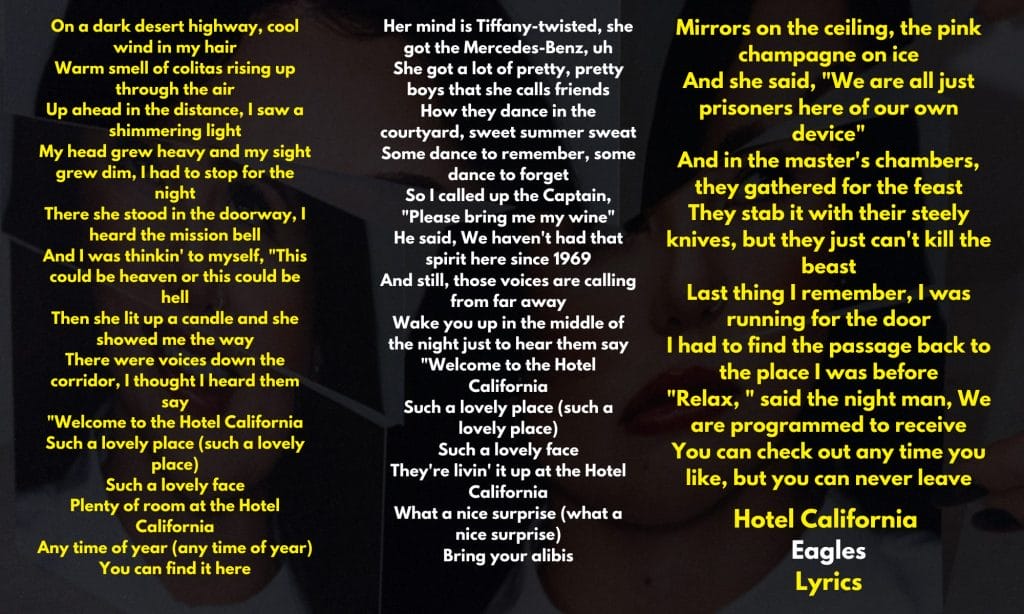
One of the most widely accepted interpretations is that “Hotel California” is a searing critique of the darker aspects of the American Dream, particularly as manifested in Southern California. The song portrays California not as a land of opportunity and sun-kissed freedom, but as a glittering cage, a place where people arrive seeking paradise but find themselves trapped by their own desires for wealth, fame, and hedonistic pleasure. The “lovely place” becomes a “prison” for those who chase these illusions.
The opulent setting of the hotel itself, with its mirrors and champagne, symbolizes the superficial glamor of the entertainment industry and the affluent lifestyle of places like Beverly Hills. Yet, this luxury comes at a cost, reflecting the moral decay and spiritual emptiness that can accompany unchecked ambition. The “pretty, pretty boys” and the “spirits of the Hotel California” represent the countless individuals who arrive in Hollywood with dreams, only to become consumed by its illusions, sacrificing their true selves in the pursuit of fleeting success. The idea that “you can check out any time you like, but you can never leave” eloquently captures the insidious nature of this trap – once you’ve tasted the California dream, even if it turns sour, its grip on you is permanent. It speaks to the psychological and spiritual toll of a lifestyle driven by superficiality, a cautionary tale for anyone seduced by the promises of a glamorous destination.
A Metaphor for Addiction and Excess
Another powerful interpretation views the “Hotel California” as a profound metaphor for addiction, particularly to drugs and alcohol, which were prevalent in the 1970s counterculture and rock scene. The “warm smell of colitas” (a slang term for marijuana buds) immediately introduces a theme of altered states of consciousness. The initial allure of the hotel mirrors the initial appeal of a substance: a seemingly inviting escape, a promise of pleasure and forgetting (“some dance to forget”).
However, as with addiction, the escape soon turns into entrapment. The feeling of being a “prisoner… of our own device” perfectly describes the self-perpetuating cycle of substance abuse. The hotel’s ability to “receive” but not allow one to “leave” reflects the insidious nature of addiction – one can try to stop, but the pull back is overwhelming. The characters within the hotel could represent fellow addicts, locked into their own cycles. This interpretation resonates deeply with the experiences of many during that era, and it casts the hotel as a psychological landscape rather than a physical one, an internal battleground rather than a tourist destination. It serves as a stark warning about the darker side of lifestyle choices that promise liberation but deliver bondage.
The Music Industry’s Golden Cage
Given the Eagles’ own journey to superstardom, a compelling theory posits “Hotel California” as a cynical commentary on the music industry itself. The band had achieved immense success but also experienced the pressures, demands, and moral compromises that came with it. The industry, much like the hotel, can appear glamorous and inviting, offering wealth and fame. Yet, it can also be a predatory environment, where artists can feel exploited, controlled, and ultimately trapped by their contracts, their image, and the relentless machinery of celebrity.
In this context, the “Hotel California” represents the music business as a luxurious prison. The “pretty, pretty boys” could be the young, hopeful musicians flocking to Los Angeles, eager for their big break, only to be “programmed to receive” by the industry. The “voices in the night” might symbolize the constant clamor of expectations, critics, and demanding record executives. The line “We haven’t had that spirit here since 1969” could refer to the loss of artistic innocence and purity in the music world, replaced by commercialism and corporate interests. The inability to “leave” signifies the difficulty of escaping the public eye, the contractual obligations, and the identity forged by fame, even if one desires a return to a simpler life. This perspective adds another layer of meaning for anyone familiar with the intense pressures and often superficial nature of the entertainment lifestyle.
The Band’s Perspective and Lasting Legacy
While the multiple interpretations of “Hotel California” are part of its allure, what have the creators themselves said about its meaning? Their insights offer valuable context, although they often lean towards maintaining the song’s enigmatic quality.
Don Henley’s Insights and Intentions
Don Henley, the primary lyricist for “Hotel California,” along with Glenn Frey and Don Felder who composed the music, has frequently offered explanations that align with the broader interpretations of disillusionment and social commentary. Henley has described the song as “a metaphor for the hedonism and self-destruction of the music industry and rock and roll in the ’70s.” He elaborates that it’s “our interpretation of the high life in Los Angeles,” and “a statement about the dark underbelly of the American Dream and about excess in America, which is something we knew a lot about.”
Henley explicitly stated that the “Hotel California” represents a “cross-section of the times,” reflecting the cultural shifts and excesses of the mid-1970s. He emphasized that it wasn’t about a literal hotel, but rather a symbolic destination – a place you go to seek your dreams, only to find them twisted or unattainable. The song, in his view, critiques the “decadence” of the era and the “erosion of innocence.” This aligns perfectly with the themes of a travel experience gone awry, where a seemingly beautiful destination hides a darker reality. The Eagles used the language of travel and accommodation to critique the very culture they inhabited, making it relatable to anyone who has ever felt overwhelmed or disillusioned by a particular place or lifestyle.

The Song’s Enduring Cultural Impact
More than four decades after its release, “Hotel California” continues to be a cornerstone of classic rock and a subject of fascination. Its enduring appeal lies in its rich musicality, the unforgettable guitar solos by Don Felder and Joe Walsh, and above all, its lyrical ambiguity. The song has cemented its place in popular culture, being inducted into the Rock and Roll Hall of Fame and appearing on countless “greatest songs of all time” lists. Its imagery and phrases (“you can check out any time you like, but you can never leave”) have become part of the lexicon, frequently quoted and referenced in various contexts.
The song’s power stems from its ability to transcend its specific 1970s California context and speak to universal themes of disillusionment, aspiration, entrapment, and the search for meaning. Whether listeners interpret it as a critique of materialism, addiction, the music industry, or simply the dark side of a seemingly perfect destination, “Hotel California” remains a potent reminder that appearances can be deceiving. It invites reflection on the choices we make, the places we seek, and the true cost of paradise. For those interested in travel, tourism, and lifestyle, “Hotel California” serves as a timeless, evocative narrative that explores the complexities inherent in seeking out new experiences and the profound impact that destinations can have on the human spirit, for better or for worse. It’s a sonic journey that proves some destinations, even metaphorical ones, are forever etched into our collective consciousness.
LifeOutOfTheBox is a participant in the Amazon Services LLC Associates Program, an affiliate advertising program designed to provide a means for sites to earn advertising fees by advertising and linking to Amazon.com. Amazon, the Amazon logo, AmazonSupply, and the AmazonSupply logo are trademarks of Amazon.com, Inc. or its affiliates. As an Amazon Associate we earn affiliate commissions from qualifying purchases.