
The curious query embedded within the title, “What Does The Texas A&M Stand For In Florida A&M?”, hints at a common point of confusion, particularly for those not intimately familiar with the educational landscape of the United States. While both institutions share the prominent “A&M” acronym, their origins, locations, and indeed, their very identities, are distinct. This exploration delves into the significance of “A&M” within the context of these two venerable universities, focusing on their historical roots and their unique contributions to the realm of higher education and, by extension, to the tapestry of travel and tourism in their respective regions. The “Texas” in Texas A&M University and the absence of a geographical prefix before Florida A&M University are not mere administrative details; they represent divergent paths forged in different eras and for different purposes, each leaving an indelible mark on the states they call home and the broader American narrative. Understanding these nuances enriches our appreciation for the diverse heritage of American academia and provides valuable context for travelers seeking to understand the cultural and historical significance of these institutions and their surrounding locales.
The Legacy of “A&M”: Agriculture and Mechanical Arts
The common thread connecting Texas A&M University and Florida A&M University is the historical significance of the “A&M” designation. This acronym is a direct legacy of the Morrill Acts of 1862 and 1890, landmark federal legislation designed to establish institutions of higher learning that would focus on providing education in “agriculture and the mechanical arts.” These acts were a pivotal moment in American education, democratizing access to higher education beyond traditional liberal arts and classical studies, and were intended to foster innovation and practical skills vital for a growing nation.
The Genesis of Land-Grant Colleges
The Morrill Act of 1862, also known as the Land-Grant College Act, provided federal land grants to states for the purpose of establishing colleges that would offer instruction in disciplines such as agriculture, home economics, mechanical engineering, and other practical professions. This was a significant departure from the existing university model, which often emphasized classical education and was largely inaccessible to the working classes. The goal was to create institutions that would serve the practical needs of the nation’s burgeoning industrial and agricultural sectors, fostering research and development that could benefit the populace.
A&M’s Role in Practical Education
Both Texas A&M University and Florida A&M University were founded under the principles of these land-grant acts. For Texas A&M University, originally established as the Agricultural and Mechanical College of Texas in 1876, this meant a foundational commitment to training citizens in the practical sciences and engineering, thereby contributing to the development of the state’s economy. Similarly, Florida A&M University, founded in 1887 as the State Normal School for Colored Students and later becoming a land-grant institution, embraced the mandate to provide practical and vocational education to underserved populations, with a strong emphasis on agriculture and mechanical arts. This shared historical purpose is the primary reason for the “A&M” in their names, signifying their dedication to these practical fields of study.
Texas A&M University: A Pioneer in the Lone Star State
The “Texas” in Texas A&M University is straightforward. It denotes its location and its primary service to the state of Texas. Established as the first public institution of higher learning in Texas, it played a crucial role in shaping the state’s agricultural and industrial prowess.
A Tradition of Service and Leadership
Texas A&M University has cultivated a rich tradition of service, epitomized by its strong Reserve Officers’ Training Corps (ROTC) programs and its commitment to producing leaders in various fields. Located in College Station, a vibrant college town, the university offers a unique educational experience deeply intertwined with the spirit of Texas. Visitors to College Station can explore the George H.W. Bush Presidential Library and Museum, a significant landmark on the university’s campus, offering a fascinating glimpse into American history and the life of the 41st U.S. President. The campus itself is an attraction, with its iconic Old Main Building and the Kyle Field, a testament to the university’s athletic heritage. The surrounding community of College Station offers a variety of lodging and dining options catering to visitors attending university events or exploring the area.
Experiencing Aggieland

For travelers, a visit to the Texas A&M University campus and its environs, often referred to as “Aggieland,” provides an opportunity to immerse oneself in a distinct Texan culture. The university’s strong sense of community, known as the “Aggie Network,” is palpable. Attending a football game at Kyle Field is a quintessential Aggieland experience, showcasing the passionate spirit of the Aggies. Beyond the campus, the Bryan-College Station area offers a blend of Southern charm and Texan hospitality, with local eateries serving up classic Texas barbecue and other regional favorites. The Brazos Valley region, where College Station is situated, also provides opportunities for outdoor recreation, including parks and nature trails, offering a respite from urban life and a chance to appreciate the natural beauty of Texas.
Florida A&M University: A Beacon of Excellence in the Sunshine State
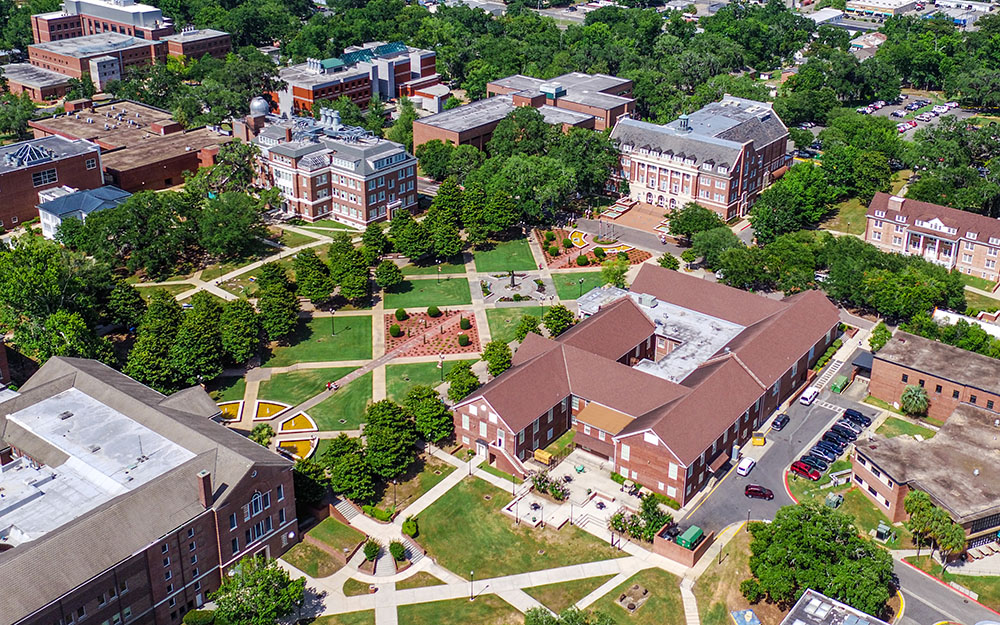
Florida A&M University (FAMU), located in Tallahassee, the capital city of Florida, stands as a prominent historically Black college or university (HBCU) with a rich legacy of empowerment and educational advancement. Unlike Texas A&M University, FAMU does not have a geographical prefix in its name; “Florida” is inherently understood to be its domain, and the “A&M” reflects its land-grant heritage and its commitment to serving the educational needs of the state.
A Legacy of Empowerment and Achievement
Founded with a mission to educate African Americans, Florida A&M University has consistently championed academic excellence and social progress. Its campus in Tallahassee is a hub of cultural and intellectual activity. Visitors can explore the Black Archives Research Center and Museum, which houses invaluable historical artifacts and documents related to the African American experience in Florida and beyond. The university’s impressive facilities, including its performing arts center and athletic venues, are often hosts to cultural events, concerts, and sporting competitions that draw visitors from across the region and the nation. The FAMU Way itself, a prominent artery through the campus, is lined with architecturally significant buildings that tell the story of the university’s growth and its enduring impact.
Discovering Tallahassee’s Vibrancy
A visit to Tallahassee offers a rich cultural and historical experience, with Florida A&M University serving as a cornerstone of the city’s identity. The vibrant atmosphere of the campus extends into the surrounding Tallahassee community. Travelers can explore the historic Downtown Tallahassee area, with its antebellum architecture and the Florida Historic Capitol Museum. The city is also known for its natural beauty, with numerous parks and gardens, such as the Alfred B. Maclay Gardens State Park, offering opportunities for leisurely strolls and appreciation of Florida’s flora. The culinary scene in Tallahassee reflects the diverse influences of the South, with opportunities to savor regional specialties and international cuisine. Exploring the campus of Florida A&M University and its surroundings provides a profound connection to the history and culture of Florida, showcasing the enduring legacy of an institution dedicated to education and empowerment.
The Distinctions: Location, Identity, and Mission
While both institutions bear the “A&M” moniker, their geographical locations, historical trajectories, and specific missions create distinct identities. This differentiation is crucial for understanding their unique contributions to their respective states and to the broader educational landscape.
Geographical Context and Cultural Significance
The most apparent distinction lies in their geographical placement. Texas A&M University is firmly rooted in the vast expanses of Texas, a state known for its independent spirit and its deep ties to agriculture and industry. Its traditions and culture are intrinsically linked to the Texan identity. In contrast, Florida A&M University is a vital part of the cultural mosaic of Florida, a state characterized by its diverse population and its unique blend of Southern and Caribbean influences. The “Florida” in FAMU signifies its primary commitment to serving the educational needs of the Sunshine State.
Divergent Paths, Shared Purpose
Despite sharing a common origin in the land-grant system, Texas A&M University and Florida A&M University have evolved along distinct paths. Texas A&M University has grown into a comprehensive research university with a strong emphasis on engineering, business, and veterinary medicine, alongside its agricultural roots. Florida A&M University, while also a comprehensive university, maintains a particular focus on areas that have historically served and empowered minority communities, including law, pharmacy, and education, in addition to its land-grant mission in agriculture and mechanical arts. Both, however, continue to uphold their foundational purpose: to provide accessible, high-quality education and to serve as engines of economic and social progress for their respective states. For travelers, understanding these distinctions enriches the experience of visiting and appreciating the unique contributions of each institution and the cultural landscapes they inhabit.
LifeOutOfTheBox is a participant in the Amazon Services LLC Associates Program, an affiliate advertising program designed to provide a means for sites to earn advertising fees by advertising and linking to Amazon.com. Amazon, the Amazon logo, AmazonSupply, and the AmazonSupply logo are trademarks of Amazon.com, Inc. or its affiliates. As an Amazon Associate we earn affiliate commissions from qualifying purchases.