
For anyone planning to travel domestically within the United States or access federal facilities, understanding the Real ID is no longer just a recommendation but a necessity. The Real ID Act, passed by Congress in 2005, established minimum security standards for state-issued driver’s licenses and identification cards and prohibits federal agencies from accepting for certain purposes driver’s licenses and identification cards from states that do not meet these standards. For residents and visitors alike in California, grasping the visual characteristics and functional importance of this document is paramount for seamless travel experiences and hassle-free interactions with federal services. This guide aims to demystify the Real ID in California, offering a comprehensive look at what it entails, how it differs from a standard license, and why it’s a crucial piece of identification for modern travelers. As you plan your next journey, ensuring your identification meets federal guidelines is a critical step, making the California Real ID an indispensable travel companion.
Understanding the Real ID Mandate for Travelers
The landscape of identification for travel underwent a significant shift with the implementation of the Real ID Act. This federal mandate impacts millions, particularly those who rely on state-issued identification for domestic air travel. For travelers, comprehending the implications of this act is fundamental to avoiding last-minute airport surprises and ensuring smooth journeys across state lines.
Why the Real ID is Crucial for Domestic Travel
At its core, the Real ID is a post-9/11 security measure designed to make identity documents more secure and resistant to fraud. The primary reason it’s crucial for domestic travel is the Transportation Security Administration’s (TSA) requirement for passengers to present a Real ID compliant driver’s license or another acceptable form of identification to board federally regulated commercial aircraft. While enforcement dates have seen extensions, the underlying requirement remains firm. Without a Real ID compliant card, or an alternative such as a valid U.S. passport, U.S. passport card, military ID, or other federally approved identification, travelers may be denied boarding at airport security checkpoints. This makes the California Real ID a critical document for anyone planning to fly, ensuring continuity in their travel plans and adherence to federal security protocols. Its importance extends beyond the airport, influencing access to certain federal facilities, further cementing its status as an essential form of modern identification for residents and travelers alike.
Differentiating Real ID from a Standard Driver’s License
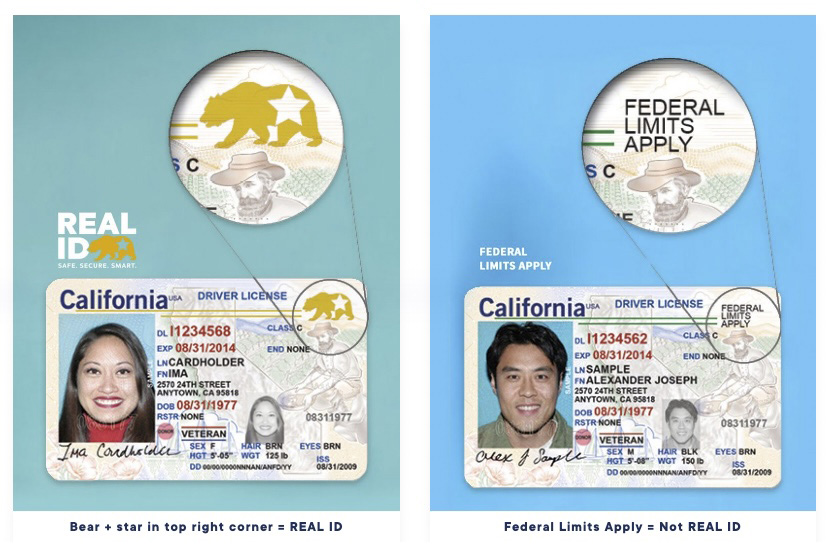
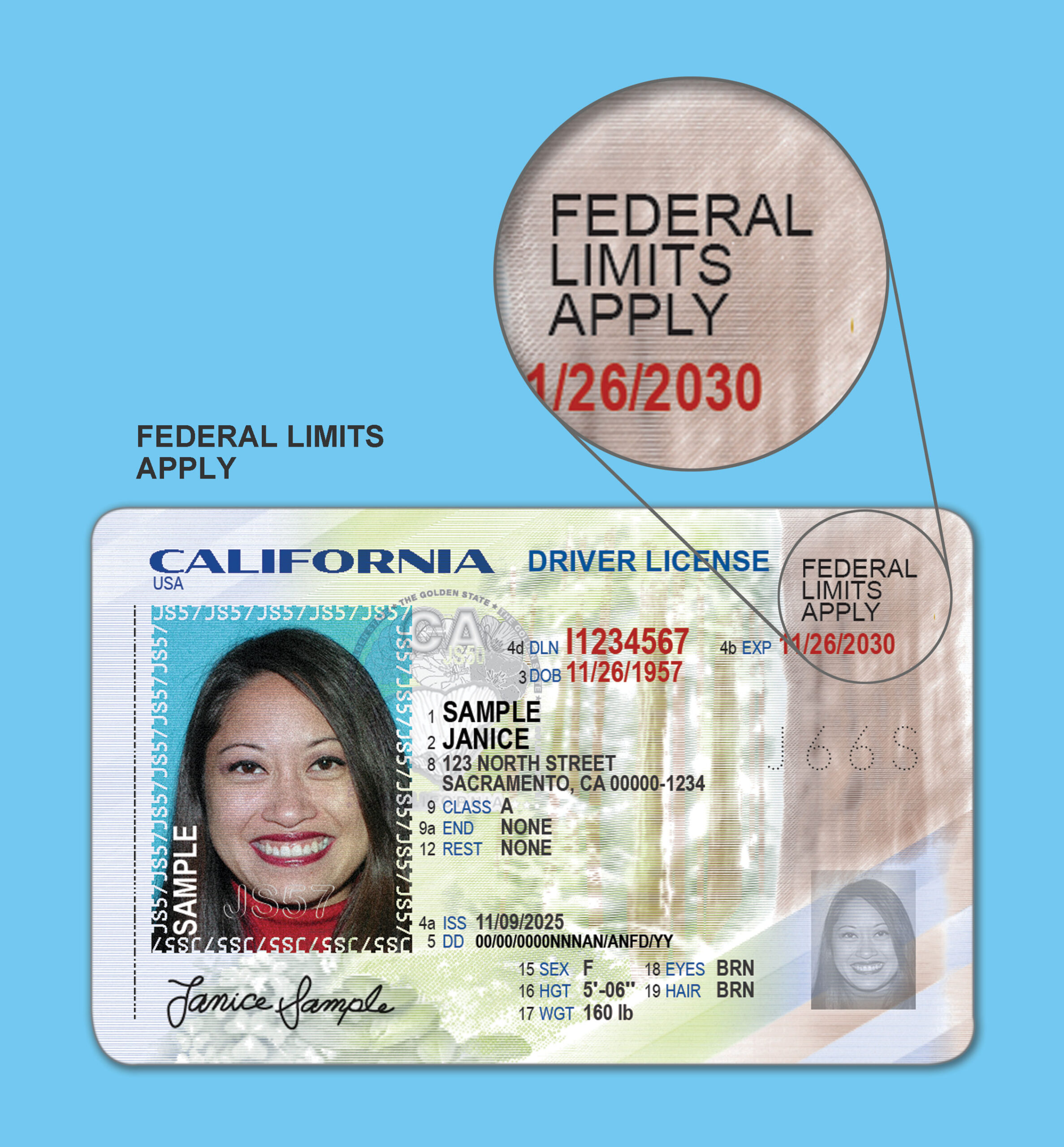
On the surface, a Real ID compliant driver’s license or identification card in California might look very similar to its standard counterpart. However, there’s a distinct visual marker that sets it apart: a star. For California, this distinction takes the form of a gold bear with a star cutout, positioned in the upper right-hand corner of the card. A standard California driver’s license or ID card, which is not Real ID compliant, will either have no star or will explicitly state “FEDERAL LIMITS APPLY” in the top right corner. This small but significant difference is the key indicator for TSA agents and federal personnel when verifying identity. While both types of cards are valid for driving and everyday identification purposes like purchasing age-restricted items or proving identity for state-level services, only the one bearing the gold bear with a star meets the federal Real ID standards for air travel and federal facility access. Understanding this visual cue is essential for any traveler to quickly confirm their card’s compliance.
Visual Identification: What to Look For
When you hold a California Real ID, its distinct features immediately communicate its federal compliance. Beyond its functional implications, the card itself embodies advanced security measures and specific design elements that set it apart. Recognizing these visual markers is key to verifying your own document or understanding what is required of others.
The Golden Bear with a Star: California’s Unique Identifier
The most prominent and definitive visual cue for a Real ID compliant card issued in California is the gold bear with a star cutout located in the upper right-hand corner. This iconic symbol, featuring California’s state animal, the Golden Bear, is specifically designed to meet the federal requirement for a visible star or indicator on Real ID compliant documents. Unlike some states that might simply use a gold star, California’s incorporation of the Golden Bear adds a unique state-specific flair while fulfilling the federal mandate. If your California driver’s license or identification card does not feature this Golden Bear with a star, it is not Real ID compliant and will not be accepted by the TSA for domestic air travel or for entry into federal facilities, unless accompanied by another federally approved form of identification. This small emblem is a powerful signal of compliance and a critical detail for all travelers to observe.
Key Security Features and Design Elements
Beyond the Golden Bear with a star, the California Real ID incorporates several other advanced security features designed to prevent counterfeiting and identity theft. These elements contribute to the card’s integrity and federal acceptance:
- Polycarbonate Material: Modern California driver’s licenses and ID cards, including Real IDs, are typically made from durable polycarbonate. This material is not only resistant to wear and tear but also allows for advanced security features to be embedded directly into the card’s structure.
- Laser Engraving: Personal information such as the cardholder’s photo, signature, and data are laser-engraved onto the card, making it extremely difficult to alter without visible damage. This includes a grayscale, ghost image of the cardholder’s photo, usually smaller and semi-transparent, often appearing on the lower right portion of the card.
- Holographic Overlays: The card features complex holographic overlays, often depicting state symbols or intricate patterns, that are visible when tilted under light. These holograms are difficult to replicate and serve as a quick visual check for authenticity.
- Microprinting: Extremely tiny text or patterns, often invisible to the naked eye but clear under magnification, are integrated into the card’s design. This microprinting is another deterrent against forgery.
- Tactile Features: Some elements of the card, such as the cardholder’s date of birth or the ” California DMV” logo, may have a raised, tactile feel. This provides an additional physical security layer that is hard to counterfeit.
- Design Specifics: The overall design includes various intricate patterns, specific fonts, and color schemes that are consistent across all valid California IDs. The card will display your full legal name, date of birth, address, and the issue and expiration dates clearly. The California state seal and a representation of the state capitol building are also often integrated into the background design.
Collectively, these security features make the California Real ID a robust and secure document, providing confidence in its authenticity for federal purposes and ensuring a higher standard of identity verification for travelers.
The Application Process in California: A Traveler’s Guide
Acquiring a Real ID in California is a straightforward process, but it requires careful preparation and an understanding of the necessary steps. For travelers who want to ensure they meet federal identification requirements, proactively applying for a Real ID is a wise decision. The process primarily involves gathering specific documents and visiting a Department of Motor Vehicles (DMV) office.

Required Documentation for a Real ID Application
To apply for a Real ID in California, you will need to present original or certified copies of several documents that verify your identity, residency, and Social Security number. It’s crucial to bring all required documents to your DMV appointment, as incomplete applications will result in delays. Here’s a breakdown of what you’ll typically need:
- Proof of Identity: One document proving your true full name and birthdate. Examples include:
- U.S. birth certificate (certified copy)
- U.S. passport or passport card
- Foreign passport with a valid U.S. visa and approved I-94 form
- Permanent Resident Card
- Certificate of Naturalization or Citizenship
- Proof of Social Security Number (SSN): One document showing your full Social Security number. Examples include:
- Social Security card
- W-2 form
- SSA-1099 form
- Pay stub with your name and SSN
- Proof of California Residency: Two different documents proving your current California residential address. These documents must list your name and the same mailing address. Examples include:
- Utility bills (gas, electric, water, cable)
- Rental or lease agreements
- Mortgage statements
- Bank statements
- Insurance documents (home, auto)
- Medical documents
- Employment documents
- School documents
- Proof of Signature: You will provide your signature on the application form at the DMV.
It is highly recommended to visit the California DMV website before your appointment to use their interactive document checklist. This tool helps ensure you have all the necessary paperwork tailored to your specific situation, preventing multiple trips.
Scheduling Your DMV Appointment and What to Expect
Once you’ve gathered all your required documents, the next step is to schedule an appointment with the California DMV. While walk-ins are sometimes accepted, appointments are strongly recommended to minimize wait times, especially for Real ID applications which can take longer due to the document verification process. You can schedule an appointment online through the California DMV website.
What to expect at your DMV appointment:
- Check-in: Arrive a few minutes early for your scheduled appointment. You’ll check in and receive a number.
- Document Review: A DMV representative will carefully review your original documents to ensure they meet all requirements. This is where having everything organized can save significant time.
- Application Completion: You will complete the Real ID application form, if you haven’t already started it online.
- Fingerprints and Photo: Your fingerprints will be scanned, and a new photo will be taken for your Real ID card.
- Vision Test: You will undergo a vision screening test.
- Signature: You will provide your signature electronically.
- Payment: Pay the applicable application fee.
- Temporary ID: Upon successful completion, you will receive a temporary paper Real ID. Your permanent card will be mailed to your address, usually within a few weeks. It’s important to keep the temporary ID with you when traveling by air until your permanent card arrives.
The entire process is designed to ensure the integrity and security of the Real ID program, providing peace of mind for both the cardholder and federal authorities responsible for security. Planning ahead for your DMV visit will make the experience as smooth and efficient as possible.
Beyond Air Travel: Other Uses and Considerations
While domestic air travel is the most commonly cited reason for obtaining a Real ID, its utility extends to other areas of federal interaction. Understanding these broader implications, as well as knowing what alternatives exist, provides a complete picture for residents and travelers in California.
Accessing Federal Facilities
The Real ID Act also mandates that state-issued driver’s licenses and identification cards must be Real ID compliant to gain access to most federal facilities. This includes, but is not limited to, federal courthouses, military bases, and other secure federal buildings. For individuals whose work or personal circumstances require regular access to such sites, a California Real ID becomes an indispensable form of identification, streamlining entry and ensuring compliance with federal security protocols. Without a Real ID compliant card, alternative federally approved identification, like a U.S. passport, would be required for entry, underscoring the card’s versatile importance for certain segments of the population.
Alternatives to the Real ID for Travel
For those who opt not to obtain a Real ID compliant California driver’s license or ID card, several other forms of identification are accepted by the TSA for domestic air travel and for accessing federal facilities. The most common and universally accepted alternative is a valid U.S. passport or U.S. passport card. Other acceptable forms of identification include:
- U.S. military ID
- Enhanced Driver’s License (though California does not issue these, some other states do)
- Permanent Resident Card (Green Card)
- Border Crossing Card
- TSA PreCheck® or Global Entry cards
- Certain federally recognized tribal IDs
It’s important to note that while a standard California driver’s license or ID card (without the Golden Bear with a star) remains valid for driving and all non-federal identification purposes, it will not be accepted by the TSA for domestic flights or for entry into federal facilities after the enforcement date. Travelers always have the option to use a passport or other accepted federal IDs, ensuring flexibility regardless of their choice regarding the Real ID compliant card. For international travel, a passport is always required, making the Real ID primarily a domestic concern.
In conclusion, the California Real ID, marked by its distinctive gold bear with a star, represents a crucial step in modernizing and securing identification documents across the United States. For residents and especially for travelers, understanding its appearance, the application process, and its widespread utility is no longer optional but a fundamental aspect of navigating both air travel and federal access. By obtaining a Real ID, you ensure a seamless, compliant, and stress-free experience, allowing you to focus on the journey ahead rather than potential identification hurdles.
LifeOutOfTheBox is a participant in the Amazon Services LLC Associates Program, an affiliate advertising program designed to provide a means for sites to earn advertising fees by advertising and linking to Amazon.com. Amazon, the Amazon logo, AmazonSupply, and the AmazonSupply logo are trademarks of Amazon.com, Inc. or its affiliates. As an Amazon Associate we earn affiliate commissions from qualifying purchases.