
The question “What Hurricane Hit New Orleans?” evokes a specific, potent memory for many, inextricably linked to a catastrophic event that reshaped a beloved American city and left an indelible mark on the nation’s consciousness. While numerous storms have threatened and impacted the Gulf Coast, one name stands out, synonymous with the devastation and subsequent resilience of the Crescent City: Hurricane Katrina. This category 5 hurricane, making landfall on August 29, 2005, remains a pivotal moment in the history of New Orleans, a city renowned for its vibrant culture, unique architecture, and rich historical tapestry. Understanding Katrina’s impact is not just an academic exercise; it is crucial for appreciating the enduring spirit of New Orleans and its ongoing journey of recovery and revitalization.

The Unveiling of a Cataclysm: Hurricane Katrina’s Fury
Hurricane Katrina was not merely a severe weather event; it was a complex disaster born from a confluence of meteorological might and infrastructural vulnerability. Its path of destruction was unprecedented, leaving a trail of devastation that extended far beyond the immediate eyewall.
Formation and Intensification
Katrina began as a tropical depression over the Bahamas on August 23, 2005. It rapidly intensified into a tropical storm and then a hurricane. Its trajectory shifted, and by August 28, it had become a Category 3 hurricane, poised to make landfall. The warm waters of the Gulf of Mexico, however, provided an environment for rapid strengthening, and Katrina escalated into a terrifying Category 5 storm, with sustained winds exceeding 170 miles per hour. This immense power was a harbinger of the destruction to come, a force of nature that no human-made barrier could fully withstand. The sheer scale of its power meant that its impact would be felt across a vast region, but its focus on New Orleans would prove particularly devastating.
Landfall and Initial Impact
The storm made its initial landfall on the southeast coast of Louisiana, near Buras, as a Category 3 hurricane with sustained winds of 125 mph. While this was a significant reduction from its peak Category 5 intensity, the storm surge and torrential rains it unleashed were enough to overwhelm the city’s protective infrastructure. The most critical failure was the breach of the levee system surrounding New Orleans. These levees, designed to protect the low-lying city from the waters of Lake Pontchartrain and the Mississippi River, proved insufficient against the immense storm surge generated by Katrina.
The Levee Breaches
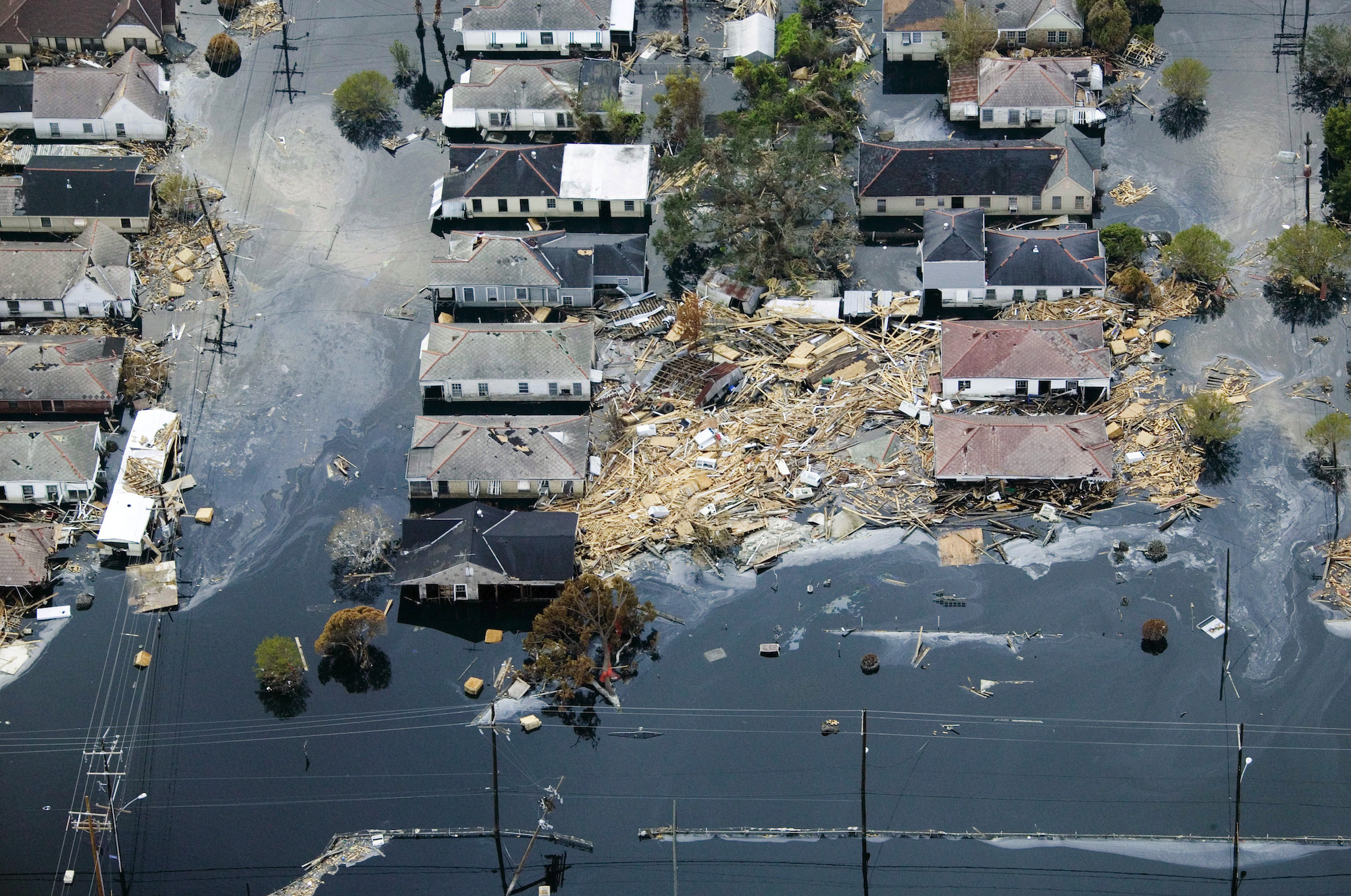
The breaches occurred in multiple locations, most notably along the 17th Street Canal, the London Avenue Canal, and the Industrial Canal. These failures were not immediate but developed over hours, allowing vast quantities of water to flood the city. As water poured in, large sections of New Orleans became submerged, with some areas experiencing inundation of 80% or more. This was not the typical flooding associated with a hurricane; this was a deluge, a catastrophic inundation that transformed streets into rivers and homes into submerged shells. The failure of the levee system was the critical turning point from a severe hurricane event to a widespread, devastating flood.
Devastation Beyond the Flooding
While the flooding was the most visible and widespread form of destruction, Katrina’s impact extended to numerous other aspects of the city’s infrastructure and cultural fabric.
Wind Damage
Even before the inundation, Katrina’s powerful winds caused significant damage. Roofs were torn off buildings, trees were uprooted, and power lines were downed across the metropolitan area. The sheer force of the wind contributed to the chaos and made immediate rescue and assessment efforts exceedingly difficult. In areas not directly affected by the catastrophic levee breaches, wind damage was the primary concern, leaving a landscape of shredded structures and debris.
Storm Surge
The storm surge associated with Katrina was a major factor in the devastation. Along the Mississippi coast, it caused a monumental wall of water to crash ashore, obliterating entire communities. While New Orleans is somewhat protected by its levees, the surge still contributed to the pressure on these barriers and caused significant coastal erosion and damage in areas bordering Lake Pontchartrain and the Gulf. The sheer height of the surge in some coastal towns was unprecedented, wiping structures clean off their foundations.

The Human Toll and Societal Repercussions
The physical destruction wrought by Hurricane Katrina was staggering, but the human toll and the subsequent societal repercussions were even more profound. The storm exposed deep-seated inequalities and challenged the very notion of preparedness and response.
Displacement and Evacuation
The slow and inadequate evacuation of New Orleans prior to the storm’s arrival led to a humanitarian crisis. Many residents, particularly those without personal transportation or with limited resources, were stranded. The iconic images of people seeking refuge on rooftops and in the Louisiana Superdome and the Ernest N. Morial Convention Center painted a grim picture of the unfolding disaster. Millions were displaced from their homes, creating a diaspora that would take years to navigate. This mass displacement not only fractured communities but also had significant economic and social implications for the entire nation.
The Superdome and Convention Center
These locations became symbols of desperation and survival. Initially intended as places of refuge, they quickly became overcrowded, undersupplied, and unsanitary. The images broadcast from these sites—of desperate people waiting for rescue, often for days—highlighted the systemic failures in emergency preparedness and response. The lack of food, water, and medical attention exacerbated the suffering of those who had already lost so much. These sites represent a stark reminder of the vulnerabilities of urban populations in the face of extreme natural disasters.
Loss of Life and Long-Term Recovery
The official death toll from Hurricane Katrina is over 1,800, with many lives lost directly or indirectly due to the storm and its aftermath. Beyond the immediate fatalities, the long-term recovery process has been arduous. The rebuilding of homes, infrastructure, and livelihoods has been a marathon, not a sprint. Many residents have been unable to return to their former lives, facing persistent challenges with housing, employment, and mental health. The emotional scars of the event continue to resonate through the community, impacting generations.
The Resilient Spirit of New Orleans
Despite the immense devastation, Hurricane Katrina also revealed the remarkable resilience and indomitable spirit of New Orleans. The city’s recovery has been a testament to the strength of its community, the dedication of its people, and the unwavering love they hold for their unique home.
Community Initiatives and Volunteer Efforts
In the wake of the storm, a groundswell of community support emerged. Local organizations, national non-profits, and countless individual volunteers descended upon New Orleans to assist in rebuilding efforts. These efforts ranged from clearing debris and mucking out flooded homes to rebuilding structures and providing essential services. The spirit of camaraderie and shared purpose was palpable, demonstrating the power of collective action in the face of adversity. This outpouring of support was crucial in jumpstarting the recovery process, providing hope and practical assistance to those who had lost everything.
Cultural Preservation and Revitalization
New Orleans is a city defined by its culture – its music, its food, its festivals, and its people. The storm threatened to extinguish this vibrant spirit, but instead, it seemed to galvanize it. Efforts to preserve and revitalize New Orleans‘ unique cultural heritage became a central pillar of the recovery. Musicians returned to their instruments, chefs reopened their restaurants, and festivals, though smaller at first, began to reappear. The preservation of landmarks like the French Quarter and iconic music venues became paramount, symbolizing the city’s refusal to be defeated. The return of jazz funerals and second lines, even in smaller, more intimate settings, marked the city’s determined reassertion of its identity.
Infrastructure Rebuilding and Future Preparedness
The lessons learned from Hurricane Katrina have led to significant investments in rebuilding and strengthening New Orleans‘ infrastructure. The federally funded New Orleans** Coastal Protection and Restoration Authority (CPRA) has overseen massive projects to enhance the city’s flood defenses, including building higher and stronger levees and installing advanced pumping systems. Beyond physical infrastructure, there has been a renewed focus on emergency preparedness and community resilience planning, aiming to ensure that the city is better equipped to handle future natural disasters. This includes improving evacuation plans, developing robust communication systems, and fostering stronger community networks that can support residents during crises. The goal is not just to recover but to build back stronger and more resilient.
The question “What Hurricane Hit New Orleans?” will forever be answered with Hurricane Katrina. It was a storm that tested the limits of human endurance and societal resilience. While the scars remain, the story of New Orleans after Katrina is ultimately one of triumph – a testament to the enduring power of the human spirit and the unyielding allure of a city that refuses to be erased. The city stands today, not as a victim, but as a survivor, a vibrant cultural heart beating stronger than ever, a living monument to the lessons learned and the strength found in unity.
LifeOutOfTheBox is a participant in the Amazon Services LLC Associates Program, an affiliate advertising program designed to provide a means for sites to earn advertising fees by advertising and linking to Amazon.com. Amazon, the Amazon logo, AmazonSupply, and the AmazonSupply logo are trademarks of Amazon.com, Inc. or its affiliates. As an Amazon Associate we earn affiliate commissions from qualifying purchases.