
The allure of the Sunshine State is undeniable. With its sun-drenched beaches, vibrant theme parks, and diverse cultural tapestry, Florida consistently ranks as a top destination for tourists and a dream location for permanent residents. For those considering making Florida their home, understanding the financial benefits of homeownership is paramount. One of the most significant advantages available to Florida residents is the homestead exemption. This powerful property tax relief mechanism can substantially reduce your annual tax burden, making the dream of owning a home in Florida more attainable.
Understanding the Core Concept of Homestead Exemption
At its heart, a homestead exemption is a legal provision designed to protect a homeowner’s primary residence from certain creditors and to provide tax relief. In Florida, the homestead exemption serves a dual purpose: it safeguards your home from forced sale to satisfy most debts, and it significantly lowers your property tax bill. This protection and financial benefit are exclusive to your primary residence – the home where you live for the majority of the year. It is not applicable to investment properties, vacation homes, or rental units.
Eligibility Requirements: Laying the Foundation
To qualify for Florida’s homestead exemption, certain criteria must be met. These are not overly complex, but adherence is crucial for approval.
Primary Residence Status
The most critical requirement is that the property must be your permanent residence. This means you must reside in the home for at least six months and one day out of the year. You cannot claim a homestead exemption on multiple properties. If you own more than one home in Florida, you must designate which one will be your primary residence. Evidence of this can include driver’s licenses, voter registration, and the address listed on your federal income tax returns.
Ownership and Occupancy
You must own and occupy the property as of January 1st of the tax year for which you are applying. This means if you purchase a property and move in on January 2nd, you will not be eligible for the exemption until the following tax year. Similarly, if you sell your primary residence and move out on December 31st, you will no longer be eligible for the homestead exemption on that property for the subsequent tax year.
Age and Legal Status
While not a strict requirement for all homestead exemptions, certain additional benefits may be tied to age or veteran status. Generally, any individual who owns property and resides in it as their primary home can apply. This includes U.S. citizens, permanent residents, and even those with certain visas who intend to establish Florida as their permanent home.
The Application Process: Securing Your Benefits
Applying for a homestead exemption in Florida is a straightforward process, typically handled through your county’s property appraiser’s office.
Filing Deadlines and Procedures
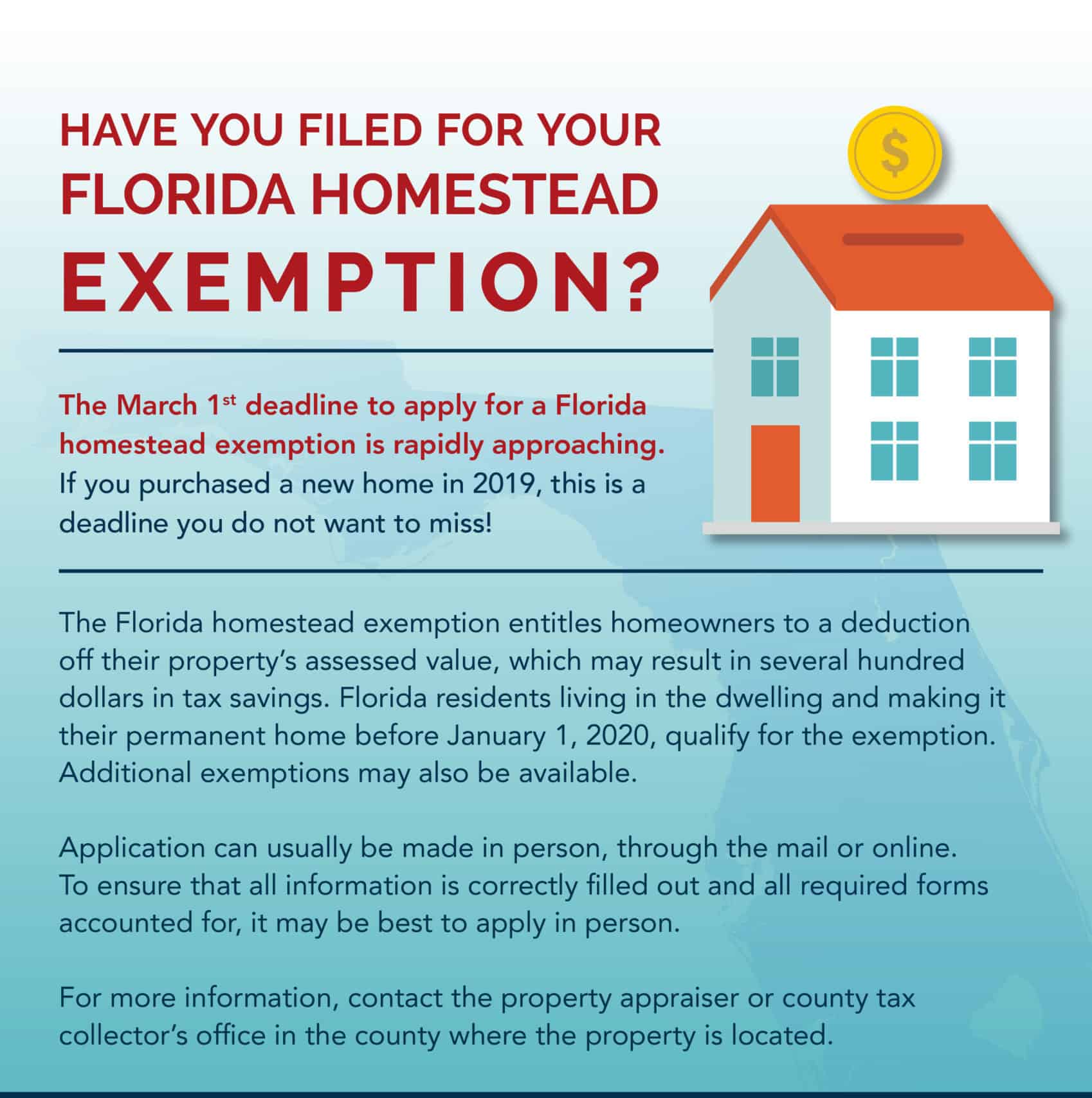
The application period for the homestead exemption typically runs from January 1st through March 1st of the tax year. However, if you miss the March 1st deadline, you can still file late, but your exemption will only apply from the date of application to the end of that tax year, and the tax savings will be prorated. It is always best to file as early as possible. You will need to complete a homestead exemption application form, which is usually available on your county property appraiser’s website or at their office.
Required Documentation
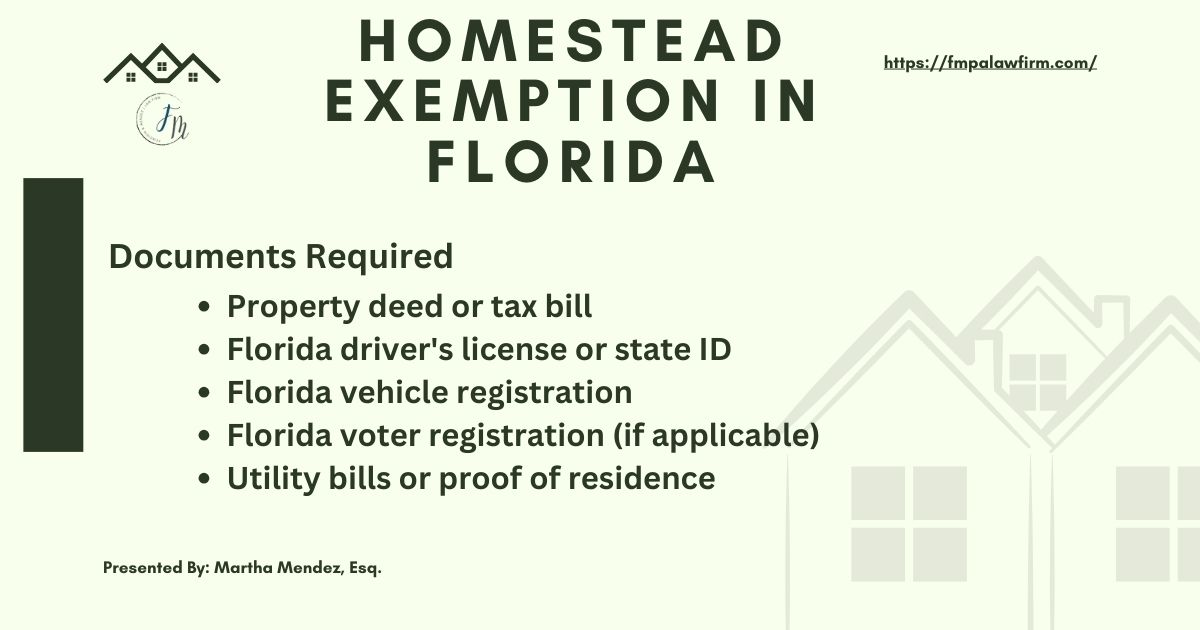
The exact documentation required can vary slightly by county, but commonly includes:
- Proof of ownership (e.g., a recorded deed).
- Your Florida driver’s license or identification card showing the property address.
- Vehicle registration showing the property address.
- Voter registration card with the property address.
- Social Security number.
For certain enhanced exemptions, such as those for veterans or individuals with disabilities, additional documentation will be necessary, such as a DD-214 for veterans or a physician’s letter for disability.
Types of Homestead Exemptions in Florida
Florida offers several types of homestead exemptions, each providing a different level of property tax relief. Understanding these variations is key to maximizing your savings.
The Ordinary Homestead Exemption
This is the foundational homestead exemption available to all eligible Florida residents. It provides a significant reduction in your property’s assessed value for tax purposes.
The $25,000 Exemption
The first $25,000 of your home’s assessed value is exempt from all property taxes. This exemption applies to all taxing authorities, meaning it reduces your tax bill from the county, city, school board, and any special districts.
The Additional $25,000 Exemption
For properties with an assessed value exceeding $50,000, an additional exemption of up to $25,000 applies. This exemption, however, is specifically for taxes levied by the county, municipalities, and independent special taxing districts. It does not apply to school district taxes. This means that for homes valued between $25,000 and $50,000, the first $25,000 is exempt from all taxes, and the next portion up to $50,000 is exempt from county and municipal taxes. For homes valued over $50,000, the first $25,000 is exempt from all taxes, and the portion between $25,000 and $50,000 is exempt from county and municipal taxes. The value above $50,000 is then assessed for all taxing entities.
Enhanced Homestead Exemptions: Additional Savings
Beyond the basic exemption, Florida offers enhanced homestead exemptions for specific groups of residents, providing even greater tax relief.
Senior Citizen Exemption
Certain counties offer an additional homestead exemption for homeowners who are 65 years of age or older and have a household income below a certain threshold, which is adjusted annually for inflation. This exemption can further reduce the taxable value of your home. The specific income limitations and exemption amounts vary by county, so it is important to check with your local property appraiser.
Disabled Person’s Exemption
Florida provides significant tax relief for individuals who are totally and permanently disabled. This exemption can exempt up to $50,000 of the assessed value of the homestead property. To qualify, you must have a permanent disability, as certified by a Florida-licensed physician or the Social Security Administration.
Veteran’s Exemption
Florida offers a valuable homestead exemption for honorably discharged veterans. The specific amount of the exemption depends on the veteran’s disability rating. For veterans with a 100% disability rating, the entire assessed value of their homestead property may be exempt from taxation. For those with a partial disability, a portion of the assessed value will be exempt. This exemption can be transferred to a surviving spouse under certain circumstances.
Surviving Spouse Exemption
A surviving spouse of a service member killed in action or a veteran who died from a service-connected disability may also be eligible for an exemption on their homestead property. This exemption can be quite substantial, often exempting the entire assessed value of the home.
Renewable Energy Exemption
This exemption is for properties that have incorporated renewable energy systems, such as solar panels. It exempts the added value of the renewable energy system from property taxation, encouraging the adoption of sustainable energy solutions.
The Financial Impact of the Homestead Exemption
The homestead exemption is not merely a bureaucratic detail; it represents a tangible financial benefit that can significantly impact a homeowner’s budget.
Reducing Your Taxable Value
The primary benefit is the reduction of your property’s taxable value. For example, if your home is appraised at $300,000 and your local millage rate (the tax rate) is 2%, without any exemption, your annual property tax would be $6,000. With the ordinary homestead exemption, the first $25,000 is exempt from all taxes. If your home’s value is over $50,000, an additional exemption of up to $25,000 applies to non-school taxes.
Let’s consider a simplified scenario for a home with an assessed value of $200,000:
- First $25,000: Exempt from all taxes.
- Next $25,000 (from $25,001 to $50,000): Exempt from county and municipal taxes.
- Remaining $150,000 (from $50,001 to $200,000): Taxable value.
In this example, the taxable value for school district taxes would be $175,000 ($200,000 – $25,000). The taxable value for county and municipal taxes would be $150,000 ($200,000 – $50,000). This reduction directly translates into lower annual tax payments, freeing up funds for other financial goals, such as saving for retirement or investing.
Protection from Property Tax Increases
Florida also has a “Save Our Homes” amendment, which caps the annual increase in assessed value for homesteaded properties at the lower of 3% or the Consumer Price Index (CPI). This cap protects homeowners from rapid and unpredictable spikes in property taxes due to escalating market values, providing long-term financial stability. This cap applies only after the first year the homestead exemption is granted. The initial assessed value for the first year is typically the just value or purchase price.
Important Considerations and Nuances
While the homestead exemption is a powerful tool, homeowners should be aware of a few additional points to ensure they are maximizing its benefits and remaining compliant.
Portability of Homestead Exemption
If you sell your homesteaded property and purchase a new primary residence in Florida, you may be able to transfer your “Save Our Homes” assessment difference to your new home. This portability feature ensures that you don’t lose the benefit of years of capped tax assessments when you move. The process for portability also involves filing with the county property appraiser and has specific deadlines.
Recapture of Taxes
If you are found to have claimed a homestead exemption on a property that is not your primary residence, or if you have claimed exemptions on multiple properties, you may be required to repay the taxes that would have been due, plus interest and penalties. This underscores the importance of accurately declaring your primary residence.

Impact on Property Value
It is essential to understand that the homestead exemption reduces your property’s taxable value, not its market value. Your home can still be sold for its full market price, but the property taxes paid by the new owner will be based on the assessed value after their own homestead exemption is applied.
The homestead exemption in Florida is a cornerstone of property ownership, offering crucial tax relief and financial protection. By understanding the eligibility requirements, application process, and the various types of exemptions available, Florida residents can significantly reduce their property tax burden and make their dream of homeownership in the Sunshine State a more financially sound reality. Consulting with your local property appraiser’s office is always recommended for the most precise and up-to-date information regarding your specific situation.
LifeOutOfTheBox is a participant in the Amazon Services LLC Associates Program, an affiliate advertising program designed to provide a means for sites to earn advertising fees by advertising and linking to Amazon.com. Amazon, the Amazon logo, AmazonSupply, and the AmazonSupply logo are trademarks of Amazon.com, Inc. or its affiliates. As an Amazon Associate we earn affiliate commissions from qualifying purchases.