
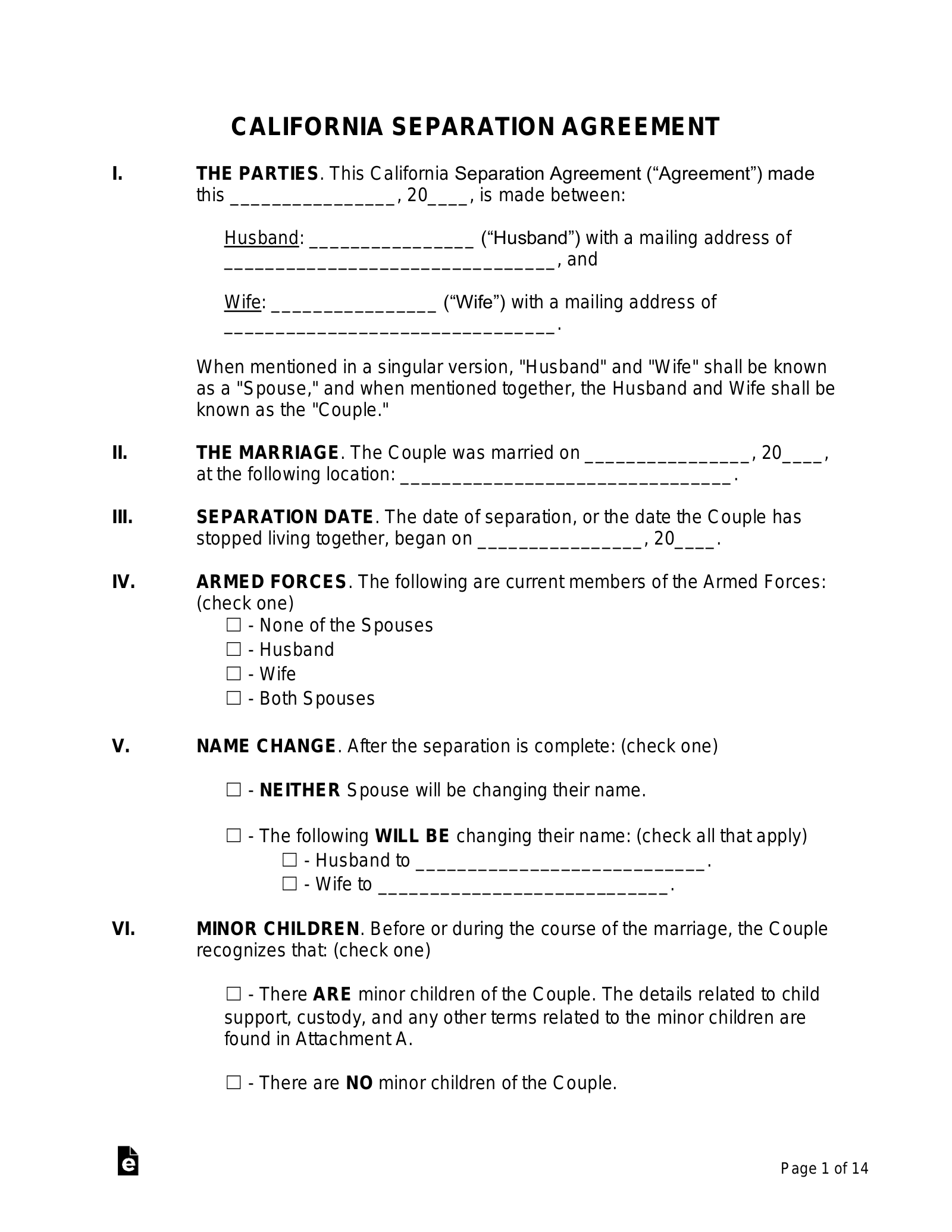
A legal separation in California is a court order that allows a married couple to live apart while remaining legally married. Unlike divorce, a legal separation does not terminate the marital status. This means that neither party can remarry. However, it addresses many of the same issues as a divorce, such as the division of property and debts, child custody and support, and spousal support. Understanding the nuances of legal separation is crucial for those considering this path, as it offers a structured framework for navigating the complexities of a marital dissolution without severing the legal bond entirely.
Understanding the Fundamentals of Legal Separation
The core concept of a legal separation revolves around a judicial decree that formally recognizes the couple’s separation. This decree is granted by a California court and outlines the rights and responsibilities of each spouse concerning financial matters, child-rearing, and property. It’s essential to distinguish legal separation from informal separation. An informal separation, where a couple decides to live apart without court involvement, carries no legal weight and leaves all marital rights and obligations intact. A legal separation, conversely, provides a legally binding agreement that offers clarity and protection.
Grounds for Legal Separation
While the specific legal grounds for seeking a divorce in California often involve establishing irreconcilable differences or incurable insanity, the grounds for legal separation are generally similar. A petitioner must demonstrate that the marriage has irretrievably broken down and that there are irreconcilable differences between the spouses that have caused the irremediable breakdown of the marriage. The court will not require extensive proof of fault; the assertion of irreconcilable differences is typically sufficient. The goal is to establish that continuing the marriage is not feasible or desirable for one or both parties.
The Legal Process
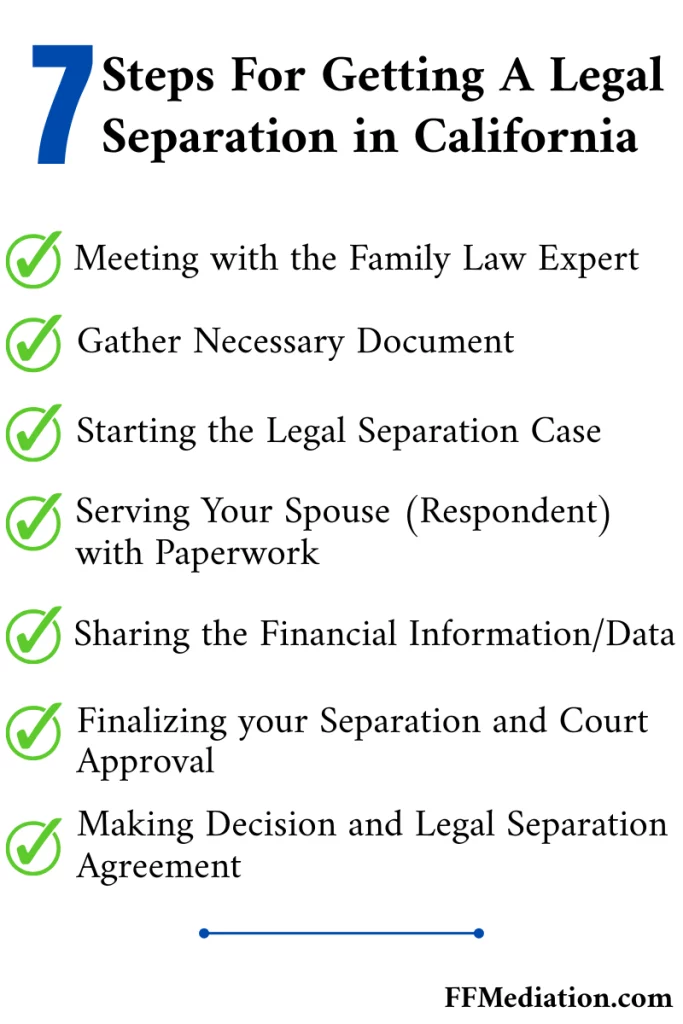
Initiating a legal separation in California follows a formal legal process, mirroring many aspects of a divorce. It begins with filing a Petition for Legal Separation with the appropriate superior court in the county where either spouse resides. The petitioner, the spouse filing the petition, must then formally serve the respondent, the other spouse, with copies of the filed documents. The respondent has a set period to respond to the petition.
Following the response, the couple enters a phase of discovery, where they exchange financial information and other relevant documents. Negotiation and mediation are often encouraged during this stage to reach an agreement on all issues. If an agreement cannot be reached, the case may proceed to a trial, where a judge will make the final decisions. The final judgment of legal separation will then be issued by the court, detailing all the stipulated or adjudicated terms. This process can be lengthy and emotionally taxing, often requiring the assistance of legal counsel.
Key Issues Addressed in a Legal Separation
A legal separation order in California meticulously addresses critical aspects of a couple’s life, aiming to provide a clear roadmap for their independent futures while they remain married. These issues are often the most contentious and require careful consideration and legal guidance.
Division of Property and Debts
One of the most significant components of a legal separation is the division of community property and debts. In California, property acquired during the marriage is generally considered community property, owned equally by both spouses. This includes real estate, bank accounts, vehicles, investments, and even retirement funds. Separate property, which is property owned before the marriage or received as a gift or inheritance during the marriage, is typically not subject to division.
The court will divide the community property and debts in a just and equal manner. This doesn’t necessarily mean a 50/50 split; it means a fair division considering various factors. Couples can agree on a property division, or the court will decide if they cannot reach a consensus. This process requires a thorough inventory and valuation of all assets and liabilities.
Child Custody and Support
For couples with minor children, child custody and support are paramount issues. Legal separation orders will specify legal and physical custody arrangements. Legal custody refers to the right to make decisions about a child’s upbringing, such as education, healthcare, and religious training. Physical custody refers to where the child primarily resides.
California courts prioritize the best interests of the child when determining custody. This involves considering factors like the child’s wishes (depending on their age and maturity), each parent’s ability to provide a stable environment, and the child’s relationship with each parent.
Child support is calculated based on state guidelines, which consider each parent’s income, the amount of time each parent spends with the child, and the number of children. The aim is to ensure that the child’s financial needs are met, regardless of the parents’ marital status.
Spousal Support (Alimony)
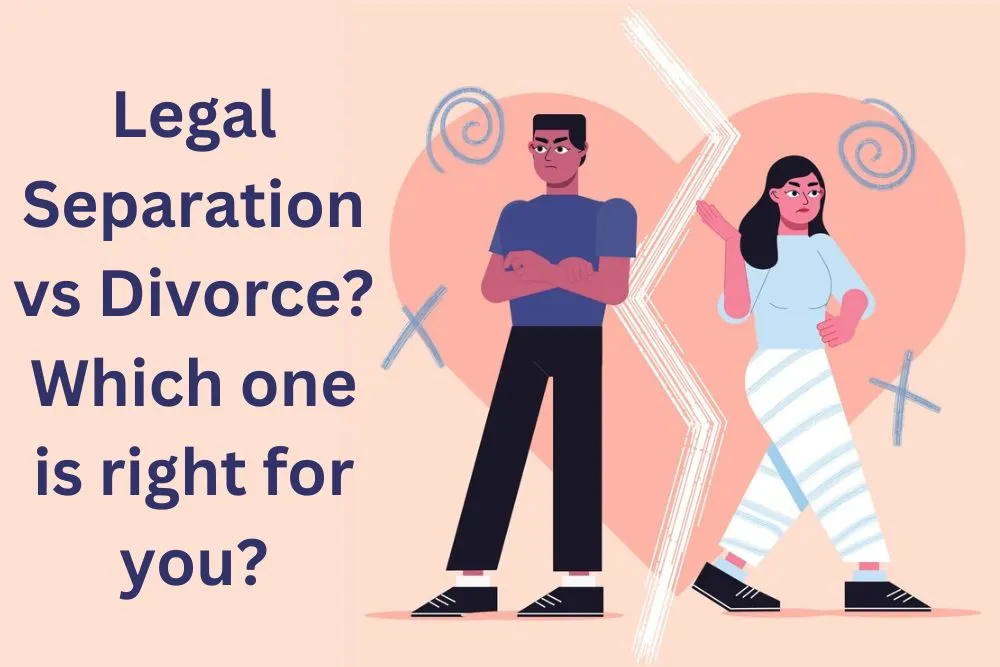
Spousal support, often referred to as alimony, is financial support paid by one spouse to the other. The purpose of spousal support is to help the lower-earning spouse maintain a reasonable standard of living after the separation or divorce. California courts consider numerous factors when determining spousal support, including:
- The length of the marriage
- The standard of living established during the marriage
- The ability of each spouse to meet their needs
- The earning capacity of each spouse
- The age and health of each spouse
- The contributions of each spouse to the marriage (including domestic contributions)
Spousal support can be temporary, lasting during the legal separation process, or long-term, continuing after the final judgment. It can also be rehabilitative, intended to help a spouse gain the skills and education necessary to become self-supporting.
Benefits and Drawbacks of Legal Separation
Opting for a legal separation in California presents a unique set of advantages and disadvantages that couples must weigh carefully against the alternative of divorce.
Advantages of Legal Separation
One primary advantage is the preservation of the marital status. For individuals who have religious objections to divorce or wish to maintain health insurance benefits through their spouse’s employer, legal separation offers a viable solution. In some cases, maintaining the marital status may be beneficial for tax purposes or for continuing certain government benefits.
Furthermore, legal separation can provide a structured period for couples to adjust to living apart without the finality of divorce. It allows for a more gradual transition, particularly when children are involved, potentially reducing immediate trauma. It also offers a clear legal framework for resolving financial and custodial issues, providing certainty and predictability during a period of significant change.
Disadvantages of Legal Separation
The most significant disadvantage is that a legal separation does not allow either party to remarry. If the desire is to move on and form new relationships that could lead to marriage, legal separation is not the appropriate path.
Financially, while many issues are resolved, some legal separations may still involve ongoing financial interdependence, such as maintaining joint assets or health insurance, which can sometimes be complex. Additionally, the legal process itself can be as costly and time-consuming as a divorce, involving similar legal fees and court proceedings. It does not offer a shortcut in terms of legal complexity.
Legal Separation vs. Divorce in California
The distinction between legal separation and divorce in California is critical and hinges primarily on the termination of the marital status.
Key Differences
- Marital Status: In a legal separation, the couple remains legally married. In a divorce, the marital status is terminated, allowing both parties to remarry.
- Remarriage: Neither party can remarry after a legal separation. Both parties are free to remarry after a divorce.
- Health Insurance: In some situations, a legally separated spouse may be able to remain on the other spouse’s health insurance plan. This is typically not possible after a divorce, unless specifically negotiated or mandated by law in limited circumstances.
- Social Security Benefits: Eligibility for certain Social Security benefits based on a former spouse’s record may be affected by the distinction between legal separation and divorce. A divorce often solidifies eligibility for survivor benefits after a certain number of years of marriage, while a legal separation may not.
- Finality: Divorce offers complete finality to the marriage. Legal separation provides a court-ordered separation but maintains the legal marital bond.
When to Choose Legal Separation
A legal separation might be the preferred choice for individuals or couples who:
- Have strong religious beliefs that prohibit divorce.
- Wish to maintain health insurance coverage through a spouse’s employer.
- Are seeking a structured separation to see if reconciliation is possible or to ease the transition for children.
- Need to resolve complex financial or child-related issues but do not wish to end the marriage immediately.
- Are concerned about the potential impact on certain government benefits or military benefits tied to marital status.
It is essential to consult with an experienced family law attorney in California to thoroughly understand the implications of legal separation and to determine whether it aligns with your specific circumstances and long-term goals. The decision between legal separation and divorce is significant and should be made with informed consideration of all legal, financial, and personal factors.
LifeOutOfTheBox is a participant in the Amazon Services LLC Associates Program, an affiliate advertising program designed to provide a means for sites to earn advertising fees by advertising and linking to Amazon.com. Amazon, the Amazon logo, AmazonSupply, and the AmazonSupply logo are trademarks of Amazon.com, Inc. or its affiliates. As an Amazon Associate we earn affiliate commissions from qualifying purchases.