
Alaska, a land of breathtaking wilderness, unparalleled adventure, and captivating wildlife, beckons travelers with its raw, untamed beauty. Deciding when to embark on this unforgettable journey is crucial to maximizing your experience, as each season offers a distinct palette of colors, activities, and atmospheric conditions. From the vibrant bloom of summer to the stark, ethereal glow of winter, Alaska transforms throughout the year, presenting a myriad of opportunities for exploration. This guide delves into the nuances of each season, helping you pinpoint the optimal time to witness the grandeur of the Last Frontier.
Summer: The Reign of the Midnight Sun
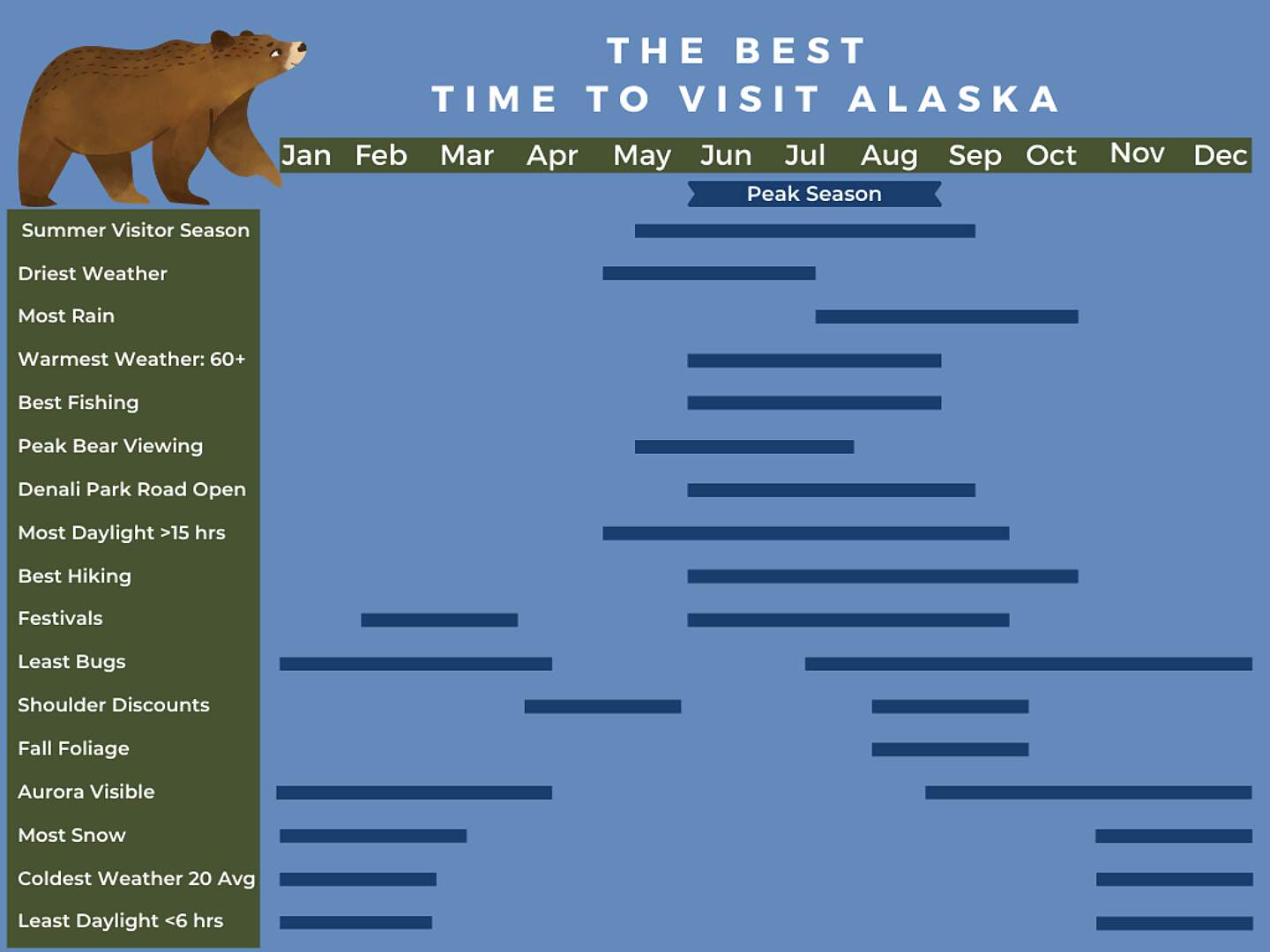
Alaska’s summer, generally spanning from June through August, is undeniably the most popular period for visitors. This is when the state truly comes alive, bathed in the extended daylight of the “Midnight Sun.” This prolonged daylight allows for more hours of exploration, making it an ideal time for those who wish to pack their days with activities and soak in as much of the Alaskan landscape as possible.
Peak Season Advantages
The primary allure of a summer visit is the accessibility and diversity of activities. Hiking trails are clear of snow, national parks are fully open, and most tourist infrastructure, from lodges to tour operators, is operational at its peak. Wildlife viewing opportunities are abundant; this is the prime time to spot whales breaching off the coast, bears foraging for salmon, and eagles soaring overhead.
June: This early summer month often boasts the longest daylight hours, with some regions experiencing nearly 24 hours of sunlight. Wildflowers begin to carpet the landscape, and the weather is generally mild, though unpredictable. It’s a fantastic time for photography and for those seeking to avoid the absolute peak crowds of July.
July: This is the heart of the Alaskan summer and the busiest month. The weather is typically at its warmest, with average temperatures in the 60s and 70s Fahrenheit. The salmon runs are in full swing, attracting abundant wildlife, and all activities and attractions are in full operation. Expect higher prices and more crowded conditions.
August: As summer begins to wane, August still offers excellent weather, though the daylight hours start to decrease. This month is superb for wildlife viewing, particularly for bears feeding on salmon. The autumn colors begin to subtly emerge in some areas, offering a preview of the fall spectacle. Crowds begin to thin slightly towards the end of the month.
Summer Activities & Considerations
Summer is the season for classic Alaskan adventures:
- Cruising: Exploring the stunning Inside Passage aboard a cruise ship or smaller expedition vessel.
- Wildlife Tours: Embarking on boat tours or land excursions to observe bears, whales, otters, and puffins.
- Hiking and Camping: Traversing trails in Denali National Park and Preserve, Kenai Fjords National Park, and other wilderness areas.
- Fishing: Participating in world-class salmon and halibut fishing.
- Kayaking and Rafting: Navigating glacial rivers and serene fjords.
Accommodation: Book well in advance, especially for popular areas like Talkeetna and Seward.
Flights: Airfare tends to be at its highest during these months.
Bugs: Be prepared for mosquitoes and biting flies, especially in June and July, and pack appropriate repellent.
Spring: The Thaw and the Bloom
Spring in Alaska, from April to May, is a period of dramatic transformation. As the snow melts and the days grow longer, the state awakens from its winter slumber, revealing a landscape in transition. While still cool, the weather becomes more hospitable, and the first signs of life emerge.
Shoulder Season Advantages
Spring is considered a shoulder season, offering a sweet spot for travelers seeking a balance between favorable weather, fewer crowds, and more accessible pricing than peak summer. It’s a time of renewal, where the raw beauty of the wilderness begins to reveal itself anew.
April: This is still very much winter for much of Alaska, particularly in the interior. However, in coastal regions and further south, the snow begins to recede, and daylight hours increase significantly. It’s an excellent time for late-season skiing and dog sledding, with the Iditarod Trail Sled Dog Race often concluding in early March.
May: Spring truly takes hold in May. Daylight hours are comparable to mid-summer, and temperatures begin to rise. Wildflowers start to dot the landscape, and wildlife becomes more active as they emerge from hibernation and migration. Many tourist facilities begin to open, though some higher-elevation trails may still be snow-covered.
Spring Activities & Considerations
Spring offers a unique set of experiences:
- Wildlife Spotting: Observing bears emerging from dens and migratory birds returning.
- Fishing: The start of the fishing season, particularly for King Salmon.
- Scenic Drives: Enjoying clearer roads and dramatic mountain vistas before the full summer rush.
- Hiking: Exploring lower-elevation trails as they become accessible.
- Northern Lights: While less likely than in winter, there’s still a chance to see the aurora borealis in early spring, especially in April.
Accommodation: Prices are generally more affordable than in summer.
Flights: Airfare can be competitive, offering good value.
Weather: Be prepared for a mix of conditions, from sunny days to late snow showers. Layers are essential.
Autumn: A Tapestry of Colors and Quietude
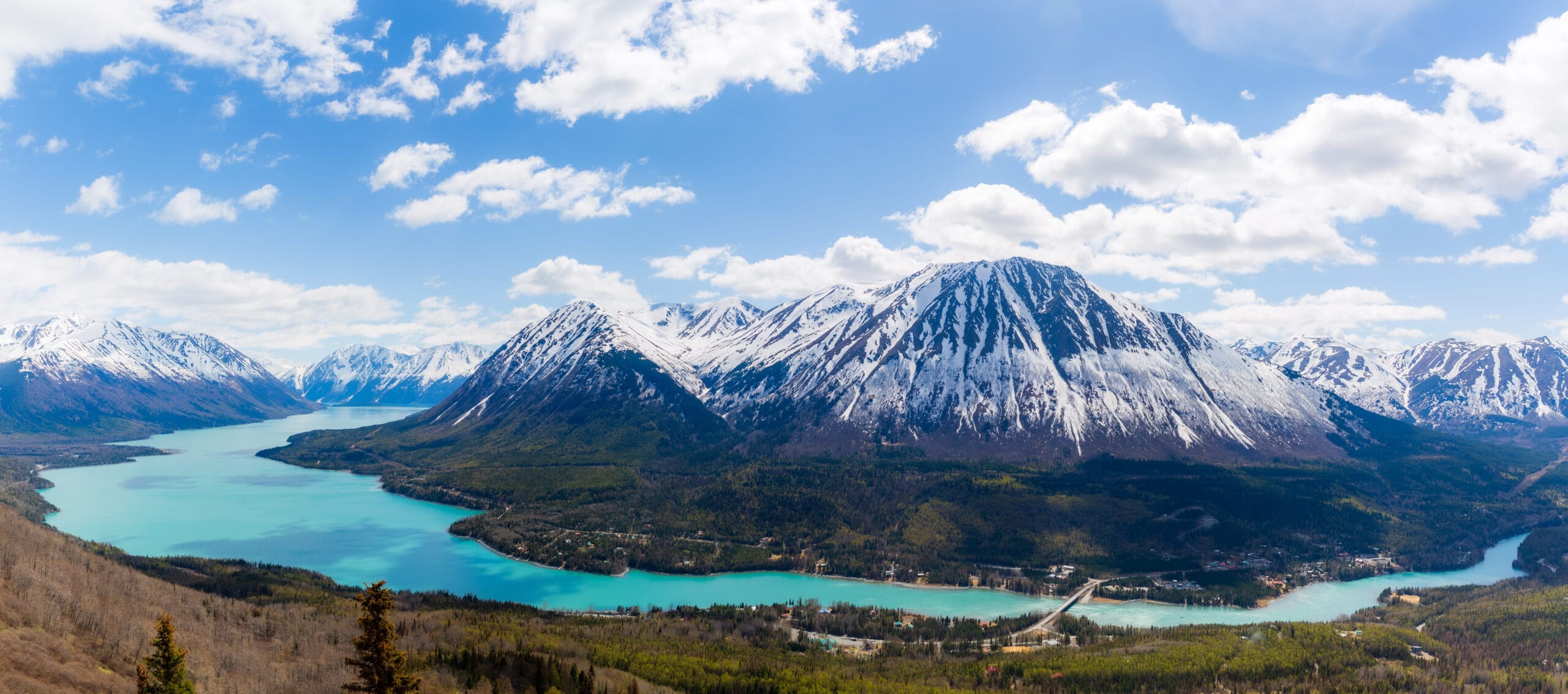
Autumn, from September to October, is a season of breathtaking beauty and increasing tranquility in Alaska. The landscape explodes in a riot of fall colors, and the air becomes crisp and clear, offering stunning photographic opportunities.
Fall Foliage and Wildlife
The primary draw of visiting Alaska in the fall is the spectacular display of autumn foliage, often peaking in early to mid-September. The birch, aspen, and alder trees transform the mountainsides into vibrant hues of gold, orange, and red. This is also a prime time for wildlife viewing, as animals prepare for winter.
September: This month is arguably one of the best for visiting Alaska. The weather is often crisp and cool, with fewer crowds than summer. The fall colors are at their peak, and wildlife, particularly bears, are actively feeding before hibernation. There’s also a good chance of witnessing the Northern Lights as the nights grow longer and darker.
October: The weather becomes significantly colder, and snow becomes more common, especially in higher elevations. Many tourist facilities begin to close for the season, and activities become more limited. However, for hardy travelers seeking solitude and stunning autumnal scenery, October can still be rewarding.
Autumn Activities & Considerations
- Fall Colors: Hiking and driving through areas like Denali National Park and Preserve and the Kenai Peninsula to witness the spectacular foliage.
- Wildlife Viewing: Observing bears, moose, and caribou during their pre-winter feeding.
- Northern Lights: Increased chances of seeing the aurora borealis due to longer, darker nights.
- Photography: A photographer’s paradise with dramatic light and vibrant landscapes.
- Fishing: Still excellent opportunities for fishing before the freeze-up.
Accommodation: Prices become more reasonable, and booking is generally easier.
Flights: Airfare tends to decrease after the summer peak.
Weather: Pack for cold weather, including hats, gloves, and waterproof layers.
Winter: The Enchanting White Wilderness
Winter in Alaska, from November through March, transforms the state into a magical wonderland of snow and ice. It’s a season for those who embrace the cold and seek unique experiences that are only possible in these extreme conditions.
The Aurora and Winter Sports
The most compelling reason to visit Alaska in winter is the unparalleled opportunity to witness the ethereal dance of the Aurora Borealis (Northern Lights). The long, dark nights create the perfect canvas for this celestial spectacle. Beyond the aurora, winter offers a range of thrilling activities.
November – February: These are the coldest and darkest months. However, they offer the highest probability of seeing the Northern Lights, with Fairbanks being a prime viewing location. Many winter activities are in full swing, including dog sledding, ice fishing, and skiing.
March: As winter begins to transition to spring, daylight hours start to increase. The snow is still plentiful, making it an excellent month for winter sports and for experiencing the “late winter” aurora. The Iditarod Trail Sled Dog Race typically takes place in March.
Winter Activities & Considerations
- Northern Lights Tours: Guided excursions to optimal viewing locations.
- Dog Sledding: Experiencing the thrill of mushing through snow-covered landscapes.
- Ice Fishing: A popular local pastime offering a unique way to experience the frozen lakes.
- Skiing and Snowboarding: Resorts offer excellent conditions for winter sports.
- Winter Festivals: Such as the Fur Rendezvous Festival in Anchorage.
- Snowmobiling: Exploring vast snowy terrains.
Accommodation: Many lodges and hotels remain open, offering cozy retreats from the cold. Prices can be lower outside of holiday periods.
Flights: Airfare is generally more affordable.
Weather: Extreme cold is to be expected. Proper insulation and thermal gear are absolutely essential. Many remote areas become inaccessible.
The Verdict: Aligning Your Visit with Your Desires
Ultimately, the “best” time to visit Alaska is subjective and depends entirely on your personal preferences and the experiences you wish to have.
- For the quintessential Alaskan experience with maximum daylight and accessibility: Summer (June-August) is your prime choice. Be prepared for higher prices and crowds.
- For a balance of pleasant weather, fewer crowds, and emerging beauty: Spring (May) offers a refreshing start to the active season.
- For stunning fall colors, abundant wildlife, and a more peaceful atmosphere: Early Autumn (September) is an excellent selection.
- For the chance to witness the magical Northern Lights and embrace winter adventure: Winter (November-March) provides a unique and unforgettable journey for the truly adventurous.
Regardless of when you choose to visit, Alaska promises an awe-inspiring encounter with nature’s grandeur, a journey that will leave an indelible mark on your soul. Each season offers a distinct and compelling reason to explore this magnificent frontier.
LifeOutOfTheBox is a participant in the Amazon Services LLC Associates Program, an affiliate advertising program designed to provide a means for sites to earn advertising fees by advertising and linking to Amazon.com. Amazon, the Amazon logo, AmazonSupply, and the AmazonSupply logo are trademarks of Amazon.com, Inc. or its affiliates. As an Amazon Associate we earn affiliate commissions from qualifying purchases.