
Boston Common stands as a monumental landmark, not merely in the city of Boston, Massachusetts, but within the very fabric of American history itself. Recognized as the oldest city park in the United States, this expansive 50-acre greenspace is far more than a recreational area; it is a living museum, a testament to centuries of civic life, protest, and cultural evolution. Its history intertwines deeply with the nation’s founding principles, serving as a silent witness and active participant in pivotal events that shaped the republic.
From its establishment in 1634, Boston Common has been a central stage for public discourse, military mustering, celebrations, and solemn occasions. Its enduring presence as a public space, freely accessible to all, underscores its original Puritanical vision of communal ownership and use. Today, it remains a vibrant hub for both residents and visitors, offering a verdant respite amidst the urban sprawl, while continuously echoing the stories of those who walked its paths before. To understand Boston Common is to grasp a fundamental piece of Boston’s and America’s collective memory, a landmark whose historical weight is matched only by its natural beauty and ongoing vitality.
A Vestige of Colonial Boston
The origins of Boston Common date back to 1634, when the early Puritan settlers of Boston purchased the land from the first white settler of the peninsula, William Blackstone. The sum paid was 30 pounds, and the intent was clear: to establish a “common cow pasture” for the residents. This communal ownership structure, where the land was held “for the common use of the inhabitants of Boston as a cow pasture and training field,” laid the foundation for its enduring role as a public space. This designation as the first public park in the United States highlights an early American commitment to shared urban green spaces, predating many similar initiatives across the globe.
Early History and Purpose
Initially, Boston Common served multiple practical functions for the fledgling community. Primarily, it was indeed a grazing ground for cattle, ensuring that early settlers had a sustainable food source. Beyond agriculture, it quickly became the primary training ground for the local militia. Citizen-soldiers would regularly gather here for drills and exercises, essential for defense against potential threats and an early manifestation of civic duty. This military use continued for centuries, most notably during the American Revolution, as detailed later.
The Common also played a crucial role in the town’s social fabric. It was a place for town meetings, public announcements, and community gatherings. Its open expanse made it ideal for large assemblies, a tradition that persists to this day. The lack of formal landscaping in its early years emphasized its utilitarian purpose, yet its very existence as an undeveloped expanse within a growing town underscored its value as a shared resource. Landmarks like the Great Elm, though no longer standing, became iconic features, serving as central meeting points and symbols of the Common’s enduring presence.
Public Executions and Protests
While known for its pastoral and civic uses, Boston Common also bore witness to the harsher realities of colonial justice. From the mid-17th century through the early 19th century, public executions were carried out on the Common, specifically at a spot near what is now the corner of Park Street and Tremont Street. These somber events served as public deterrents and reminders of the law’s gravity, often drawing large crowds. The site of these gallows, known as “Gallows Hill” or “Hangman’s Hill,” is a stark reminder of the Common’s multi-faceted historical narrative, encompassing both daily life and ultimate judgment.
Beyond formal justice, the Common was a natural stage for dissent and protest, long before the Revolutionary War. Its open nature made it an ideal location for citizens to voice grievances and challenge authority. Even during colonial times, groups gathered to express dissatisfaction with various policies or social issues. This tradition of public assembly and protest would intensify significantly as tensions with Great Britain escalated, cementing Boston Common’s role as a crucible of American political expression.
A Green Oasis in a Bustling City
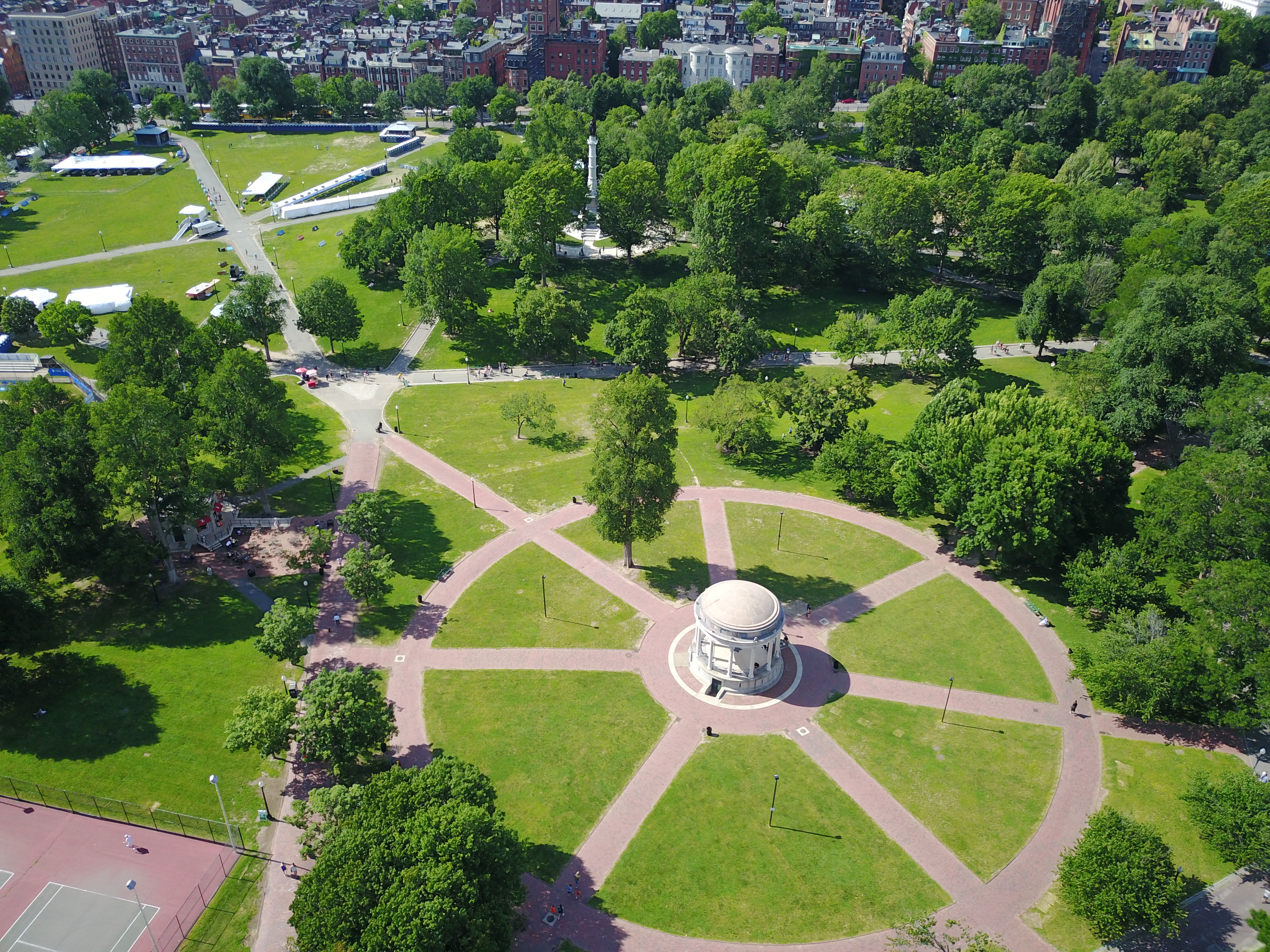
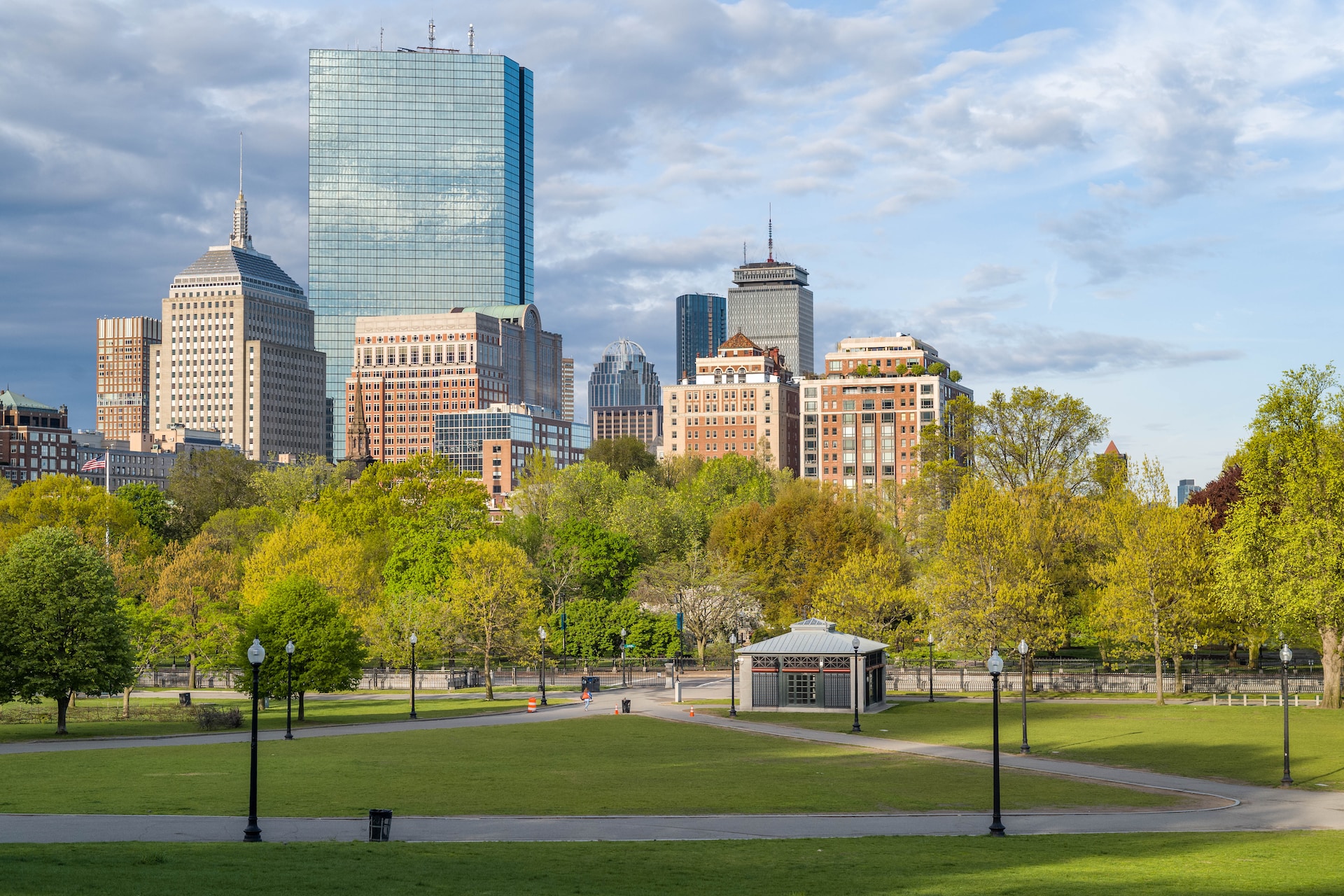
Nestled amidst the dense urban landscape of downtown Boston, Boston Common offers a vital green sanctuary. Its expansive lawns, mature trees, and thoughtful pathways provide a sharp contrast to the surrounding brick buildings and busy streets, inviting residents and visitors alike to pause, relax, and connect with nature. This role as an urban oasis has only grown in importance as Boston has expanded and modernized, making the Common an indispensable component of the city’s environmental and cultural well-being.
Landscape and Features
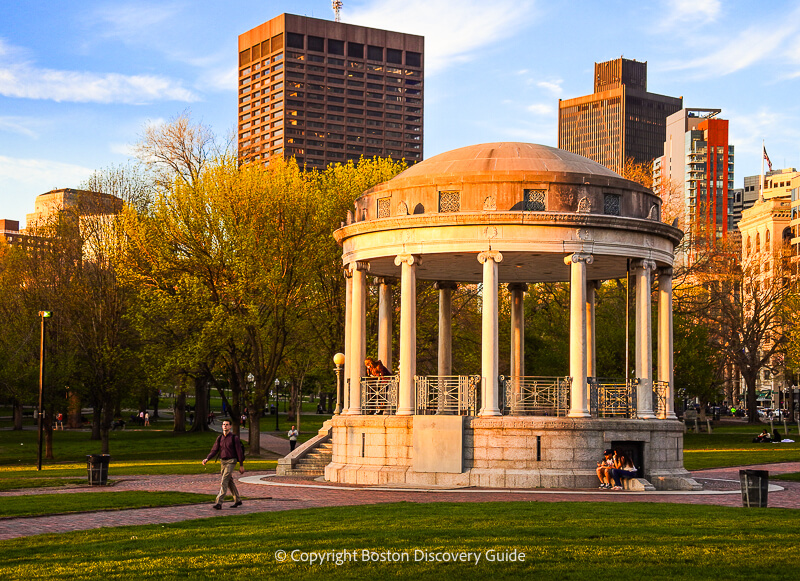
The landscape of Boston Common is characterized by rolling hills, open fields, and majestic trees, some of which are centuries old. While its early function was primarily utilitarian, later centuries saw more deliberate efforts to enhance its aesthetic appeal. The pathways crisscrossing the Common are well-maintained, guiding pedestrians through various sections, each offering a unique perspective. One of its most beloved features is the Frog Pond, located near the center of the park. This shallow wading pool transforms with the seasons, serving as a spray pool for children in the summer, a public ice-skating rink in the winter, and a popular spot for relaxation during spring and autumn.
Adjacent to the Frog Pond is the Tadpole Playground, providing a dedicated space for children’s play. The Central Burying Ground, situated on the Boylston Street side of the Common, is another significant feature. Established in 1756, it is the resting place for many historical figures, including the artist Gilbert Stuart and Revolutionary War casualties, further emphasizing the Common’s deep historical roots. The Soldiers and Sailors Monument, a prominent obelisk commemorating Massachusetts soldiers who died in the Civil War, stands proudly atop Flagstaff Hill, offering panoramic views of the park.
Recreational Uses
Beyond its historical significance, Boston Common thrives as a center for contemporary recreation. Its vast lawns are perfect for picnics, sunbathing, or casual games of frisbee and soccer. Joggers and walkers utilize its extensive network of paths, finding a refreshing escape from the city streets. During warmer months, free yoga classes, concerts, and various community events take place, drawing diverse crowds. The Common also frequently hosts festivals, art installations, and charitable walks, reinforcing its role as a dynamic public gathering space.
In winter, the Frog Pond transforms into a magical ice-skating rink, complete with skate rentals and warm refreshments, attracting families and couples alike. The surrounding landscape, often dusted with snow, provides a picturesque backdrop for cold-weather activities. Regardless of the season, Boston Common consistently provides opportunities for leisure, exercise, and social interaction, demonstrating how a historical landmark can adapt and remain deeply relevant to modern urban life. Its strategic location, bordering the historic Beacon Hill neighborhood and the bustling retail district, makes it easily accessible and a natural point of convergence for various city activities.
A Crucible of American History
Boston Common is more than just a park; it is a repository of pivotal moments in American history. Its ground has been trodden by revolutionaries, abolitionists, civil rights leaders, and millions of ordinary citizens, each leaving an indelible mark on its storied landscape. The landmark’s role in the American Revolution is particularly significant, as it served as a stage for colonial grievances and military maneuvers that ultimately led to the birth of a new nation.
Revolutionary War Echoes
Leading up to the American Revolution, Boston Common became a symbol of growing tensions between the colonists and the British crown. In 1768, British troops, sent to quell colonial unrest, encamped on the Common. For several years, thousands of Redcoats, commanded by figures such as General Thomas Gage, used the park as their primary garrison. Their tents, parade grounds, and military exercises were a constant, imposing presence, turning the common pasture into an occupation camp and a stark reminder of royal authority. It was from this strategic position that British forces marched to Lexington and Concord in 1775, sparking the initial battles of the war.
The Common was also where colonists gathered to protest against oppressive British policies. While British soldiers drilled, colonial leaders delivered impassioned speeches, fostering a spirit of rebellion. The nearby Park Street Church and Massachusetts State House also played roles in these tumultuous times, with the Common serving as the natural outdoor extension for public discourse. After the British evacuation of Boston in 1776, George Washington himself visited the Common, marking a celebratory end to this critical chapter and reaffirming its role as a space for triumph and patriotic gatherings.
Abolitionist and Civil Rights Gatherings
Centuries after the Revolution, Boston Common continued its legacy as a vital forum for social change. In the 19th century, it became a significant site for the abolitionist movement. Activists like William Lloyd Garrison and Frederick Douglass frequently spoke here, leveraging the Common’s public nature to advocate for the end of slavery. The sheer number of people who could gather on its open fields made it an indispensable venue for such politically charged rallies.
In the 20th century, the Common again rose to prominence during the Civil Rights Movement. Martin Luther King Jr. delivered a powerful speech on the Common in 1965, addressing an estimated 20,000 people and underscoring Boston’s role in the national struggle for equality. This event demonstrated the Common’s enduring power as a symbol of freedom of speech and assembly, a place where profound social transformations could be publicly championed.
Modern Day Demonstrations
The tradition of public assembly and protest on Boston Common remains vibrant in the 21st century. It continues to be the preferred location for large-scale demonstrations, rallies, and public forums on a wide array of contemporary issues. From environmental protests to political movements, and from labor disputes to cultural celebrations, the Common consistently serves as Boston’s primary civic stage.
This ongoing use highlights its architectural and urban planning significance as an enduring “people’s park.” Unlike many historical sites that become static monuments, Boston Common remains an active, evolving landmark, continually shaping and being shaped by the present-day concerns and aspirations of the community. Its open, unencumbered nature is central to its functionality, allowing for spontaneity and inclusivity in public expression.
Its Enduring Legacy and Significance
Boston Common’s legacy extends far beyond its historical markers and physical attributes. It represents an enduring commitment to public space, civic engagement, and historical preservation. As the oldest public park in the United States, its mere existence serves as a continuous reminder of the origins of American urban planning and the value placed on shared communal resources.
Iconic Status
Today, Boston Common is recognized globally as an iconic landmark. It is a cornerstone of Boston’s identity, frequently featured in literature, film, and art, symbolizing the city’s rich history and vibrant public life. Its prominent location, nestled between the historic Beacon Hill neighborhood and the bustling theater district, ensures its continuous visibility and importance. The view of the Massachusetts State House from the Common, with its distinctive golden dome, is one of the most recognizable vistas in New England.
The Common’s iconic status is not merely aesthetic; it is deeply rooted in its narrative as a witness to centuries of change. From the encampment of British soldiers under King George III to the fervent speeches of abolitionists and the massive gatherings for figures like Pope John Paul II, it encapsulates the journey of a nation.
Connection to the Freedom Trail
Boston Common serves as the official starting point for the Freedom Trail, a 2.5-mile red-lined path that leads visitors to 16 historically significant sites throughout Boston. This designation firmly positions the Common as the gateway to understanding Boston’s pivotal role in the American Revolution and the early history of the United States. Visitors often begin their historical journey here, absorbing the atmosphere of this ancient park before delving into the specific stories of nearby landmarks like the Massachusetts State House and Park Street Church, both of which border the Common. This integral connection ensures that the Common remains a central fixture in the educational and cultural experiences of all who visit Boston.
Preservation Efforts
Maintaining the integrity and historical character of Boston Common is an ongoing endeavor. Various organizations, including the Boston Parks and Recreation Department and the private Friends of the Public Garden, work tirelessly to preserve its landscape, manage its historical features, and ensure its accessibility and beauty for future generations. These efforts involve careful horticultural management, restoration of monuments, and infrastructure improvements that respect the park’s historical context while accommodating its contemporary uses.
The preservation of Boston Common is a testament to its profound value as a landmark. It is not merely a piece of property but a living monument to centuries of American history, a vital green lung for the city, and an enduring symbol of democratic ideals and public assembly. Its continuous care ensures that “What Is Boston Common?” will always be answered with “a timeless, evolving, and essential piece of the American story.”
LifeOutOfTheBox is a participant in the Amazon Services LLC Associates Program, an affiliate advertising program designed to provide a means for sites to earn advertising fees by advertising and linking to Amazon.com. Amazon, the Amazon logo, AmazonSupply, and the AmazonSupply logo are trademarks of Amazon.com, Inc. or its affiliates. As an Amazon Associate we earn affiliate commissions from qualifying purchases.