
For anyone embracing the vibrant lifestyle of California, or considering a move to the Golden State, understanding the nuances of major purchases is paramount to sound financial planning. Among the most significant assets for many residents is a vehicle, an essential component for navigating California’s vast landscapes, commuting to dynamic urban centers, or embarking on scenic road trips that define much of the California experience. However, acquiring a car in California involves more than just the sticker price; it includes the often-misunderstood element of car sales tax. This tax isn’t just a minor fee; it’s a substantial financial consideration that can significantly impact your budget and overall lifestyle choices.
The California car sales tax is a critical element in the total cost of vehicle ownership, affecting everyone from first-time buyers to luxury car enthusiasts. It’s a complex system that combines a statewide base rate with various local district taxes, making the final percentage vary depending on where you make your purchase and, in some cases, where you intend to register the vehicle. Demystifying this tax is crucial for making informed decisions that align with your financial goals and preferred lifestyle in California. This guide will break down the intricacies of California car sales tax, offering insights into its calculation, exemptions, and the broader financial landscape of car ownership in one of America’s most economically dynamic states.
Understanding the Foundation of California Car Sales Tax
The foundation of California’s car sales tax system is rooted in a combination of statewide and local levies. This multi-layered approach ensures that while there’s a consistent base rate across the state, the final percentage can fluctuate, directly impacting your purchasing power and financial planning for a new vehicle. For residents committed to a certain lifestyle, whether it involves urban commuting or extensive regional travel, understanding these layers is essential for budgeting effectively.
The Statewide Base Rate: A Starting Point for Every Purchase
At the core of the California sales tax system is a statewide base rate. This rate is applied uniformly across all taxable transactions in California, including the sale of motor vehicles. As of recent data, this base rate is 7.25%. This means that for every dollar of the vehicle’s purchase price, 7.25 cents will be allocated to the state’s general fund and specific programs. This rate serves as the universal minimum, a benchmark that every car buyer in California must factor into their financial calculations. For someone budgeting for a significant lifestyle investment like a car, beginning with this foundational percentage provides a clear starting point. It’s important to remember that this 7.25% is just the beginning; additional taxes will invariably push the total higher.
Navigating Local District Taxes: Why Location Matters for Your Wallet
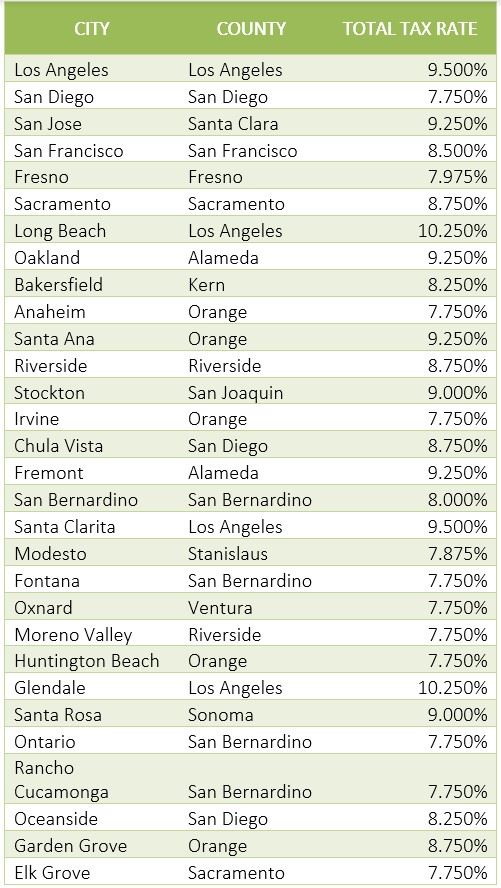
Beyond the statewide base rate, California implements a system of local district taxes. These additional taxes are levied by cities, counties, and special districts to fund local services, infrastructure projects, and other community initiatives. Consequently, the total sales tax rate on a car purchase varies significantly depending on the specific city and county where the transaction occurs and, importantly, where the vehicle will be registered. For example, a car purchased in Los Angeles County will have a different total sales tax rate than one purchased in San Francisco County or Sacramento.
These district taxes can add anywhere from 0.10% to over 2% to the statewide base rate. For instance, residents in some parts of Los Angeles County or Alameda County might face a combined sales tax rate exceeding 9.5% or even 10.0%, due to a combination of county, city, and special district add-ons. This regional variation highlights the importance of researching the exact sales tax rate for your specific location before committing to a purchase. It’s a crucial step in managing your lifestyle budget, as a seemingly small percentage difference can translate into hundreds or even thousands of dollars on a new or used vehicle, directly impacting what car you can afford or what other lifestyle expenditures you can manage.
The Cumulative Effect: Calculating Your Total Tax Burden
The actual total sales tax you pay on a car in California is the sum of the statewide base rate and all applicable local district taxes. This cumulative effect is what often surprises buyers who only account for the standard 7.25%. To accurately calculate your total tax burden, you must identify the sales tax rate for the specific jurisdiction where the vehicle is delivered or registered. The California Department of Tax and Fee Administration (CDTFA) provides resources and tools to look up current sales tax rates by address or zip code, an invaluable resource for precise financial planning.
For instance, if you purchase a vehicle for $30,000 in a region with a combined sales tax rate of 9.0%, your sales tax would be $2,700. If the rate were 9.5%, that would jump to $2,850. This difference, while seemingly minor, can certainly influence your overall financial health and ability to maintain your desired lifestyle, especially when combined with other car ownership costs. Careful calculation of this cumulative burden is a fundamental step in ensuring your car purchase aligns seamlessly with your broader financial and lifestyle aspirations in California.
Who Pays and When: The Mechanics of the Transaction
Understanding who is responsible for the California car sales tax and at what point in the transaction it becomes due is as crucial as knowing the rate itself. These mechanical aspects directly influence your cash flow and how you structure your financing, ultimately impacting your financial lifestyle in the Golden State.
Buyer’s Responsibility: Direct Impact on Your Lifestyle Budget
In California, the car sales tax is primarily the responsibility of the buyer. This means that when you purchase a vehicle, whether new or used, from a dealership or a private party, you are the one obligated to pay the sales tax. This significant expense needs to be fully integrated into your overall car purchase budget, not treated as an afterthought. For many, this tax amount is financed along with the vehicle, adding to the total loan amount and subsequently increasing monthly payments. For those who prefer to pay cash for their car, the sales tax represents a direct outflow of capital at the time of purchase.
This direct impact on your lifestyle budget underscores the importance of pre-purchase financial planning. If you’ve allocated a certain amount for a car, failing to account for sales tax can lead to unexpected strain on your finances, potentially forcing compromises on the vehicle model, trim level, or other lifestyle choices. Savvy buyers will always calculate the sales tax first to determine their true “all-in” budget.
Timing of Payment: Integrating Tax into Your Car Acquisition Process
The timing of sales tax payment differs slightly depending on where you purchase your vehicle:
- Dealership Purchases: When you buy a car from a licensed dealership, the sales tax is typically collected by the dealer at the time of sale. The dealer then remits this tax to the California Department of Tax and Fee Administration (CDTFA). This simplifies the process for the buyer, as it’s rolled into the total transaction.
- Private Party Sales: For vehicles purchased from a private seller, the sales tax is not collected by the seller. Instead, the buyer is responsible for paying the sales tax directly to the California Department of Motor Vehicles (DMV) when registering the vehicle. This is a critical distinction, as many buyers in private transactions might mistakenly believe they are exempt from sales tax, only to face a substantial bill at the DMV. This delayed payment can catch unprepared buyers off guard and disrupt their financial lifestyle planning if not anticipated. It’s an essential aspect to factor in, especially if you’re managing cash flow closely.
Vehicles Under Scrutiny: New, Used, and Private Party Sales
The sales tax applies to most vehicle sales in California, regardless of whether the vehicle is new, used, or purchased from a private party.
- New Vehicles: All new vehicles sold in California are subject to sales tax based on their purchase price.
- Used Vehicles from Dealerships: Used vehicles purchased from licensed dealerships are also subject to sales tax, calculated on the selling price.
- Used Vehicles from Private Parties: This is where some confusion arises. Unlike some states, California does levy sales tax on private party used car sales. The tax is typically calculated on the agreed-upon purchase price between the buyer and seller. However, the DMV reserves the right to assess the tax based on the vehicle’s market value if the declared sale price is suspiciously low, to prevent tax evasion. This vigilance ensures fairness and consistency in tax collection, reinforcing the need for transparent transactions that align with your ethical financial lifestyle.
Understanding these payment mechanics is vital for anyone planning to acquire a vehicle in California. It ensures that your budget is accurate and that you avoid any unexpected financial surprises, allowing you to maintain your desired lifestyle without undue stress.
Key Exemptions and Special Considerations
While California’s car sales tax is broadly applied, there are specific circumstances and transactions that may qualify for an exemption or a reduction in the taxable amount. Being aware of these exceptions can significantly impact your financial planning for a car purchase and contribute to maintaining your desired lifestyle within the Golden State.
Out-of-State Purchases and Relocation: Planning Your Move to California
For individuals relocating to California and bringing a vehicle with them, or those purchasing a vehicle out-of-state with the intent to register it in California, special rules apply. The primary goal of the state is to prevent residents from evading California sales tax by purchasing vehicles in states with lower or no sales tax.
- Non-Resident Exemption (Use Tax): If you purchased a vehicle in another state while you were a bona fide resident of that state, and you subsequently move to [California](https://lifeoutofthebox.com/california], you may be exempt from California use tax (which is equivalent to sales tax for out-of-state purchases) under certain conditions. Generally, you must have owned and used the vehicle in your previous state of residence for at least 12 months before moving to [California](https://lifeoutofthebox.com/california]. If you owned it for less than 12 months, California may assess a use tax based on the vehicle’s purchase price, crediting any sales tax already paid to another state. This is a critical consideration for anyone planning a lifestyle change that involves moving to California with a car.
- Out-of-State Purchase by California Resident: If you are a California resident and purchase a car in another state with the intention of bringing it to [California](https://lifeoutofthebox.com/california] for use, you will generally be subject to California use tax when you register it at the DMV. Any sales tax paid in the other state can typically be credited against the California use tax. The intent is crucial here; if the primary purpose of the out-of-state purchase was to avoid California tax, the state will typically collect it.
Gifts and Transfers: Understanding Non-Taxable Scenarios
Certain vehicle transfers may be exempt from sales tax, primarily those classified as genuine gifts or specific familial transfers.

- True Gifts: If a vehicle is transferred as a genuine gift, where no money or other consideration is exchanged, it is generally exempt from sales tax. However, the DMV scrutinizes these transactions to ensure they are legitimate gifts and not disguised sales. The giver typically signs a declaration of gift.
- Intrafamily Transfers: Transfers between immediate family members (e.g., parent to child, spouse to spouse) may also qualify for a sales tax exemption or a reduced rate, especially if the vehicle was already registered in [California](https://lifeoutofthebox.com/california] and sales tax was previously paid. The specific rules can be complex and often require precise documentation, so consulting the DMV or a tax professional is advisable to ensure your lifestyle transitions involving vehicle transfers are handled correctly.
Trade-Ins: Reducing Your Taxable Amount
One of the most significant ways to reduce your sales tax burden on a new vehicle purchase from a dealership is through a trade-in. In [California](https://lifeoutofthebox.com/california], the sales tax is calculated on the net purchase price of the new vehicle after subtracting the value of your trade-in. This means the trade-in allowance directly reduces the amount on which you pay sales tax, leading to substantial savings.
For example, if you purchase a new car for $40,000 and trade in your old vehicle for $10,000, your taxable amount would be $30,000. At a 9.0% sales tax rate, you would pay $2,700 in tax. Without the trade-in, the tax would be $3,600 – a savings of $900. This is a compelling incentive for many California residents to trade in their old vehicles at dealerships rather than selling them privately, as it directly translates into more disposable income or a lower car payment, enhancing your financial flexibility for other lifestyle pursuits.
Beyond Sales Tax: The Broader Financial Landscape of Car Ownership in California
While car sales tax is a significant upfront cost, it is merely one component of the broader financial landscape of car ownership in [California](https://lifeoutofthebox.com/california]. For those living or planning to live a fulfilling lifestyle in the Golden State, understanding the full spectrum of costs is essential for robust financial planning and sustaining your desired quality of life.
Registration Fees and Vehicle Licensing: The Annual Investment in Your Mobility
Beyond the initial sales tax, every vehicle owner in California faces recurring annual fees. These include:
- Registration Fees: A flat base fee for vehicle registration.
- Vehicle License Fee (VLF): This is a fee that is essentially an annual property tax on your vehicle, calculated as a percentage of its market value. The VLF is generally 0.65% of the vehicle’s value. As your vehicle ages, its value depreciates, and thus the VLF tends to decrease over time.
- Transportation and Air Quality Fees: Various smaller fees are collected to fund initiatives related to transportation infrastructure, air quality improvement (such as smog programs), and other environmental efforts.
- County and District Fees: Some counties or special districts may levy additional fees to support local projects.
These annual fees, while seemingly modest individually, can accumulate to several hundred dollars each year. For a California resident, budgeting for these recurring costs is as important as planning for the initial sales tax. Neglecting them can lead to late fees, penalties, and even vehicle impoundment, disrupting your daily life and financial stability.
The Lifestyle Impact: Budgeting for Total Car Ownership Costs in the Golden State
The true cost of car ownership in California extends far beyond sales tax and annual registration. A comprehensive lifestyle budget must account for a multitude of expenses:
- Insurance: California has some of the highest car insurance rates in the nation, influenced by factors like population density, accident rates, and vehicle theft statistics, particularly in metropolitan areas like Los Angeles, San Francisco, and San Diego.
- Fuel: Given the vast distances, extensive commuting, and higher gas prices often found in California, fuel costs can be a significant monthly expenditure.
- Maintenance and Repairs: Regular servicing, unexpected repairs, and tire replacements are inevitable parts of vehicle ownership.
- Parking and Tolls: Especially in urban centers, parking fees and tolls (e.g., on express lanes or specific bridges) can add up quickly.
- Depreciation: While not an out-of-pocket expense, depreciation is the single largest cost of owning a new car, representing the loss in value over time.
Collectively, these costs paint a realistic picture of the financial commitment required to maintain a car-dependent lifestyle in California. For individuals who rely on their vehicle for work, family, or leisure, these expenses are integral to their lifestyle budget.
Making Informed Decisions: Aligning Your Car Purchase with Your Financial Lifestyle Goals
In a state like California, where the cost of living can be high, every financial decision has a magnified impact on one’s lifestyle. When it comes to car purchasing, making informed decisions means:
- Realistic Budgeting: Accounting for sales tax, registration, insurance, fuel, and maintenance from the outset.
- Considering Alternatives: Exploring public transportation options in dense urban areas, ridesharing, or even living car-free if your lifestyle allows, can significantly reduce expenses.
- New vs. Used: Weighing the benefits of a new car (latest technology, warranty) against the lower upfront costs and slower depreciation of a quality used vehicle.
- Fuel Efficiency: Prioritizing fuel-efficient models or electric vehicles (EVs) to mitigate high gas prices and benefit from potential state incentives for eco-friendly choices.
Aligning your car purchase with your financial lifestyle goals is not just about affordability, but about sustainable living. It’s about ensuring that your vehicle choice supports your daily needs and aspirations without creating undue financial stress, allowing you to fully enjoy the unique opportunities and experiences that California offers.
Strategic Approaches to Car Purchasing in California
Navigating the complexities of car sales tax and the broader costs of vehicle ownership in California requires a strategic approach. For those dedicated to maintaining a robust financial lifestyle in the Golden State, thoughtful planning and execution can lead to substantial savings and a more predictable financial future.
Researching Dealerships and Private Sellers: Optimizing Your Purchase
The choice between purchasing from a dealership and a private seller can have significant implications for your total cost, largely due to the differing sales tax collection methods and available advantages.
- Dealership Advantages:
- Trade-in Benefit: As discussed, trading in your existing vehicle at a dealership directly reduces the taxable amount of your new purchase, providing immediate sales tax savings. This can be a compelling reason for many California residents to opt for a dealership.
- Convenience: Dealerships handle all sales tax collection and DMV paperwork, streamlining the acquisition process.
- Warranties and Certifications: New cars come with manufacturer warranties, and many used cars sold by dealerships are certified pre-owned (CPO), offering additional peace of mind and reducing potential immediate repair costs.
- Private Seller Advantages:
- Potentially Lower Sticker Price: Private sellers often list vehicles at a lower price than dealerships, as they don’t have overhead costs.
- Negotiation Flexibility: There can be more room for negotiation on the sales price.
- Sales Tax Nuance: While sales tax is still due to the DMV, the absence of a trade-in reduction means the entire purchase price (or DMV-assessed value) is subject to tax. Buyers need to be disciplined in setting aside these funds.
For those focused on optimizing their lifestyle budget, comparing the “all-in” cost from both avenues, including sales tax and any potential savings from a trade-in, is critical. Sometimes, a seemingly higher dealership price with a trade-in can result in a lower total expenditure due to tax savings.
The Role of Financial Planning: Integrating Car Costs into Your Overall Lifestyle Budget
Effective financial planning is the cornerstone of managing car ownership in California. This means looking beyond the initial purchase price and understanding how the sales tax, along with all other associated costs, integrates into your broader financial lifestyle.
- Create a Comprehensive Budget: Factor in all expenses: sales tax, registration, insurance, fuel, maintenance, and potential depreciation.
- Assess Affordability: Don’t just consider the monthly car payment. Evaluate if the total cost of ownership aligns with your income, savings goals, and other lifestyle priorities (e.g., housing, travel, education).
- Build an Emergency Fund: Unexpected car repairs can derail a budget. Having an emergency fund dedicated to vehicle issues can provide a crucial financial safety net.
- Consider Financing Options: Research interest rates, loan terms, and down payment requirements. A larger down payment can reduce the amount financed, including the sales tax portion, and lead to lower overall interest paid.
Integrating these considerations into your financial plan allows for a stable and stress-free car ownership experience, enabling you to enjoy your California lifestyle without financial strain.
Staying Informed: Keeping Up with California Tax Law Changes
California’s tax laws, including those related to sales and use tax, can change. New district taxes may be approved by local voters, or statewide regulations might be updated. For instance, incentives for electric vehicles (EVs) or hybrid cars, which can indirectly affect the net cost of ownership for certain buyers, are subject to frequent revisions.
- Regularly Check Official Sources: The California Department of Tax and Fee Administration (CDTFA) and the California Department of Motor Vehicles (DMV) websites are the most reliable sources for up-to-date information on sales tax rates, exemptions, and vehicle registration fees.
- Consult Professionals: For complex situations, such as large commercial vehicle purchases, unique exemptions, or out-of-state relocation scenarios, consulting a tax advisor or a reputable auto broker can provide tailored advice.
By staying informed and proactive, California residents can ensure their car purchasing decisions are always based on the most current information, safeguarding their financial well-being and supporting their chosen lifestyle in this dynamic state. Understanding “What Is California Car Sales Tax?” is not just about a single number; it’s about mastering a key component of your financial roadmap for a comfortable and mobile life in the Golden State.
LifeOutOfTheBox is a participant in the Amazon Services LLC Associates Program, an affiliate advertising program designed to provide a means for sites to earn advertising fees by advertising and linking to Amazon.com. Amazon, the Amazon logo, AmazonSupply, and the AmazonSupply logo are trademarks of Amazon.com, Inc. or its affiliates. As an Amazon Associate we earn affiliate commissions from qualifying purchases.