
California, with its iconic landmarks, diverse lifestyle offerings, and economic opportunities, is a perennial magnet for travelers, remote workers, and those seeking new beginnings. Yet, for anyone spending considerable time within its borders, understanding what constitutes a “California resident” for tax purposes is crucial. This isn’t just about where you physically are; it’s a nuanced legal determination with significant financial implications, especially for individuals whose lives involve frequent travel, varied accommodations, or a mobile professional life.
The concept of tax residency in the Golden State delves into the entirety of an individual’s circumstances, aiming to ascertain their true home and permanent base. For globetrotters, long-term visitors, or those contemplating a move, deciphering these rules is essential to prevent unforeseen tax liabilities, penalties, and potential audits from the California Franchise Tax Board (FTB). This article will demystify California’s tax residency rules, offering insights tailored to those with dynamic lifestyles, helping you navigate the state’s tax landscape confidently.

Understanding California Tax Residency: Beyond the Golden State’s Allure
California’s definition of tax residency is notably broad. It can often surprise individuals who maintain residences or spend significant time in other states or countries. Unlike many jurisdictions, California doesn’t solely rely on a simple “days spent” count. While physical presence is a factor, it’s one piece of a larger, intricate puzzle.
You are generally considered a California resident for tax purposes if you are:
- In California for other than a temporary or transitory purpose.
- Domiciled in California but outside California for a temporary or transitory purpose.
This dual definition means you could be a resident even if you never intended to make California your permanent home, simply by spending enough time there under specific conditions. Conversely, if California remains your “domicile,” even extended absences might not exempt you from its tax reach.
The 183-Day Presumption: A Common Misconception for Travelers
A widespread misconception is that spending fewer than 183 days (six months) in California automatically exempts you from California income tax as a non-resident. This is incorrect. The 183-day rule in California primarily creates a presumption of residency if you are physically present for more than nine months of the taxable year. If you exceed nine months, you are presumed a resident, and the burden of proof is on you to demonstrate your presence was temporary.
Crucially, there is no corresponding presumption that spending less than 183 days makes you a non-resident. You could spend only a few weeks or months in California and still be deemed a resident if the California Franchise Tax Board concludes California is your “domicile” and your absence is merely temporary. This nuance is particularly relevant for digital nomads or those with residences in states like Nevada, Arizona, or Florida, which have no state income tax. Physical presence is a factor, but not the only one.
Domicile vs. Residency: A Critical Distinction for the Mobile Lifestyle
Understanding the difference between “domicile” and “residency” is paramount for anyone with a mobile lifestyle.
- Domicile: This is your true, fixed, and permanent home, the place where you intend to return whenever you are absent. You can only have one domicile. It reflects your intent and where your most significant connections lie. Changing domicile requires both physically leaving your old one and establishing a new one with the intent to remain there permanently or indefinitely.
- Residency: For California tax purposes, residency can be broader. You can be a California resident even if your domicile is in another state or country, provided your presence in California is “for other than a temporary or transitory purpose.” Conversely, you can be domiciled in California and still be considered a non-resident if you leave the state for an extended period with intent to establish a new domicile, and your absence from California is not temporary.
This distinction is vital for travelers using various accommodations, from short-term hotel suites to long-term apartment rentals. For instance, you might be domiciled in Texas, but if you spend eight months working in California, living in a serviced apartment in San Jose, you could be a California resident for tax purposes, subjecting your worldwide income to California tax.
Key Factors Determining Your California Tax Status
The California Franchise Tax Board employs a “facts and circumstances” test to determine residency, weighing various factors to assess an individual’s connections to the state. There isn’t a single determinative factor; rather, it’s the cumulative weight of all evidence that guides their decision.
The “Closer Connections” Test: What the FTB Really Looks At
The “closer connections” test is central to California’s residency determination. The California Franchise Tax Board examines numerous personal, professional, and financial ties. Key elements include:
- Location of Principal Residence: Where do you own or rent your primary home?
- Location of Family: Where do your spouse and children reside?
- Bank Accounts and Financial Records: Where do you primarily conduct your banking and investments?
- Vehicle Registration and Driver’s License: Which state issued your driver’s license and where are your vehicles registered?
- Voter Registration: Where are you registered to vote?
- Source of Income: A significant portion of your income derived from California sources can be a factor.
- Professional Licenses: Where were they issued and primarily used?
- Medical and Dental Care: Where do you regularly receive healthcare?
- Memberships: Social, fraternal, or religious organizations in California.
- Mail and Postal Address: Where do you receive important mail?
- Storage of Personal Property: Where do you store valuable possessions?
- Location of Business Interests: Where are your significant business interests or employment located?
For those with mobile lifestyles, meticulously documenting changes in these factors is crucial, as the California Franchise Tax Board will scrutinize them to establish a pattern of intent.
Lifestyle Implications for Travelers and Remote Workers
The rise of remote work and the appeal of California’s diverse regions, from the sun-drenched beaches of Los Angeles to the bustling tech hubs of San Francisco, have made residency a complex issue for various groups:
- Digital Nomads: Individuals constantly traveling, living in different cities or countries, might face challenges if they maintain any significant ties to California (e.g., California driver’s license, virtual mailing address, or property they return to). The California Franchise Tax Board might argue California remains their domicile, making their worldwide income taxable.
- Snowbirds and Seasonal Residents: Many enjoy California’s mild winters, spending several months in areas like Palm Springs or Santa Barbara. If their stay is genuinely seasonal, temporary, and their primary domicile is clearly established elsewhere (e.g., Oregon, Washington), they might avoid California residency. However, deepening connections or exceeding temporary periods could lead to residency challenges.
- Business Travelers and Extended Assignments: A person on a year-long project in Silicon Valley might initially believe they are non-residents. However, if they bring their family, register their car, obtain a California driver’s license, and enroll children in local schools, they quickly establish “closer connections” that could lead to California residency.
The Role of Accommodation and Property Ownership
Your choice of accommodation and property ownership plays a significant, though not always singular, role in residency determination.
- Owning Property in California: A home in Berkeley or a vacation rental in Lake Tahoe is a strong indicator of connection. While not automatic proof of residency, it shifts the burden onto the individual to demonstrate their domicile is elsewhere.
- Renting Long-Term: A year-long lease in Santa Monica implies a more permanent intent than staying in short-term hotel suites.
- Hotels and Short-Term Rentals: For those frequently staying in hotels, resorts, or short-term vacation rentals, the cumulative time spent and the purpose of those stays become critical. A month-long stay at the Four Seasons Beverly Hills for vacation differs from eight months living in a series of apartments while working remotely for a California-based company. The pattern, combined with other factors, paints a picture for the California Franchise Tax Board.
Navigating Common Scenarios and Severing Ties
Understanding how these rules apply in real-world situations is critical, especially for those moving into or out of California.
Extended Stays and the “Temporary or Transitory” Test
Whether a stay is “temporary or transitory” depends on facts and circumstances, not just duration. A New York resident on a six-month sabbatical exploring California, perhaps renting a villa in Napa Valley and an apartment in San Diego, would likely remain a New York resident if they maintain clear ties there (voting, driver’s license, primary family residence) and have no intent to establish a permanent life in California. They would only be taxed on California-sourced income. However, if they begin seeking permanent employment, enrolling children in schools, or establishing significant social ties, their status could shift.
Leaving California: The Importance of Severing Connections
For those planning to leave California, simply moving isn’t enough to instantly change your tax residency. The California Franchise Tax Board looks for clear and convincing intent to sever all ties and establish a new domicile outside the state. Key steps include:
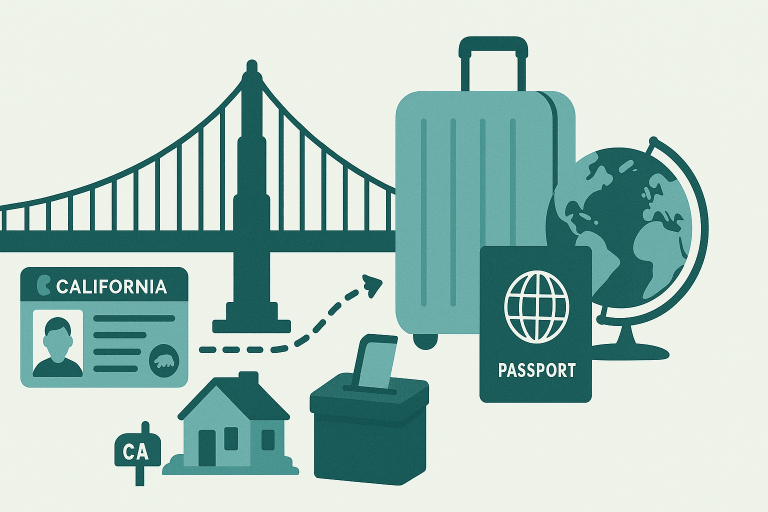
- Establishing a New Domicile: Register to vote, obtain a new driver’s license, register vehicles, and open new bank accounts in your new state (e.g., Arizona, Texas, Florida).
- Disposing of California Property: Selling or renting your primary California residence is a strong indicator. If you keep it, be prepared to demonstrate it’s an investment or temporary accommodation.
- Relocating Family and Belongings: Moving your spouse, children, and valuable possessions provides strong evidence.
- Updating Addresses: Forward all mail to your new out-of-state address.
- Changing Affiliations: Join new clubs and organizations in your new community.
A detailed record of these actions is highly advisable. The California Franchise Tax Board has a reputation for aggressively pursuing former residents to ensure they truly left California.
Practical Advice for Ensuring Tax Compliance
Navigating California’s tax residency rules requires diligence and a proactive approach, especially for those with dynamic lifestyles.
Documentation and Record Keeping for the Savvy Individual
The burden of proof often lies with the taxpayer. Maintaining meticulous records is your best defense against potential California Franchise Tax Board inquiries:
- Travel Itineraries and Accommodation Receipts: Keep detailed logs of travel dates, flight tickets, hotel bookings, and rental agreements (e.g., for suites in San Francisco, villas in Palm Springs).
- Financial Statements: Retain bank statements, credit card bills, and investment account statements, especially those showing address changes or activity consistent with a non-California domicile.
- Official Documents: Copies of driver’s licenses, vehicle registrations, voter registration cards, clearly showing your domicile state.
- Utility Bills and Mail: Evidence of utility payments at a new out-of-state residence, and general mail received at that address.
- Employment Contracts: Documentation showing the location of your employer.
Having a robust collection of these documents can substantiate your claims and provide a clear picture of your intent to the California Franchise Tax Board.
Seeking Professional Guidance: When to Consult an Expert
Given the complexity and potential financial ramifications of California tax residency, consulting a qualified tax professional is highly recommended, particularly if you:
- Have multiple residences or spend significant time in more than one state/country.
- Are a digital nomad or remote worker.
- Are planning to move into or out of California.
- Have significant income and are concerned about your residency status.
- Have received an inquiry from the California Franchise Tax Board regarding your residency.
A tax attorney or a CPA specializing in multi-state taxation can provide tailored advice, help you structure your affairs to minimize tax risk, and represent you in the event of an audit. They can help you understand the specific implications of your travel habits, accommodation choices, and overall lifestyle on your California tax obligations, providing peace of mind. Don’t leave your tax residency to chance; expert advice can save you substantial headaches and money down the line.
LifeOutOfTheBox is a participant in the Amazon Services LLC Associates Program, an affiliate advertising program designed to provide a means for sites to earn advertising fees by advertising and linking to Amazon.com. Amazon, the Amazon logo, AmazonSupply, and the AmazonSupply logo are trademarks of Amazon.com, Inc. or its affiliates. As an Amazon Associate we earn affiliate commissions from qualifying purchases.