
The world of academic writing and scholarly communication is often characterized by its rigorous standards and precise methodologies. Among the many established frameworks designed to ensure clarity, consistency, and academic integrity, citation styles play a pivotal role. For students and researchers, mastering these styles is not merely a matter of adherence but a fundamental aspect of scholarly discourse. One such influential style is the Chicago Manual of Style, a comprehensive guide that has shaped how research is presented, particularly within certain academic disciplines. This article delves into the intricacies of the Chicago referencing style, exploring its core components, its prevalence, and its significance in academic publishing and research.

Understanding the Chicago Manual of Style
The Chicago Manual of Style (CMOS) is a widely respected style guide published by the University of Chicago Press. It is known for its depth and breadth, covering not only citation and referencing but also grammar, punctuation, editing, and manuscript preparation. Within the realm of referencing, Chicago offers two distinct systems for citing sources: the Notes-Bibliography system and the Author-Date system. This dual approach allows for flexibility, catering to the diverse needs of various academic fields.
The Notes-Bibliography System
The Notes-Bibliography system is perhaps the more traditional and widely recognized of the two Chicago systems. It is particularly favored in the humanities, including literature, history, and the arts. This system relies on numbered notes (footnotes or endnotes) to cite sources within the text.
Footnotes and Endnotes
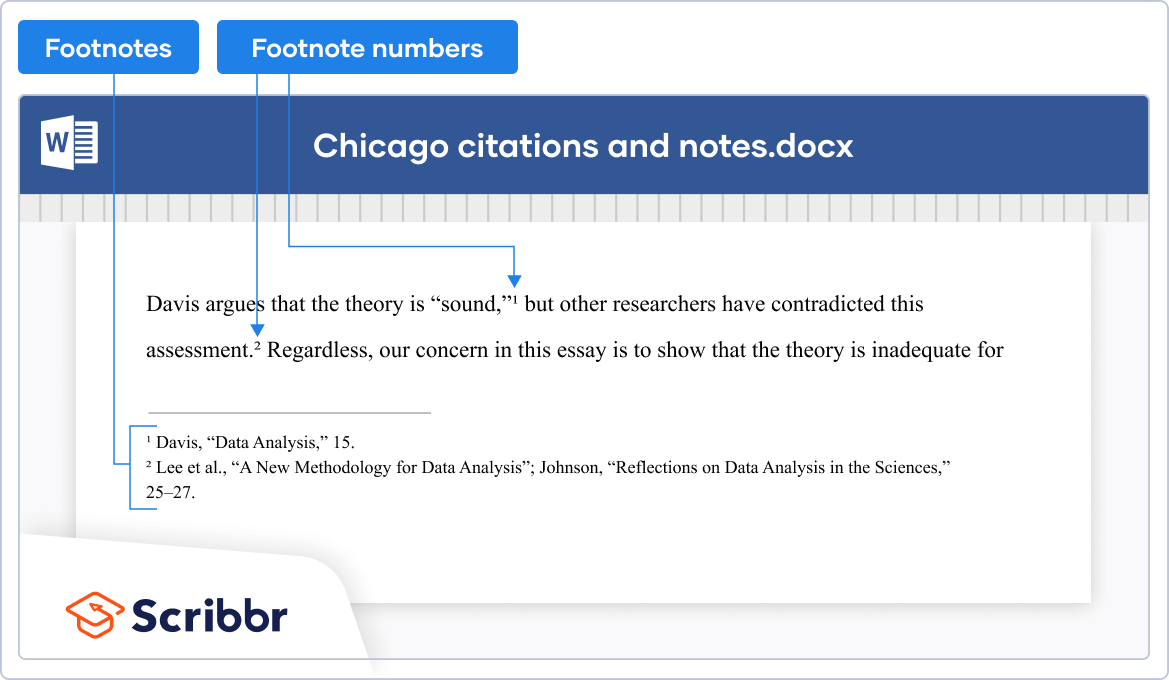
When a source is referenced in the text, a superscript number is placed after the relevant quotation or paraphrased information. This number corresponds to a note at the bottom of the page (footnote) or at the end of the document (endnote). The note provides the full citation details for the source.
- First Reference: The first time a source is cited, the note typically includes comprehensive bibliographic information, such as the author’s full name, the title of the work (italicized for books, in quotation marks for articles), publication details (city, publisher, year), and page number(s).
- Subsequent References: For subsequent citations of the same source, a shortened form is used. This usually includes the author’s last name, a shortened title of the work, and the relevant page number. If only one source by a particular author is being used, the author’s last name and page number may suffice.
The Bibliography
Accompanying the notes is a bibliography, an alphabetized list of all sources cited in the work. The bibliography provides a complete record of the materials consulted and used, allowing readers to locate the original sources easily. The formatting in the bibliography mirrors that of the full notes but often omits page numbers for the entire work unless quoting a specific chapter or section.
The Author-Date System
The Author-Date system is an alternative to the Notes-Bibliography system and is more commonly used in the social sciences and natural sciences. This system places parenthetical citations directly within the text, followed by a reference list at the end of the work.
In-Text Citations
In the Author-Date system, citations appear within the sentence, typically enclosed in parentheses. Each citation includes the author’s last name and the year of publication. If a specific quotation is used, the page number is also included.
- Example: (Smith 2020, 45) or (Jones and Brown 2019).
When the author’s name is already part of the sentence, only the year and page number (if applicable) are needed within the parentheses.
- Example: As Smith notes, “the research indicates a significant trend” (2020, 45).
The Reference List
Similar to the bibliography in the Notes-Bibliography system, the Author-Date system requires a reference list at the end of the document. This list contains all the sources that were cited in the text. The entries are alphabetized by the author’s last name and provide full bibliographic details, enabling readers to identify and locate the sources. The format of entries in the reference list is very similar to that of the notes in the Notes-Bibliography system, with slight variations depending on the source type.
Key Features and Principles of Chicago Referencing
Regardless of whether the Notes-Bibliography or Author-Date system is employed, the Chicago Manual of Style emphasizes several core principles to ensure academic integrity and reader comprehension.
Consistency
One of the most crucial aspects of any referencing style is consistency. Whether you are using footnotes and a bibliography or parenthetical citations and a reference list, the format for similar types of sources must be applied uniformly throughout the entire document. This includes the consistent use of punctuation, capitalization, and italicization.
Accuracy
Citations must accurately reflect the source material. This means ensuring that author names, titles, publication dates, and page numbers are precisely as they appear in the original source. Errors in citation can lead to misattribution and a lack of credibility.
Completeness
Each citation, whether in a note or a reference list, should provide sufficient information for the reader to identify and locate the source. This means including all necessary bibliographic elements for each specific source type.
Clarity
The ultimate goal of referencing is to guide the reader. Well-formatted and consistent citations make it easy for readers to follow the scholarly conversation, verify claims, and explore the research further.
When to Use Chicago Referencing Style
The Chicago referencing style is widely adopted, but its prevalence varies by discipline.
Humanities
As mentioned, the Notes-Bibliography system is the predominant choice in fields such as:
- History: Historians often rely on the detailed explanatory notes provided by footnotes and endnotes to offer supplementary information or commentary without disrupting the flow of the main text.
- Literature: Literary scholars use Chicago for its ability to handle diverse source types, including primary literary texts, critical essays, and historical documents.
- Arts and Architecture: Scholars in these areas benefit from Chicago’s capacity to cite images, exhibition catalogs, and other visual or performance-based materials effectively.
Social Sciences
The Author-Date system finds its strongest footing in:
- Sociology: Researchers in sociology frequently use the Author-Date system for its conciseness and ease of integration within empirical research papers.
- Anthropology: Similar to sociology, anthropological studies often employ the Author-Date system for its practical application in fieldwork-heavy research.
- Political Science: Political scientists often prefer the Author-Date system, particularly when empirical data and frequent citation of multiple studies are involved.
Other Fields
While less common, some journals and institutions in other disciplines may also adopt Chicago for specific publications or requirements. It is always essential for authors to consult the specific style guidelines provided by their publisher, professor, or institution to determine the required referencing format.
Common Source Types and Their Chicago Formatting
Understanding how to cite different types of sources is fundamental to mastering Chicago style. While the full manual is extensive, here are some common examples.
Books
Books with One Author (Notes-Bibliography System)
- Note:
- Author Full Name, Title of Book (City of Publication: Publisher, Year), page number.
- Author Last Name, Shortened Title, page number.
- Bibliography:
Author Last Name, Author Full Name. Title of Book. City of Publication: Publisher, Year.
Books with One Author (Author-Date System)
- In-text: (Author Last Name Year, page number)
- Reference List:
Author Last Name, Author Full Name. Year. Title of Book. City of Publication: Publisher.
Journal Articles
Journal Article (Notes-Bibliography System)
- Note:
- Author Full Name, “Title of Article,” Title of Journal Volume, no. Issue (Year): page number(s).
- Author Last Name, “Shortened Title,” page number.
- Bibliography:
Author Last Name, Author Full Name. “Title of Article.” Title of Journal Volume, no. Issue (Year): page number(s).
Journal Article (Author-Date System)
- In-text: (Author Last Name Year, page number)
- Reference List:
Author Last Name, Author Full Name. Year. “Title of Article.” Title of Journal Volume, no. Issue: page number(s).
Websites
Web Page (Notes-Bibliography System)
- Note:
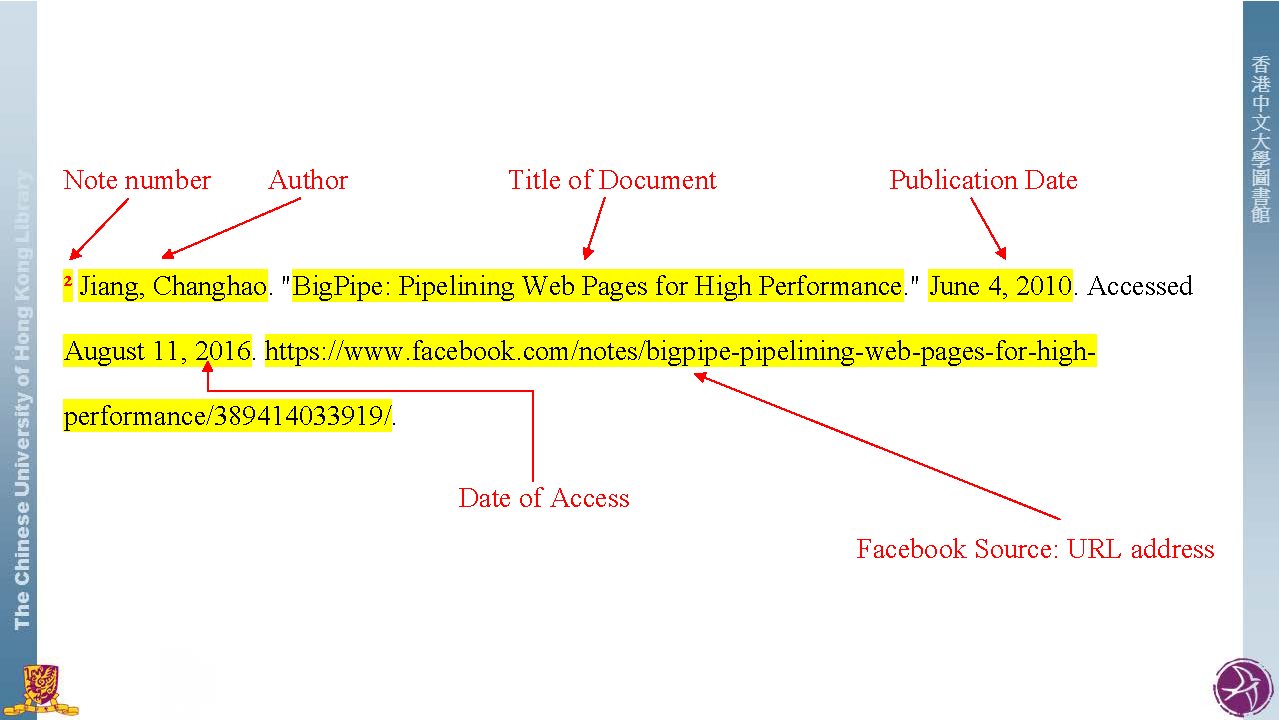
- Author Full Name (if known), “Title of Web Page,” Title of Overall Website, last modified Month Day, Year, URL.
- Author Last Name, “Shortened Title.”
- Bibliography:
Author Last Name, Author Full Name. “Title of Web Page.” Title of Overall Website. Last modified Month Day, Year. URL.
Web Page (Author-Date System)
- In-text: (Author Last Name Year) or (Author Last Name, n.d.) if no date
- Reference List:
Author Last Name, Author Full Name. Year. “Title of Web Page.” Title of Overall Website. Last modified Month Day, Year. URL.
The Importance of Style Guides in Academic Integrity
The Chicago Manual of Style, like other major citation styles such as APA Style and MLA Style, serves a crucial function in maintaining academic integrity. By providing a standardized method for attributing sources, these styles help prevent plagiarism, acknowledge the intellectual contributions of others, and allow readers to trace the lineage of ideas.
For researchers and students, understanding and applying Chicago referencing is not just about following rules; it’s about engaging in a scholarly community with respect for intellectual property and a commitment to transparent research practices. Whether you are crafting a historical analysis for a journal, a literary critique for a university course, or a sociological study for a conference, mastering the nuances of the Chicago Manual of Style will undoubtedly enhance the credibility and impact of your work.
LifeOutOfTheBox is a participant in the Amazon Services LLC Associates Program, an affiliate advertising program designed to provide a means for sites to earn advertising fees by advertising and linking to Amazon.com. Amazon, the Amazon logo, AmazonSupply, and the AmazonSupply logo are trademarks of Amazon.com, Inc. or its affiliates. As an Amazon Associate we earn affiliate commissions from qualifying purchases.