
While the allure of Texas is undeniable, with its vast landscapes, vibrant cities, and unique culture, understanding the legal framework governing conduct within the state is crucial for any visitor or resident. This is particularly true when navigating potential legal entanglements, as even minor infractions can have significant consequences. Among the various classifications of offenses in the Texas legal system, the Class C misdemeanor holds a specific place, representing the least serious category of criminal offenses. This article aims to demystify what constitutes a Class C misdemeanor in Texas, exploring its characteristics, common examples, penalties, and the implications for individuals who find themselves facing such charges.
Understanding the Texas Criminal Justice System
The Texas Penal Code categorizes criminal offenses into different levels, each with its own set of definitions and prescribed punishments. These classifications are fundamental to ensuring that the justice system appropriately addresses the severity of alleged wrongdoing. At the lowest rung of this ladder is the Class C misdemeanor, a designation that signifies a less severe offense compared to its Class A, B, or felony counterparts.
Misdemeanors vs. Felonies
The primary distinction in the Texas criminal justice system lies between misdemeanors and felonies. Felonies are considered more serious crimes, carrying potential prison sentences of more than one year and significant fines. Misdemeanors, on the other hand, are less grave offenses, typically punishable by fines or jail time of no more than one year in a county jail. Within the misdemeanor category, Texas further divides offenses into three classes: A, B, and C.
The Hierarchy of Misdemeanors
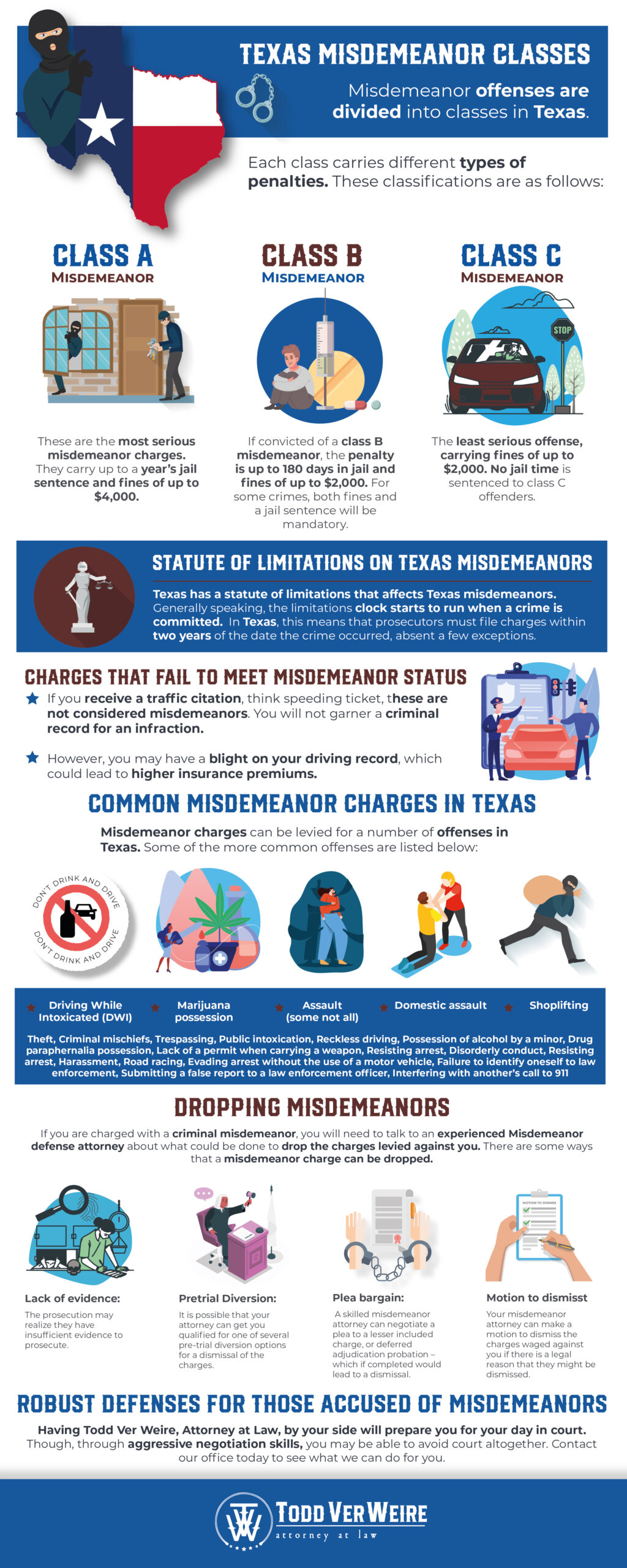
- Class A Misdemeanor: The most serious type of misdemeanor, punishable by up to one year in county jail and a fine of up to $4,000.
- Class B Misdemeanor: Less serious than Class A, punishable by up to 180 days in county jail and a fine of up to $2,000.
- Class C Misdemeanor: The least serious form of misdemeanor, with its own distinct set of penalties.
Characteristics of a Class C Misdemeanor in Texas
The defining characteristic of a Class C misdemeanor in Texas is its penalty structure. Unlike higher classes of misdemeanors and felonies, Class C offenses do not carry the possibility of jail time or imprisonment. This distinction is paramount and sets them apart from more serious criminal charges.
Penalties for Class C Misdemeanors
The primary penalty for a Class C misdemeanor in Texas is a fine. These fines are typically set by statute and can vary depending on the specific offense. In addition to the fine, a judge may order the defendant to pay court costs. While jail time is not an option, a conviction for a Class C misdemeanor will result in a criminal record.
No Jail Time
It is crucial to reiterate that individuals convicted of a Class C misdemeanor in Texas cannot be sentenced to jail or prison. This is a significant difference from Class A and B misdemeanors. The legislative intent behind this penalty structure is to reserve incarceration for offenses that pose a greater threat to public safety or involve more egregious conduct.
Fines and Court Costs
The maximum fine for a Class C misdemeanor is generally $500. However, certain specific offenses might have different statutory fine ranges. Beyond the base fine, additional court costs are almost always assessed. These costs can include fees for various court services, administrative expenses, and other associated charges, often increasing the total financial obligation significantly.
Criminal Record
Despite the absence of jail time, a conviction for a Class C misdemeanor does result in a criminal record. This record can appear on background checks and may have implications for future employment, licensing, or certain housing opportunities, even if the offense is considered minor.
Common Examples of Class C Misdemeanors in Texas
A wide array of minor offenses fall under the umbrella of Class C misdemeanors in Texas. These are often infractions that do not involve violence, significant property damage, or serious threats to public welfare. They are typically the types of offenses encountered in everyday life, from traffic violations to minor public disturbances.
Traffic Violations
Many common traffic violations are classified as Class C misdemeanors in Texas. These include offenses that do not involve excessive speeding, driving while intoxicated, or causing accidents.
- Minor Speeding Violations: Exceeding the posted speed limit by a small margin, typically when it does not meet the threshold for a more serious charge.
- Failure to Obey Traffic Control Devices: Disregarding traffic lights, stop signs, or other official signs.
- Minor Equipment Violations: Such as broken taillights or expired inspection stickers.
- No Driver’s License in Possession: While driving without a license at all can be a more serious offense, simply not having your physical license with you during a traffic stop may be a Class C.
Public Order and Disorderly Conduct
Offenses related to public behavior and order can also be classified as Class C misdemeanors.
- Disorderly Conduct: Engaging in behavior that alarms or disturbs others or provokes a violent reaction, such as public intoxication (without aggravating circumstances) or offensive language in public.
- Minor Alcohol Violations: Such as public possession of an open container of alcohol in a dry county or providing alcohol to a minor (though this can escalate to higher offenses depending on circumstances).
- Loitering: While specific definitions vary, certain forms of loitering can be considered a Class C misdemeanor.
Other Common Offenses
Beyond traffic and public order violations, other minor offenses may be classified as Class C misdemeanors.
- Trespassing (Minor): Entering or remaining on private property after being warned not to do so, without causing damage or intending to commit a more serious crime.
- Vandalism (Minor): Graffiti or minor property damage that does not exceed a certain monetary threshold.
- Public Lewdness (Minor): While serious forms of indecency are felonies, minor instances might fall under Class C.
- Failure to Appear: In some instances, failing to appear for a court date for a Class C offense can itself be a Class C misdemeanor.

It is important to note that the specific classification can depend on the details of the incident and the intent of the accused. For example, a first-time DUI offense in Texas is typically a Class B misdemeanor, but repeat offenses or those involving injury can escalate significantly.
Legal Process and Consequences
Navigating a Class C misdemeanor charge involves a specific legal process and carries certain consequences that individuals should be aware of.
Citation and Appearance
Often, individuals accused of a Class C misdemeanor receive a citation, which is similar to a ticket. This citation will outline the alleged offense and require the individual to appear in court on a specified date. Failure to appear for this court date can lead to additional charges, such as a failure to appear misdemeanor.
Court Proceedings
Class C misdemeanor cases are typically handled in Justice Courts or Municipal Courts in Texas. These courts are designed to handle minor offenses efficiently. Defendants have the right to legal representation, even for Class C misdemeanors, although many individuals choose to represent themselves due to the lower penalties involved.
Plea Options
When a defendant appears in court, they will be asked to enter a plea. The common pleas are:
- Guilty: Admitting to the offense and accepting the penalties.
- No Contest (Nolo Contendere): Not admitting guilt but accepting the conviction and penalties. This plea can sometimes offer advantages in related civil proceedings.
- Not Guilty: Contesting the charge and proceeding to a trial.
Trial
If a plea of not guilty is entered, the case may proceed to a trial. In Justice and Municipal Courts, these trials are typically bench trials, meaning they are heard by a judge rather than a jury. The prosecution must prove guilt beyond a reasonable doubt.
Pleading Options for Non-Citizens
For individuals who are not citizens of the United States, or if they have pending immigration cases, even a Class C misdemeanor conviction can have serious immigration consequences. It is highly recommended that non-citizens consult with an immigration attorney before pleading guilty or no contest to any offense in Texas, regardless of its classification.
Deferred Adjudication and Diversion Programs
In some cases, particularly for first-time offenders or specific offenses, defendants may be eligible for diversion programs or deferred adjudication. These programs can allow an individual to avoid a formal conviction if they meet certain requirements, such as completing community service, attending educational programs, or paying restitution. Successfully completing such a program usually results in the charges being dismissed, thus avoiding a criminal record.
Long-Term Implications
While Class C misdemeanors do not carry jail time, a conviction can still have lasting impacts:
- Criminal Record: As mentioned, this can affect background checks for employment, housing, and certain licenses.
- Increased Insurance Premiums: Traffic-related Class C misdemeanors can lead to higher automobile insurance rates.
- Professional Licensing: Certain professions may have regulations that consider any criminal conviction, regardless of severity, in their licensing decisions.
- Immigration Status: For non-citizens, even minor convictions can impact their ability to remain in the United States, obtain visas, or become citizens.
Navigating a Class C Misdemeanor Charge in Texas
Understanding the nature of a Class C misdemeanor is the first step in effectively addressing such a charge. While they are the least serious offenses, taking them lightly can still lead to undesirable outcomes.
Seek Legal Counsel
Even for Class C misdemeanors, consulting with a Texas attorney can be highly beneficial. A lawyer can explain your rights, explore potential defenses, advise on the best course of action (such as pursuing diversion programs), and represent you in court. This is particularly true if the charge has potential immigration or professional licensing implications.
Understand Your Rights
You have the right to remain silent, the right to an attorney, and the right to a trial. Familiarize yourself with these rights before interacting with law enforcement or appearing in court.
Be Prepared for Court
If you are issued a citation, ensure you understand the court date and location. Arrive on time, dress appropriately, and be prepared to state your plea.

Explore Diversion Programs
If you are eligible, seriously consider diversion programs. These programs offer a path to avoid a criminal conviction and its associated long-term consequences.
By understanding the specifics of Class C misdemeanors in Texas—their penalties, common examples, and the legal processes involved—individuals can better navigate the legal system and make informed decisions regarding their legal situation. While they represent the lower end of criminal offenses, proactive engagement and awareness are key to minimizing any potential impact on one’s life.
LifeOutOfTheBox is a participant in the Amazon Services LLC Associates Program, an affiliate advertising program designed to provide a means for sites to earn advertising fees by advertising and linking to Amazon.com. Amazon, the Amazon logo, AmazonSupply, and the AmazonSupply logo are trademarks of Amazon.com, Inc. or its affiliates. As an Amazon Associate we earn affiliate commissions from qualifying purchases.