
In the vibrant metropolis of Chicago, amidst the architectural grandeur and cultural richness that defines the city, stands a monumental piece of public art that has captivated millions. Known officially as Cloud Gate, but affectionately dubbed “The Bean” by locals and tourists alike, this iconic sculpture is more than just a metallic curiosity; it is a profound architectural marvel, a reflective canvas, and a dynamic urban landmark. Situated in Millennium Park, Cloud Gate has become an indispensable part of Chicago’s identity, drawing visitors from across the globe to experience its unique blend of art, engineering, and optical illusion. This article delves into the essence of Cloud Gate, exploring its design, artistic intent, and enduring legacy as a must-see landmark.
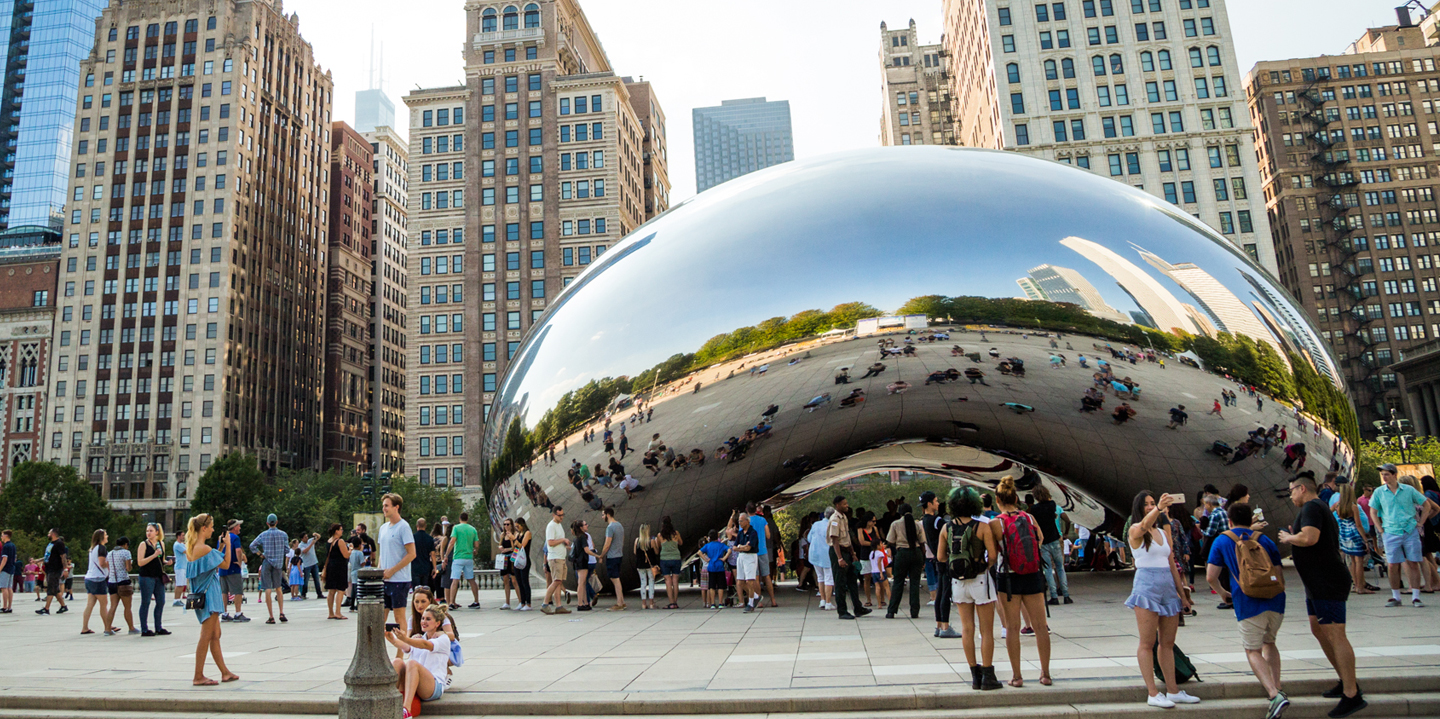
An Iconic Architectural Marvel in the Heart of Chicago
Cloud Gate stands as a testament to contemporary art and innovative engineering, seamlessly blending into its urban surroundings while simultaneously transforming them through its reflective surface. Its colossal, seamless form invites interaction and introspection, establishing itself as a focal point within one of the world’s most acclaimed public spaces.
The Vision of Anish Kapoor
The mastermind behind Cloud Gate is renowned British artist Anish Kapoor. Born in Mumbai, India, Kapoor is celebrated for his large-scale public sculptures that often explore themes of void, reflection, and the manipulation of space. His works frequently challenge viewers’ perceptions, creating immersive experiences that blur the lines between object and environment. For the Millennium Park project, Kapoor envisioned a sculpture that would act as a gateway, reflecting both the Chicago skyline and the ephemeral sky above, inviting people to walk around and underneath it. The initial concept for Cloud Gate involved creating a fluid, mercury-like surface that would distort and reflect its surroundings in a perpetually changing spectacle. This audacious vision required unprecedented levels of precision and material science to bring to life, pushing the boundaries of what was thought possible in public art. Kapoor’s goal was not merely to create a static monument, but an interactive, living sculpture that would engage with its audience and its environment in equal measure, constantly transforming with the light, weather, and presence of people.
Engineering an Optical Illusion
The construction of Cloud Gate was an engineering feat of monumental proportions. Weighing 110 tons, the sculpture measures 33 feet high, 42 feet wide, and 66 feet long. Its exterior is composed of 168 individual stainless steel plates, each precisely cut and shaped using computer-aided design. The greatest challenge, however, lay in achieving its signature seamless exterior. The plates were meticulously welded together on-site and then polished to an incredibly high sheen, erasing any visible seams. This extensive and painstaking process was handled by a dedicated team of experts over several years, ensuring that the surface appeared as a single, uninterrupted liquid form. The result is a mirror-like surface that flawlessly reflects Chicago’s majestic skyline, the passing clouds, and the ever-present stream of visitors. The engineering brilliance extends to the internal structure as well, a robust steel framework designed to support the immense weight and intricate geometry of the outer shell, while remaining completely hidden from view. This complex internal system also allows the sculpture to expand and contract with Chicago’s extreme temperature fluctuations, preventing damage to its pristine surface. The seamless, highly reflective surface is not just an aesthetic choice; it is integral to the sculpture’s function as an optical device, creating dynamic, distorted reflections that constantly shift with the viewer’s movement and the surrounding environment, making each encounter unique.
The Artistic Intent and Symbolic Resonance
Beyond its striking appearance and complex construction, Cloud Gate is rich with artistic intent and symbolic meaning, inviting multiple interpretations and fostering a deep connection with its audience.
Reflecting City and Sky
Anish Kapoor’s primary artistic goal for Cloud Gate was to create a sculpture that would reflect and engage with its environment in a dynamic way. The polished surface acts as a gigantic convex mirror, capturing panoramic views of the surrounding skyscrapers, including the iconic Willis Tower and the historic Art Institute of Chicago, along with the expansive Lake Michigan and the ever-changing Chicago sky. This continuous interplay between the sculpture and its setting ensures that Cloud Gate is never the same from one moment to the next. The reflections are not merely passive images; they are distorted, magnified, and inverted, creating surreal, dreamlike versions of reality. As a result, the sculpture becomes a living canvas, its appearance perpetually altered by the time of day, the weather conditions, and the presence of people, offering a fresh visual experience with every visit. This constant transformation underscores Kapoor’s interest in the fluidity of form and the elusive nature of perception, making the sculpture a truly interactive piece of urban landscape art.
A Gateway to Perception
The official name, “Cloud Gate,” alludes to the sculpture’s role as an entry point, not just geographically into a park, but experientially into a different way of seeing. The archway beneath the sculpture, known as the “omphalos” (Greek for navel), draws visitors in, creating a unique vortex of reflections that distorts and fragments their images. This concave chamber produces a dizzying “funhouse mirror” effect, where visitors see multiple, stretched, and inverted versions of themselves and the world around them. This playful distortion is central to Kapoor’s vision, encouraging viewers to step outside conventional perspectives and engage with the artwork on a deeply personal and interactive level. The sensation of walking beneath the structure, looking up into its curved underbelly, creates an immersive experience that challenges spatial awareness and invites a moment of playful self-reflection amidst the bustling city. It transforms onlookers into participants, becoming part of the artwork’s ever-changing reflective tapestry. The work serves as a reminder that perception is subjective and mutable, offering a momentary escape from the rigid lines of urban architecture into a realm of fluid, dreamlike visuality.
The Bean: A Beloved Nickname
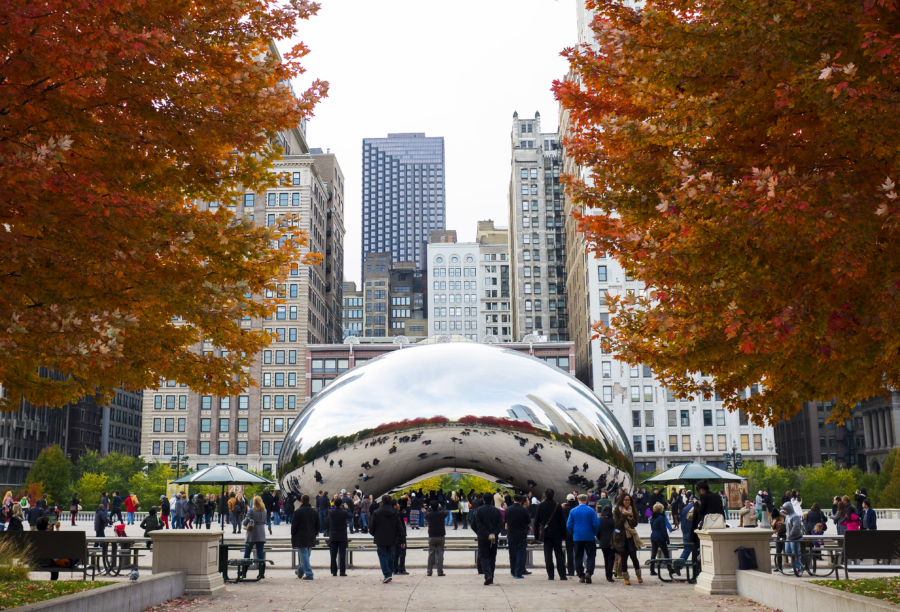
Despite its formal, poetic title, Cloud Gate quickly acquired its now-famous nickname, “The Bean.” This colloquial moniker arose organically from the public due to its distinctive, kidney-bean-like shape. The name stuck, becoming far more pervasive and beloved than its official designation. This informal embrace by the public speaks volumes about the sculpture’s accessibility and its success in becoming a relatable, integral part of Chicago’s cultural fabric. The simplicity and warmth of “The Bean” perfectly encapsulate the sculpture’s approachable nature, contrasting with the often intimidating formality associated with large-scale public art. It represents a democratic aspect of public art, where the artwork transcends its creator’s initial intent to become something owned and named by the community it serves. This popular nickname has contributed significantly to its widespread recognition and endearment, making it instantly identifiable and a cherished symbol for both residents and visitors alike, solidifying its place as a truly popular landmark.
Cloud Gate’s Place Within Millennium Park
Cloud Gate is not an isolated art piece; it is a critical component of Millennium Park, a sprawling 24.5-acre public park that stands as a monumental achievement in urban planning and public art integration.
A Centerpiece of Urban Renewal
Millennium Park, officially opened in 2004, transformed a former railway yard and parking lot into a vibrant cultural hub. It was envisioned as a grand public space that would celebrate art, music, architecture, and landscape design. Cloud Gate quickly emerged as the park’s undeniable centerpiece and most visited attraction. Its prominent placement within Millennium Park was strategic, anchoring the vast space and drawing visitors towards other notable features. The sculpture’s ability to reflect its surroundings perfectly aligns with the park’s ethos of bringing together nature, art, and urban life. It serves as a visual magnet, encouraging exploration of the park’s diverse offerings, from the serene Lurie Garden to the architectural brilliance of the Jay Pritzker Pavilion. The very presence of Cloud Gate helped solidify Millennium Park’s status as a world-class destination and a successful model for urban renewal, demonstrating how thoughtful public art can revitalize city spaces and enhance the quality of life for residents and visitors.
Interactive Public Art
What sets Cloud Gate apart from many traditional sculptures is its inherent interactivity. Visitors are not just passive observers; they are active participants in the artwork. People touch its cool, smooth surface, walk around it to observe the changing reflections, and marvel at their distorted images in its convex and concave curves. The sculpture encourages movement and engagement, inviting a playful and often humorous interaction. This tactile and visual engagement contributes to its universal appeal, breaking down barriers often associated with contemporary art. Its seamless integration within the park allows it to interact with other major attractions. For instance, standing near Cloud Gate, one can capture reflections of the Crown Fountain‘s towering LED faces or the distinctive ribbons of the Jay Pritzker Pavilion’s stage. This spatial dialogue between the various elements of Millennium Park amplifies the overall experience, making the park a cohesive and richly layered destination where art, architecture, and human interaction converge.
The Enduring Legacy and Visitor Experience
Cloud Gate has transcended its initial purpose as a public art installation to become a global icon, a symbol of Chicago’s innovative spirit, and a source of endless fascination for millions.
A Photographic Icon
Perhaps no other modern landmark is as instantly recognizable or as frequently photographed as Cloud Gate. Its unique form and reflective surface make it a dream subject for photographers, from amateur smartphone users to professional artists. The reflections of the skyline, the ever-changing clouds, and the endless stream of people create dynamic compositions that are impossible to replicate, ensuring every photograph offers a fresh perspective. Its popularity has led to an explosion of images across social media platforms, further cementing its status as a contemporary icon. For those seeking the perfect shot, early mornings offer fewer crowds and softer light, while late evenings provide a dramatic contrast with the city lights. Regardless of the time of day, the sculpture continually provides captivating visual opportunities, inviting visitors to capture their unique interaction with this extraordinary piece of art. The endless photographic possibilities contribute significantly to its viral appeal, making it a bucket-list item for travellers and a cherished backdrop for countless memories.
Economic and Cultural Impact
The impact of Cloud Gate on Chicago has been profound, both economically and culturally. As the star attraction of Millennium Park, it plays a significant role in boosting tourism, drawing visitors who contribute to the local economy through accommodation, dining, and other activities. Beyond the economic benefits, Cloud Gate has solidified Chicago’s reputation as a global leader in urban planning, public art, and architectural innovation. It stands as a powerful symbol of the city’s commitment to investing in its public spaces and enriching the lives of its residents and visitors through world-class cultural offerings. The sculpture’s ability to seamlessly blend high art with popular appeal has made it a democratic landmark, accessible and enjoyable for people of all ages and backgrounds, fostering a sense of civic pride and international recognition for Chicago’s vibrant cultural scene. Its success has also inspired other cities to commission similar ambitious public art projects, demonstrating its lasting influence beyond Chicago’s borders.

Visiting Cloud Gate
Cloud Gate is freely accessible to the public, making it an inclusive and welcoming landmark for everyone. Located in Millennium Park, it is easily reachable by public transport and is a pleasant walk from many downtown Chicago attractions. While it can get very crowded, particularly during peak tourist seasons and warmer months, visiting during off-peak hours (early morning or late evening) or in the colder months (when it’s often dusted with snow) can offer a more intimate and serene experience. Each season brings a new dimension to the sculpture, with the reflections transforming from the lush greens of summer to the fiery reds of autumn, and the stark beauty of winter snowscapes. Regardless of when one visits, the experience of standing before “The Bean,” witnessing its majestic reflections, and becoming a part of its ever-changing canvas is an unforgettable highlight of any trip to Chicago. It remains a powerful testament to the transformative power of public art to inspire wonder and foster connection.
In conclusion, Cloud Gate is far more than just a large, shiny object in a park. It is a masterpiece of modern sculpture and engineering, a dynamic mirror reflecting the soul of Chicago, and an interactive experience that invites playful engagement. As a cornerstone of Millennium Park, it has redefined what public art can be, serving as an enduring symbol of creativity, innovation, and the vibrant spirit of the city it calls home. Its captivating presence ensures that Cloud Gate will continue to fascinate and inspire generations to come, forever cementing its status as an iconic global landmark.
LifeOutOfTheBox is a participant in the Amazon Services LLC Associates Program, an affiliate advertising program designed to provide a means for sites to earn advertising fees by advertising and linking to Amazon.com. Amazon, the Amazon logo, AmazonSupply, and the AmazonSupply logo are trademarks of Amazon.com, Inc. or its affiliates. As an Amazon Associate we earn affiliate commissions from qualifying purchases.