
Understanding the intricacies of California’s overtime laws is crucial for anyone working or planning a long-term stay in the Golden State, whether you’re a seasoned professional relocating for a business opportunity in Silicon Valley or a budding artist taking on a temporary gig in Los Angeles. California is renowned for its progressive labor laws, often providing greater protections and higher standards for employees than federal regulations. This means that if you’re accustomed to the Fair Labor Standards Act (FLSA) guidelines, you’ll find California’s rules concerning overtime pay to be significantly more robust and worker-friendly.
This guide will demystify what constitutes overtime in California, who is eligible, how it’s calculated, and important exceptions to be aware of. While this information is designed to be comprehensive and helpful, it is important to remember that it does not constitute legal advice. For specific legal guidance, always consult with a qualified attorney or the California Department of Industrial Relations (DIR).
The Fundamentals of Overtime in the Golden State
At its core, overtime pay is additional compensation for employees who work beyond a standard work schedule. In California, this concept is enshrined in the Labor Code and Industrial Welfare Commission (IWC) Wage Orders, which dictate the specific rules for various industries and occupations. Unlike federal law, which primarily focuses on weekly overtime, California also incorporates daily overtime calculations, offering an extra layer of protection for workers.
Defining the Standard Workday and Workweek
For most non-exempt employees in California, the standard workday is defined as eight hours, and the standard workweek is 40 hours. Any time worked beyond these thresholds within a specific period generally triggers overtime pay. This is a crucial distinction, especially for those new to the state’s employment landscape.
However, California’s overtime laws don’t stop there. They also account for:
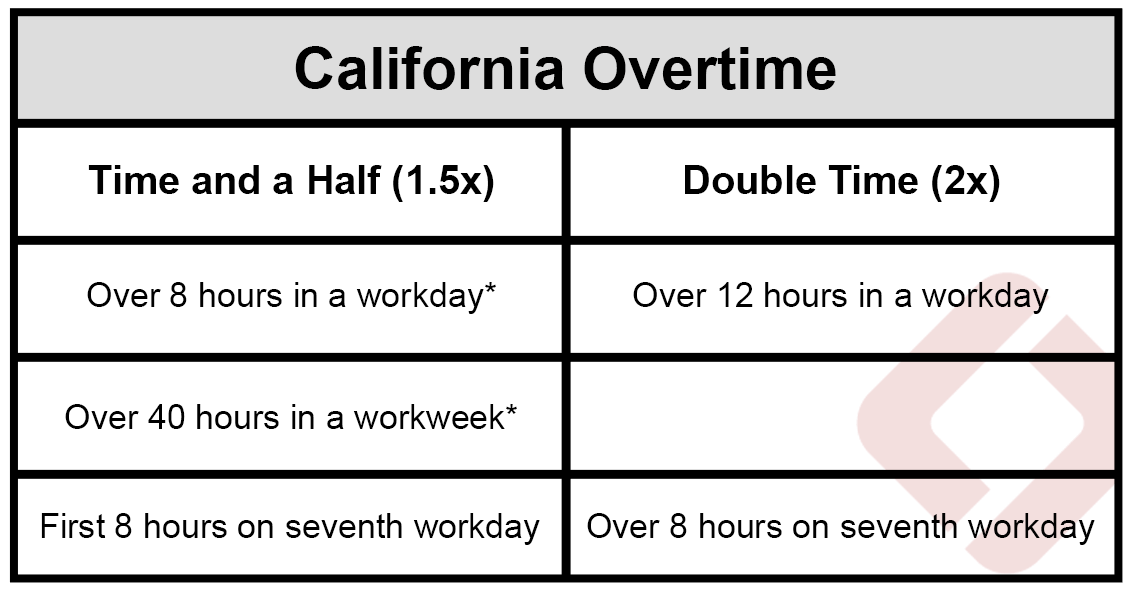
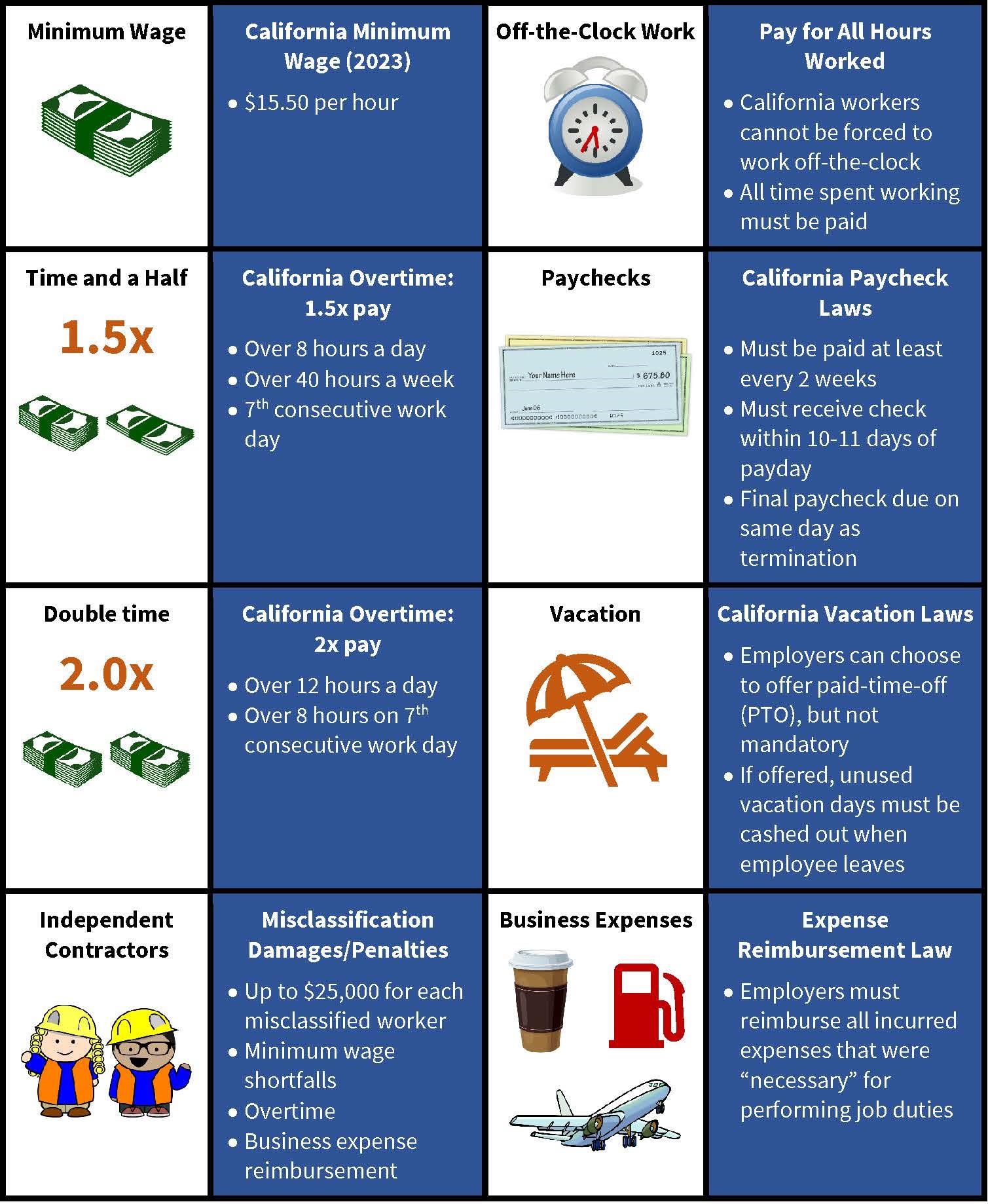
- Daily Overtime: Time-and-a-half (1.5 times the regular rate of pay) for all hours worked over eight hours and up to 12 hours in any workday.
- Double-Time Overtime: Double the regular rate of pay for all hours worked in excess of 12 hours in any workday.
- Weekly Overtime: Time-and-a-half for all hours worked in excess of 40 hours in any workweek.
- Seventh Consecutive Day Overtime: Time-and-a-half for the first eight hours worked on the seventh consecutive day of work in a workweek, and double-time for all hours worked in excess of eight hours on that seventh day. This “seventh-day rule” is a unique and significant protection in California.
It’s important to note that these overtime rules apply cumulatively. For instance, if an employee works 10 hours in a day, they earn two hours of time-and-a-half daily overtime. If that same employee also works more than 40 hours in the week, they would then receive additional weekly overtime for hours exceeding 40, minus any daily overtime already paid for hours over eight or twelve in a day. The intent is to prevent employers from stacking hours without proper compensation.
What Constitutes “Hours Worked”?
Determining what counts as “hours worked” is fundamental to calculating overtime. In California, “hours worked” is broadly defined as the time during which an employee is subject to the control of an employer, and includes all the time the employee is suffered or permitted to work, whether or not required to do so. This can include:
- On-duty meal periods: If an employee is required to remain at their post or continue working during their meal break.
- Travel time: Under certain circumstances, such as travel between job sites during the workday.
- Waiting time: If an employee is required to be on the premises and available for work.
- Preparatory and concluding activities: If these activities are integral to the principal duties of the job, such as donning and doffing specialized gear.
Understanding these nuances is particularly important for workers in various sectors, from construction sites in San Diego to hospitality roles in Napa Valley.
Who is Eligible: Exempt vs. Non-Exempt Employees
Not all employees are entitled to overtime pay. California law categorizes employees as either “exempt” or “non-exempt.” Generally, only non-exempt employees are eligible for overtime compensation. The distinction largely depends on an employee’s job duties, salary level, and discretion, rather than just their job title.
The White Collar Exemptions
The most common exemptions, often referred to as “white collar exemptions,” mirror federal law but with stricter requirements under California law. To qualify as exempt, an employee must meet all three of the following criteria:
- Salary Basis Test: The employee must earn a salary that is at least two times the state minimum wage for full-time employment. As California’s minimum wage increases, so does this threshold, making it one of the highest in the nation. For a 40-hour workweek, this salary threshold is significantly higher than the federal standard.
- Duties Test: The employee’s primary duties must involve executive, administrative, or professional tasks, as specifically defined by the IWC Wage Orders. This means that a substantial amount of their time (more than 50%) must be spent on these exempt duties.
- Discretion and Independent Judgment: The employee must customarily and regularly exercise discretion and independent judgment in performing their job duties. This implies a level of autonomy and decision-making power.
Let’s break down these white-collar exemptions further:
- Executive Exemption: Applies to employees whose primary duty is management of the enterprise or a recognized department or subdivision, who customarily and regularly direct the work of two or more other employees, and who have the authority to hire or fire (or whose suggestions on hiring/firing are given particular weight).
- Administrative Exemption: Applies to employees whose primary duty is the performance of office or non-manual work directly related to the management or general business operations of the employer or the employer’s customers, and who customarily and regularly exercise discretion and independent judgment. Examples might include high-level administrative assistants with significant decision-making authority or specialists in areas like human resources or finance.
- Professional Exemption: Applies to licensed professionals in recognized fields such as law, medicine, dentistry, optometry, architecture, engineering, or teaching, or to employees in an artistic or learned profession who are primarily engaged in work requiring advanced knowledge and consistent exercise of discretion and judgment. For example, a doctor working at a hospital in San Francisco or a software engineer in Palo Alto might qualify.
Other Notable Exemptions
Beyond the white-collar categories, several other types of employees may be exempt from California’s overtime laws. These are often specific to certain industries or job functions:
- Computer Software Professionals: These individuals may be exempt if they meet specific salary requirements (which are adjusted annually), are primarily engaged in highly skilled intellectual or creative work, and exercise independent judgment and discretion. This exemption is particularly relevant in tech hubs like San Jose.
- Licensed Physicians and Surgeons: Exempt if primarily engaged in duties that require a license to practice medicine and earning at least a specified hourly rate (which is adjusted annually).
- Outside Salespersons: Exempt if they are 18 years or older, primarily engaged in selling tangible or intangible items or obtaining orders or contracts for services away from the employer’s place of business, and customarily and regularly spend more than half their working time engaged in sales activities outside the office. This is a broad exemption applicable across many sectors, from real estate agents in Beverly Hills to wine salespeople in Sonoma.
- Certain Commissioned Employees: Employees primarily engaged in sales, who earn more than 1.5 times the minimum wage, and whose compensation includes commissions that make up more than half of their total earnings, may be exempt from daily overtime (but not necessarily weekly overtime, depending on the IWC Wage Order).
- Unionized Employees: Employees covered by a valid collective bargaining agreement that explicitly provides for wages, hours, and working conditions, and specifies premium wage rates for overtime, may also be subject to different rules.
- Personal Attendants: Certain individuals who provide personal care in a private home may have specific exemptions, though these are often complex and nuanced.
It’s crucial for both employers and employees to correctly classify roles, as misclassification can lead to significant penalties, back wages, and legal disputes. If you’re planning an extended stay or considering work in California, understanding your classification is paramount to ensuring fair compensation.
Calculating Overtime Pay: A Practical Look

Calculating overtime pay in California requires a clear understanding of an employee’s “regular rate of pay.” This isn’t just their hourly wage; it can include other forms of compensation.
The “Regular Rate of Pay”
The “regular rate of pay” is the hourly rate from which all overtime pay is calculated. It generally includes:
- Hourly wages: The base rate of pay.
- Non-discretionary bonuses: Bonuses that are understood or promised, such as production bonuses.
- Commissions: If paid as part of regular compensation.
- Shift differentials: Additional pay for working less desirable shifts.
- Housing or lodging allowances: If provided by the employer.
It typically excludes discretionary bonuses (those entirely at the employer’s option), gifts, expense reimbursements, and certain benefit plan contributions. The calculation can become complex when an employee receives various forms of compensation or works different rates for different types of work.
Example Scenario:
Let’s say an employee earns $20 per hour.
- For the first 8 hours in a day: $20/hour
- For hours 9-12 in a day: $20 * 1.5 = $30/hour
- For hours beyond 12 in a day: $20 * 2 = $40/hour
- For hours 41-48 in a workweek (if no daily overtime was already paid for those hours): $20 * 1.5 = $30/hour
- For the first 8 hours on the 7th consecutive workday: $20 * 1.5 = $30/hour
- For hours beyond 8 on the 7th consecutive workday: $20 * 2 = $40/hour
These calculations are critical for businesses across California, from technology startups to the bustling entertainment industry in Hollywood. Accurate record-keeping is essential for both employers and employees to ensure compliance.
Important Considerations and Employer Responsibilities
Beyond the basic calculations, there are several other factors and employer responsibilities to keep in mind regarding overtime in California.
Alternative Workweek Schedules
California law allows for alternative workweek schedules (AWS), where employees can work more than eight hours in a day without triggering daily overtime, provided certain conditions are met. An AWS typically involves working 10-hour days for four days a week (4/10 schedule) or similar arrangements. For an AWS to be valid:
- It must be adopted through a secret ballot election by at least two-thirds of the affected employees.
- The employer must provide reasonable notice to employees about the election.
- The schedule must be regularly recurring.
Even with an AWS, employees are still entitled to overtime for hours worked outside the adopted schedule, hours exceeding 10 or 12 hours in a workday (depending on the schedule), and hours exceeding 40 in a workweek. For example, in a 4/10 AWS, working an 11th hour in a day would trigger daily overtime, and working a fifth day would trigger weekly overtime for all hours on that day.
Record Keeping and Wage Statements
Employers in California have a strict obligation to keep accurate records of all hours worked by non-exempt employees, including start and end times, and all meal and rest periods. These records must be maintained for at least three years.
Furthermore, employees are entitled to detailed wage statements (pay stubs) that clearly show:
- Gross wages earned
- Total hours worked
- All deductions
- Net wages earned
- The inclusive dates of the pay period
- The name and address of the employer
- All applicable hourly rates in effect during the pay period and the corresponding number of hours worked at each hourly rate
- And, if applicable, the number of piece-rate units earned and any applicable piece rate.
Failure to provide accurate wage statements or maintain proper records can result in significant penalties for employers.
Penalties for Non-Compliance
California’s labor laws are vigorously enforced. Employers who fail to properly pay overtime or misclassify employees can face severe penalties, including:
- Back wages: Payment of all unpaid overtime, dating back several years.
- Liquidated damages: In some cases, an additional amount equal to the unpaid wages.
- Interest: On all unpaid amounts.
- Civil penalties: Significant fines imposed by the California Department of Industrial Relations (DIR) or through private lawsuits.
- Attorney’s fees and costs: If an employee prevails in a lawsuit.
These penalties underscore the importance of strict adherence to California’s overtime laws. For businesses operating in this vibrant state, understanding and implementing these regulations is not merely a compliance task but a fundamental aspect of ethical business practice and employee relations. For individuals considering a move to California for work, knowing your rights regarding overtime can significantly impact your financial well-being and overall quality of life.
Navigating Your Rights as an Employee in California
For employees in California, being informed about overtime laws is your best defense against potential wage theft or misclassification. If you suspect your employer is not paying you correctly for overtime, here are steps you can take:
- Review your pay stubs and work records: Compare your actual hours worked against the hours reported on your pay stubs.
- Communicate with your employer: Sometimes, it’s a simple mistake. Bring your concerns to your manager or HR department.
- Consult the Department of Industrial Relations: The California Department of Industrial Relations (DIR) provides extensive resources and information on wage and hour laws. You can file a wage claim with the Labor Commissioner’s Office if your employer fails to address the issue.
- Seek legal counsel: For complex situations, or if you’re not getting a satisfactory resolution, consulting with an employment law attorney specializing in California labor law is advisable.
Whether you’re exploring the diverse attractions of San Francisco or considering a business venture in Sacramento, understanding the labor landscape is as vital as knowing the best local restaurants or travel routes. California’s commitment to worker protections, particularly through its overtime laws, reflects its progressive approach to lifestyle and work-life balance. Being well-versed in these regulations ensures you can fully enjoy the opportunities and experiences that this dynamic state has to offer, confident in the knowledge of your rights and fair compensation.
LifeOutOfTheBox is a participant in the Amazon Services LLC Associates Program, an affiliate advertising program designed to provide a means for sites to earn advertising fees by advertising and linking to Amazon.com. Amazon, the Amazon logo, AmazonSupply, and the AmazonSupply logo are trademarks of Amazon.com, Inc. or its affiliates. As an Amazon Associate we earn affiliate commissions from qualifying purchases.