
When preparing for travel, particularly domestic air travel within the United States, the importance of proper identification cannot be overstated. For residents of California, their Real ID serves as a crucial document, embodying a suite of advanced security features designed to verify identity and streamline the travel experience. Among these features, embossing holds a significant place, offering a tactile and visual layer of security that deters fraud and aids in rapid authentication. Understanding what elements are embossed on a California Real ID provides travelers with confidence in their identification and insight into the rigorous standards set for secure travel.
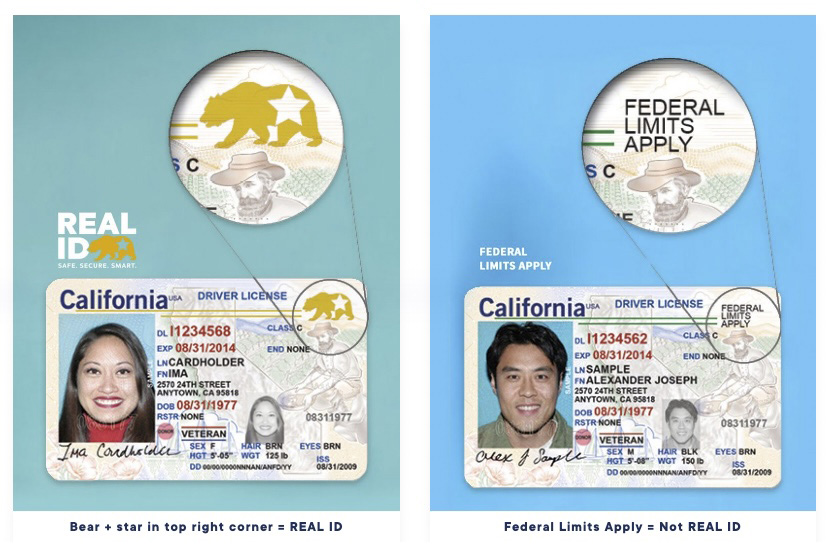
The Real ID Act, passed by Congress in 2005, established minimum security standards for state-issued driver’s licenses and identification cards, aligning them with federal requirements. This initiative was a direct response to the 9/11 Commission’s recommendation that the federal government “set standards for the issuance of sources of identification, such as driver’s licenses.” For travelers, this means that a California Real ID is not just a standard state ID, but a federally compliant document accepted for domestic flights and access to federal facilities. The embossed features are integral to meeting these stringent security benchmarks, making your ID a robust tool for identity verification in the bustling environments of airports and other controlled access points.
The Essential Role of Embossing in Travel Security
The act of embossing, which creates a raised effect on a surface, has been a long-standing security feature in various identification documents globally. On a California Real ID, this technique is employed strategically to embed critical information and security markers that are both visually apparent and tactile. For the modern traveler, understanding these features goes beyond mere curiosity; it’s about appreciating the layers of security designed to protect their identity and ensure seamless journeys. The tactile nature of embossing makes it difficult to replicate without specialized equipment, adding a formidable barrier against counterfeiting.
California Real ID and Domestic Air Travel
Since May 7, 2025, every traveler 18 years of age or older flying within the United States must present a Real ID-compliant driver’s license or state ID card, or another acceptable form of identification, such as a passport. This federal mandate, enforced by the Transportation Security Administration (TSA), underscores the critical role of the Real ID. When you present your California Real ID at an airport security checkpoint, TSA agents are trained to quickly verify its authenticity. The embossed features are among the first lines of defense they look for, as they are hard to fake convincingly. These raised elements offer a quick, tactile check that can differentiate a genuine document from a fraudulent one, ensuring that only authorized individuals proceed to their flights. For travelers, this means a smoother, quicker verification process, reducing delays and enhancing overall airport security.
The Core Purpose of Embossed Features for Verification
The primary purpose of embossing on a California Real ID is to enhance the document’s security against alteration and counterfeiting. Unlike flat printing, embossed text and graphics create a physical depth that is difficult to replicate with standard printing techniques. This makes forged documents easier to spot, as they often lack the distinct tactile feel and visual shadow effects of genuine embossing. For travelers, this means their identification is more secure, reducing the risk of identity theft or fraudulent use. Moreover, in dimly lit environments or when optical scanning devices are unavailable, the tactile nature of embossed features allows for a quick, manual verification of key information, adding another layer of authentication critical in high-stakes environments like international border crossings or secure federal facilities.
Dissecting the Embossed Elements of Your California Real ID
While the exact nature and location of embossed features can vary slightly with design updates, certain elements are consistently employed to maximize security and clarity. On a typical California Real ID, these embossed details are carefully chosen to provide essential information in a tamper-evident format.
Key Personal Identifiers: Name, Date of Birth, and Signature
One of the most critical aspects of any identification document is the display of personal information. On many state IDs, including certain iterations or security layers of the California Real ID, key personal identifiers such as the cardholder’s full name, date of birth, and sometimes even the signature, might feature an embossed or subtly raised texture. This is not always a full embossing like a credit card number, but rather a raised print that adds a tactile dimension. This type of raised print ensures that altering these crucial details would involve damaging the card’s surface, making any tampering immediately obvious. For travelers, this means that their core identity details are protected by a physical barrier, adding an extra layer of confidence that their ID is authentic and uncompromised when presenting it to airline personnel or TSA agents.
Security Emblems and State-Specific Markings

Beyond personal data, Real IDs often incorporate embossed or raised security emblems and state-specific markings. These might include the state seal of California or other unique government symbols. These emblems are not merely decorative; they serve as sophisticated anti-counterfeiting measures. Their intricate designs and raised textures are exceedingly difficult for counterfeiters to replicate precisely without specialized industrial equipment. The specific placement and design of these embossed markings are often proprietary and known only to authorized security personnel, providing a quick visual and tactile check for authenticity. When you pass your California Real ID to a security official, they are trained to feel for these specific textures and observe how light interacts with the raised surfaces, revealing genuine security features.
The Tactile Nature of Advanced Counterfeit Deterrence
The tactile nature of embossing is one of its strongest security attributes. Unlike purely visual features like holograms or microprinting, which require good lighting and sometimes magnification, embossing can be felt. This allows for verification even in less-than-ideal conditions and provides a simple yet effective method for quick checks. The subtle ridges and valleys formed by the embossing machine are incredibly difficult to reproduce accurately through conventional printing or lamination methods. Any attempt to alter or counterfeit an embossed ID would typically result in visible damage to the card’s surface or a noticeable lack of the characteristic tactile feel. This physical distinctiveness makes the California Real ID a robust document for travel, as its authenticity can be confirmed through multiple sensory checks, significantly reducing the risk of unauthorized travel.
Beyond Embossing: Additional Security Features for Travelers
While embossing is a vital security feature, it is part of a broader, integrated security ecosystem embedded in modern identification documents. The California Real ID, like other federally compliant IDs, incorporates multiple layers of security designed to protect against a wide array of fraudulent activities. Travelers benefit from this multi-faceted approach, as it ensures their identification is highly secure and trustworthy.
Holograms, UV Printing, and Microprinting
In addition to embossing, California Real IDs feature advanced security elements such as holograms, UV printing, and microprinting. Holograms, often seen as iridescent images that change color and pattern when viewed from different angles, are extremely difficult to reproduce. They are typically embedded within the card material, making them nearly impossible to alter without destroying the card. UV printing involves images or text that are invisible to the naked eye but become apparent under ultraviolet light, a common tool used by TSA and other security agencies. Microprinting consists of extremely small text that appears as a line or design to the unaided eye but reveals legible words when magnified. These features, combined with embossing, create a formidable defense against counterfeiting, ensuring that only genuine documents are accepted for travel.
The Integrated Security Ecosystem of Modern IDs
The combination of embossed features with other security elements like holograms, microprinting, and UV printing forms an integrated security ecosystem. Each feature acts as a deterrent individually, but their combined presence creates a synergistic effect, making the document exponentially more secure. This layered approach is crucial for documents used in high-security contexts like air travel. The Department of Homeland Security (DHS) mandates these comprehensive security standards to ensure the integrity of identification documents across the United States. For travelers, this means that their California Real ID is not just a piece of plastic, but a technologically advanced document designed to safeguard their identity and facilitate secure passage through various checkpoints, fostering a sense of security and trust in the travel system.
Ensuring a Seamless Travel Experience with Your Real ID
Having a California Real ID with its robust security features, including embossing, is a significant step towards ensuring a seamless travel experience. However, understanding how to properly use and present your ID is equally important for navigating the intricacies of modern travel security.
Preparing for TSA Checkpoints: What to Know
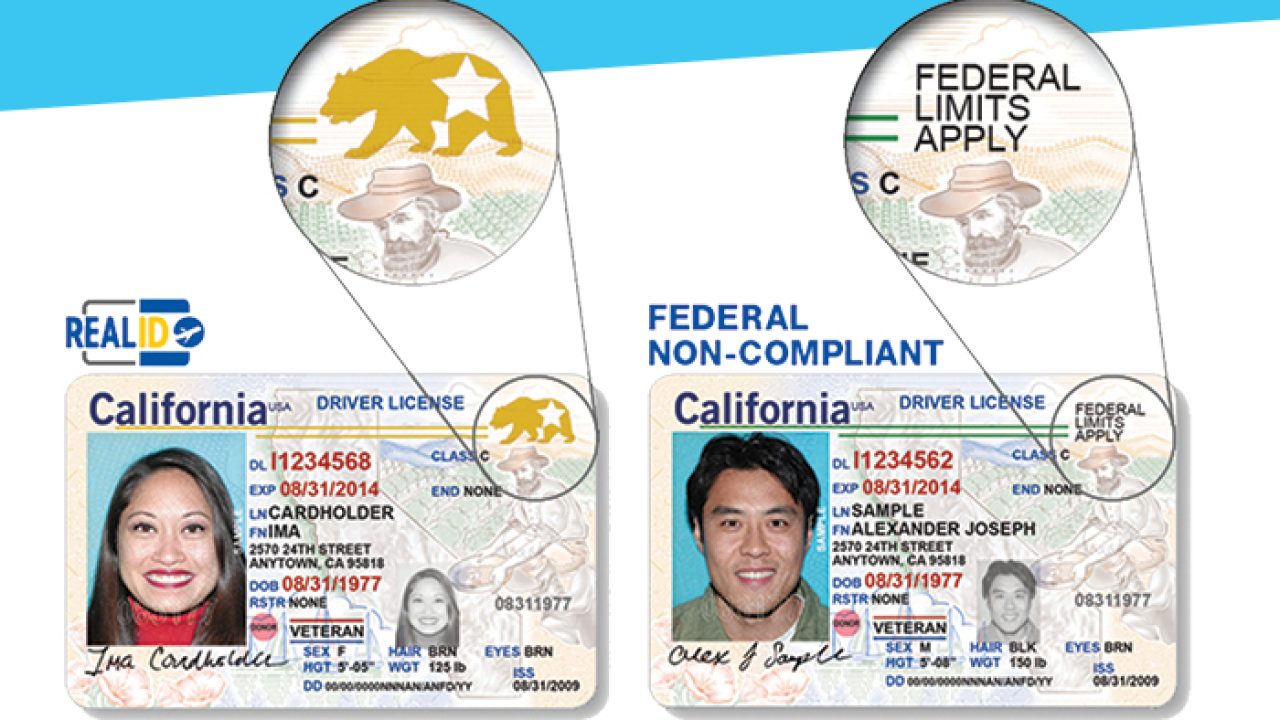
When approaching a TSA checkpoint, travelers should have their California Real ID readily accessible. TSA officers are trained to inspect IDs for various security features, including the presence and integrity of embossed elements. They may run their fingers over the card to feel for the raised texture or hold it under different lighting conditions to observe holographic effects. Being prepared to present your ID clearly, with nothing obscuring its features, helps expedite the screening process. Travelers should also be aware that the star marking in the upper right-hand corner of a Real ID-compliant card signifies its federal compliance, a key visual cue for TSA officers. Familiarizing yourself with these aspects of your ID helps you anticipate the verification process and contribute to a more efficient flow through airport security.
The Future Landscape of Digital Identity and Biometrics in Travel
While physical security features like embossing remain critical, the future of identity verification in travel is increasingly moving towards digital and biometric solutions. Many airports are already piloting programs that use facial recognition technology to verify identity against travel documents, offering a faster and potentially more secure alternative to traditional ID checks. While these advancements aim to enhance security and convenience, the physical Real ID, with its embossed features and other safeguards, will continue to serve as the foundational document against which digital identities are verified. Understanding the layers of security on your California Real ID provides a valuable context for appreciating the ongoing evolution of travel security, ensuring that as technology advances, the underlying principles of secure identity verification remain robust and reliable for every journey.
LifeOutOfTheBox is a participant in the Amazon Services LLC Associates Program, an affiliate advertising program designed to provide a means for sites to earn advertising fees by advertising and linking to Amazon.com. Amazon, the Amazon logo, AmazonSupply, and the AmazonSupply logo are trademarks of Amazon.com, Inc. or its affiliates. As an Amazon Associate we earn affiliate commissions from qualifying purchases.