
When planning a trip, especially one that might involve exploring the heartland of the United States, travelers often seek to understand local laws and customs to ensure a smooth and enjoyable experience. One aspect that frequently comes up in discussions about firearm laws is open carry. For those venturing into the Sunflower State, a common question arises: “Is Kansas an open carry state?” This article delves into the nuances of Kansas’s open carry laws, providing clarity for travelers and residents alike. Understanding these regulations is crucial for anyone considering bringing firearms into the state or for those simply interested in the legal landscape of Kansas.

Kansas has a reputation for being a state that respects individual liberties, and its firearm laws are often a reflection of this. The question of whether Kansas is an open carry state is answered with a clear “yes.” However, like most states, this right is not without its specific provisions and limitations. This guide will break down what open carry means in Kansas, who can carry firearms openly, and where it is permitted or prohibited, drawing parallels to how understanding local laws enhances any travel experience, whether you’re exploring the historic sites of Dodge City or enjoying the vibrant city life in Wichita.
Understanding Open Carry in Kansas
Open carry, in its most straightforward definition, refers to the practice of carrying a visible firearm in public. In Kansas, the legal framework surrounding open carry is primarily governed by state statutes. The cornerstone of this legislation is the recognition that citizens have the right to keep and bear arms. This right extends to carrying those arms openly, provided certain conditions are met.
Who Can Open Carry in Kansas?
To legally engage in open carry in Kansas, an individual must meet specific eligibility requirements. Generally, these include:
- Age: Individuals must be at least 18 years old to openly carry a handgun. For long guns (rifles and shotguns), the age requirement is also typically 18.
- Legal Possession: The firearm being carried must be legally owned by the individual. This means the person must not be prohibited from possessing firearms under federal or state law. Prohibited persons often include convicted felons, individuals with a history of domestic violence, and those adjudicated as mentally defective.
- No Concealed Carry Permit Required: A significant aspect of Kansas law is that a permit is not required to openly carry a handgun. This distinguishes it from states that mandate a concealed carry permit even for open carry. This “constitutional carry” or “permitless carry” aspect is a key feature for gun owners in Kansas.
It’s important to note that while a permit isn’t required for open carry, obtaining a Concealed Carry Handgun (CCH) license can have its own set of benefits, such as reciprocity with other states and the ability to carry concealed in certain locations where open carry might be restricted.
What Constitutes “Open Carry”?
The visual aspect of open carry is crucial. A firearm is considered openly carried if it is visible to others. This typically means carrying a handgun in a holster on the hip or thigh, or carrying a rifle or shotgun in a manner that it is readily apparent it is a firearm. The intent is generally that the firearm is not hidden. The legal interpretation of “visible” can sometimes be nuanced, but the general principle is clear: the firearm should not be concealed. This contrasts with concealed carry, where the firearm is intentionally hidden from plain view.
For travelers, understanding this visual distinction is important. If you are carrying a firearm in Kansas and it is not visible, you would be subject to the laws and regulations pertaining to concealed carry, which may have different requirements.
Permitted Locations for Open Carry
While Kansas is an open carry state, the right to carry a firearm openly is not absolute and is subject to restrictions in certain locations. These restrictions are in place to ensure public safety and to maintain order in sensitive environments.
General Rule: Public Places
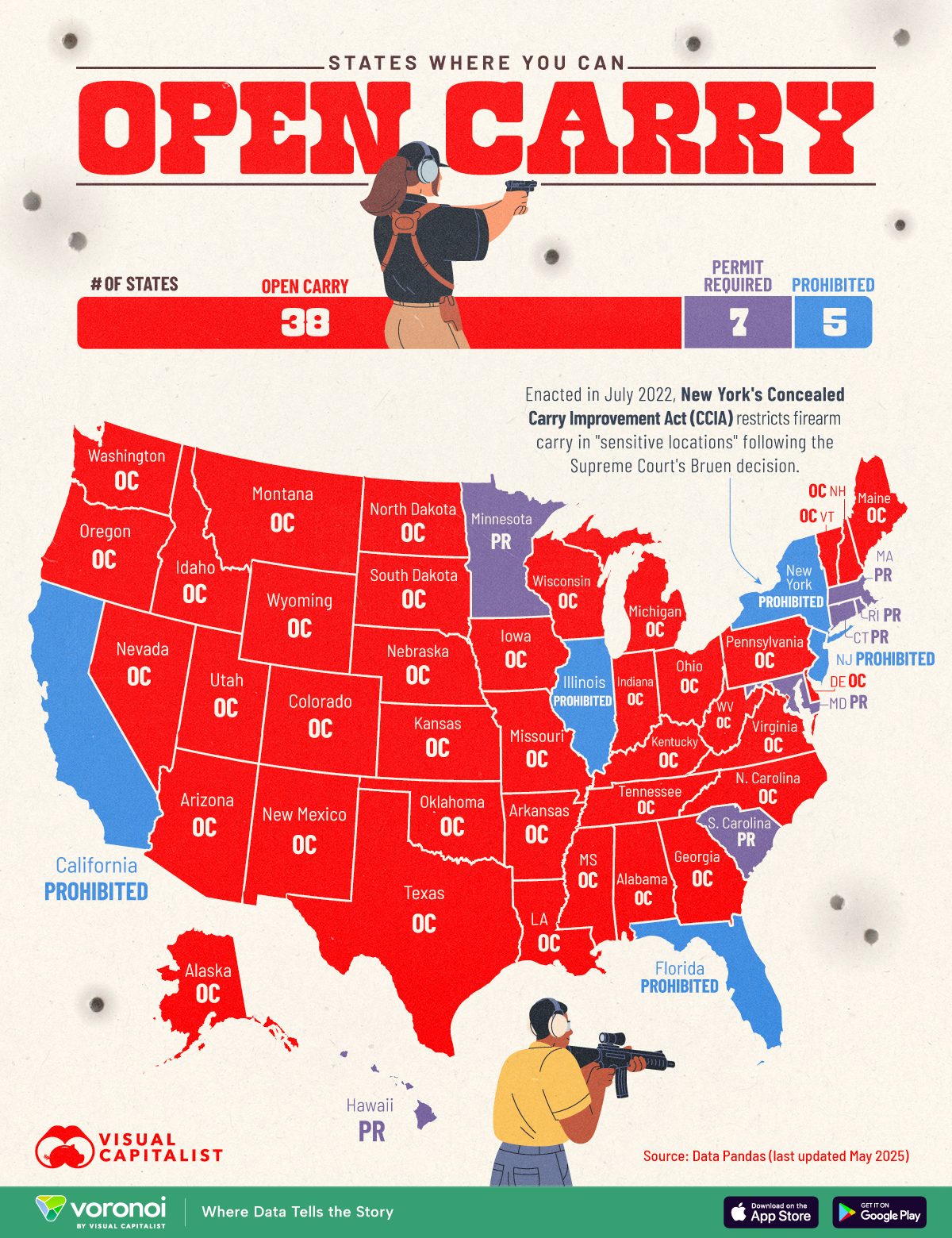
In general, open carry of a firearm is permitted in most public places in Kansas, provided the individual meets the eligibility requirements outlined previously. This includes streets, parks, and other areas accessible to the general public.
Prohibited Locations
Despite the general permissiveness, there are specific locations where carrying firearms, whether openly or concealed, is prohibited. These often include:
- Schools and School Property: Carrying firearms on school grounds, including public schools and private schools, and at school-sponsored events is strictly prohibited. This applies to K-12 institutions and can sometimes extend to university campuses, though specific university policies may vary.
- Courthouses: Federal and state courthouses are generally designated as firearm-free zones.
- Federal Buildings: Buildings owned and operated by the federal government are typically off-limits for firearms.
- Law Enforcement Facilities: Carrying firearms into police stations or sheriff’s offices is usually prohibited.
- Private Property with Notice: Private property owners have the right to prohibit firearms on their premises. This can be done through verbal or written notice. For example, a business owner might post a sign indicating that firearms are not welcome. In such cases, individuals are required to comply with the property owner’s wishes.
- Certain Events: While not universally banned, specific venues or events might have their own rules regarding firearms. It is always advisable to check with event organizers or venue management if you are unsure.
When traveling, especially to unfamiliar cities like Topeka or Overland Park, it is wise to be aware of these restrictions. Even if you are not carrying a firearm, understanding these laws can provide context about the community and its approach to safety.
Considerations for Travelers and Responsible Ownership
For visitors to Kansas, understanding the state’s firearm laws is part of responsible travel. Just as you would research local customs, dining etiquette, or the best attractions like the Tallgrass Prairie National Preserve, knowing the laws concerning firearms contributes to a safe and respectful visit.
Reciprocity with Other States
If you are a resident of another state and legally possess a firearm, it is crucial to understand Kansas’s stance on reciprocity. Kansas recognizes the concealed carry permits of many other states. While this article focuses on open carry, the principle of understanding inter-state recognition of firearm laws is paramount for anyone traveling with a firearm. If you have a concealed carry permit from your home state, it is generally valid for concealed carry in Kansas. However, for open carry, the permit is not required by Kansas law itself.
Responsible Firearm Handling
Regardless of whether you are open carrying or simply traveling through the state, responsible firearm ownership and handling are paramount. This includes:
- Safe Storage: If you are staying in a hotel, such as a luxury resort or a budget-friendly accommodation, ensure you store your firearm safely and in accordance with hotel policy and your own safety protocols.
- Awareness of Surroundings: Be mindful of where you are and the potential sensitivities of others. Openly carrying a firearm can draw attention, and it’s important to be respectful of the community.
- Knowledge of Local Ordinances: While state law governs much of firearm regulation in Kansas, some cities or counties might have local ordinances that further regulate firearms. It is always best to err on the side of caution and familiarize yourself with any specific local rules.
- Purpose of Carrying: The laws in Kansas do not typically require a person to state a reason for carrying a firearm openly. However, engaging in behavior that suggests an intent to threaten or intimidate others with a firearm can lead to legal consequences, regardless of whether the firearm is carried openly or concealed.

The “Why” Behind Travel Laws
Understanding firearm laws, like understanding the best family-friendly attractions or the historical significance of landmarks such as the Pony Express Museum, enhances the travel experience by promoting safety, respect, and cultural awareness. Knowing that Kansas is an open carry state, with specific rules and restrictions, allows travelers to make informed decisions and avoid potential misunderstandings. This knowledge contributes to a more secure and enjoyable journey, whether you’re exploring the vast plains or visiting bustling cities like Kansas City, Kansas.
In conclusion, Kansas is indeed an open carry state, allowing eligible individuals to carry firearms openly without a permit. However, this right is accompanied by a responsibility to be aware of and adhere to the specific locations where firearms are prohibited and to practice safe and responsible handling at all times. For travelers, this understanding is a vital component of navigating the state respectfully and ensuring a safe and law-abiding visit.
LifeOutOfTheBox is a participant in the Amazon Services LLC Associates Program, an affiliate advertising program designed to provide a means for sites to earn advertising fees by advertising and linking to Amazon.com. Amazon, the Amazon logo, AmazonSupply, and the AmazonSupply logo are trademarks of Amazon.com, Inc. or its affiliates. As an Amazon Associate we earn affiliate commissions from qualifying purchases.