
Florida, often lauded as the Sunshine State, is a premier destination for travelers worldwide, drawing millions with its pristine beaches, vibrant cities, and world-class attractions. From the magical theme parks of Orlando to the Art Deco splendor of Miami, and the natural wonders of the Everglades National Park, Florida offers an unparalleled array of experiences for every type of visitor. Whether you’re planning a luxurious resort stay, a family adventure, or a quiet escape to a hidden gem, ensuring safety and peace of mind is paramount for any traveler. While hurricane season and general safety precautions are often discussed, a lesser-known but equally vital safety initiative in Florida is the Purple Alert.
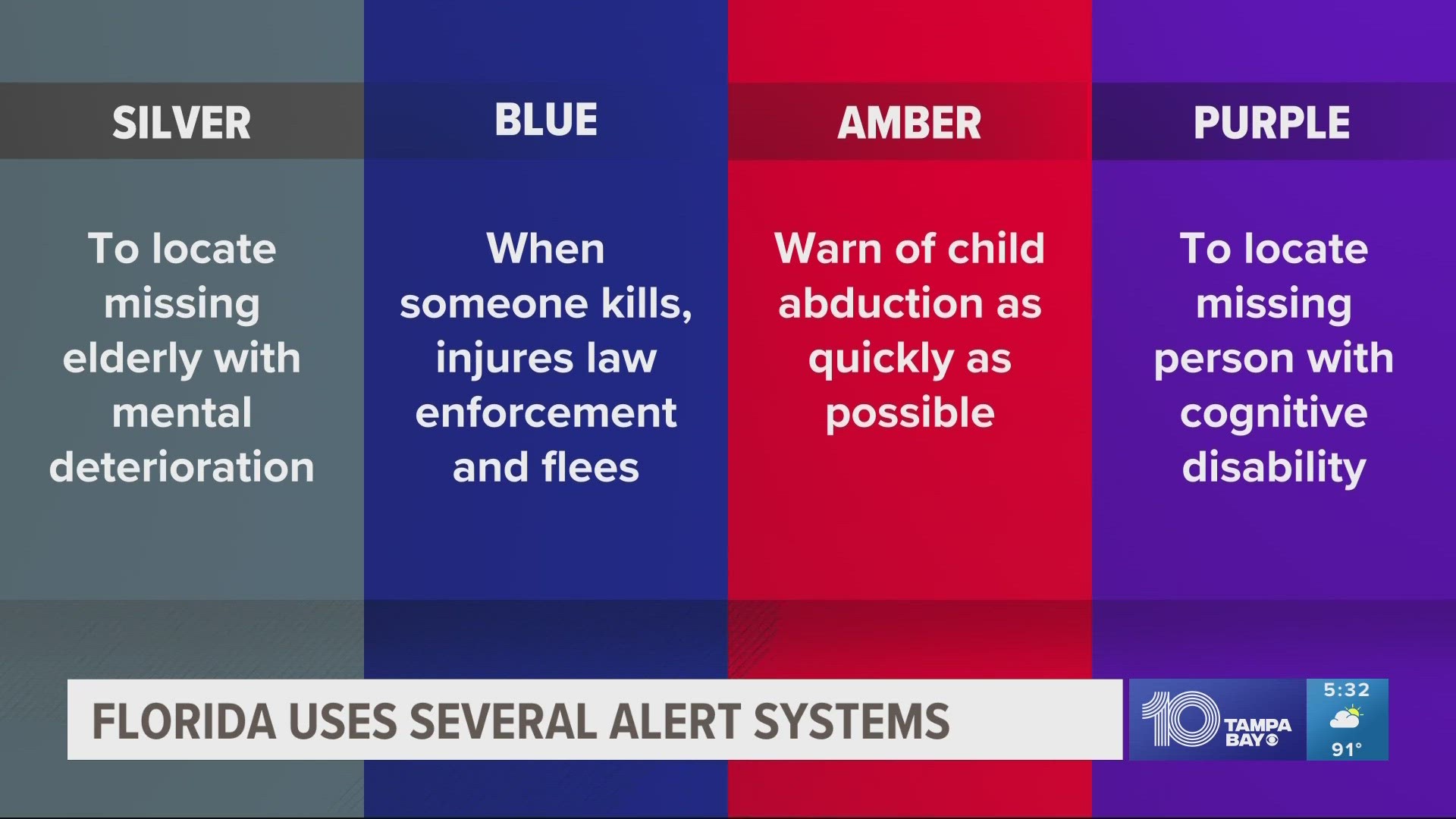
The Purple Alert is a critical tool in Florida’s emergency response system, specifically designed to help locate missing adults with mental or cognitive disabilities who do not meet the criteria for other established alerts, such as Amber Alert or Silver Alert. For both residents and visitors, understanding what a Purple Alert entails, its purpose, and how it might impact their travel and leisure activities is crucial. This comprehensive guide will delve into the specifics of the Purple Alert system, examining its origins, activation protocols, and its broader implications for tourism, accommodation, and the overall lifestyle experience in Florida. By shedding light on this important public safety measure, we aim to enhance your understanding and preparedness, ensuring a safer and more informed visit to the Sunshine State.
Understanding the Purple Alert System in Florida
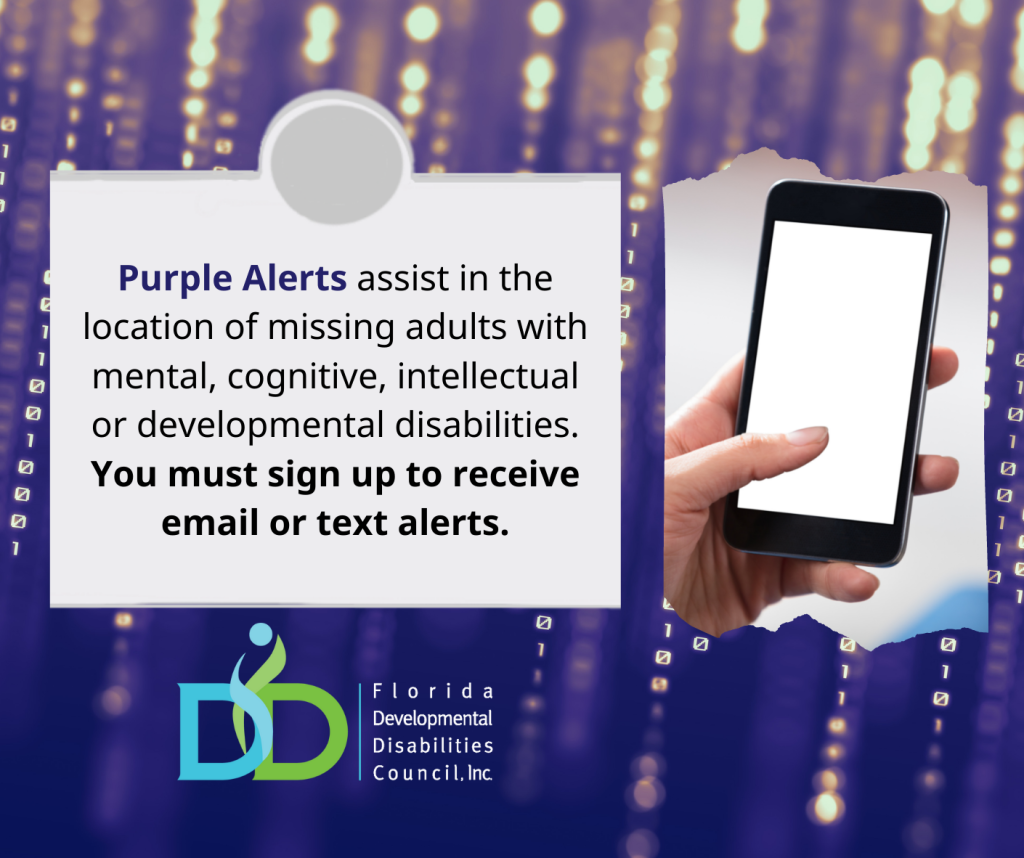
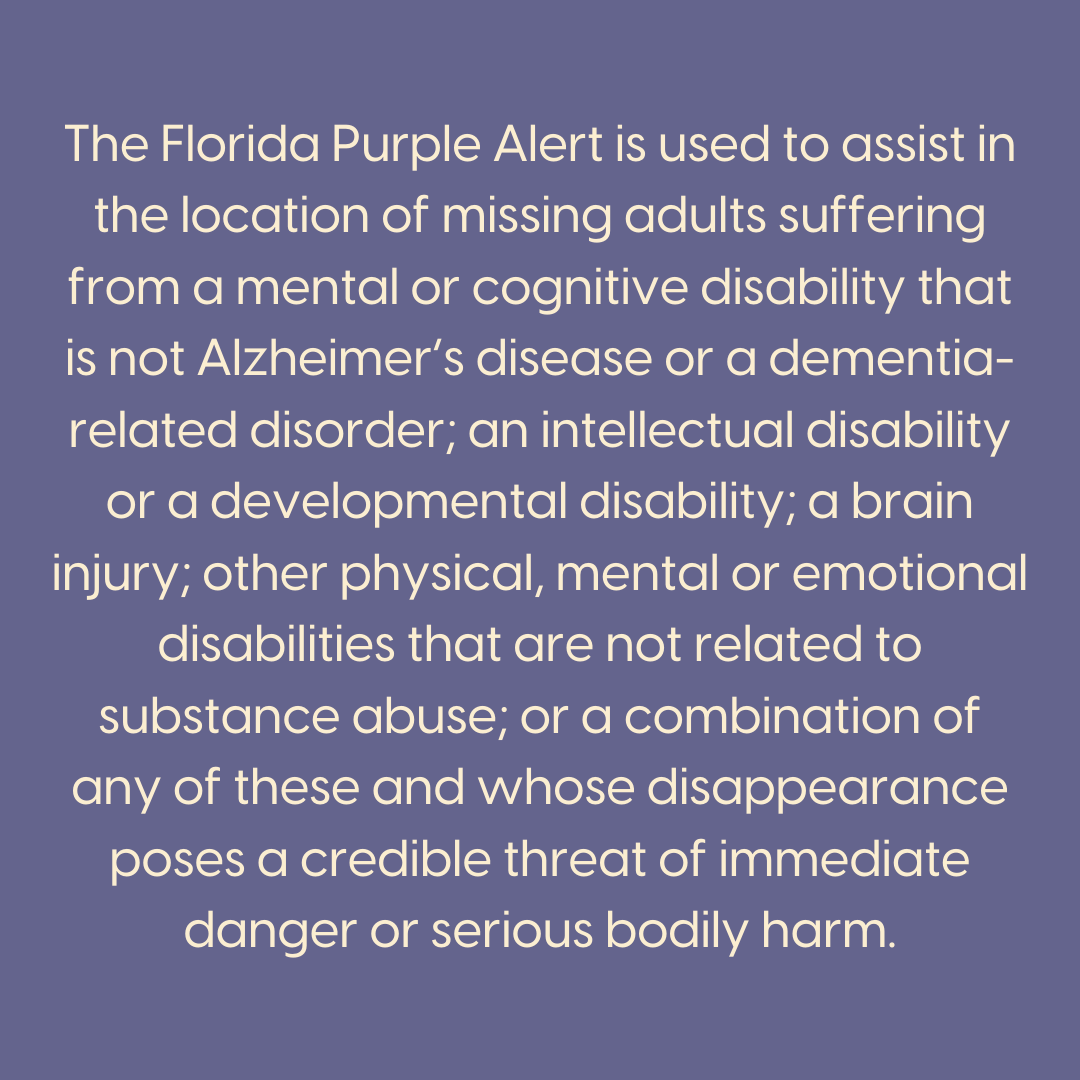
The Purple Alert system in Florida represents a significant advancement in the state’s commitment to protecting its most vulnerable citizens. Enacted into law, this system was specifically crafted to address a gap in existing alert mechanisms. Prior to its establishment, adults with certain mental or cognitive disabilities who went missing often did not qualify for the immediate, widespread public notification that systems like Amber Alert (for abducted children) or Silver Alert (for missing vulnerable elders, typically with Alzheimer’s or dementia) provided. The Purple Alert fills this critical void, focusing on individuals aged 18 and older who have a mental or cognitive disability that is not related to Alzheimer’s disease or dementia, and whose disappearance poses a credible threat to their safety or health.
The activation of a Purple Alert is a serious matter, initiated only after specific criteria are met and verified by local law enforcement agencies. These criteria typically include: the missing person must be 18 years of age or older; they must have a mental or cognitive disability (excluding Alzheimer’s or dementia); the law enforcement agency must have determined that the individual’s disappearance poses a credible threat of immediate danger or serious bodily harm; and there must be sufficient descriptive information about the person and/or their vehicle to broadcast to the public. Once activated, the alert is disseminated through various channels, including digital highway signs, public and private radio and television broadcasters, and social media, ensuring maximum public awareness. The goal is to rapidly enlist the eyes and ears of the entire community, increasing the chances of a swift and safe recovery.
Distinguishing Purple Alert from Other Emergency Notifications
Florida operates a comprehensive suite of emergency alert systems, each tailored to specific circumstances to maximize effectiveness. Understanding the distinctions between these alerts is crucial for residents and visitors alike.
- Amber Alert: This is perhaps the most widely recognized alert, primarily used in cases of child abduction. The criteria are stringent, requiring that the child be 17 years old or younger, that law enforcement confirm an abduction has occurred, that the child is in imminent danger of serious bodily injury or death, and that there is sufficient descriptive information to aid in the child’s recovery. Amber Alerts often trigger widespread broadcasts across television, radio, and digital signs, aiming for immediate public assistance in locating the child and perpetrator.
- Silver Alert: Established to aid in the search for missing persons suffering from Alzheimer’s disease or other dementia-related disorders, the Silver Alert focuses on a highly vulnerable population. These individuals often become disoriented and lost, making timely recovery critical for their safety. Similar to Amber Alerts, Silver Alerts utilize broadcast media, lottery terminals, and highway signs to disseminate information, mobilizing the public to look out for the missing person.
- Purple Alert: As discussed, the Purple Alert addresses the specific need for missing adults (18+) with mental or cognitive disabilities not covered by the Silver Alert criteria. Its implementation ensures that no vulnerable adult is left without a dedicated public notification system in their time of need. This nuanced approach demonstrates Florida’s commitment to a layered safety net, ensuring that emergency resources are appropriately channeled to assist diverse populations.
The overarching authority for these alert systems in Florida is the Florida Department of Law Enforcement (FDLE), which works in close collaboration with local law enforcement agencies, the Florida Highway Patrol, and media partners to ensure the efficient and effective dissemination of these critical messages.
The Impact of Purple Alert on Florida Travel and Tourism
While the primary objective of a Purple Alert is to locate a missing vulnerable individual, its activation can have tangential effects on the travel and tourism landscape of Florida. For visitors, understanding these potential impacts is key to maintaining a smooth and enjoyable trip, while for tourism stakeholders, it’s about preparedness and responsible operation. The good news is that these alerts, while serious, are targeted and typically do not lead to widespread disruptions affecting the majority of travel plans. However, being aware can help travelers manage expectations and contribute to community safety.
For Travelers and Visitors
When a Purple Alert is activated in a specific region of Florida you might be visiting, such as Tampa, Key West, or a theme park area in Orlando, you may observe several changes. Expect to see messages about the missing person on digital highway signs, on local news channels in your hotel room, and possibly through push notifications on your phone if you have emergency alerts enabled. You might also notice an increased presence of law enforcement personnel in public areas, particularly if the search is concentrated in a specific vicinity or popular attraction.
For travelers, the most important action is to remain vigilant and empathetic. While your vacation plans are important, the immediate safety of a vulnerable individual takes precedence. If you see the description of the missing person, take a moment to look around, especially in public spaces, transportation hubs, or areas with high foot traffic. Do not approach the individual if you believe you have located them, but instead immediately contact 911 or the number provided in the alert.
It’s unlikely that a Purple Alert will directly lead to the closure of major attractions like Walt Disney World or Universal Studios Florida, or widespread road closures. However, localized searches could temporarily impact traffic flow in specific areas or prompt heightened security measures at certain venues. Staying informed through local news and official channels, rather than relying on rumors, is the best approach.
Role of Hotels and Accommodation Providers
Florida’s vast array of hotels, resorts, apartments, and villas play a crucial role in public safety during any alert. For accommodation providers, a Purple Alert signifies a need for increased awareness among staff and a readiness to assist law enforcement.
- Staff Training and Vigilance: Hotel staff, from front desk to housekeeping, are often trained to recognize and report suspicious activities or individuals matching alert descriptions. They are on the front lines, interacting with hundreds of guests daily, making their vigilance invaluable.
- Guest Communication: While not typically disrupting guest stays, hotels may choose to subtly inform guests about an active alert, perhaps through lobby signage or a notice on in-room televisions, encouraging them to be observant. This is done to inform and empower guests without causing undue alarm.
- Security Protocols: During an alert, hotels might temporarily reinforce security measures, such as monitoring entrances and exits more closely or reviewing surveillance footage if a missing person is believed to be in the vicinity. This is part of their broader commitment to guest safety and security.
- Assistance to Law Enforcement: Hotels readily cooperate with law enforcement by providing access to security footage, guest information (when legally permissible and necessary), and assisting in searches if their property falls within a search radius.
For travelers, this means you can expect your accommodation to be a partner in ensuring community safety. While you may not be directly impacted, knowing that your hotel is actively participating in public safety efforts can add to your peace of mind.
Attractions, Destinations, and Landmarks
The myriad attractions, destinations, and landmarks across Florida also adapt their operations during a Purple Alert. From theme parks to museums, natural parks, and historic sites, these venues are often high-traffic areas where a missing person might be spotted.
- Enhanced Security and Observation: Major attractions, in particular, have sophisticated security systems and trained personnel. During an alert, these teams will intensify their observation of visitors, cross-referencing individuals with the missing person’s description.
- Internal Communication: Park and attraction staff are usually briefed on active alerts, ensuring everyone from ride operators to gift shop employees is aware and knows how to report a potential sighting.
- Public Announcements (Rare): While rare for a Purple Alert, in specific, urgent scenarios, an attraction might make a public announcement or display information on digital screens to solicit guest assistance, similar to how they might for a lost child.
- Minimal Disruption to Experiences: Generally, the experience at attractions remains largely unaffected. The focus is on discreet vigilance rather than overt changes that would detract from a visitor’s enjoyment. Guests are encouraged to continue enjoying their activities while simply being mindful of their surroundings.
Whether you’re exploring the historic streets of St. Augustine, relaxing on the beaches of South Florida, or immersing yourself in the magic of Walt Disney World, the presence of a Purple Alert underscores a collective commitment to safety and welfare. Travelers are encouraged to appreciate this community-wide effort and play their part by staying informed and being observant.
Ensuring Safety and Peace of Mind During Your Florida Stay
Visiting Florida should be an exciting and memorable experience, and being prepared for various scenarios, including public safety alerts, only enhances that. The Purple Alert system is a testament to Florida’s dedication to protecting its vulnerable citizens, and as a visitor, you can play a small but significant role in its effectiveness while also ensuring your own safety and peace of mind.
Staying Informed and Prepared
The best defense is a good offense, and in the context of travel and safety, this means being informed.
- Official Sources First: For any public safety alert, always rely on official sources. These include local news channels (TV, radio, reputable online news sites), the websites of the Florida Department of Law Enforcement (FDLE), and county-level emergency management agencies. Avoid sensationalized social media posts or unverified rumors.
- Enable Emergency Alerts: Most modern smartphones have a setting to receive emergency alerts, often under “Wireless Emergency Alerts” or similar. Enabling these ensures you receive critical notifications like Purple Alerts, Amber Alerts, and weather warnings directly to your device, tailored to your current location.
- Familiarize Yourself with Local News: Before or upon arrival, take a few minutes to identify local news stations or online news outlets for the specific Florida region you are visiting. A quick scan of headlines can keep you abreast of any local safety concerns.
- Personal Safety Tips: Regardless of any active alerts, always practice general travel safety. Be aware of your surroundings, especially in crowded areas. Secure your belongings, and if traveling alone, inform someone of your itinerary. If you’re exploring nature, understand the local conditions and adhere to park safety guidelines.
By taking these proactive steps, you contribute to your own safety network and are better equipped to understand and respond to any public safety notifications that may arise during your trip.
The Community Effort and Visitor Responsibility
The success of systems like the Purple Alert hinges on community participation. As a visitor, you become an honorary member of the Florida community, and your awareness can be invaluable.
- Be Observant, Not Overly Concerned: There’s a fine line between vigilance and anxiety. The goal is to be observant and aware without letting it overshadow your travel experience. Enjoy the beaches, explore the attractions, and savor the local cuisine, all while keeping a mental note of any active alerts.
- Report, Don’t Confront: If you believe you have spotted an individual matching a Purple Alert description, the most important action is to contact 911 immediately. Provide as much detail as possible about the person’s appearance, location, and direction of travel. Do not attempt to approach or apprehend the individual yourself, as this could put you or the missing person at risk.
- Empathy and Understanding: The primary reason for a Purple Alert is a vulnerable individual is missing. Approaching the situation with empathy and understanding contributes to a positive community spirit, even as a temporary visitor.
- Support Local Efforts: By simply staying informed and being willing to report a sighting, you are indirectly supporting the tremendous efforts of law enforcement, emergency services, and community volunteers dedicated to reuniting families and ensuring the safety of all Floridians.
In conclusion, the Purple Alert in Florida is a vital component of a comprehensive safety network, specifically designed to protect adults with certain mental or cognitive disabilities. While it is a serious call to action for residents, for travelers, it serves as a reminder of the state’s commitment to safety and a subtle invitation to participate in a collective effort of vigilance. Understanding this system, distinguishing it from others, and knowing how to respond appropriately can only enrich your travel experience in Florida, ensuring that your journey is not only filled with unforgettable memories but also imbued with a sense of security and peace of mind. So, pack your bags, prepare for adventure, and rest assured that Florida is striving to keep everyone, residents and visitors alike, safe and sound.
LifeOutOfTheBox is a participant in the Amazon Services LLC Associates Program, an affiliate advertising program designed to provide a means for sites to earn advertising fees by advertising and linking to Amazon.com. Amazon, the Amazon logo, AmazonSupply, and the AmazonSupply logo are trademarks of Amazon.com, Inc. or its affiliates. As an Amazon Associate we earn affiliate commissions from qualifying purchases.