
Becoming a police officer in California is a rigorous and highly rewarding career path, demanding a specific set of qualifications, extensive training, and a strong commitment to public service. The journey involves navigating a detailed selection process designed to identify individuals with the integrity, physical fitness, and mental fortitude necessary to uphold the law and protect communities across the Golden State. From initial eligibility to departmental academy graduation, each step is crucial in molding aspiring officers into capable guardians of public safety.
Foundational Eligibility Requirements
Before an individual can even consider applying to a law enforcement agency in California, they must meet a set of foundational eligibility requirements. These are non-negotiable prerequisites that serve as the initial screening mechanism, ensuring that candidates possess the basic attributes deemed essential for the profession. Adherence to these standards is paramount for anyone dreaming of serving in a California police department.

Age and Citizenship
A primary requirement for aspiring police officers in California is that candidates must be at least 18 years of age. This minimum age ensures a certain level of maturity and legal capacity. Furthermore, applicants must be United States citizens. While some exceptions may exist for specific roles or under certain circumstances, the general rule for sworn peace officers is U.S. citizenship. This is often a federal and state requirement tied to the authority and responsibilities vested in law enforcement officers.
Education and Background
The educational benchmark for police officers in California typically includes a high school diploma or a GED equivalent. However, many departments, particularly larger city police forces or county sheriff’s offices, prefer or even require some college coursework or an associate’s degree. A bachelor’s degree in criminal justice, sociology, psychology, or a related field can significantly enhance an applicant’s competitiveness and may even lead to accelerated career advancement.
Beyond formal education, a clean background is absolutely critical. This involves a comprehensive background investigation that scrutinizes an applicant’s personal history. This includes, but is not limited to, reviewing criminal records, driving records, financial history, and past employment. Any history of felony convictions, significant misdemeanor offenses (especially those involving violence, theft, or dishonesty), or a pattern of substance abuse can be disqualifying. Honesty and transparency throughout this process are vital; any attempt to conceal or misrepresent information will almost certainly lead to disqualification.
Residency
While not universally mandated by every agency, many California police departments have residency requirements. These can vary, with some requiring officers to live within the city or county they serve, while others may mandate residency within a certain mileage radius. The rationale behind residency requirements often includes fostering a stronger connection between officers and the communities they protect, promoting quicker response times, and encouraging officers to invest in the local community.
The Rigorous Selection Process
Once the foundational eligibility criteria are met, candidates embark on a multi-stage selection process. This process is designed to be challenging and exhaustive, assessing not only an individual’s knowledge and skills but also their psychological suitability and physical capabilities. Each stage is a critical hurdle that must be successfully cleared to advance.
Written Examination
The initial step for most applicants is a written examination. This test typically assesses basic skills such as reading comprehension, writing ability, grammar, and problem-solving. It may also include questions related to general knowledge, logical reasoning, and situational judgment. The purpose is to gauge an applicant’s ability to understand and process information, communicate effectively in writing, and make sound decisions under pressure, all of which are fundamental to police work.
Physical Agility Test (PAT)
Physical fitness is a cornerstone of policing. The Physical Agility Test (PAT) is designed to evaluate an applicant’s strength, stamina, and agility. The specific exercises and standards vary by agency but commonly include tasks such as running a timed obstacle course, performing push-ups, sit-ups, and a certain number of pull-ups, and sometimes a water treading or a weight drag component. These tests simulate the physical demands of the job, such as pursuing a suspect, apprehending a resisting individual, or responding to emergencies. Successful completion of the PAT is mandatory.

Oral Interview Board
Following the written and physical assessments, candidates typically face an oral interview board. This panel, often composed of experienced officers and supervisors, will delve deeper into the applicant’s motivations, character, and suitability for law enforcement. Questions will focus on ethical dilemmas, problem-solving scenarios, personal experiences, and understanding of the law enforcement role. The board assesses communication skills, composure, decision-making abilities, and overall demeanor. A strong and articulate performance in this interview is crucial.
Polygraph Examination
A polygraph examination, commonly known as a lie detector test, is a standard part of the background investigation for most law enforcement positions in California. This test aims to verify the accuracy of information provided by the applicant during the background investigation process. It covers areas such as past criminal activity, drug use, truthfulness in the application, and any undisclosed issues.
Psychological Evaluation
The psychological stability and mental resilience of a police officer are of utmost importance. Candidates undergo a comprehensive psychological evaluation conducted by a licensed psychologist. This typically involves a battery of written tests and an in-depth interview. The evaluation assesses an applicant’s mental health, emotional maturity, judgment, stress tolerance, and overall suitability for the demanding and often emotionally taxing nature of police work. Any significant psychological concerns can lead to disqualification.
The Academy and Beyond
Successfully navigating the selection process is only the beginning. The next critical phase is the police academy, followed by ongoing training and development throughout an officer’s career.
The Police Academy
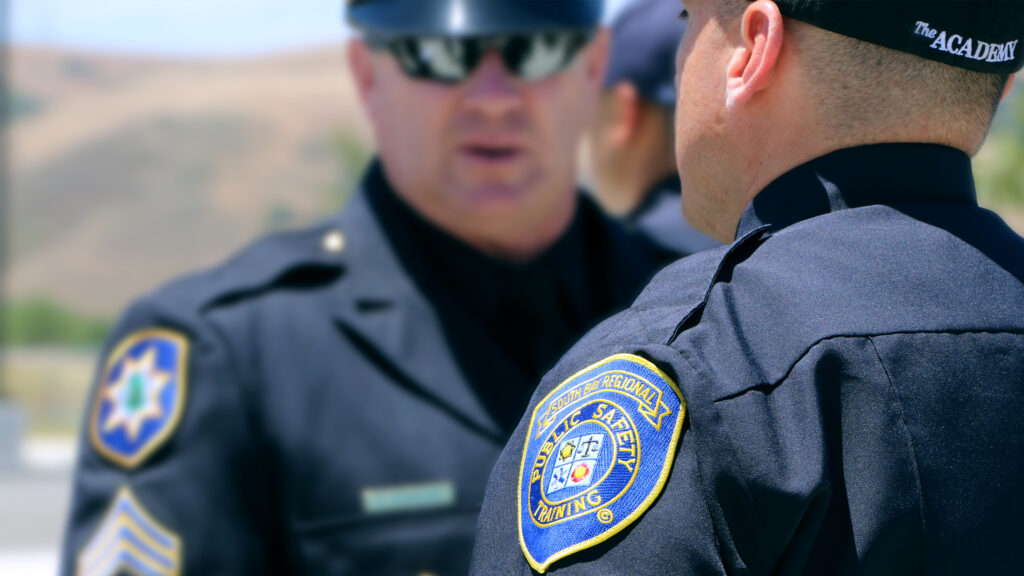
Upon selection, recruits are typically sent to a state-certified police academy. In California, these academies are run by various agencies, including the California Commission on Peace Officer Standards and Training (POST) or individual law enforcement departments. The academy is an intensive, full-time program that can last from several weeks to several months.
Here, recruits receive comprehensive training in a wide range of subjects, including:
- Law Enforcement Tactics: This covers patrol procedures, traffic enforcement, investigation techniques, and arrest procedures.
- Firearms Training: Extensive practice and qualification with firearms are mandatory, emphasizing safe handling and accurate shooting.
- Use of Force: Detailed instruction on the legal and ethical use of force, including de-escalation techniques.
- Criminal Law and Procedure: A thorough understanding of the legal framework governing law enforcement.
- First Aid and CPR: Essential life-saving skills.
- Driver Training: High-risk driving techniques and pursuit protocols.
- Physical Fitness: Continued rigorous physical training to maintain and improve fitness levels.
- Ethics and Professionalism: Instilling a strong sense of duty, integrity, and public trust.
- Cultural Diversity and Community Relations: Training to interact effectively and respectfully with diverse populations.
Graduation from the academy signifies the successful completion of basic training, but it is not the end of the learning process.
Field Training Officer (FTO) Program
After graduating from the academy, new officers enter a Field Training Officer (FTO) program. This is a period of on-the-job training where the new officer is paired with an experienced and certified FTO. The FTO acts as a mentor, guiding the recruit through real-world policing scenarios, evaluating their performance, and providing constructive feedback. This program typically lasts for several months and is designed to bridge the gap between academy training and independent patrol duties. It’s a crucial phase where theoretical knowledge is applied in practical, often unpredictable situations.
Continuous Professional Development
Law enforcement is a dynamic field, and officers are required to engage in continuous professional development throughout their careers. This includes regular in-service training to stay current on legal changes, new techniques, and emerging issues. Specialized training may also be available in areas such as investigations, K-9 units, SWAT teams, or community outreach. Maintaining certifications and meeting ongoing training requirements are essential for continued employment and career progression within California law enforcement agencies. The dedication to learning and adapting is a hallmark of a successful and enduring career as a police officer.
LifeOutOfTheBox is a participant in the Amazon Services LLC Associates Program, an affiliate advertising program designed to provide a means for sites to earn advertising fees by advertising and linking to Amazon.com. Amazon, the Amazon logo, AmazonSupply, and the AmazonSupply logo are trademarks of Amazon.com, Inc. or its affiliates. As an Amazon Associate we earn affiliate commissions from qualifying purchases.