
For any traveler planning a trip to the Sunshine State, understanding the local communication landscape is as essential as packing sunscreen. While often overlooked in the excitement of planning adventures to theme parks, pristine beaches, and historic cities, knowing the area codes for Florida is a fundamental piece of information. Far from being a mere string of numbers, Florida’s area codes are deeply intertwined with its geography, history, and the distinct characteristics of its diverse regions. This guide delves into the specifics of Florida’s area codes, offering insights crucial for smooth travel and communication, whether you’re calling a local restaurant, booking an excursion, or simply staying connected with loved ones back home.

Understanding Florida’s Area Codes for Travelers
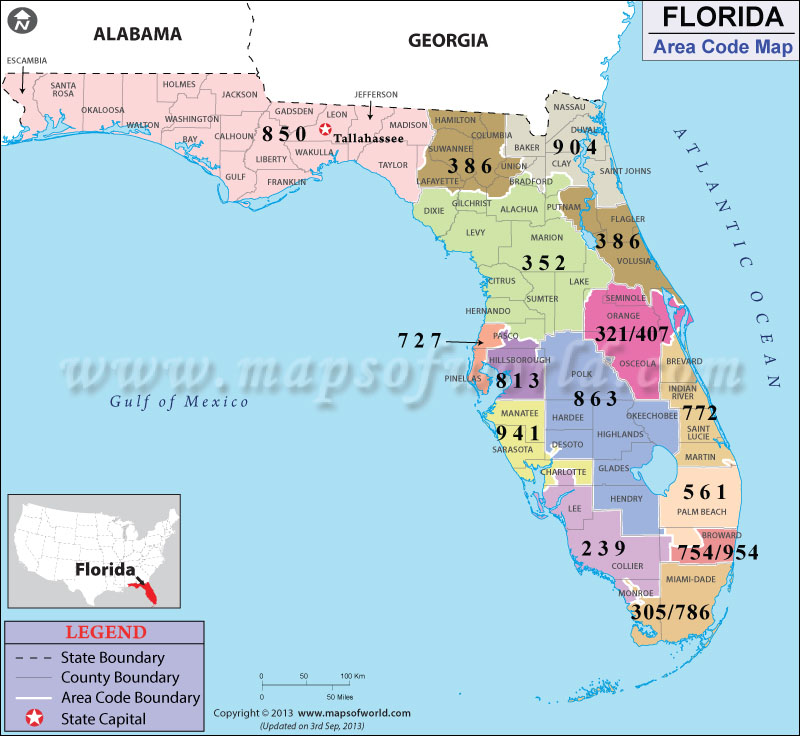
Florida, a sprawling peninsula teeming with vibrant cities, serene natural landscapes, and bustling tourist hubs, is served by numerous area codes. Unlike smaller states that might have one or two, Florida’s rapid growth and expansive population have necessitated a complex system of geographic telephone prefixes. For travelers, this means that there isn’t just one “area code for Florida”; instead, specific codes are assigned to distinct regions, each reflecting the unique character and needs of that part of the state.
The Importance of Knowing Area Codes When You Travel
Understanding area codes goes beyond mere dialing mechanics. For a traveler, it’s a practical tool for:
- Localizing Services: Quickly identifying if a business or service is local to a specific region you’re visiting. A phone number starting with 305 immediately tells you it’s for Miami-Dade County and parts of the Florida Keys, while 407 points to the Orlando area. This helps in planning itineraries and understanding regional availability.
- Avoiding Toll Charges: Although less common with modern mobile plans, historically, knowing area codes helped distinguish local calls from long-distance ones, potentially incurring extra costs. Even today, some specialized services or landlines might still operate under such distinctions.
- Emergency Preparedness: While 911 is universal, knowing local area codes can be helpful in non-emergency situations where you need to reach local authorities or services.
- Cultural Context: Area codes become part of a region’s identity. Asking a local for their number often includes the expectation of providing their specific area code, grounding the conversation within the geographical context of Florida.
A Brief History of Area Codes in Florida
The first area codes were introduced in the United States in 1947, and Florida was among the pioneering states. Initially, the entire state of Florida was covered by a single area code: 305. As the state’s population boomed, especially with the post-war migration and the explosion of tourism, new area codes became necessary. The first split occurred in 1953, introducing 813 for the west coast (including Tampa) and central Florida. Over the decades, and with the proliferation of fax machines, pagers, and later, mobile phones, the demand for numbers skyrocketed, leading to numerous splits and overlay plans. Today, Florida has one of the most extensive lists of area codes in the nation, a testament to its dynamic growth and status as a global destination.
Navigating Florida’s Diverse Regions Through Its Area Codes
Florida’s geographic and cultural diversity is mirrored in its telephone numbering plan. Each region, with its distinct attractions and way of life, is served by specific area codes, offering a unique mosaic for the informed traveler.
North Florida: Historic Charms and Natural Beauty
North Florida is characterized by its deep Southern roots, historic cities, and vast natural landscapes.
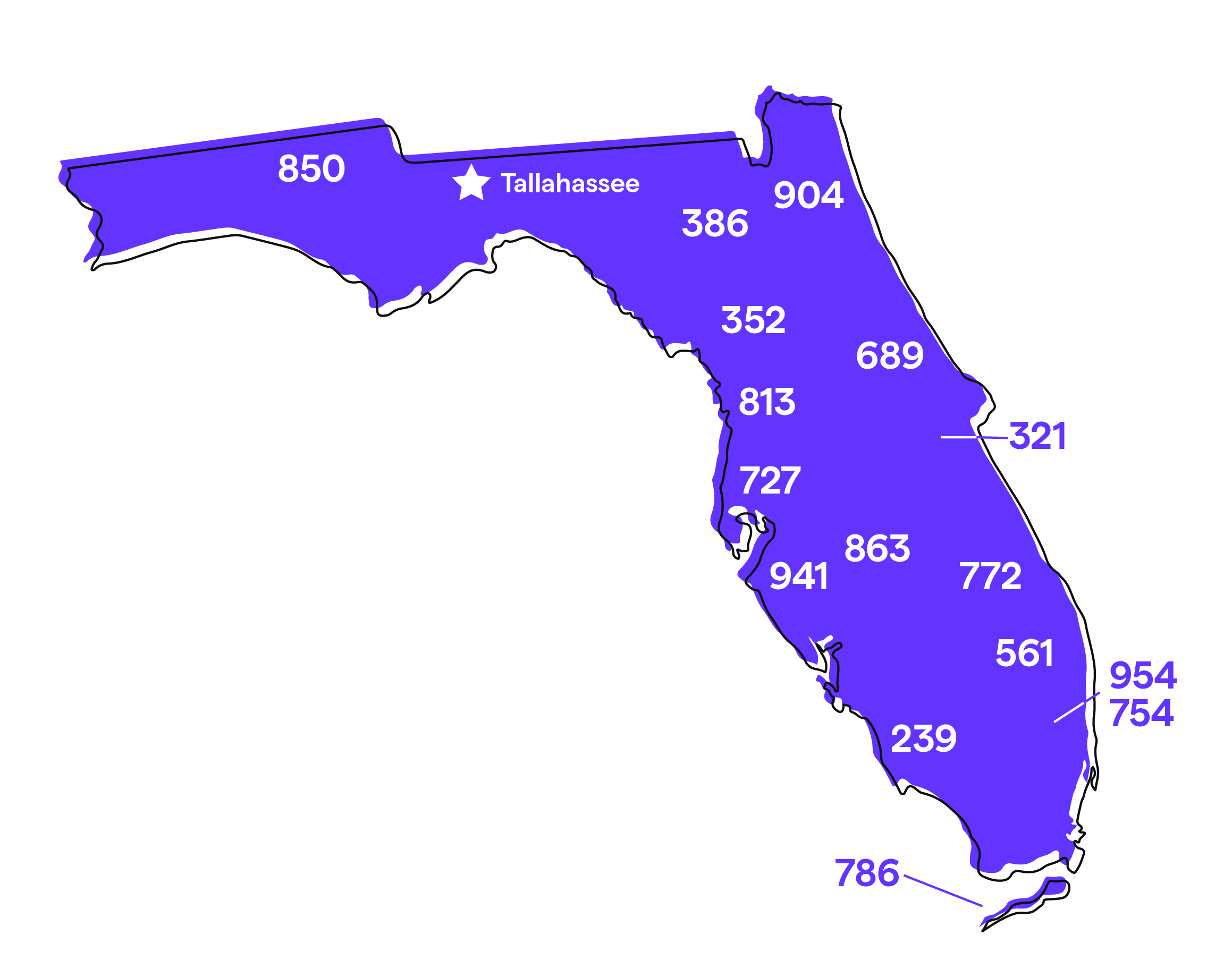
- 904: This code covers Jacksonville, the largest city by land area in the contiguous United States, and extends to St. Augustine, the nation’s oldest continuously inhabited European-established settlement. Travelers here can explore the St. Augustine Historic District, pristine beaches, and riverfront attractions.
- 850: Encompassing the Florida Panhandle, this area code includes the state capital, Tallahassee, and the stunning white-sand beaches of the Emerald Coast in places like Pensacola, Destin, and Panama City Beach. This region offers a blend of history, outdoor adventure, and coastal relaxation.
Central Florida: Theme Parks and Lakes
The heart of Florida’s tourism industry beats strongest in its central region, famous for its world-renowned attractions.
- 407 / 321 / 689: This cluster of codes serves the greater Orlando metropolitan area, home to giants like Walt Disney World Resort, Universal Orlando Resort, and SeaWorld Orlando. 321 also uniquely extends east to the Space Coast, covering cities like Melbourne and the Kennedy Space Center in Cape Canaveral. The 689 code is an overlay for the 407/321 region, reflecting its immense growth.
- 352: This code covers a vast central and northern interior region, including cities like Gainesville (home to the University of Florida), Ocala (the horse capital of the world), and the charming historic district of Mount Dora.
- 386: This code serves the Daytona Beach area, famous for its motorsports, and extends north to the historic city of DeLand and west into more rural areas.
Southwest Florida: Gulf Coast Bliss
Along the scenic Gulf of Mexico, Southwest Florida is celebrated for its stunning beaches, lush nature, and vibrant arts scenes.
- 239: This code encompasses Fort Myers, Naples, and Cape Coral, a region known for its pristine barrier islands like Sanibel and Captiva, exquisite dining, and access to the Everglades National Park wilderness.
- 941: Serving the Sarasota and Bradenton areas, this code is associated with cultural richness, including the Ringling Museum of Art, beautiful beaches, and family-friendly attractions.
- 813 / 656: The original west coast code, 813, now primarily serves Tampa and surrounding Hillsborough County. This includes attractions like Busch Gardens Tampa Bay and a vibrant urban core. The 656 code is a new overlay for the 813 region, indicating continued population growth.
- 727: Dedicated to Pinellas County, this area code covers St. Petersburg and Clearwater, famous for their award-winning beaches and thriving arts communities.
Southeast Florida: Beaches, Culture, and Urban Vibrancy
The southeastern coast of Florida, stretching along the Atlantic Ocean, is a renowned corridor of luxury, culture, and bustling urban centers.
- 305 / 786 / 645: These codes are dedicated to Miami-Dade County and parts of the Florida Keys, capturing the vibrant international flair of Miami, its iconic South Beach, the Art Deco Historic District, and dynamic nightlife. The 786 and 645 codes are overlays, essential for the densely populated metropolitan area.
- 954 / 754: These codes serve Broward County, including the popular city of Fort Lauderdale, often dubbed the “Venice of America” for its extensive canal system. Travelers here enjoy beautiful beaches, sophisticated dining, and cultural attractions.
- 561 / 728: Dedicated to Palm Beach County, this region is known for its upscale resorts, golf courses, and cultural institutions like the Norton Museum of Art in West Palm Beach. The 728 code is a recent overlay.
- 772: This code covers the Treasure Coast, including cities like Port St. Lucie and Vero Beach, offering a more laid-back coastal experience with a focus on natural beauty and outdoor activities.
The Florida Keys: Island Paradise
A unique chain of tropical islands curving southwest from the tip of Florida, the Florida Keys are a world unto themselves.
- 305 / 786: While primarily associated with Miami, the 305 and 786 area codes also extend down through the Florida Keys, including famous destinations like Key Largo, Islamorada, Marathon, and the southernmost point of the continental United States, Key West. This is a testament to the strong historical and geographical ties between Miami and the Keys.
Practical Communication Tips for Your Florida Trip
Navigating phone calls in Florida is generally straightforward, but a few tips can enhance your experience and avoid confusion.
Dialing Within and Outside Florida
- Ten-Digit Dialing: Due to the widespread use of overlay area codes, all calls within Florida – even local ones – require ten-digit dialing (area code + seven-digit number). This is a crucial habit to adopt immediately upon arrival.
- Calls to Other States/Countries: For calls outside of Florida but within the United States and North American Numbering Plan (NANP) (including Canada and parts of the Caribbean), you will dial 1 + area code + seven-digit number.
- International Calls: If you are calling outside the NANP, you’ll typically dial 011 (international access code) + country code + city/area code + local number. For example, calling the United Kingdom would start with 011-44…
International Considerations for Visitors
- Roaming: Travelers from outside the United States should check with their home mobile provider about international roaming charges. These can be very expensive.
- Local SIM Cards: For extended stays, purchasing a local prepaid Florida SIM card (from providers like AT&T, T-Mobile, or Verizon) can be a cost-effective option. This will give you a Florida area code and local rates.
- Wi-Fi Calling: Many modern smartphones support Wi-Fi calling, which allows you to make and receive calls over a Wi-Fi connection, potentially avoiding roaming charges, especially when calling back home. Most hotels, restaurants, and attractions in Florida offer free Wi-Fi.
Staying Connected: Mobile vs. Landline
While landlines still exist, mobile phones are the primary mode of communication for virtually all travelers.
- Mobile Network Coverage: Florida generally has excellent mobile network coverage across its populated areas. However, expect spotty service in remote parts of the Everglades or very sparsely populated rural areas.
- Public Phones: Public payphones are rare and should not be relied upon.
- Hotel Phones: Hotel room phones are available but often charge high rates for calls, making personal mobile devices the preferred option.
The Future of Florida’s Communication Landscape
Florida’s growth shows no signs of slowing, and neither does the demand for telephone numbers. The communication landscape continues to evolve, impacting how travelers will interact with the state in the future.
Overlays and New Area Codes
The trend of “overlay” area codes, where a new code is simply added to an existing geographic region rather than splitting it, will continue. This strategy is less disruptive than splitting existing codes but necessitates mandatory 10-digit dialing. As the state’s population density increases, particularly in metropolitan areas, more new overlay codes are inevitable. This means travelers should always be prepared for a multi-area code experience within a single city or region.
Beyond the Dial Tone: Digital Connectivity
While area codes remain relevant for traditional phone services, much of modern travel communication relies on digital platforms.
- Messaging Apps: WhatsApp, iMessage, and other messaging apps leverage internet connectivity, reducing reliance on traditional phone calls.
- VoIP Services: Services like Skype and Google Voice allow calls over Wi-Fi, offering cost-effective ways to connect internationally.
- Travel Apps: Many Florida attractions, resorts, and cities offer their own dedicated apps for booking, navigation, and information, further decentralizing communication from standard phone calls.
Planning Your Florida Adventure: A Holistic Approach
Understanding the area codes for Florida is just one piece of the puzzle when planning your perfect trip. It underscores the importance of being prepared and informed about the destination.
From Communication to Exploration
Whether you’re calling to book a dolphin tour in Clearwater, confirming dining reservations in South Beach, or checking attraction hours at Disney in Orlando, knowing the local area codes ensures seamless communication. This practical knowledge allows you to focus more on the experiences rather than logistical hurdles. It’s a small detail that contributes to a larger, more organized and enjoyable travel experience.
Embracing the Florida Experience
Ultimately, Florida invites exploration and wonder. From the sun-drenched beaches of the Panhandle to the vibrant nightlife of Miami and the magical realms of Orlando, the state offers an unparalleled array of travel opportunities. By being well-versed in its communication norms, including its diverse array of area codes, you empower yourself to fully immerse in all that the Sunshine State has to offer, connecting effortlessly with its people, places, and unforgettable moments. So, whether it’s a 305, 407, or 850, rest assured you’re dialing into a world of adventure.
LifeOutOfTheBox is a participant in the Amazon Services LLC Associates Program, an affiliate advertising program designed to provide a means for sites to earn advertising fees by advertising and linking to Amazon.com. Amazon, the Amazon logo, AmazonSupply, and the AmazonSupply logo are trademarks of Amazon.com, Inc. or its affiliates. As an Amazon Associate we earn affiliate commissions from qualifying purchases.