
For anyone planning a trip to the majestic landscapes and vibrant cities of Colorado, understanding its telecommunication landscape, particularly its area codes, is a foundational piece of practical knowledge. While often overlooked in the excitement of planning excursions to the Rocky Mountains or exploring urban centers, knowing how to connect and communicate effectively is paramount for a smooth and enjoyable travel experience. An area code isn’t just a sequence of three digits; it’s a geographic identifier that facilitates local and long-distance calls, guiding phone networks to the correct destination within a vast telecommunication system. For travelers, this means being able to call a hotel, make restaurant reservations, contact emergency services, or simply stay in touch with local contacts without hassle.
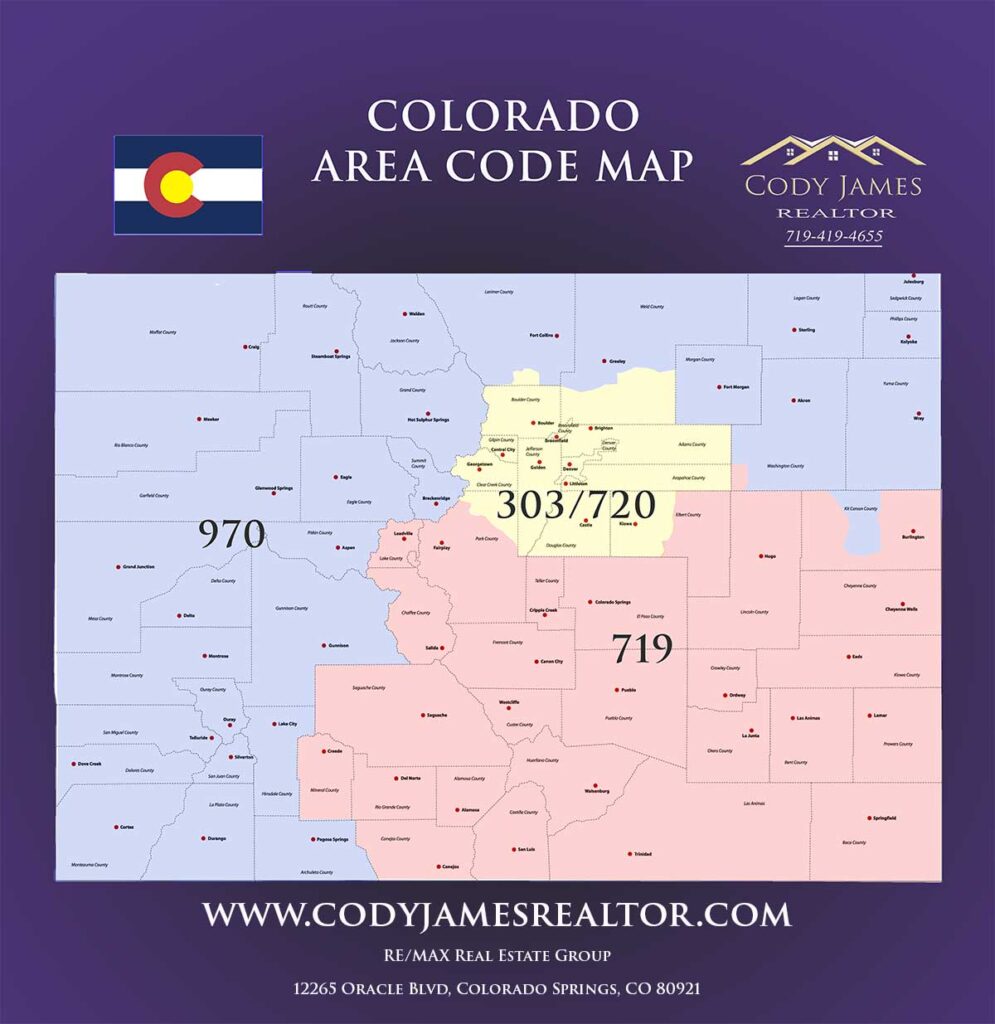
Colorado, like many populous and geographically diverse states in the United States, is served by multiple area codes, reflecting its growth and the increasing demand for phone numbers. This article serves as a comprehensive guide for travelers, delving into Colorado’s area codes, explaining their significance, and offering essential tips to ensure you’re always connected during your adventures in the Centennial State.
Decoding Colorado’s Telecommunication Landscape
The assignment of area codes in the United States is governed by the North American Numbering Plan (NANP), which divides geographic regions into distinct numbering plan areas (NPAs). Over time, as populations grow and new communication technologies emerge, these NPAs sometimes undergo splits or overlays to accommodate the demand for new phone numbers. Colorado is a prime example of a state that has seen its telecommunication map evolve considerably over the decades.
A Brief History of Area Codes in Colorado
Colorado initially began with a single area code, 303, established in 1947 as one of the original 86 area codes in the NANP. This solitary code served the entire state for many years, covering all corners from the bustling metropolis of Denver to the remote mountain towns. However, as the state’s population boomed, particularly in its Front Range Urban Corridor, the supply of available phone numbers within the 303 area code began to dwindle.
The first significant change occurred in 1988 when the 719 area code was created by a geographic split, primarily serving southern Colorado, including cities like Colorado Springs and Pueblo. This alleviated pressure on the 303 code by redistributing demand. A few years later, in 1995, the 970 area code was introduced, covering the vast northern and western regions of Colorado, encompassing areas such as Fort Collins, Grand Junction, Aspen, and Vail.
The most recent and notable change for the most populous part of the state came in 1998 with the introduction of the 720 area code. Instead of another geographic split, 720 was implemented as an overlay on the existing 303 area code. This meant that new phone numbers in the Denver metropolitan area and its surroundings (including Aurora and Boulder) could be assigned either a 303 or a 720 prefix. The key implication of an overlay is that all calls within the overlay region, even local ones, require 10-digit dialing (area code + 7-digit number). More recently, in 2022, the 987 area code was introduced as an additional overlay to the 303/720 region, and the 838 area code was introduced in 2023 as an overlay to the 719 region, further indicating the continued growth and demand for phone numbers in the state.
The Primary Area Codes You Need to Know
For travelers, understanding the main area codes and their general geographic coverage is crucial. Colorado currently utilizes several active area codes, each serving distinct or overlapping regions:
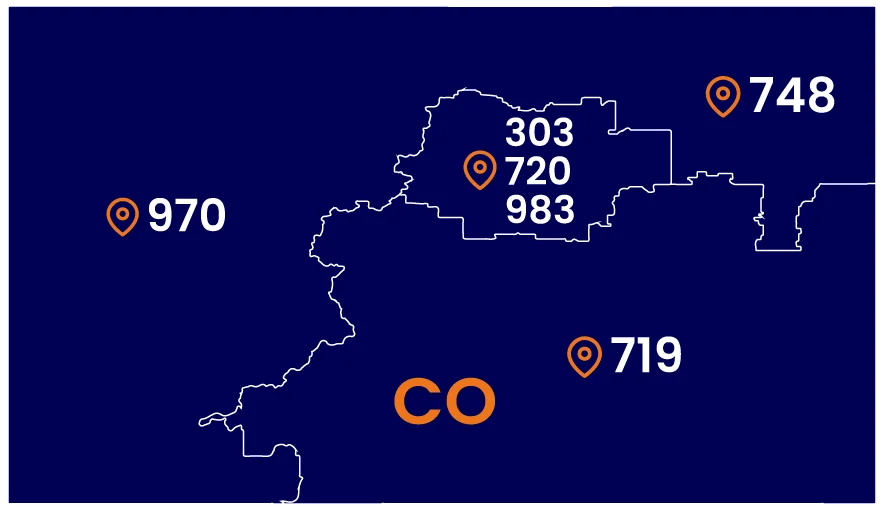
- 303: Primarily serving the greater Denver metropolitan area, including cities like Denver, Aurora, Boulder, Lakewood, and Arvada. It is part of an overlay complex with 720 and 987, meaning 10-digit dialing is mandatory for local calls in this region.
- 720: An overlay area code for the same region as 303 and 987, covering the Denver metro area and its surrounding communities.
- 987: The newest overlay area code for the 303/720 region, introduced to meet ongoing demand.
- 719: Covering much of southern Colorado, including major cities like Colorado Springs, Pueblo, Cañon City, and Lamar. This area code also has an overlay, 838.
- 838: An overlay area code for the 719 region, introduced to meet ongoing demand in southern Colorado.
- 970: Serving northern and western Colorado, this is the code for regions including Fort Collins, Grand Junction, Greeley, Durango, Aspen, and Vail. It is currently not part of an overlay and typically requires 7-digit dialing for local calls within its region, though 10-digit dialing is increasingly becoming standard practice across the USA.
Navigating Colorado’s Area Codes as a Traveler
As a traveler, encountering different area codes is an inevitable part of communicating across various regions. Knowing when and how to use them correctly can save time and prevent communication frustrations.
When Do You Need an Area Code?
The rule of thumb for dialing in the USA has largely shifted towards 10-digit dialing for all calls. This change became nationally mandated in 2021, particularly for regions like Colorado that have multiple area codes within the same geographic area (overlays).
- Calling within an overlay region (303/720/987 or 719/838): You must dial 10 digits (area code + 7-digit number), even if you are calling a number with the same area code as your own phone. For example, if you are in Denver with a 303 number and calling another 303 number also in Denver, you will still dial 303-XXX-XXXX.
- Calling between different area codes within Colorado: Always dial 10 digits (area code + 7-digit number). For instance, if you’re in Denver (303/720/987) and calling a restaurant in Fort Collins (970), you would dial 970-XXX-XXXX.
- Calling Colorado from outside the state: Always dial 10 digits (the 1 for long-distance is typically no longer needed within the USA for calls between landlines/mobile, but it won’t hurt if your carrier still requires it for some services).
- Calling internationally to Colorado: You will need to dial the international access code for your country, followed by
1(the country code for the USA), then the 10-digit Colorado number (e.g.,+1-XXX-XXX-XXXX).
Key Cities and Their Codes
To help you quickly orient yourself, here’s a breakdown of major Colorado cities and their corresponding area codes:
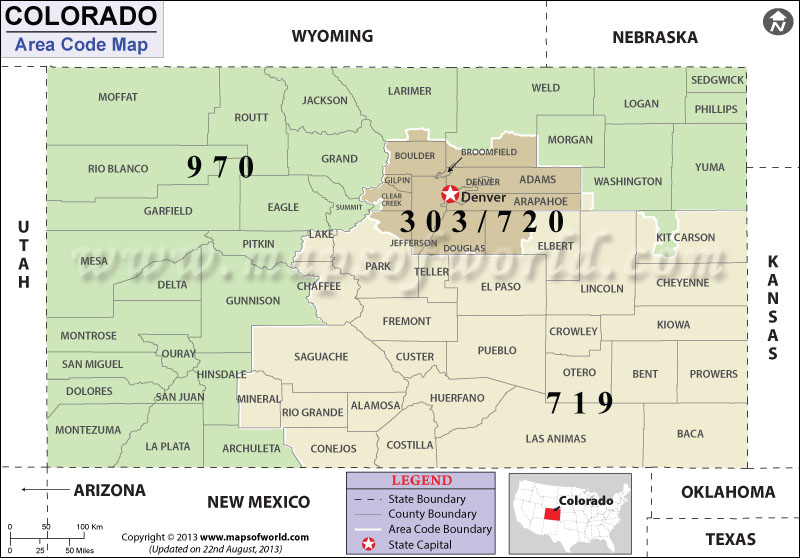
- Denver / Aurora / Boulder / Lakewood / Arvada and surrounding Front Range communities: These populous areas are served by the 303, 720, and 987 overlay complex. If you’re staying in a hotel or contacting services here, you’ll likely encounter numbers beginning with any of these three prefixes.
- Colorado Springs / Pueblo / Cañon City / Lamar and southern Colorado: These regions primarily use 719 and the newer 838 overlay.
- Fort Collins / Grand Junction / Greeley / Durango / Aspen / Vail and northern/western Colorado: This vast and scenic part of the state is covered by the 970 area code.
Beyond the Digits: Essential Communication Tips for Your Colorado Trip
While area codes are fundamental, a holistic communication strategy ensures you remain connected and informed throughout your Colorado adventure.
Understanding Overlay vs. Geographic Splits
The distinction between an “overlay” and a “geographic split” is important, primarily because it dictates dialing behavior.
- Geographic Split: Divides a region into two distinct areas, each with its own exclusive area code. Calls within each new area typically remain 7-digit, while calls between the new areas require 10-digit dialing. The 303 to 719 and 970 splits were geographic.
- Overlay: Introduces a new area code into the same geographic region as an existing one. This means phone numbers with different area codes (e.g., 303, 720, and 987) coexist in the same city or neighborhood. The critical consequence is that 10-digit dialing becomes mandatory for all local calls within that overlay region to distinguish between numbers. Denver and Colorado Springs are prime examples where overlays (720, 987 for Denver; 838 for Colorado Springs) necessitate this.
International Calls and Roaming
If you’re traveling to Colorado from outside the United States, remember that the country code for the USA is +1. So, to dial a Colorado number from abroad, you would typically dial your international exit code (e.g., 00 or +), then 1, followed by the 10-digit Colorado number.
Regarding roaming, check with your home mobile carrier about international roaming plans and costs before your trip. These can be expensive. Alternatives include purchasing a local USA SIM card upon arrival, or relying heavily on Wi-Fi and Voice over IP (VoIP) services like WhatsApp or Skype, which circumvent traditional cellular calls.
Emergency Services and Other Important Numbers
Regardless of the area code, for any emergency requiring police, fire, or medical assistance anywhere in the United States, including Colorado, you simply dial 911. This number does not require an area code.
Other useful non-area code numbers you might encounter:
- 411: Directory assistance (often paid service).
- 211: Community services information and referral (availability may vary by location).
- 311: Non-emergency municipal services (available in some larger cities like Denver).
The Evolving Landscape of Telecommunication and Travel
The way we communicate is constantly changing, with digital platforms playing an increasingly significant role. While area codes remain a core component of traditional telephony, their practical application for travelers is also evolving.
The Rise of Digital Communication
The proliferation of smartphones and widespread Wi-Fi availability in hotels, cafes, and public spaces has revolutionized how travelers stay connected. Apps like WhatsApp, FaceTime, Skype, Google Meet, and various social media platforms allow for calls and messages over the internet, often bypassing traditional cellular networks and, by extension, the direct need for understanding area codes for peer-to-peer communication. For many international travelers, using these apps via Wi-Fi or an eSIM/local SIM with a data plan is far more cost-effective than international roaming.
However, traditional phone calls still hold immense importance. You’ll likely need to dial local Colorado numbers for taxi services, tour operators, specific restaurant reservations, or to reach businesses that don’t primarily operate on digital messaging platforms. This is where knowing Colorado’s area codes becomes essential.
Planning Your Communication Strategy
Before embarking on your Colorado journey, dedicate some time to planning your communication strategy:
- Check Your Phone Plan: Understand your current mobile plan’s coverage and costs for calls and data in Colorado, especially if you’re coming from outside the USA. Consider temporary upgrades or international travel packages.
- Local SIM or eSIM: For longer stays or significant local communication, purchasing a local prepaid SIM card (e.g., from T-Mobile, AT&T, Verizon) or activating an eSIM can be a cost-effective solution, providing you with a local Colorado number.
- Wi-Fi Access: Identify hotels and accommodations that offer reliable Wi-Fi, which can serve as your primary communication hub for digital calls and messaging.
- Important Numbers: Save key contact numbers (hotel, rental car, emergency contacts, local friends/family) in your phone with their full 10-digit Colorado area code, even if they are in the same general region. This proactive step prevents dialing errors.
In conclusion, while the digital age offers many alternatives, area codes remain a fundamental aspect of navigating the telecommunication landscape of any destination, including Colorado. By familiarizing yourself with Colorado’s primary area codes (303, 720, 987, 719, 838, and 970), understanding 10-digit dialing, and adopting a smart communication strategy, you can ensure that staying connected is the least of your worries as you immerse yourself in the natural beauty and vibrant culture of the Centennial State. Enjoy your travels, and may your calls always connect seamlessly!
LifeOutOfTheBox is a participant in the Amazon Services LLC Associates Program, an affiliate advertising program designed to provide a means for sites to earn advertising fees by advertising and linking to Amazon.com. Amazon, the Amazon logo, AmazonSupply, and the AmazonSupply logo are trademarks of Amazon.com, Inc. or its affiliates. As an Amazon Associate we earn affiliate commissions from qualifying purchases.