
For anyone considering a long-term stay or the acquisition of property for accommodation within the golden state, understanding the intricacies of California property tax is paramount. Unlike many other states, California’s property tax system is profoundly shaped by a landmark piece of legislation, which has significant implications for both current homeowners and prospective buyers seeking to establish roots or invest in long-term accommodation. Deciphering this system is crucial for accurate financial planning, whether you envision a beachfront villa in Malibu or a family home in Sacramento.
Understanding California’s Property Tax Landscape for Long-Term Accommodation
The cornerstone of California’s property tax system is Proposition 13, a voter-approved initiative passed in 1978. This proposition fundamentally altered how real estate is assessed and taxed, creating a unique environment for property owners and those planning long-term accommodation. Prior to Proposition 13, property taxes were often perceived as unpredictable and rapidly increasing, leading to significant financial burden for many residents.
Proposition 13: The Foundation of California Property Tax
Proposition 13 established two primary limitations that continue to define the property tax landscape. Firstly, it capped the maximum ad valorem tax rate on real property at 1% of its full cash value. This means that the general property tax levied by counties cannot exceed 1% of your property’s assessed value, excluding certain voter-approved special assessments. Secondly, and perhaps more significantly, it limited annual increases in a property’s assessed value to no more than 2% per year, or the rate of inflation, whichever is lower. This cap applies as long as there is no change in ownership.
The implication for long-term accommodation is profound: if you purchase a property, its assessed value is typically set at the purchase price, becoming its “base year value.” From that point onward, your property tax bill, derived from this base year value, will only increase incrementally by a maximum of 2% annually, regardless of how much the market value of your property appreciates. This offers a level of predictability and stability in property tax expenses that is often sought after by those planning a permanent residence or an extended stay.
How Property Value is Assessed
The assessment process determines the “full cash value” or “base year value” of your property, which is the starting point for calculating your tax liability. For newly acquired properties, this base year value is typically the purchase price. If a property has not changed ownership recently, its assessed value is its 1975 market value, adjusted annually by the Proposition 13 inflation factor (maximum 2%).
County assessors are responsible for valuing all taxable property within their jurisdiction. They consider various factors including the property’s size, location, amenities, recent sales of comparable properties, and income-generating potential (for commercial or rental properties). While Proposition 13 limits annual increases, it’s crucial to understand that a “change in ownership” will trigger a reassessment to the current market value. This is typically when a property is sold, but it can also include transfers of ownership between family members (though some intergenerational transfers are exempt under specific conditions, like Proposition 19). This reassessment can lead to a significant jump in property taxes for new owners, a key consideration for anyone entering California’s competitive housing market for long-term accommodation.
Calculating Your California Property Tax Bill
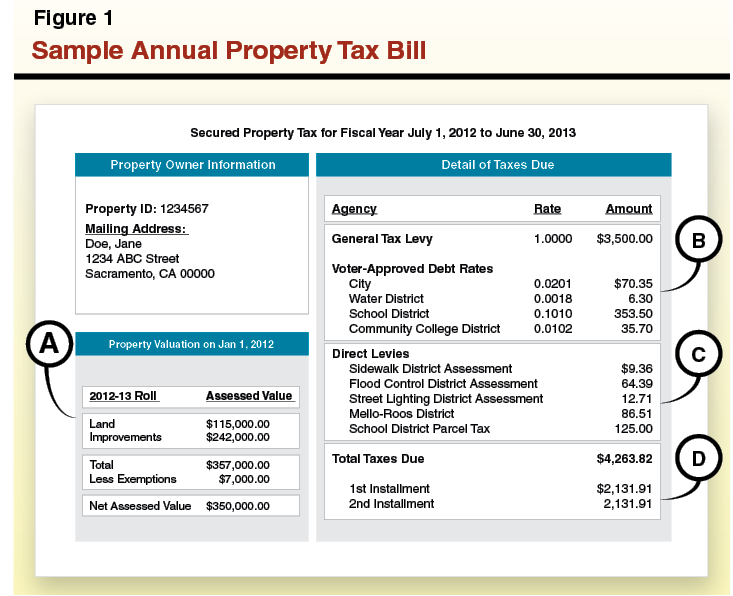
Understanding the components that make up your annual property tax bill is essential for budgeting and financial planning, especially when considering the total cost of long-term accommodation in California. The calculation goes beyond just the 1% general levy.
Base Year Value and Annual Increases
As established by Proposition 13, your property’s base year value is the full cash value (usually purchase price) at the time of acquisition or new construction. Each year, this base year value is adjusted by an inflation factor, capped at 2%, or the actual California Consumer Price Index (CPI) for all items for California, whichever is less. This adjusted value is known as your “taxable value” or “assessed value.” Your general property tax liability is then 1% of this taxable value.
For example, if you purchase a home in Los Angeles for $1,000,000, your initial general property tax would be approximately $10,000 (1% of $1,000,000). In subsequent years, even if market values skyrocket, your assessed value for tax purposes would only increase by a maximum of 2%, meaning your tax bill would rise gradually, offering relative stability for your long-term accommodation expenses.
Special Assessments and Mello-Roos Districts
Beyond the 1% general levy, your property tax bill will likely include various “special assessments.” These are charges for specific local improvements or services that directly benefit your property or community, such as parks, libraries, street lighting, flood control, schools, and police and fire protection. These assessments are not subject to the Proposition 13 cap and are added on top of the 1% general tax.
One common type of special assessment is the Mello-Roos Community Facilities District (CFD) tax. These are typically found in newer master-planned communities across California, such as those in Orange County or the Bay Area. Mello-Roos taxes finance public services and infrastructure (e.g., roads, schools, sewers) that were necessary to develop the community. These taxes can add hundreds or even thousands of dollars to an annual property tax bill and are a critical consideration for anyone looking at long-term accommodation in newly developed areas. They are usually disclosed prominently during the property purchase process, but understanding their long-term impact on your overall cost of living is vital.

Exemptions and Relief Programs
California offers several property tax exemptions and relief programs that can reduce a homeowner’s tax burden, making long-term accommodation more affordable for eligible individuals. The most common is the Homeowners’ Exemption, which provides a reduction of $7,000 from the assessed value of a homeowner’s principal residence. While this may seem modest, it translates to a tax savings of approximately $70 per year (1% of $7,000).
Other significant exemptions include those for disabled veterans, properties used for religious, hospital, charitable, or educational purposes, and certain disaster relief programs. Furthermore, under Proposition 19, homeowners who are over 55, severely disabled, or victims of natural disasters may transfer their Proposition 13 base year value from an existing primary residence to a replacement primary residence anywhere in California. This allows seniors and others to move without incurring a massive property tax increase, significantly impacting their ability to find suitable long-term accommodation as their needs change. Understanding these programs can lead to substantial savings over time.
Impact on Long-Term Accommodation and Property Ownership
The unique aspects of California’s property tax system directly influence decisions regarding long-term accommodation, from initial purchase considerations to ongoing financial management. Its structure creates both opportunities and challenges for residents.
Financial Planning for Homeownership in California
For those planning to purchase property for long-term accommodation in California, property taxes represent a significant ongoing expense. While the 1% general levy capped by Proposition 13 offers stability, the total tax rate, including special assessments and Mello-Roos taxes, can range from 1.2% to over 2% of the purchase price, particularly in newer developments. Prospective buyers must factor this full amount into their monthly housing budget, alongside mortgage payments, insurance, and maintenance costs.
The stability provided by Proposition 13’s 2% annual cap means that while your property’s market value might soar in a desirable location like San Francisco or San Diego, your property tax bill will increase at a much slower, predictable rate. This makes long-term ownership more financially manageable than in states where property taxes are reassessed closer to market value annually. However, the initial purchase price establishes a high base, meaning even 1.2-2% of a multi-million-dollar property in Silicon Valley is a substantial annual sum.
Comparing Costs Across Different California Regions
Property tax rates can vary considerably across California’s diverse regions, primarily due to the presence and number of special assessments and Mello-Roos districts. While the 1% base rate is uniform, a home in an older, established neighborhood in Oakland might have fewer additional assessments than a newly built home in a sprawling master-planned community outside Riverside or Fresno.
When evaluating locations for long-term accommodation, it’s prudent to research the specific property tax rates for areas of interest. Websites of county assessor-recorder offices often provide tools to estimate property tax bills. Coastal cities, while having higher property values, may have older infrastructure and fewer new community assessments compared to inland suburban developments that often rely on Mello-Roos to fund schools and public services. This regional variation means that two properties of the same market value could have significantly different annual property tax bills depending on their location, a crucial detail for comprehensive financial planning.
Navigating Property Tax Changes and Future Considerations
The dynamic nature of real estate and legislation means that property tax considerations for long-term accommodation are not static. Understanding how property transfers and potential reforms can impact your tax liability is vital.
Supplemental Assessments and Property Transfers
When a property undergoes a “change in ownership” – typically a sale or transfer – it triggers a reassessment of its value to the current market price. This new value becomes the new base year value for Proposition 13 purposes. If this change occurs mid-year, the buyer will likely receive a “supplemental assessment” bill. This bill covers the difference between the old assessed value and the new assessed value for the remainder of the fiscal year. It’s a one-time bill, in addition to the regular annual property tax payments, and can often be a surprise to new homeowners if not anticipated.
Furthermore, new construction or major additions can also trigger a supplemental assessment for the value added by the improvement. Understanding these supplemental assessments is crucial for budgeting, as they represent an additional cost immediately following a property acquisition or major renovation.
Potential Reforms and Their Implications
While Proposition 13 has largely remained intact for decades, there are periodic discussions and attempts at reform. These proposals often target commercial properties or seek to modify the rules around reassessment upon transfer of ownership. For example, Proposition 19, passed in 2020, significantly altered the rules for intergenerational property transfers, limiting the ability to transfer a low Proposition 13 base year value to children or grandchildren unless the property is also used as their primary residence.
Any future reforms could potentially alter the tax burden for property owners, impacting the long-term cost of accommodation. Staying informed about proposed changes and understanding their potential impact is essential for anyone with a vested interest in California real estate. The stability provided by the current system is a significant factor in California’s property market, and any major alterations would undoubtedly shift the financial landscape for long-term residents and investors alike.
LifeOutOfTheBox is a participant in the Amazon Services LLC Associates Program, an affiliate advertising program designed to provide a means for sites to earn advertising fees by advertising and linking to Amazon.com. Amazon, the Amazon logo, AmazonSupply, and the AmazonSupply logo are trademarks of Amazon.com, Inc. or its affiliates. As an Amazon Associate we earn affiliate commissions from qualifying purchases.