
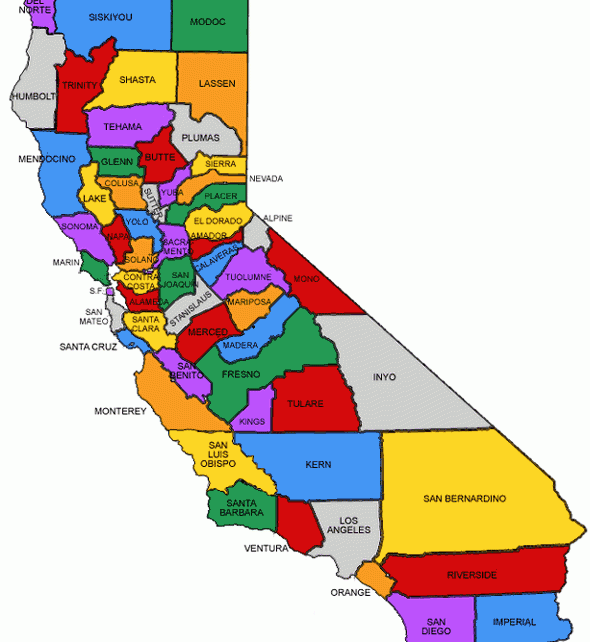
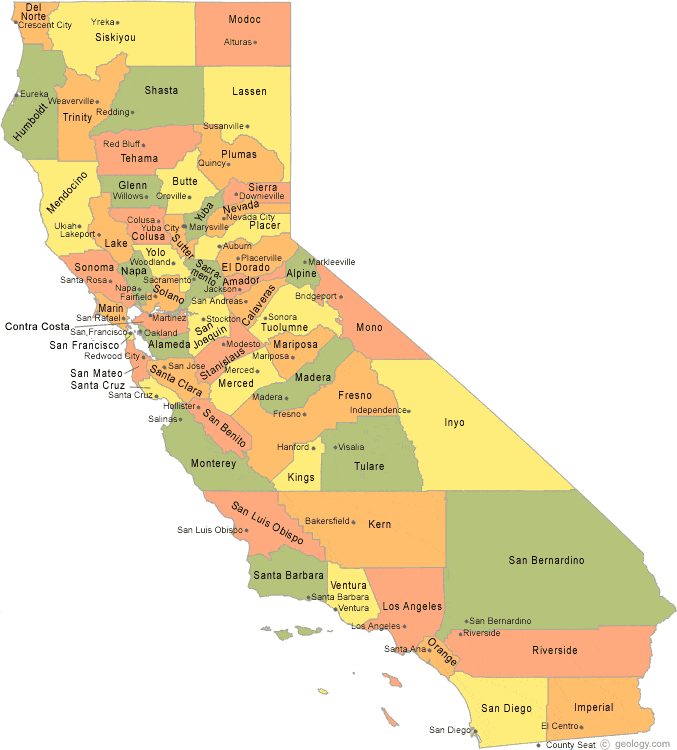
The question “What is the county of California?” frequently arises from those new to the state’s geography or the American administrative system. It’s a fundamental query that highlights a common misconception: California is not a single county, but rather a vast, diverse state comprising 58 distinct counties, each with its own unique character, landscapes, and travel experiences. Understanding this intricate county structure is key to unlocking the full potential of a journey through the Golden State, from its bustling metropolises to its serene wildernesses. For any traveler seeking to truly immerse themselves in the state’s offerings, recognizing these administrative divisions transforms a mere road trip into a curated exploration of varied destinations.

California’s Diverse County Landscape
At its heart, California is a mosaic of regions, each governed and characterized by its specific county. These divisions are not arbitrary lines on a map but deeply influence everything from local culture and economic drivers to natural attractions and infrastructure, making them invaluable reference points for travelers.
The Administrative Backbone of Travel
In the United States, a county serves as a major administrative and political subdivision of a state, akin to a province or region in other countries. Each of California’s 58 counties boasts its own government, responsible for local services ranging from public safety and road maintenance to parks and libraries. For travelers, this means that moving from one county to another can often involve subtle (or sometimes stark) shifts in local regulations, tax rates, cultural norms, and even the types of attractions available. For instance, an environmental regulation or a historical preservation district might be unique to one county, shaping its specific appeal and drawing distinct types of visitors. This administrative framework creates distinct regional identities, making each county a potential destination in its own right, offering a unique facet of the broader California experience.
Size, Population, and Geographic Variety
The counties of California present an astonishing range in terms of both physical size and population density. Travelers might find themselves exploring San Bernardino County, the largest county by area in the contiguous United States, encompassing vast stretches of desert, mountains, and high desert communities. Its sheer scale means a journey through it can involve wildly different terrains and experiences, from off-roading adventures to historic Route 66 stops.
In stark contrast, San Francisco County is one of the smallest and most densely populated counties, essentially co-extensive with the city of San Francisco. Here, the travel experience is intensely urban, focused on iconic landmarks, diverse neighborhoods, and a vibrant cultural scene packed into a compact area.
This diversity extends beyond size and population. Geographically, California’s counties span every imaginable landscape: rugged coastlines, towering mountain ranges like the Sierra Nevada, fertile agricultural valleys, arid deserts, and ancient redwood forests. This means that a trip planned with county lines in mind can easily transition from surfing lessons in a coastal county to skiing in a mountain county, all within a few hours’ drive, offering an unparalleled range of experiences for every type of traveler.
Exploring California Through Its Counties: A Traveler’s Perspective
Thinking of California in terms of its counties allows for a more granular and enriched travel planning process, encouraging visitors to delve deeper into specific regional identities.
Coastal Gems and Urban Hubs
The counties lining California’s expansive coastline are often the state’s most famous and visited. Los Angeles County exemplifies this, home to the sprawling metropolis of Los Angeles, world-famous beaches like Malibu and Santa Monica, and cultural powerhouses like Hollywood and numerous museums. Its vastness means travelers can spend weeks exploring its diverse neighborhoods, from upscale Beverly Hills to the artistic enclaves of Venice Beach.
Further south, San Diego County offers a more relaxed, Southern California vibe with pristine beaches, the historic Gaslamp Quarter, and family-friendly attractions like the San Diego Zoo and Balboa Park. Nestled between Los Angeles and San Diego is Orange County, renowned for its idyllic beaches, high-end shopping districts like Fashion Island, and, famously, Disneyland Resort in Anaheim. Each of these coastal counties provides a distinct flavor of the California dream, catering to different interests, from urban exploration to beach relaxation and theme park thrills.
Mountain Adventures and Natural Wonders
Venturing inland and eastward reveals counties defined by their majestic mountain ranges and natural splendor. Mariposa County is synonymous with Yosemite National Park, one of the world’s most iconic natural landmarks, drawing millions to its granite cliffs, giant sequoia groves, and cascading waterfalls. Travelers here are immersed in grand natural beauty, with opportunities for hiking, climbing, and photography.
Neighboring Mono County offers a high-elevation playground, particularly famous for its stunning alpine lakes, hot springs, and excellent skiing at Mammoth Mountain. Further south, Inyo County boasts stark contrasts, from the lowest point in North America at Death Valley National Park to the highest peak in the contiguous United States, Mount Whitney. These counties are ideal for adventurers, nature photographers, and those seeking solitude amidst dramatic landscapes, offering a stark contrast to the bustling coastal areas.
Wine Country and Agricultural Riches
California’s reputation as a premier wine region is built upon the distinct microclimates and fertile soils found across several key counties. Napa County and Sonoma County, often grouped together as “Wine Country,” are globally celebrated for their world-class vineyards, gourmet dining, and luxurious resorts. A visit to these counties is an indulgent experience, blending wine tasting tours with culinary adventures and picturesque scenery.
Beyond the famous wine regions, other counties offer rich agricultural experiences. Monterey County combines its stunning coastal beauty—home to Big Sur and Carmel-by-the-Sea—with a significant agricultural industry, often referred to as the “Salad Bowl of the World.” It also offers historic sites like Cannery Row and the acclaimed Monterey Bay Aquarium. San Luis Obispo County, situated on the Central Coast, offers a blend of wine tasting, laid-back beach towns like Pismo Beach, and historical marvels such as Hearst Castle. These regions highlight California’s bounty, from grapes to fresh produce, providing travelers with tastes of the state’s agricultural heartland.
Planning Your California Itinerary by County
Understanding California’s county map empowers travelers to design highly specific and fulfilling itineraries, moving beyond generic tourist paths to discover niche interests.
Beyond the Major Metropolises
While Los Angeles, San Francisco, and San Diego draw the largest crowds, many of California’s most authentic and breathtaking experiences lie in its less-traveled counties. Humboldt County, in the far north, is home to the majestic Redwood National and State Parks, where visitors can wander among the tallest trees on Earth. Its rugged coastline and quirky towns like Ferndale offer a distinct, off-the-beaten-path adventure.
Similarly, Mendocino County enchants with its dramatic cliffs, charming Victorian villages like Mendocino and Fort Bragg, and a burgeoning wine scene that rivals its southern counterparts in charm if not scale. For those seeking alpine beauty without the crowds of Yosemite, Shasta County in the northern reaches of the state offers Mount Shasta, numerous lakes, and vast national forests ideal for fishing, boating, and hiking. Exploring these counties allows for a deeper appreciation of California’s diverse natural heritage and local communities.
Thematic Travel by County
County boundaries naturally lend themselves to thematic travel planning. A “Wine Trail” could span Napa, Sonoma, and even extend to Mendocino and San Luis Obispo for a comprehensive journey through California’s viticultural excellence. A “Coastal Road Trip” could meticulously follow Highway 1 through counties like Marin, San Mateo, Santa Cruz, and Monterey, each offering distinct beach towns, surf breaks, and ocean vistas.
Adventure seekers might plan a “Mountain & Desert Loop” connecting Inyo and Mono counties with parts of San Bernardino to experience everything from the peaks of the Eastern Sierra to the extreme landscapes of the Mojave. This approach allows travelers to curate experiences based on specific interests, seamlessly transitioning between complementary attractions and activities defined by these geographic and administrative divisions.
Practical Considerations for Travelers
Beyond the experiential benefits, understanding county lines has practical implications for travelers. Local laws, particularly concerning alcohol sales, public land use (e.g., camping regulations), and even specific tourist taxes, can vary significantly from one county to the next. Park regulations, whether for state parks or county-managed recreational areas, are often specific to the governing body. Being aware of which county you are in helps in navigating these differences and finding appropriate local resources, from visitor centers to emergency services. Moreover, knowledge of county boundaries aids in accurately using navigation apps and understanding geographical references in local guides or brochures, ensuring a smoother and more informed travel experience.
In conclusion, the question “What is the county of California?” is best answered by appreciating that it is not one, but a multitude of distinct counties, each a microcosm of the state’s incredible diversity. For the savvy traveler, these 58 counties represent 58 unique gateways to adventure, culture, and natural beauty, inviting deeper exploration beyond the well-trodden paths and into the heart of what makes California truly golden.
LifeOutOfTheBox is a participant in the Amazon Services LLC Associates Program, an affiliate advertising program designed to provide a means for sites to earn advertising fees by advertising and linking to Amazon.com. Amazon, the Amazon logo, AmazonSupply, and the AmazonSupply logo are trademarks of Amazon.com, Inc. or its affiliates. As an Amazon Associate we earn affiliate commissions from qualifying purchases.