
In the vast and varied landscape of accommodation options available to travelers today, the terms “hotel” and “motel” are frequently used, sometimes interchangeably, yet they represent distinct categories with unique characteristics. While both aim to provide a temporary place to stay, their origins, architectural designs, services, amenities, and target audiences have historically carved out clear differences. Understanding these distinctions is crucial for anyone planning a trip, whether it’s a spontaneous road trip across the United States or a meticulously planned luxury travel experience in a bustling metropolis like Paris. This comprehensive guide will delve deep into what sets a hotel apart from a motel, helping you make an informed decision for your next journey, aligning your choice with your travel style, budget, and specific needs.

Tracing Their Origins: A Historical Perspective
The evolution of both hotels and motels is closely intertwined with the history of tourism and transportation. Each emerged to serve a particular need in a specific era, shaping their fundamental characteristics that persist to this day.
The Genesis of the Hotel
The concept of the “hotel” is ancient, tracing its roots back to inns and lodging houses that catered to travelers, pilgrims, and merchants in cities and towns across the globe for centuries. These establishments offered shelter, food, and often stables for horses, serving as vital hubs for social interaction and commerce. As societies progressed and travel became more formalized, particularly with the advent of railways in the 19th century, these inns evolved into more sophisticated “hotels.”
Early hotels were typically multi-story buildings located in urban centers, designed to provide a comprehensive range of services. They featured grand lobbies, dining rooms, and internal corridors leading to guest rooms. The focus was on providing a full-service experience, often including amenities like porters, concierges, and room service. They were destinations in themselves, symbols of opulence and comfort for those who could afford them. Cities like London, New York, and Rome became home to iconic hotels that stood as landmarks of hospitality, catering to a clientele that arrived by train, carriage, or, later, early automobiles, but always valuing the central location and extensive services.
The Rise of the Motel
The “motel,” a portmanteau of “motor hotel,” is a distinctly 20th-century American invention, born out of the booming popularity of the automobile and the construction of vast highway networks in the United States starting in the 1920s and accelerating after World War II. As more families acquired cars and took to the open road for leisure and business, there arose a demand for convenient, affordable lodging specifically designed for motorists.
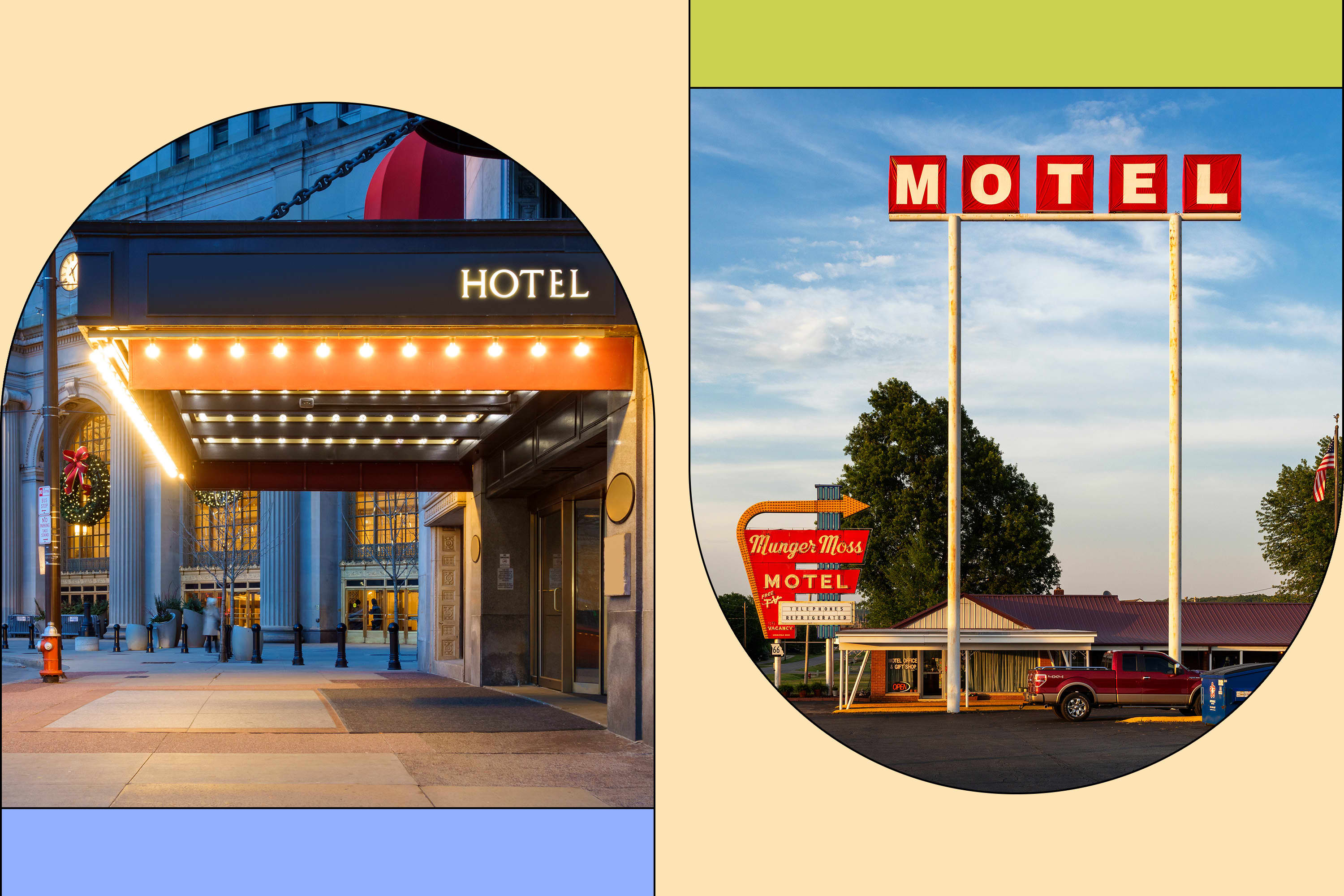
Traditional hotels, often located in city centers, were not ideal for these new travelers who needed easy access from the highway, parking directly adjacent to their rooms, and a quick, no-frills overnight stay before continuing their journey. The first motel, the Motel Inn (originally the Milestone Mo-Tel), opened in San Luis Obispo, California, in 1925, embodying this new concept. Motels were characterized by their single or two-story structures, exterior room entrances, and ample parking spaces right outside the room door, making check-in and luggage handling incredibly convenient for drivers. They proliferated along famous routes like Route 66, becoming synonymous with classic Americana and the freedom of the open road.
Defining Characteristics: Architecture, Amenities, and Services
The historical divergence between hotels and motels has led to distinct architectural designs, service models, and the types of amenities they typically offer. These are often the most immediately apparent differences to a traveler.
Hotel Features and Offerings
Hotels, particularly those in the mid-range to luxury segments, are generally multi-story buildings, often with numerous rooms and complex layouts. Their design emphasizes security and a full-service experience, with guest rooms typically accessed via interior corridors, elevators, and a central lobby where guests check in. This design provides a sense of enclosure and privacy from the outside world.
The range of amenities and services in hotels is extensive and varied, often dictated by their star rating and target market. Common hotel amenities include:
- A Grand Lobby: Serving as a central hub for check-in, guest services, and often featuring seating areas, bars, or cafes.
- Restaurants and Bars: Many hotels offer multiple dining options, from casual cafes to fine-dining establishments, and sometimes 24-hour room service.
- Fitness Centers and Pools: Well-equipped gyms, indoor or outdoor swimming pools, and sometimes spas are common, especially in resorts and higher-end properties.
- Conference and Event Facilities: Business hotels and larger properties frequently feature ballrooms, meeting rooms, and business centers catering to corporate clients and events.
- Concierge Services: Staff dedicated to assisting guests with bookings, recommendations, transportation, and other needs.
- Bellhop/Porter Services: Assistance with luggage, a classic hotel amenity.
- Enhanced Security: Controlled access to guest floors, security personnel, and often underground or secure parking.
- Varied Room Types: Beyond standard rooms, hotels offer suites, executive rooms, and sometimes even apartments for longer stays.
- Accessibility: Hotels are typically equipped with elevators and accessible rooms designed to cater to guests with mobility challenges, ensuring a comfortable experience for everyone.
Popular hotel brands like Marriott, Hilton, and Hyatt exemplify this full-service approach, often competing on the breadth and quality of their offerings.
Motel Features and Focus
Motels are primarily designed for efficiency and convenience for car travelers. Architecturally, they are typically low-rise structures, often just one or two stories, with guest rooms that have direct, outdoor access from a parking lot. This “door-to-car” convenience is their defining structural characteristic. There might be a small central office for check-in, but a grand lobby is rarely present.
The amenities in motels are generally more basic and focused on providing essential comforts rather than extensive luxury or services. Typical motel features include:
- Direct Room Access: The most defining feature, allowing guests to park directly outside their room door.
- Basic Furnishings: Rooms usually contain a bed, a small desk or table, a television, and an en-suite bathroom.
- Limited Food Options: While some may have a small breakfast area or vending machines, full-service restaurants are rare. They are often located near fast-food establishments or diners.
- Outdoor Pool (seasonal): A common amenity, particularly in warmer climates, often visible from the rooms.
- Ice Machines: A staple for road trippers.
- Free Parking: Almost always included and easily accessible.
- Simpler Booking and Check-in: Designed for quick and easy processing, often without the need for bellhops or extensive concierge services.
Brands like Motel 6, Super 8, and Travelodge epitomize the motel experience, focusing on affordability and practicality for overnight stays.
The Guest Experience: Target Audience and Travel Styles
The differences in architecture and amenities naturally lead to different guest experiences, catering to distinct segments of the traveling public and various lifestyle preferences.
Who Stays in Hotels?
Hotels attract a wide array of travelers whose needs align with a full-service environment, convenience in urban settings, or a more immersive stay.
- Business Travelers: Often prioritize amenities like meeting rooms, business centers, high-speed internet, and convenient locations near corporate offices or convention centers. Brands like Holiday Inn and Courtyard by Marriott cater strongly to this segment.
- Leisure Tourists: Especially those exploring cities, visiting attractions like the Eiffel Tower in Paris or the Colosseum in Rome, appreciate central locations, easy access to public transportation, and services like concierges who can help with tour bookings and local guides.
- Families: Hotels with pools, kid-friendly dining, and connecting rooms offer a more comfortable experience for families. Resorts, in particular, with their extensive recreational facilities, are popular family destinations.
- Luxury Seekers: Guests looking for premium services, opulent surroundings, gourmet dining, and personalized attention will gravitate towards five-star hotels and boutique properties.
- Long-term Stays: Extended-stay hotels, often offering kitchens and living areas, cater to individuals relocating or on longer assignments.
The hotel experience is often about more than just a bed; it’s about the ambiance, the services, and the convenience of having everything you need under one roof. It’s an integral part of the overall travel experience.
Who Stays in Motels?
Motels, on the other hand, cater to a more specific type of traveler, valuing practicality, accessibility, and budget-friendliness.
- Road Trippers: The quintessential motel guest. People driving long distances across the country, perhaps on Interstate 40 or through scenic routes in Colorado, need a convenient place to pull over for the night without venturing far from their route.
- Budget Travelers: Those seeking the most economical lodging option for a quick overnight stay, where the primary need is a clean bed and a shower.
- Truck Drivers and Salespeople: Professionals who spend significant time on the road often opt for motels due to their ease of access, ample parking for larger vehicles, and cost-effectiveness.
- Short-term Stays: Ideal for single-night stops or very brief trips where extensive amenities are unnecessary.
- Event Attendees: Sometimes located near specific venues or fairgrounds, motels offer a practical option for attendees who don’t need a full urban hotel experience.
The motel experience is primarily functional: a place to rest and refuel before continuing one’s journey. It prioritizes ease of access and minimal fuss, making it perfect for transient stays.
Practical Considerations: Location, Pricing, and Booking
Beyond the experiential differences, practical aspects such as where they are located, their typical price points, and how one might go about booking them also play a significant role in differentiating hotels and motels.
Strategic Locations and Their Impact
- Hotels: Primarily found in urban areas, downtown districts, business parks, near major airports (airport hotels), or close to popular tourist attractions and landmarks. Their strategic placement allows guests easy access to public transport, cultural sites, shopping, and entertainment. For instance, a hotel in Times Square in New York City or near the Arc de Triomphe in Paris offers unparalleled access to the city’s heartbeat. This prime real estate often contributes to their higher pricing.
- Motels: Predominantly situated along major highways, interstates, arterial roads, or on the outskirts of towns and cities. Their location is chosen for visibility and accessibility to passing motorists, rather than proximity to central city amenities. They are typically found in more suburban or rural settings, where land is cheaper and direct road access is paramount. This roadside positioning is a key factor in their affordability.
Cost-Effectiveness and Value
- Hotels: Generally command higher prices than motels. This is due to a combination of factors: their prime locations, the extensive range of services and amenities offered, the higher staffing levels required, and the often more luxurious or expansive facilities. Prices can vary significantly based on brand, star rating, city, season, and specific amenities (e.g., a room with a view of the Golden Gate Bridge in San Francisco will be pricier). Travelers might choose a hotel for the overall value proposition, including the experience, convenience, and perceived security, even if the nightly rate is higher.
- Motels: Are almost universally more budget-friendly. Their focus on essential services, simpler construction, and roadside locations with lower property costs allow them to offer significantly more competitive rates. For travelers on a tight budget travel plan, or those simply needing a place to sleep before resuming their journey, motels offer excellent value for money. The value here lies in the practicality and affordability, sacrificing extensive services for a lower price point.
When it comes to booking, both hotels and motels are readily available through online travel agencies, direct website bookings, or walk-ins. However, for hotels, particularly high-demand properties or specific resorts during peak season (e.g., Cancun or the Maldives), advance booking is often essential. Motels, given their frequent availability and focus on transient guests, are often more amenable to last-minute walk-ins, though booking ahead can still secure better rates. Reading reviews and doing a careful comparison are always recommended regardless of the choice.

Evolving Landscape: Blurring Lines and Modern Trends
While the traditional definitions of hotels and motels remain largely distinct, the modern hospitality industry is dynamic, and the lines between these two types of accommodation have begun to blur. Many hotel chains have introduced budget-friendly brands that mimic some motel characteristics, such as simpler services and exterior room access, while some upscale motels have added amenities like small fitness centers or upgraded dining options.
The rise of boutique hotels, extended-stay properties, and hybrid models like “aparthotels” (offering apartment-style living with hotel services) further complicates the traditional dichotomy. Travelers today have an unprecedented array of choices, allowing for highly personalized trips, whether it’s a business stay or a family trip. Location still plays a critical role, but features and price points are increasingly diversified across the spectrum. For example, a modern budget hotel near an airport might feel very much like an upscale motel, while some roadside establishments now offer amenities that rival mid-range city hotels.
In conclusion, the fundamental differences between hotels and motels stem from their historical origins and their intended purpose: hotels as full-service urban establishments, and motels as convenient roadside lodging for motorists. These core distinctions manifest in their architectural design, the range of amenities and services offered, their typical locations, pricing structures, and the type of traveler they primarily serve. While the industry is constantly innovating, understanding these foundational differences remains key to selecting the perfect temporary home away from home for your next adventure.
LifeOutOfTheBox is a participant in the Amazon Services LLC Associates Program, an affiliate advertising program designed to provide a means for sites to earn advertising fees by advertising and linking to Amazon.com. Amazon, the Amazon logo, AmazonSupply, and the AmazonSupply logo are trademarks of Amazon.com, Inc. or its affiliates. As an Amazon Associate we earn affiliate commissions from qualifying purchases.