
Embarking on a journey through the vast and diverse landscapes of Texas, whether you’re cruising through the vibrant cityscapes of Austin and Houston, exploring the historic charm of San Antonio, or venturing into the rugged beauty of Big Bend National Park, one constant companion is the radiant Texas sun. For many drivers, both residents and visitors alike, the allure of window tinting is undeniable. It promises a cooler interior, enhanced privacy, and a sleek aesthetic that complements any vehicle. However, before you commit to transforming your ride, understanding “What Is The Legal Tint In Texas?” is not just a matter of compliance but a crucial aspect of ensuring a comfortable, safe, and stress-free travel experience across the Lone Star State.
In a state renowned for its expansive highways and year-round sunshine, window tint plays a significant role in the daily lifestyle and travel habits of millions. From mitigating the intense glare that can fatigue drivers on long road trips to protecting vehicle interiors from the relentless UV rays, the benefits are clear. Yet, these advantages must be balanced with the state’s meticulously crafted regulations designed to ensure road safety for everyone. This guide delves deep into the specifics of Texas window tint laws, offering an indispensable resource for anyone looking to navigate these regulations while maximizing their enjoyment of all that Texas has to offer. We’ll explore the Visible Light Transmission (VLT) percentages, material restrictions, exemptions, and the practical implications for those planning their next Texas adventure, whether it’s a cross-state relocation or a scenic drive through the Hill Country.
Navigating the Lone Star State: Understanding Texas Window Tint Laws
The appeal of tinted windows in Texas extends far beyond mere aesthetics; it’s deeply intertwined with the practicalities of travel, personal comfort, and vehicle longevity in a region known for its intense sun. For the discerning traveler or the resident embracing the Texas lifestyle, understanding the nuances of window tinting legislation is paramount.
Why Tint Matters for the Texas Traveler and Lifestyle
The radiant Texas sun, while perfect for outdoor adventures and basking on the Gulf Coast beaches, can turn a long drive into an uncomfortable ordeal without adequate protection. Window tint acts as a crucial barrier, offering a multitude of benefits that enhance both the journey and the overall vehicle ownership experience.
- Sun Protection and Comfort: One of the primary drivers for tinting windows in Texas is the sheer intensity of the sun. Quality window tint can block a significant percentage of harmful ultraviolet (UV) rays, which not only protects your skin from sun damage but also vastly reduces the heat inside your vehicle. Imagine cruising through the desert landscapes near El Paso or navigating the sprawling highways of Dallas in the peak of summer; a cooler cabin means less reliance on air conditioning, potentially improving fuel efficiency and certainly making for a more pleasant ride. Reduced glare also significantly lessens eye strain and fatigue, a critical safety factor during those long drives across the vast Texas expanse, whether heading to Guadalupe Mountains National Park or visiting family in Fort Worth. For families with young children or pets, this enhanced comfort transforms a potentially trying trip into a more enjoyable journey.
- Privacy and Security: For those who frequently travel with luggage, valuables, or simply appreciate a heightened sense of personal space, tinted windows offer an invaluable layer of privacy. Whether you’re parking to explore historic sites in San Antonio, enjoying the vibrant music scene in Austin, or stopping for a hike in the Davis Mountains, the reduced visibility into your vehicle deters opportunistic thieves. This subtle security feature provides peace of mind, allowing you to immerse yourself fully in your travel experiences without constant worry about your belongings.
- Aesthetics and Lifestyle: Beyond the practical benefits, window tint undeniably adds a sophisticated and polished look to any vehicle. For many, their car is an extension of their personal style and lifestyle. A legally tinted vehicle in Texas can project an image of elegance and deliberate design, complementing everything from a luxury sedan navigating Houston’s business districts to a rugged SUV ready for an adventure in Palo Duro Canyon. It’s a choice that reflects a desire for both functionality and flair, aligning with a discerning approach to travel and daily living.
Key Regulations: The Visible Light Transmission (VLT) Breakdown
Understanding the core of Texas tint law revolves around Visible Light Transmission (VLT), which is the percentage of visible light that passes through your car windows. The lower the VLT percentage, the darker the tint.
Front Side Windows: The 25% Rule
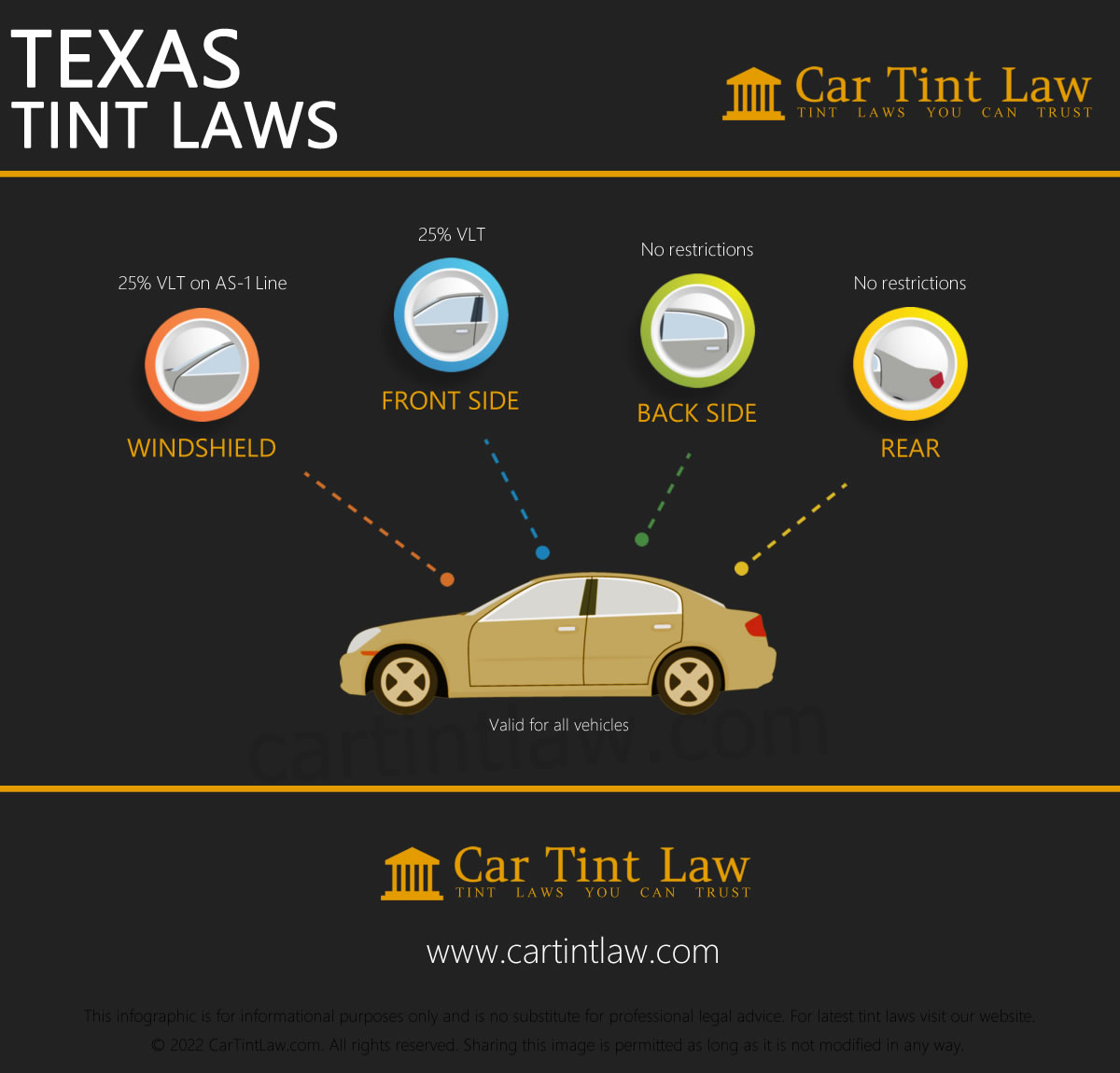
This is arguably the most critical and often misunderstood aspect of Texas tint law. For the front side windows – those adjacent to the driver and front passenger – the tint film applied must allow more than 25% of visible light to pass through. This means a 25% VLT is the darkest legal tint for these windows. The rationale behind this specific limit is rooted in safety; it ensures that law enforcement officers can clearly see the occupants of the vehicle during a traffic stop and that drivers maintain adequate visibility, especially at night or in adverse weather conditions. For travelers, this regulation is a gentle reminder that while comfort is important, uncompromised visibility is paramount for navigating unfamiliar roads safely.
Rear Side and Rear Windows: Freedom of Choice
In contrast to the front windows, Texas law is significantly more lenient regarding the rear side windows (those behind the driver and front passenger) and the rear window itself. For these windows, there is no specific VLT limit, meaning you can legally apply tint of any darkness. This flexibility allows drivers to opt for much darker tints on the back of their vehicles, providing maximum privacy and sun protection for rear passengers or cargo. This is particularly appealing for families on vacation or individuals who frequently carry valuable items, as it helps obscure the interior from prying eyes. However, even with dark rear tint, it’s crucial to ensure your vehicle has functional side mirrors to compensate for any reduced visibility when backing up, particularly in dimly lit parking areas or during night-time travel.
Beyond Darkness: Specific Tint Restrictions and Exemptions
While VLT percentages form the backbone of Texas tint laws, several other regulations govern the type, placement, and characteristics of window film allowed on vehicles. These details are vital for complete compliance and to avoid potential issues during your travels across the Lone Star State.
Windshield Tinting: A Limited Exception
The windshield, being the primary visual conduit for the driver, has the most stringent tinting rules. In Texas, only non-reflective tint is permitted on the windshield, and it can only be applied above the manufacturer’s AS-1 line. This line is typically located approximately five inches from the top of the windshield and is marked on most vehicles. The purpose of this limited allowance is primarily to reduce glare from the sun, particularly when it’s low on the horizon, without obstructing the driver’s critical field of vision. Any tint applied below this line is illegal and can result in fines and a requirement to remove the tint, significantly disrupting your travel plans. Ensuring your forward visibility is always clear is non-negotiable for safe driving, especially when exploring new destinations.
Reflectivity and Color Limitations
Beyond the level of darkness, Texas law also imposes restrictions on the properties and colors of the window film itself.
Reflectivity Cap: No Mirror Effect
To prevent hazardous glare for other drivers, Texas law stipulates that window tint must not be more than 25% reflective. Highly reflective or “mirror-like” tints, while perhaps stylish to some, can bounce sunlight directly into the eyes of oncoming traffic or drivers behind you, creating dangerous driving conditions. This regulation underscores the state’s commitment to road safety for all motorists, emphasizing that personal preferences must align with community well-being on the roads. For travelers navigating bustling city traffic in Houston or sharing open highways, this rule contributes to a safer and more harmonious driving environment.
Banned Tint Colors: Avoiding Distraction and Misinterpretation
Texas law also explicitly prohibits certain tint colors, specifically red, blue, or amber. The reasoning behind this is practical and crucial for public safety. These colors are typically associated with emergency vehicles (red and blue flashing lights) or traffic signals (amber). Allowing civilian vehicles to have windows tinted in these colors could create confusion for other drivers or pedestrians, potentially leading to accidents or misinterpretations of road signals. While rare, a uniquely colored tint might seem like an expressive choice, but adherence to these color restrictions is vital for avoiding legal trouble and ensuring clarity on the road.
The All-Important Tint Sticker
For any vehicle with window tint applied in Texas, a certification sticker is required. This sticker, provided by the tint installer, must be placed between the film and the glass on the driver’s side front window. This sticker serves as official proof that the tint meets Texas legal standards, making it easier for law enforcement to verify compliance without needing to use a VLT meter. If you’re purchasing a used car in Texas or renting a vehicle with aftermarket tint, always look for this sticker. Its absence could indicate non-compliance and lead to unwanted legal complications, highlighting the importance of choosing a reputable and certified installer.
Medical Exemptions: A Special Consideration
Texas law recognizes that certain medical conditions necessitate darker window tint for health reasons. Individuals suffering from severe photosensitivity, lupus, or other conditions exacerbated by sun exposure may be eligible for a medical exemption. This typically involves obtaining a doctor’s note and applying to the Texas Department of Public Safety for special permission to have darker tint on the front side windows than typically allowed. If approved, the individual receives a special medical exemption sticker that must be displayed. This crucial provision ensures that those with legitimate health needs can travel comfortably and safely throughout Texas without risking their well-being, reflecting a compassionate approach within the legal framework.
Practical Implications for Travelers and Residents in Texas
Understanding the letter of the law is one thing; navigating its practical implications is another. For anyone driving in Texas, whether a long-time resident or a transient traveler, these rules have tangible effects on vehicle choices, road trip planning, and interaction with local authorities.
For the Texas Road Tripper
Texas is synonymous with road trips, offering an incredible diversity of landscapes from the piney woods of East Texas Piney Woods to the rugged mountains of West Texas. For those embarking on these epic journeys, ensuring your vehicle’s tint is compliant is a small but significant step in planning. A legally tinted vehicle guarantees not just comfort from the relentless sun but also peace of mind. Imagine a long drive from Dallas to Padre Island National Seashore – hours under the sun. Correct tint reduces the strain, minimizes the use of air conditioning, and protects your belongings. Proactive checks before you set off can save you the hassle of a roadside stop and potential fines, allowing you to fully immerse yourself in the beauty of the Lone Star State.
Navigating Rental Cars and Out-of-State Vehicles
A common concern for tourists and new arrivals is how Texas tint laws apply to vehicles that aren’t registered in the state. If you’re renting a car from an established agency within Texas, you generally won’t need to worry about tint compliance. Rental fleets are typically maintained to meet all state regulations, ensuring a hassle-free experience for visitors.
However, if you’re driving your own vehicle into Texas from another state, it’s crucial to understand that while you are within Texas borders, its laws apply to your vehicle. Tint laws vary significantly from state to state; for example, what might be legal in Oklahoma or Louisiana could be non-compliant in Texas. Out-of-state visitors with excessively dark front window tint risk being stopped and cited. While some states offer a grace period or discretion, it’s always safest to be aware and, if possible, ensure your tint adheres to Texas standards or be prepared for potential enforcement. This foresight can prevent unexpected interruptions to your vacation or business trip.

Choosing a Reputable Tint Installer
For residents or those planning an extended stay in Texas and considering tinting their vehicle, selecting a reputable and certified installer is paramount. A professional installer will not only ensure the quality and longevity of the tint but, most importantly, guarantee that the installation complies with all Texas laws. They should be knowledgeable about VLT percentages, reflective limits, and the requirement for the certification sticker. Asking for proof of their understanding of Texas law and their warranty on both the film and the labor can save you significant headaches down the road. Local businesses in major cities like Dallas, Houston, Austin, or El Paso often have established reputations for quality and compliance.
Consequences of Non-Compliance
Ignoring Texas window tint laws can lead to more than just a minor inconvenience; it can result in legal repercussions. Typically, a violation of tint law is classified as a Class C misdemeanor in Texas, carrying a fine that can range from a few dollars up to $200. While not a severe criminal charge, a fine and a court appearance are unwelcome additions to any travel itinerary or daily routine. Moreover, continued non-compliance might lead to more significant issues, potentially requiring the removal of the illegal tint on the spot or during a vehicle inspection. These interruptions can cause delays, stress, and additional expenses, detracting from what should be an enjoyable experience in Texas. Adhering to the law is not just about avoiding penalties; it’s about contributing to overall road safety and ensuring a smooth journey for yourself and others.
Enhancing Your Texas Experience: The Lifestyle Benefits of Legal Tint
Beyond mere compliance, strategically choosing legal window tint can profoundly elevate your driving experience and overall lifestyle in Texas. It’s an investment that pays dividends in comfort, vehicle preservation, and a touch of personal flair.
Comfort in the Texas Heat
The intense Texas summer can be brutal, with temperatures often soaring into the triple digits. Legal window tint acts as an effective shield, significantly reducing the amount of solar heat entering your vehicle. This means a cooler cabin, which not only makes for a more comfortable ride—especially for children or pets—but also reduces the strain on your car’s air conditioning system. Less reliance on AC translates into better fuel efficiency, an economical benefit for frequent travelers and daily commuters alike. Whether you’re navigating the scorching plains near Midland or making your way through a bustling Houston afternoon, the relief provided by legal tint is a tangible upgrade to your driving comfort. It allows you to enjoy the vast beauty of Texas without constantly battling the heat.
Preserving Your Investment
A vehicle is often one of the most significant investments for many individuals and families. The relentless Texas sun, while picturesque, can be merciless on car interiors. UV rays cause dashboards to crack, upholstery to fade and become brittle, and leather seats to deteriorate over time. High-quality, legally compliant window tint effectively blocks a substantial percentage of these damaging UV rays, acting as an invisible guardian for your car’s interior. This preservation maintains the aesthetic appeal of your vehicle, significantly extends the life of its components, and ultimately helps retain its resale value. For those who view their car not just as transport but as a prized possession or a crucial tool for their travel and lifestyle, legal tint is an intelligent long-term investment.
Privacy for Personal and Business Travel
In an increasingly connected world, privacy in transit is a valued commodity. Legal window tint offers a discreet boundary, creating a more private sanctuary within your vehicle. This is particularly beneficial for business travelers who might need to take calls or review documents on the go, or for families who prefer a more secluded environment during long road trips. Whether you’re pulling into a hotel in Austin after a day of meetings or parking at a bustling attraction, the added privacy means you can leave items in your back seat with less concern, knowing they are less visible to passersby. It contributes to a sense of personal space and security, aligning with a lifestyle that values both convenience and discretion.
A Subtle Style Statement
While functionality is key, the aesthetic contribution of window tint cannot be overlooked. A well-applied, legally compliant tint adds a refined and cohesive look to almost any vehicle, enhancing its lines and giving it a sleek, finished appearance. It’s a subtle yet impactful style statement that reflects attention to detail and a certain discernment. Whether your lifestyle leans towards luxury travel in Dallas, adventurous excursions through Big Bend, or family-focused trips across the state, legal tint can seamlessly integrate into your vehicle’s overall design, making it more appealing and reflecting a sense of pride in your ride. It’s about choosing an enhancement that complements your personal brand and elevates your journey through the diverse tapestry of Texas.
In conclusion, understanding “What Is The Legal Tint In Texas?” is more than just navigating a set of rules; it’s about optimizing your travel and lifestyle experience in this magnificent state. By adhering to the VLT percentages, reflectivity limits, and other specific regulations, you ensure not only compliance but also a safer, more comfortable, and aesthetically pleasing journey. From shielding yourself from the potent Texas sun to safeguarding your vehicle’s interior and enhancing your privacy, legally applied window tint offers a myriad of benefits. So, whether you’re a lifelong resident or a visitor embarking on your next grand Texas adventure, drive smart, stay legal, and soak in all the wonders the Lone Star State has to offer, responsibly and in comfort.
LifeOutOfTheBox is a participant in the Amazon Services LLC Associates Program, an affiliate advertising program designed to provide a means for sites to earn advertising fees by advertising and linking to Amazon.com. Amazon, the Amazon logo, AmazonSupply, and the AmazonSupply logo are trademarks of Amazon.com, Inc. or its affiliates. As an Amazon Associate we earn affiliate commissions from qualifying purchases.