
Understanding the economic landscape of a state is crucial for anyone considering a move, planning a business venture, or simply seeking to grasp the financial pulse of a region. For Florida, a state renowned for its sunshine, vibrant culture, and diverse economy, the median income offers a key insight into the financial well-being of its residents. This figure serves as a benchmark, indicating the midpoint of household incomes across the state, with half earning more and half earning less.
Florida’s Economic Snapshot: A Look at Income Averages
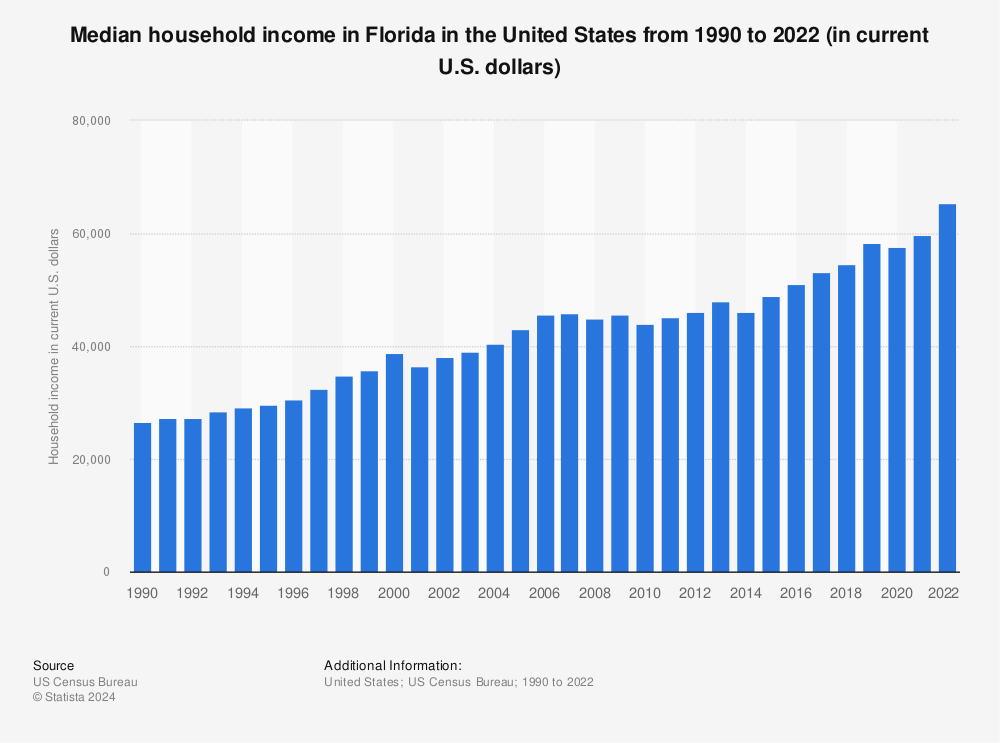
The median household income for Florida is a dynamic figure that fluctuates annually, influenced by a myriad of economic factors including job growth, inflation, industry performance, and the overall state of the national economy. While specific numbers can vary slightly depending on the reporting agency and the year of the data, consistently, Florida has shown a strong and growing economy. This has translated into an upward trend in its median income over recent years, reflecting a state that is attracting new residents and businesses, and fostering economic development.
Key Demographics and Income Distribution
To truly understand the median income, it’s important to consider the broader demographic picture. Florida is a state of significant diversity, both in terms of its population and its geographic regions. Factors such as age, education level, occupation, and geographic location within the state can all play a substantial role in an individual’s or household’s earning potential. For instance, metropolitan areas with strong service, technology, and finance sectors, such as Miami-Dade County or the Tampa Bay Area, often report higher median incomes compared to more rural or tourism-dependent areas.
Furthermore, the composition of households in Florida also impacts the median income. The presence of retirees, who may rely on savings and pensions rather than active employment income, can influence the overall figures. Conversely, areas experiencing rapid population growth due to job creation in burgeoning industries will likely see higher income levels. Analyzing income by different demographic groups—such as by race, ethnicity, or household type—provides a more nuanced understanding of economic equity and opportunity across the state.
Understanding the Data: Sources and Methodologies
The data for Florida‘s median income is primarily collected and reported by government agencies, most notably the U.S. Census Bureau. The American Community Survey (ACS) is a primary source for this information, providing annual estimates of income and other socioeconomic characteristics. Methodologies for data collection involve surveys of a representative sample of households across the state. It’s important to note that median income is calculated by ranking all reported household incomes in ascending order and selecting the middle value. This method is generally preferred over the average (mean) income because it is less susceptible to being skewed by extremely high or low incomes.
Different reports might present figures for “household income,” “family income,” or “personal income.” While related, these terms measure different entities. Household income includes the total income of all individuals living in a housing unit, regardless of their relationship. Family income refers to the income of a group of two or more people related by birth, marriage, or adoption and residing together. Personal income refers to the earnings of an individual. For a broad understanding of the financial health of residents, household income is often the most relevant metric.
Factors Influencing Florida’s Median Income
Florida‘s economic vitality is driven by a combination of powerful sectors, each contributing to the state’s overall income levels. The tourism industry, for example, is a perennial powerhouse, drawing millions of visitors to attractions like Walt Disney World, Universal Orlando Resort, and the iconic beaches of the Florida Keys. This industry supports a vast number of jobs, from hospitality and entertainment to retail and transportation, significantly impacting the earnings of many Floridians.
Beyond tourism, Florida boasts a burgeoning technology sector, particularly in cities like Orlando and Tampa, and a strong presence in the healthcare industry. The retirement and leisure sector also plays a considerable role, with many retirees choosing Florida for its climate and lifestyle, bringing with them accumulated wealth and contributing to local economies through spending and investment. Furthermore, the state’s strategic location and business-friendly environment have attracted numerous corporations, leading to job creation in higher-paying fields such as finance, aerospace, and advanced manufacturing.
The Impact of Tourism and Hospitality
The tourism and hospitality sector is a cornerstone of Florida‘s economy. From the theme parks of Central Florida to the beaches of South Florida, the industry generates billions of dollars annually and employs a significant portion of the state’s workforce. While many of these jobs are in service roles, the sheer volume of employment opportunities means they contribute substantially to the state’s median income. The growth and success of major attractions like SeaWorld Orlando and the numerous resorts along the coast directly correlate with the economic well-being of many communities.
Growth in Technology and Innovation Hubs
In recent years, Florida has been actively cultivating its technology and innovation sectors. Cities like Miami, Orlando, and Jacksonville are emerging as significant hubs for tech startups and established companies, attracting skilled professionals and driving up income levels in these regions. Investment in research and development, coupled with a growing pool of talent, is positioning Florida as a competitive player in the national tech landscape. This diversification away from solely tourism-dependent industries is a key factor in the state’s rising median income.

The Influence of the Real Estate and Construction Sectors
Florida‘s continuous population growth fuels a robust real estate and construction market. The demand for housing, commercial properties, and infrastructure development creates numerous jobs in construction, real estate, and related industries. The appreciation of property values also contributes to the wealth of homeowners. This sector is particularly sensitive to interest rates and economic cycles but has historically been a significant driver of economic activity and income generation in the state.
Retirement and Healthcare Industries
The appeal of Florida as a retirement destination cannot be overstated. A large and growing population of retirees contributes to the economy through their spending power and demands for services, particularly in the healthcare and leisure sectors. The healthcare industry itself is a major employer, providing a wide range of jobs from medical professionals to support staff. These sectors, while often characterized by a mix of income levels, collectively contribute to the state’s economic output and employment figures.
Regional Variations in Florida’s Income Landscape
While Florida as a whole presents a compelling economic picture, it’s essential to recognize that income levels are not uniform across the state. Significant disparities exist between different metropolitan areas and rural communities, reflecting variations in economic opportunities, cost of living, and industry concentration.
South Florida: A Hub of High Earners
South Florida, encompassing vibrant cities like Miami, Fort Lauderdale, and West Palm Beach, often reports some of the highest median incomes in the state. This region benefits from a strong international trade presence, a thriving finance and business services sector, and a robust tourism industry. The concentration of high-net-worth individuals and luxury markets also contributes to elevated income levels. The presence of major international airports and ports in Miami-Dade County further enhances its economic significance.
Central Florida: Balancing Tourism and Growth
Central Florida, particularly the Orlando metropolitan area, presents a dynamic economic landscape. While deeply rooted in the tourism and entertainment sectors with world-renowned attractions, it is also experiencing significant growth in technology, aerospace, and healthcare. This blend creates a diverse job market, supporting a healthy median income that benefits from both high-volume service jobs and specialized professional roles.
The Gulf Coast: Economic Diversification
The Florida Gulf Coast, including cities like Tampa, St. Petersburg, and Sarasota, has seen substantial economic diversification. Beyond its established tourism and retirement appeal, the region is fostering growth in sectors such as healthcare, finance, and technology. The Tampa Bay Area, in particular, is becoming a recognized hub for business and innovation, attracting both established companies and startups.
North Florida and Rural Areas: Unique Economic Drivers
North Florida, including the state capital Tallahassee and the historic city of Jacksonville, has a mix of government, healthcare, and logistics-based economies. Jacksonville‘s large port and military presence contribute significantly to its economic base. In contrast, many of Florida‘s more rural areas, often reliant on agriculture or smaller-scale tourism, may exhibit lower median incomes. Addressing economic disparities and fostering growth in these regions remains a key focus for state economic development initiatives.

The Significance of Median Income for Residents and Visitors
The median income for Florida holds significant implications for a variety of stakeholders. For residents, it provides a benchmark for financial well-being, helps in budgeting, and informs decisions about housing, education, and retirement planning. It also offers insights into the general economic health of the communities they live in.
For potential residents considering a move to the Sunshine State, understanding the median income is crucial for assessing affordability and career opportunities. It can help in evaluating the cost of living versus earning potential in different regions.
For visitors and tourists, while not directly impacted by state median income figures, the economic health of Florida underpins the quality and range of experiences available. A strong economy supports vibrant attractions, well-maintained infrastructure, and a diverse array of businesses catering to travelers. The prosperity reflected in the median income helps ensure that destinations like Key West, St. Augustine, and Everglades National Park remain appealing and accessible. Ultimately, the median income is more than just a statistic; it’s a reflection of the state’s economic vitality and the opportunities it offers to those who call it home or choose to visit.
LifeOutOfTheBox is a participant in the Amazon Services LLC Associates Program, an affiliate advertising program designed to provide a means for sites to earn advertising fees by advertising and linking to Amazon.com. Amazon, the Amazon logo, AmazonSupply, and the AmazonSupply logo are trademarks of Amazon.com, Inc. or its affiliates. As an Amazon Associate we earn affiliate commissions from qualifying purchases.